
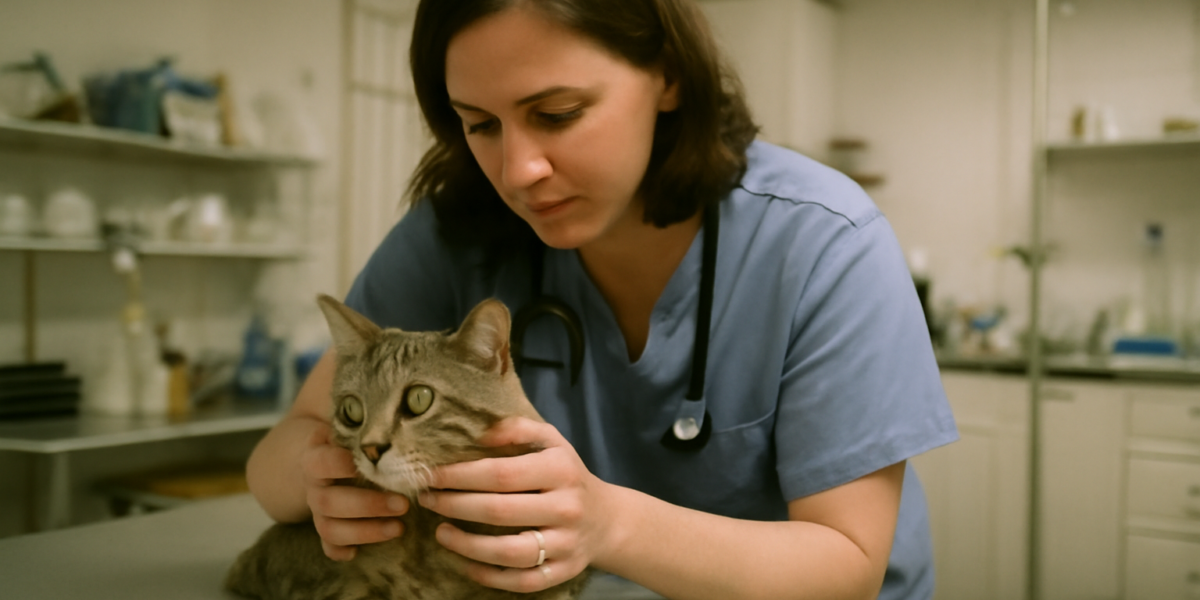
What Hip Dysplasia Is in Cats
Hip dysplasia in cats is a developmental condition where the hip joint forms abnormally during growth. The ball of the femur and the socket of the pelvis do not fit together as snugly as they should, leading to joint looseness, abnormal wear, and gradual development of arthritis. While the disease is more familiar in dogs, it does occur in cats and is often underrecognized because cats hide their discomfort so well.
In this article
The condition is most often seen in larger and more heavily built breeds, particularly Maine Coons, Persians, Himalayans, Devon Rex, and Siamese cats. That said, mixed-breed cats can also be affected, and the condition occurs more commonly than many cat owners realize. Genetic predisposition appears to play a strong role, and certain lines within affected breeds carry higher risk than others.
Hip dysplasia cats face is often a quietly progressive condition rather than a dramatic acute disease. Cats adapt to discomfort through subtle behavior changes that families may not connect to a joint problem. Recognizing the early signs allows for management that preserves mobility and quality of life through the cat’s senior years.
How Hip Dysplasia Develops
The hip joint forms during the first months of life, with the ball of the femoral head and the socket of the pelvic acetabulum developing together. When this development goes well, the surfaces match perfectly, and the joint is stable through normal motion. When development is abnormal, the surfaces do not fit, and the joint moves with subtle laxity that gradually damages cartilage and underlying bone.
Over months to years, the abnormal mechanical loading produces changes typical of arthritis. Cartilage wears unevenly, the joint capsule thickens, bony spurs form along the joint margins, and inflammation becomes a continuous low-grade presence. The joint stiffens and becomes less comfortable through normal range of motion.
Genetics drive most of the risk, with body weight and growth rate playing supporting roles. Heavier cats and those who gain weight rapidly during growth may experience more mechanical stress on developing hips. Maintaining a healthy lean body condition throughout life supports joint health regardless of underlying genetic predisposition.
Why the Signs Are Often Missed
Cats are masters at hiding discomfort. In the wild, a cat showing weakness or pain becomes vulnerable, so domestic cats often retain that instinct to mask their symptoms. The result is that hip dysplasia in cats can progress for years before owners realize something is wrong. By the time a cat shows obvious lameness, the disease is often well established.
The early signs are typically behavioral rather than overtly painful. A cat who used to leap onto the kitchen counter now uses a chair as a stepping stone. A favorite high perch becomes less popular. The cat plays for shorter periods, naps in different spots, or seems less interested in interactive play. These changes happen gradually, and families often attribute them to normal aging rather than a specific medical condition.
Other subtle signs include changes in litter box habits, sometimes with cats avoiding boxes that require a high step over the side, increased irritability when picked up or handled around the back end, and altered grooming patterns. Some cats develop matted fur over the back hips because they no longer reach those areas comfortably. The pattern of clues, taken together, often reveals what individual signs would not.
Common Symptoms
Reluctance to jump is one of the most common early signs. A cat who has always been a comfortable jumper may start hesitating before leaps, taking shorter jumps, or avoiding heights entirely. Watch for a cat who used to fly onto the bed or counter and now climbs onto a chair first.
Stiffness after rest is another telling sign. The cat may take time to stretch and move smoothly after a nap, walking carefully for the first few steps before settling into a more normal gait. Reduced grooming of the back end, weight gain from reduced activity, and decreased play interest all develop over time.
Some cats develop visible lameness, particularly after exertion or during weather changes. The bunny-hopping gait sometimes seen in dogs with hip dysplasia, where both back legs move together rather than alternating, can occasionally be observed in affected cats. Severe cases may show clear pain on hip manipulation, reluctance to walk, and significant muscle wasting in the back legs.
How Veterinarians Diagnose It
Diagnosis usually starts with a careful physical exam, often after the owner reports subtle behavior changes. The exam includes observation of gait, palpation of the hips for pain or laxity, and assessment of range of motion. Many cats are sensitive to hip manipulation and may resist or even act aggressively, which is itself a clue.
X-rays of the hips confirm the diagnosis. The films show the abnormal joint shape, with various degrees of femoral head and acetabular abnormality, and any arthritis changes such as bony spurs and joint surface remodeling. Comparing both hips helps assess whether the disease is bilateral, which it often is, even when symptoms appear one-sided.
Sedation or anesthesia may be needed to position the cat properly for diagnostic-quality films, particularly when assessing joint laxity. Bloodwork is usually unremarkable but supports general health assessment for senior cats. Other imaging like CT is rarely needed for diagnosis but may be considered in atypical cases.
Pain Management
For cats with clinical signs, pain management is the foundation of care. Options for cats are more limited than for dogs because cats metabolize many medications differently, and some commonly used canine pain medications are dangerous or even fatal to cats. Working with your veterinarian to choose appropriate, safe medications matters greatly.
Several pain medications are available for cats, including specific nonsteroidal anti-inflammatory drugs approved or commonly used in feline patients, gabapentin, and other agents. Newer biologic therapies including monoclonal antibodies that target nerve growth factor have become available for cat osteoarthritis and have changed the landscape of feline pain control significantly. Your veterinarian can discuss which options are appropriate for your cat.
Avoid giving any human pain medications, including over-the-counter products like acetaminophen, ibuprofen, or aspirin, to cats. Acetaminophen in particular is highly toxic to cats and can be fatal. The temptation to grab something from the medicine cabinet for a sore-looking cat is dangerous; calling your veterinarian for an appropriate prescription is essential.
Weight Management and Exercise
Maintaining a healthy lean body weight is one of the most effective interventions for cats with hip dysplasia. Excess weight increases stress on already abnormal joints and worsens both pain and progression. Many indoor cats are overweight, and even modest weight reduction can produce noticeable improvement in mobility and comfort.
Encouraging gentle activity supports joint health and muscle tone. Interactive play with wand toys, food puzzles that require movement, and environmental enrichment all promote engagement without forcing high-impact activity. Some cats enjoy supervised time in safely enclosed outdoor spaces, which can encourage natural movement patterns.
Avoid forcing affected cats to make jumps or climbs they are reluctant to attempt. Provide ramps or steps to favorite perches, lower-sided litter boxes, and easy access to food and water bowls. Reading about osteoarthritis in cats rounds out understanding of joint disease in this species, since many affected cats develop generalized arthritis along with hip-specific issues.
Home Modifications
Practical home changes make daily life easier for cats with hip dysplasia. A low-sided litter box, often a shallow plastic storage tote with one side cut down, allows easier entry and exit. Multiple boxes throughout the home reduce travel distance, particularly in multi-level homes. Soft, cushioned bedding in favorite resting spots supports comfortable rest.
Pet ramps or steps to access beds, couches, and window perches preserve cherished routines without requiring jumps. Heated beds can be welcome during cold months for arthritic joints. A consistent layout, with food, water, litter, and resting spots in predictable accessible locations, helps cats whose mobility has changed.
Nail trims become more important when cats are not climbing and scratching as actively, because nails can overgrow and cause additional discomfort. Regular grooming of the back end helps cats who can no longer fully groom themselves. Resources at our cat care blog cover senior cat care topics that complement specific hip dysplasia management.
Surgical Considerations
Surgery is sometimes considered for cats with severe disease that does not respond adequately to medical management. Femoral head and neck excision, the procedure where the painful bony joint is removed and replaced by a fibrous false joint, can be very effective for cats just as it is for small dogs with similar conditions. Most cats handle the surgery well and recover good function.
Total hip replacement is occasionally performed in cats, though it is much less commonly done than in dogs. The procedure can provide excellent function but requires specialized expertise and is generally reserved for selected cases with severe disease in younger cats with good surgical candidacy. Cost and availability are practical considerations.
For most cats, medical management with pain control, weight management, and home modifications provides adequate quality of life, and surgery is not necessary. Your veterinarian or veterinary surgeon can discuss whether surgical options might benefit your specific cat. Reading about Legg-Calve-Perthes disease can help you understand the femoral head and neck excision approach used in similar feline cases.
Long-Term Outlook
The long-term outlook for cats with hip dysplasia is generally good with appropriate management. Most affected cats live comfortable lives well into their senior years, with quality of life preserved through pain management, weight control, and supportive home care. The disease progresses gradually rather than acutely, and many cats reach old age without dramatic disability.
Some cats develop more significant arthritis and mobility limitations over time, particularly when diagnosis is delayed or when other concurrent conditions complicate care. Multimodal care that addresses pain, mobility, and overall wellness together gives the best outcomes. Regular veterinary check-ins help adjust the plan as the cat ages.
Adopting a cat with known hip dysplasia is a very reasonable consideration. Resources at our adopt-a-cat hub can guide thoughtful planning. The condition is manageable, and many of these cats make wonderful family members with active comfortable lives. Awareness of subtle behavior changes helps owners stay ahead of disease progression and provide responsive care.
When to Call Your Veterinarian
Call your veterinarian when you notice changes in your cat’s jumping, climbing, grooming, or activity patterns. Subtle signs deserve attention because cats hide pain so well that obvious lameness usually represents advanced disease. Earlier intervention preserves mobility and comfort longer.
Seek prompt evaluation for sudden severe lameness, refusal to bear weight on a back leg, or signs of significant pain. These warrant a thorough exam to confirm the diagnosis and rule out other conditions. Acute injuries on top of underlying hip dysplasia can occur and may need different management.
If your cat is being managed for hip dysplasia and seems to be losing ground despite current treatment, contact your veterinarian to revisit the plan. Adjustments to pain medications, home modifications, or rehabilitation may be needed. Your veterinary team is your best partner in keeping your cat comfortable through senior years.
Frequently Asked Questions
How common is hip dysplasia in cats?
The condition occurs more often than many cat owners realize, particularly in larger and more heavily built breeds like Maine Coons, Persians, and Himalayans. It is likely underdiagnosed because cats hide pain so effectively.
Will my cat need surgery?
Most cats are managed successfully with medical management, weight control, and home modifications. Surgery is reserved for severe cases that do not respond to conservative care. Femoral head and neck excision is the most commonly performed procedure when surgery is needed.
Is hip dysplasia painful for cats?
Yes, although cats are very good at hiding their discomfort. Pain often manifests as behavior changes rather than overt complaints. Effective pain management can dramatically improve quality of life for affected cats.
What breeds are most at risk?
Maine Coons are particularly recognized as being affected. Persians, Himalayans, Devon Rex, and Siamese cats are also at higher risk than the general feline population. Mixed-breed cats can also develop the condition.
Can hip dysplasia be prevented?
Genetic predisposition cannot be changed. Maintaining a healthy lean body weight throughout life, encouraging gentle activity, and prompt veterinary attention to early signs help support joint health. Reputable breeders screen for the condition in lines where it is recognized.
Should I see a veterinary specialist?
Most cases are well managed by primary care veterinarians. Severe cases or cases being considered for surgery may benefit from referral to a board-certified veterinary surgeon. Your primary veterinarian can coordinate referral when appropriate and continue routine care.


