
Last updated: April 27, 2026
In this article
Why Brushing Your Dog’s Teeth at Home Matters
Dental disease is one of the most common health problems in dogs, affecting an estimated 80 percent of dogs over the age of three. Yet it is also one of the most preventable. Learning to brush dog teeth at home is one of the simplest and most impactful things you can do for your pet’s long-term health.
Plaque builds up on your dog’s teeth daily, just like it does on yours. Within 48 to 72 hours, plaque hardens into tartar, which can only be removed by a professional dental cleaning under anesthesia. Tartar buildup leads to gum disease, tooth loss, pain, and bacterial infections that can spread to the heart, kidneys, and liver.
Regular brushing disrupts that cycle. Even brushing a few times per week dramatically reduces plaque buildup and keeps your dog’s mouth healthier between professional cleanings.
What You Will Need
Gathering the right supplies before your first session sets you up for success. Here is your checklist.
- Dog-specific toothbrush: A soft-bristled brush designed for dogs, with an angled head. Finger brushes work well for small dogs or beginners.
- Dog-safe toothpaste: Never use human toothpaste, which contains fluoride and xylitol — both toxic to dogs. Dog toothpastes come in flavors like chicken, beef, and peanut butter.
- High-value treats: Small, soft rewards to create positive associations throughout the process.
- Patience: Introducing tooth brushing takes days to weeks. This is not something you rush.
You can find dog toothbrush and toothpaste kits at most pet stores or through your veterinarian’s office. Ask your vet for a brand recommendation if you are unsure what to buy.
Getting Your Dog Used to Tooth Brushing
Most dogs will not sit still for a full brushing session right away. Desensitization is key, and the process is straightforward if you take it one step at a time.
Week One: Mouth Handling
Start by gently lifting your dog’s lip and touching their teeth and gums with your finger. Do this for just a few seconds at a time, several times per day. Reward with a treat after each attempt.
If your dog pulls away, do not force it. Shorten the interaction and try again later. The goal is to teach your dog that having their mouth touched leads to good things.
Week Two: Introduce the Toothpaste
Put a small amount of dog toothpaste on your finger and let your dog lick it off. Most dogs enjoy the taste. Then gently rub the toothpaste along a few teeth with your finger. Reward and praise.
Week Three: Add the Brush
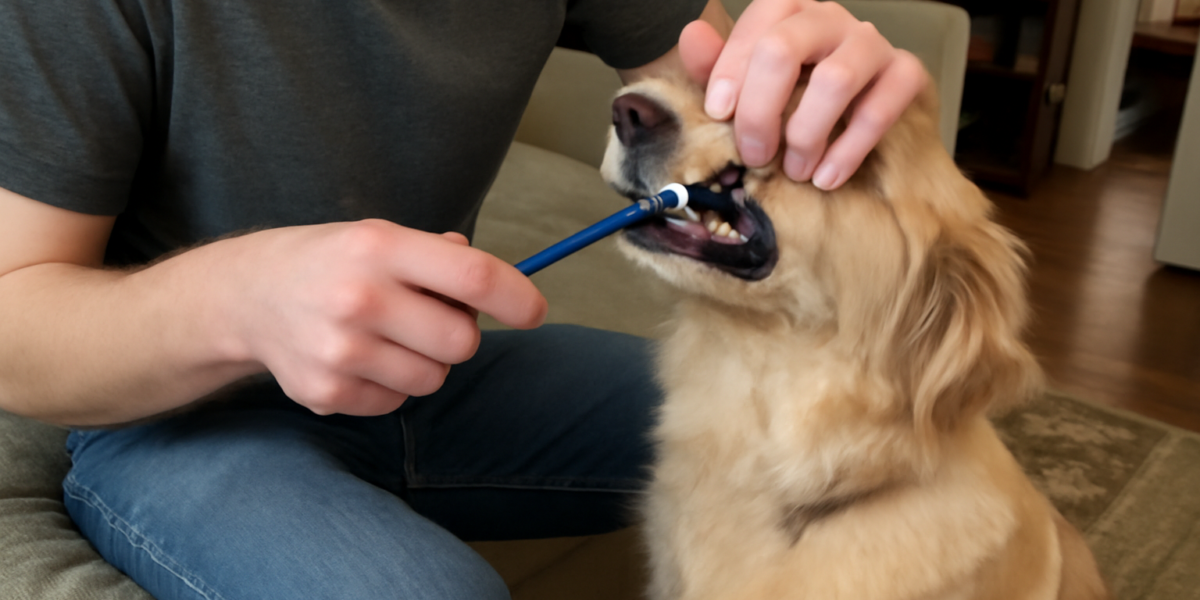
Let your dog sniff and lick the toothbrush. Apply toothpaste to the brush and gently brush a few front teeth. Work your way to the back teeth over several sessions. The outer surfaces are the most important, since plaque accumulates most heavily there.
Step-by-Step Brushing Technique
Once your dog is comfortable with the brush, follow this routine for effective cleaning.
- Position your dog: Sit beside your dog or have them face away from you. Avoid hovering over them, which can feel threatening.
- Lift the lip: Gently lift the upper lip to expose the teeth and gum line on one side.
- Brush in circular motions: Angle the brush at 45 degrees toward the gum line and use small, gentle circles. Focus on the gum-tooth junction where plaque accumulates.
- Cover all surfaces: Work from front to back on the outer surfaces. The upper back molars and canine teeth accumulate the most tartar, so give them extra attention.
- Keep sessions short: Aim for about two minutes total. You do not need to brush the inner surfaces — your dog’s tongue does a reasonable job of cleaning those.
- End with a reward: Always finish with praise and a treat to keep the experience positive.
Brushing three to four times per week provides significant benefits. Daily brushing is ideal, but even two to three sessions per week make a measurable difference in plaque control.
Signs of Dental Problems to Watch For
Regular brushing gives you a front-row seat to your dog’s oral health. Watch for these warning signs that warrant a veterinary visit.
- Bad breath: Persistent foul breath is often the first sign of dental disease, not just “normal” dog breath.
- Red or swollen gums: Healthy gums should be pink, not red, puffy, or bleeding.
- Yellow or brown buildup: Visible tartar on the teeth means plaque has hardened and needs professional removal.
- Difficulty eating: Dropping food, chewing on one side, or reluctance to eat hard food can indicate tooth pain.
- Loose or missing teeth: Any change in your dog’s teeth should be evaluated by a veterinarian.
- Pawing at the mouth: This often signals pain or discomfort in the oral cavity.
If you notice any of these signs during brushing, schedule a veterinary dental exam promptly. Early intervention prevents more serious and costly problems down the road.
Beyond Brushing: Other Dental Care Options
Brushing is the gold standard, but it is not the only tool in your dental care arsenal. These supplemental options can enhance your dog’s oral health.
Dental chews: Products approved by the Veterinary Oral Health Council (VOHC) are clinically proven to reduce plaque and tartar. Look for the VOHC seal on packaging.
Water additives: Enzymatic water additives help break down plaque between brushings. They are easy to use but should not replace brushing entirely.
Dental diets: Some prescription and over-the-counter dog foods are formulated with a texture that scrubs teeth as your dog chews. Ask your veterinarian if a dental diet makes sense for your dog.
Professional cleanings: Even with diligent home care, most dogs benefit from a professional dental cleaning every one to two years. These cleanings require anesthesia and allow the veterinarian to clean below the gum line where brushing cannot reach.
Combining home brushing with one or two supplemental strategies gives your dog the best chance at a healthy mouth throughout their life. If you are building a home care routine, check out our guide on trimming dog nails at home and keep a pet first aid kit on hand for emergencies.
Common Mistakes to Avoid
Even well-intentioned dog owners sometimes make mistakes that undermine their dental care efforts. Here are the most common pitfalls.
Using human toothpaste: This is the most dangerous mistake. Human toothpaste contains ingredients that are toxic to dogs. Always use a pet-specific formula.
Brushing too aggressively: Scrubbing hard can damage gum tissue and make your dog dread the experience. Gentle pressure is all you need.
Skipping the back teeth: The premolars and molars at the back of the mouth accumulate the most tartar. Many owners focus only on the visible front teeth and miss where the real problems develop.
Giving up too soon: If your dog resists at first, do not conclude that tooth brushing is impossible. The desensitization process takes time, and consistency pays off. For more dog care tips, visit our full resource library.
Frequently Asked Questions
At what age should I start brushing my dog’s teeth?
Start handling your puppy’s mouth as early as possible, ideally around 8 to 12 weeks of age. Once their adult teeth come in at about 6 months, begin a regular brushing routine. Early exposure makes lifelong dental care much easier.
Can I use coconut oil instead of dog toothpaste?
Coconut oil has mild antimicrobial properties and is safe for dogs. While it is not as effective as enzymatic dog toothpaste, it can serve as a temporary alternative. For the best plaque control, use a veterinarian-recommended dog toothpaste.
My dog’s breath is terrible. Is that normal?
Mild doggy breath is common, but persistent, foul-smelling breath is not normal and usually indicates dental disease, gum infection, or another health issue. Schedule a veterinary exam to find the cause.
How much does a professional dental cleaning cost?
Professional dental cleanings for dogs typically range from $300 to $800, depending on your location, the severity of dental disease, and whether extractions are needed. Regular home brushing helps reduce the frequency and complexity of professional cleanings.
Are bones a good alternative to brushing?
Raw bones can provide some dental benefit, but they carry risks of tooth fractures, choking, and intestinal blockage. Cooked bones are even more dangerous because they splinter. Veterinarians generally recommend VOHC-approved dental chews as a safer option for supplemental dental care.


