
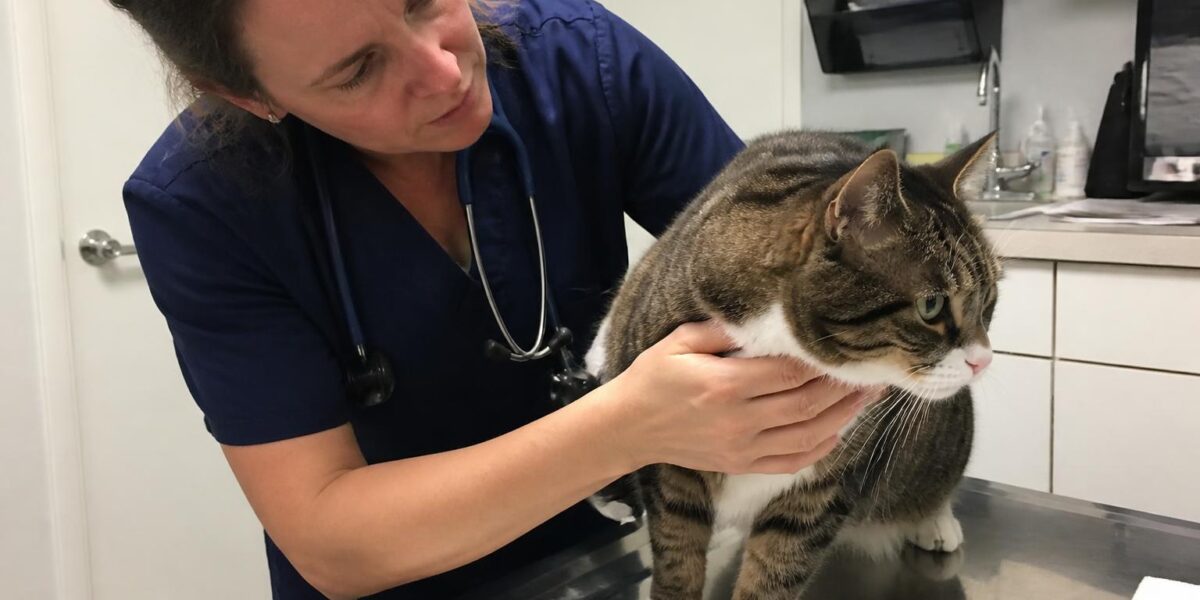
Hyperthyroidism is the most common endocrine disease in cats over ten years old and arguably the most clinically rewarding to treat. Most affected cats respond well to one of four established treatment options, and most owners, given honest information, can choose the path that fits their cat, their budget, and their access to feline-credentialed care. The framing in this article follows the AAFP and the ACVIM consensus statements on feline hyperthyroidism management.
In this article
- What hyperthyroidism actually is
- Diagnosis: TT4 first, then nuance
- Treatment option one: methimazole
- Treatment option two: radioactive iodine (I-131)
- Treatment option three: dietary iodine restriction
- Treatment option four: thyroidectomy
- Why hyperthyroidism happens (probably)
- The CKD comorbidity question
- Hypertension and cardiac monitoring
- Treatment selection: a working framework
- Skin and coat: the underestimated sign
- Acute decompensation: thyroid storm
- Living with a treated hyperthyroid cat
- Adopting a hyperthyroid cat
- Frequently asked questions
What hyperthyroidism actually is
The thyroid gland sits in two lobes along the trachea in the neck. In hyperthyroid cats, one or both lobes develop functional adenomatous hyperplasia (rarely a true thyroid carcinoma) that produces excess thyroid hormone independent of pituitary control. The systemic result is hypermetabolism: weight loss despite a ravenous appetite, increased thirst and urination, intermittent vomiting or diarrhea, restlessness, vocalization (especially at night), an unkempt or matted coat, and sometimes a palpably enlarged thyroid lobe. Cardiac changes are common, including a heart murmur, tachycardia, and secondary hypertrophic changes that may improve once thyroid hormone normalizes.
Diagnosis: TT4 first, then nuance
The first-line diagnostic is total thyroxine (TT4) on a routine senior chemistry panel. A clearly elevated TT4 plus consistent clinical signs is diagnostic. When clinical signs are present but TT4 sits in the upper normal range, a free T4 by equilibrium dialysis often clarifies the picture; subclinical or early hyperthyroidism is common and TT4 alone can miss it. Thyroid scintigraphy (nuclear imaging) is the most sensitive test and is occasionally used for atypical presentations or pre-I-131 planning, but it requires a specialty facility. Concurrent screening for chronic kidney disease and hypertension is standard at diagnosis because both commonly coexist in older cats.
Treatment option one: methimazole
Methimazole (commonly dispensed as Felimazole in the United States, or carbimazole in some regions, which is the prodrug form) blocks thyroid hormone synthesis. It is the most accessible treatment and the one almost all hyperthyroid cats start on, at least initially. Forms include oral tablets and transdermal gel compounded by veterinary compounding pharmacies, applied to the inner ear pinna. Transdermal absorption is more variable than oral but is a lifeline for cats that refuse pills. Side effects include vomiting and inappetence early on (usually transient), facial pruritus, blood dyscrasias, and elevated liver enzymes; a small subset develop severe reactions requiring drug discontinuation. Monitoring is the headline: a TT4 four weeks after starting, with CBC and chemistry rechecks, and ongoing checks every three to six months for life. Dosing is individualized by your AAFP-credentialed or ACVIM-credentialed prescriber based on weight, response, and side-effect tolerance; we deliberately do not publish dose numbers here. See methimazole for cats.
Treatment option two: radioactive iodine (I-131)
I-131 is the gold standard curative treatment when access and the cat’s kidney status allow. A single subcutaneous or oral dose of radioactive iodine is selectively taken up by hyperactive thyroid tissue and destroys it. Hospitalization at a licensed I-131 facility for several days for radiation containment is required. Cure rate is roughly 95 percent. Cost typically ranges from about USD 1,200 to USD 2,500 depending on program and region, and the procedure is not available in every state or country. The major contraindication is severe pre-existing CKD because hyperthyroidism can mask CKD by increasing glomerular filtration rate; treating the hyperthyroidism unmasks the underlying kidney disease in some cats. A methimazole trial before I-131 is the standard way to flush this out.
Treatment option three: dietary iodine restriction
An iodine-restricted prescription diet (Hill’s Prescription Diet y/d) can normalize TT4 in cats that eat it exclusively. Real-world efficacy is limited by household practicality: the cat must eat only this food, with no treats, no other diets, no scavenging, and no shared bowls in multi-cat homes. For single-cat households with a willing eater and an owner who cannot manage daily medication, y/d is a legitimate option. For most multi-cat households or cats with strong food preferences, it is not.
Treatment option four: thyroidectomy
Surgical removal of one or both thyroid lobes is rarely the first choice in modern cat medicine. It requires general anesthesia in a hyperthyroid (and often cardiac-compromised) patient, carries a risk of iatrogenic hypoparathyroidism if the parathyroid glands are damaged, and is generally reserved for cats with ectopic thyroid tissue not amenable to I-131 or with confirmed carcinoma. Most modern cases skip this option.
Why hyperthyroidism happens (probably)
The etiology of feline hyperthyroidism remains incompletely understood despite decades of investigation. The disease was virtually unrecognized before the late 1970s; current prevalence is roughly 10 percent of cats over ten years old in many populations, which is striking. Hypotheses include environmental goitrogens, polybrominated diphenyl ether flame retardants in indoor cat environments, iodine content swings in commercial cat food (both too high and too low have been implicated in different decades), can-lining bisphenol A, and individual genetic susceptibility. None is conclusively proven; most affected cats have idiopathic disease, meaning the cause cannot be identified for that individual. The practical takeaway: there is no proven prevention strategy. Annual senior wellness bloodwork starting around age seven is the realistic early-detection approach.
The CKD comorbidity question
Hyperthyroidism artificially lowers BUN, creatinine, and SDMA in many cats by increasing renal blood flow. Treat the hyperthyroidism and the previously masked CKD declares itself. This is not a reason to undertreat hyperthyroidism, because untreated hyperthyroidism also damages the kidneys long term. It is a reason to do a four to six week methimazole trial before committing to I-131, monitor renal values closely during early treatment, and titrate the goal: normalize TT4 without aggressively suppressing it below normal, which can worsen renal outcomes. ACVIM consensus supports this stepwise approach. See chronic kidney disease in cats for the renal side.
Hypertension and cardiac monitoring
Systemic hypertension is present in a meaningful fraction of hyperthyroid cats at diagnosis and may persist after thyroid hormone normalizes. Blood pressure measurement, ideally Doppler in a low-stress room, is standard at diagnosis and during follow-up. Hypertensive cats benefit from amlodipine; left untreated, hypertension threatens retinas (sudden blindness from retinal detachment), kidneys, brain, and heart.
Treatment selection: a working framework
A reasonable decision framework for owners and primary vets. Newly diagnosed hyperthyroid cat with normal kidney values, healthy heart, and motivated owner: start methimazole for four to six weeks to confirm response and unmask any underlying CKD, then offer I-131 as the curative option. Methimazole long-term is also reasonable if owner prefers daily medication to a one-time procedure or if I-131 access is limited. Newly diagnosed cat with concurrent severe CKD: methimazole is the path of choice, dosed conservatively to normalize TT4 without over-suppressing, with close renal monitoring. Cat that refuses oral medication: transdermal compounded methimazole or I-131 if otherwise suitable. Cat with confirmed thyroid carcinoma or ectopic tissue: thyroidectomy or specialty I-131 dosing depending on extent. Single-cat household with strong-eater preference and an owner who cannot do daily medication: y/d trial is reasonable. The decision is collaborative between the owner, the AAFP-credentialed primary vet, and where relevant an ACVIM internist.
Skin and coat: the underestimated sign
Many hyperthyroid cats present with a greasy unkempt coat, matting along the back, and increased shedding. Hyperthyroid skin changes resolve as TT4 normalizes. If your senior cat with progressive matting also has weight loss and increased appetite, request a TT4. See hyperthyroid skin changes in cats.
Acute decompensation: thyroid storm
Rarely, severe untreated hyperthyroidism progresses to thyroid storm: extreme tachycardia, hyperthermia, weakness, collapse. This is an emergency requiring stabilization, beta-blockers, and methimazole loading. Pre-identify your AAFP-credentialed emergency clinic. See cat thyroid storm.
Living with a treated hyperthyroid cat
Daily life with a methimazole-managed cat is straightforward: a once or twice daily tablet or a transdermal gel application to the inside of the ear pinna, paired with a high-value food reward or a small treat. Pilling-averse cats often do well with compounded flavored liquids or chews. The Cat Friendly Practice-style low-stress handling that good clinics now offer extends to home medication routines: short, predictable, reward-paired sessions establish the medication as a non-event rather than a daily battle. For multi-cat households, separation at medication time matters because the wrong cat eating the wrong medicated treat can cause real harm.
Cats moving from methimazole to post-I-131 status often need adjustment of concurrent medications, especially blood pressure medication (amlodipine) if hypertension partially resolves, and CKD management if azotemia worsens once thyroid hormone is normalized. Build in a four to six week post-treatment recheck visit. A cure is celebrated; the management framework around the cure is what keeps the cat healthy long-term.
Adopting a hyperthyroid cat
Hyperthyroid cats, especially seniors, are adoptable and rewarding. Lifetime cost on methimazole runs roughly USD 30 to 80 per month plus quarterly bloodwork; I-131 is a one-time larger investment with long-term savings. CareCredit and Scratchpay are common financing routes; cat-specific grants (The Pet Fund, RedRover Relief) occasionally help. See adopting a cat with hyperthyroidism for the practical setup.
Frequently asked questions
Is hyperthyroidism curable?
Yes, with radioactive iodine in roughly 95 percent of cases when CKD does not preclude it. Methimazole controls the disease but does not cure it.
How long does methimazole take to work?
TT4 typically normalizes within two to four weeks of starting an appropriate dose, which is why the first recheck is at four weeks. Clinical improvement (weight regain, calmer behavior) often follows soon after.
What if my cat refuses pills?
Transdermal methimazole compounded gel applied to the ear pinna is a real option. Some cats do well on flavored compounded liquids. Discuss with a compounding pharmacy via your AAFP-credentialed vet.
Will the iodine-restricted diet work in my multi-cat home?
Usually not, because cats share food. It works best in single-cat households with a willing eater and an owner who cannot do daily medication.
Why does my vet want to recheck the kidneys after starting treatment?
Because hyperthyroidism masks CKD. Treating reveals it. Rechecking kidney values lets your vet titrate thyroid treatment to the level that protects both the thyroid and the kidneys.


