Last updated: May 6, 2026
In this article
Korat Cat: Thai Lucky Cat Breed Complete Guide
The Korat is one of the oldest and most revered cat breeds in the world, with a documented history stretching back over seven hundred years to the ancient kingdom of Siam, now modern-day Thailand. Revered in Thai culture as a symbol of good fortune and prosperity, the Korat is a strikingly beautiful cat with a shimmering silver-blue coat, luminous green eyes, and a heart-shaped face that has earned it admirers across the globe.
Beyond their stunning appearance, Korats are known for their exceptional intelligence, deep loyalty to their human companions, and a quietly assertive personality that sets them apart from more boisterous breeds. They are not the most common breed in Western countries, which makes them all the more special to those who have the privilege of sharing their home with one. This guide covers everything you need to know about the Korat, from their rich cultural heritage to their specific care requirements and common health considerations.
History and Origins of the Korat
The Korat’s history is among the most well-documented of any cat breed. The earliest known reference to the breed appears in the Tamra Maew, or Cat Book Poems, a manuscript produced during the Ayutthaya Kingdom period of Thai history, which dates roughly from 1350 to 1767. In this text, the Korat is described as the Si-Sawat cat, a silver-blue feline whose coloring resembles the sawat seed. The manuscript describes the breed as a bringer of good luck and prosperity to its owner.
In Thailand, Korats have traditionally been given as gifts rather than sold, particularly to brides on their wedding day as a symbol of a prosperous marriage. They were never deliberately bred for commercial purposes in their homeland, which helped preserve the natural breed type over centuries. The Thai people considered them too precious to sell, and this cultural reverence contributed to their rarity outside of Southeast Asia for most of history.
The Korat first appeared in Western cat shows in the late 1800s, when a cat matching the breed description was exhibited at a London show. However, it was not until 1959 that the first formally recognized Korats were imported to the United States by Jean Johnson, who received a breeding pair named Nara and Darra from a Thai breeder. The Cat Fanciers’ Association granted the Korat championship status in 1966, and the breed has maintained a devoted but relatively small following in Western countries since then.
Unlike many modern cat breeds that were developed through extensive crossbreeding programs, the Korat is considered a natural breed. Its appearance has changed very little from the descriptions in ancient manuscripts, and responsible breeders work to maintain this historic type rather than modify it to suit changing aesthetic preferences.
Appearance and Physical Characteristics
The Korat is a medium-sized cat with a semi-cobby body type that is muscular and surprisingly heavy for its size. Males typically weigh between eight and ten pounds, while females range from six to eight pounds. When lifted, a Korat often feels heavier than expected, a characteristic described by breed enthusiasts as “a small cat with a heavy feel.”
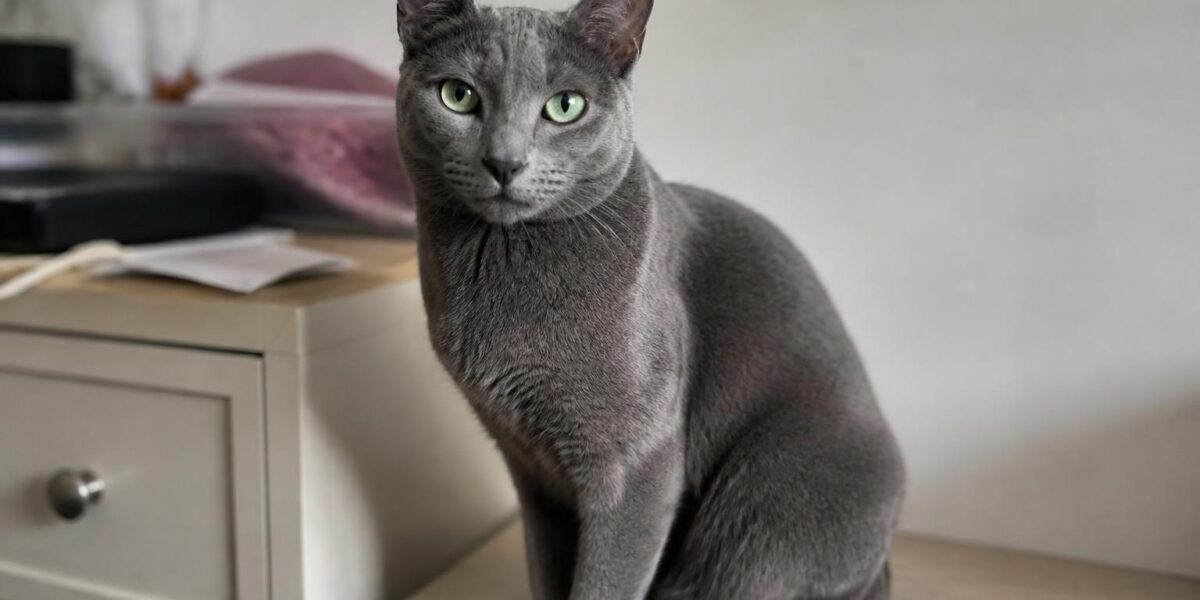
The most distinctive feature of the Korat is its head shape, which forms a heart when viewed from the front. The broad forehead narrows through well-defined cheekbones to a gently pointed chin, creating the classic heart silhouette that is considered the hallmark of the breed. The brow ridges form the upper curves of the heart, and this shape is further emphasized by the large, slightly rounded ears set high on the head.
The eyes are perhaps the Korat’s most captivating feature. They are large, round, and luminous, with a slight Asian slant when partially closed. The preferred eye color is a brilliant peridot green, though kittens and young cats often have amber or golden-green eyes that deepen to true green as they mature, sometimes not reaching full color intensity until the cat is two to five years old.
The coat is the Korat’s crowning glory. It comes in only one color: silver-tipped blue. Each hair is lighter at the root and darker along the shaft, with a silver tip that creates a shimmering, halo-like effect when the cat moves. The coat is short to medium in length, fine in texture, and lies close to the body. Unlike many blue-coated breeds, the Korat lacks an undercoat, which gives the fur a glossy, almost liquid appearance. If you enjoy blue-coated cats, you might also appreciate the Russian Blue compared to the British Shorthair.
The nose is short with a slight downward curve, and the profile shows a gentle stop between the forehead and nose. The body is muscular with a broad chest and well-developed shoulders, supported by proportionate legs that end in oval-shaped paws. The tail is medium in length, heavier at the base and tapering to a rounded tip.
Temperament and Personality
Korats are intensely loyal cats who form powerful bonds with their primary caregivers. They are often described as “one-person cats” or “velcro cats” because of their tendency to choose a favorite human and stick close to that person whenever possible. This does not mean they are unfriendly to other family members, but there is usually one person who receives the lion’s share of the Korat’s devotion.
Intelligence is one of the Korat’s defining characteristics. These cats are quick learners who can be trained to perform tricks, walk on a leash, and respond to verbal commands. They are excellent problem solvers and will figure out how to open cabinets, doors, and containers that other cats would ignore. This intelligence also means they need mental stimulation to stay content, as bored Korats can become demanding or destructive.
While Korats are affectionate and social with their families, they can be reserved or cautious with strangers. They are not aggressive, but they prefer to observe newcomers from a safe distance before deciding whether to approach. This selective sociability is part of their charm for many owners who appreciate a cat that is not indiscriminately friendly.
Korats are vocal cats, though not excessively so. They have a range of vocalizations they use to communicate with their people, from soft chirps and trills to more assertive meows when they want attention or disagree with something. They are not as loud as Siamese cats but are certainly more talkative than many other breeds.
One important personality trait to be aware of is the Korat’s sensitivity to their environment. They prefer calm, stable households and can become stressed by loud noises, frequent disruptions, or chaotic environments. They do best in homes where they have a consistent routine and a peaceful atmosphere. This sensitivity extends to their relationships with other pets. Korats generally get along with other cats, especially other Korats, but may become stressed in homes with highly dominant or aggressive animals.
Care and Nutrition Requirements
Korats thrive on a high-quality diet rich in animal-based proteins. Their muscular build requires adequate protein to maintain, and their active metabolism benefits from a balanced ratio of protein, fat, and essential nutrients. Most Korat owners feed a combination of premium wet and dry food, with wet food making up at least half of the daily intake to support hydration.
Portion control is important because Korats can be prone to weight gain, particularly as they age and their activity levels decrease. An overweight Korat loses the sleek, muscular silhouette that defines the breed and faces increased risk of health problems. Regular weight checks and measured meals help prevent obesity.
Environmental enrichment is critical for this intelligent breed. Provide a variety of interactive toys, puzzle feeders, and climbing structures. Korats particularly enjoy games that involve chasing and pouncing, and many will play fetch with small toys. They appreciate having high vantage points from which to survey their territory, so tall cat trees or access to shelves at various heights will be well used.
Korats are indoor cats who should not be allowed to roam freely outside. Their trusting nature with familiar people, combined with their value as a rare breed, makes them vulnerable to theft as well as the usual outdoor dangers. A secure catio or supervised outdoor time on a leash can satisfy any desire for fresh air without the associated risks. For advice on preparing your home for a new cat, our guide on preparing your home for a new kitten covers essential safety measures.
Grooming Needs
The Korat’s grooming requirements are refreshingly simple. Their single-layer coat without an undercoat means they shed minimally and are unlikely to develop mats or tangles. A weekly combing with a fine-toothed comb or a gentle brushing with a soft brush is sufficient to remove loose hair and keep the coat looking its best.
The lack of an undercoat has a practical benefit beyond easy maintenance. It means the Korat produces less dander than double-coated breeds, which some allergy sufferers find makes them more tolerable to be around. However, no cat is truly hypoallergenic, and individual reactions vary significantly.
Bathing is rarely necessary. The Korat’s fine coat stays clean and glossy with normal self-grooming. If a bath is required for any reason, use a gentle, cat-safe shampoo and dry the cat thoroughly afterward. The silver-tipped coat looks most impressive when it is clean and well-maintained, so an occasional wipe with a damp cloth can help maintain the coat’s signature shimmer.
Dental hygiene should be part of the regular grooming routine. Brush your Korat’s teeth several times per week using a cat-specific toothpaste to prevent plaque buildup and gum disease. Regular nail trimming every two to three weeks and periodic ear checks round out the grooming needs for this low-maintenance breed.
Health Considerations
Korats are generally robust cats with a lifespan of fifteen to twenty years, making them one of the longer-lived purebred cat breeds. However, there are several genetic health conditions that prospective owners and breeders should be aware of.
Gangliosidosis is the most significant hereditary condition associated with the Korat breed. This fatal neurological disease comes in two forms, GM1 and GM2, both of which are autosomal recessive. Affected kittens appear normal at birth but begin showing neurological symptoms between one and five months of age, including tremors, uncoordinated movement, and progressive paralysis. There is no treatment, and affected cats rarely survive beyond their first year. Fortunately, reliable DNA tests exist for both forms, and responsible breeders test all breeding cats to eliminate carriers from their programs.
Low body fat can be a concern, particularly in younger Korats. Their lean, muscular build means they have less fat reserves than many other breeds, which can make them more susceptible to hypothermia during anesthesia or illness. Veterinarians should be made aware of this breed characteristic when planning any surgical procedures.
Korats may also be more sensitive to certain anesthetics and vaccines than other breeds. While this sensitivity is not universal, it is worth discussing with your veterinarian before any procedures. Some Korat owners report that their cats have stronger reactions to routine vaccinations, though this is anecdotal and should be evaluated on an individual basis.
Standard preventive care including regular veterinary checkups, core vaccinations, dental cleanings, and parasite prevention forms the foundation of health maintenance for Korats. Their long potential lifespan makes early detection and management of age-related conditions particularly important.
Is the Korat Cat Right for You?
The Korat is an ideal companion for individuals or couples who can appreciate a deeply devoted, intelligent cat and provide the calm, stable environment this breed prefers. They excel in homes where they receive plenty of attention and mental stimulation, and they particularly thrive when they are the center of their owner’s world.
Korats are less well-suited to chaotic households with multiple young children or a constantly revolving cast of visitors. Their sensitivity to noise and disruption means they are happiest in quieter environments. Families with older, respectful children can certainly make excellent Korat homes, but very young children may be too unpredictable for this breed’s comfort level.
The breed’s rarity means finding a kitten requires patience. There are relatively few Korat breeders in North America and Europe, and waiting lists are common. Expect to pay between one thousand and two thousand five hundred dollars for a pet-quality kitten from a reputable breeder who tests for gangliosidosis and other hereditary conditions. The foster-to-adopt process is another avenue worth exploring if you are open to an adult cat.
If you have the right living situation and are looking for a cat who will be your loyal, intelligent shadow for potentially two decades, the Korat offers a deeply rewarding companionship experience that few other breeds can match. Their ancient heritage, stunning beauty, and devoted personality make them truly special cats for those fortunate enough to share their lives with them.
Frequently Asked Questions
Are Korat cats rare?
Yes, Korat cats are considered a rare breed, particularly outside of Thailand. There are a limited number of breeders in North America, Europe, and Australia, and waiting lists for kittens are common. Their rarity is partly due to the breed’s traditional status in Thailand, where they were historically given as gifts rather than sold commercially, and partly because the breeding pool remains relatively small compared to more popular breeds.
What is the difference between a Korat and a Russian Blue?
While both breeds have blue coats and can appear similar at first glance, there are significant differences. The Korat has a single coat without an undercoat and silver-tipped fur that creates a shimmering effect, while the Russian Blue has a dense double coat with a plush texture. The Korat’s body is semi-cobby and muscular, whereas the Russian Blue is more slender and elegant. Korats have green eyes and a heart-shaped face, while Russian Blues have vivid green eyes set in a more wedge-shaped head. Temperamentally, Korats tend to be more assertive and vocal, while Russian Blues are typically quieter and more reserved.
Do Korat cats get along with other pets?
Korats can coexist well with other cats, especially if introduced properly and gradually. They tend to do best with calm, respectful feline companions and may establish themselves as the dominant cat in a multi-cat household. They can also live peacefully with cat-friendly dogs, though their initial reaction to a boisterous dog may be cautious. Korats generally do not do well in homes where they feel threatened or harassed by other animals, as stress can significantly impact their health and wellbeing.
How vocal are Korat cats?
Korats are moderately vocal cats. They communicate regularly with their owners through a variety of sounds including chirps, trills, and meows. They are not as persistently loud as Siamese or Oriental Shorthair cats, but they are certainly not silent. Most Korat owners describe the breed’s vocalizations as pleasant and conversational rather than demanding or piercing. Korats are particularly likely to vocalize when they want attention, are hungry, or have an opinion about something happening in their environment.
How long do Korat cats live?
Korat cats are among the longer-lived purebred cat breeds, with an average lifespan of fifteen to twenty years. Some individuals have been reported to live even longer with excellent care. Key factors that contribute to a long life include a high-quality diet, regular veterinary care, maintaining a healthy weight, keeping the cat indoors, and obtaining the cat from a breeder who tests for hereditary conditions like gangliosidosis. Their impressive longevity means adopting a Korat is a significant long-term commitment.
Looking to adopt a Korat Cat?
Browse Korat Cat cats and mixes available for adoption from shelters and rescues near you.
Find Korat Cat Cats for Adoption