
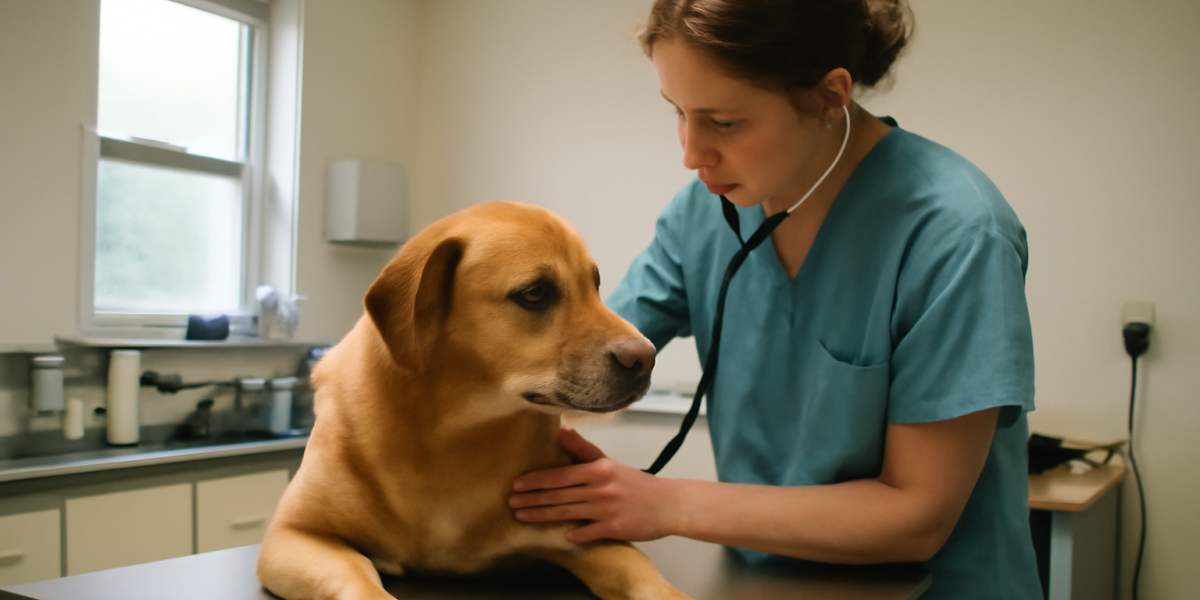
What Latanoprost Is and How It Helps Dogs with Glaucoma
Latanoprost for dogs is a topical prostaglandin analog eye drop used to lower intraocular pressure in canine glaucoma. Originally developed for human glaucoma management, it has become a mainstay of emergency and chronic pressure control in dogs because it works rapidly and is comparatively easy to administer at home. The active ingredient drains fluid from the eye through an alternate pathway, which is why it can dramatically reduce pressure even when other drainage routes are blocked.
In this article
- What Latanoprost Is and How It Helps Dogs with Glaucoma
- How Latanoprost Lowers Eye Pressure
- Dosing and Administration
- Storage Requirements: Refrigeration After Opening
- Side Effects to Watch For
- When Latanoprost Should Not Be Used
- Latanoprost in Cats and Other Species
- Recognizing a Glaucoma Emergency
- Combining Latanoprost with Other Eye Drops
- Long-Term Outlook for Dogs on Latanoprost
- When to Call Your Veterinarian
- Frequently Asked Questions
Glaucoma in dogs is a sight-threatening emergency. When the pressure inside the eye rises, the optic nerve is damaged, sometimes within hours, and vision can be permanently lost if pressure is not brought down quickly. Many breeds, particularly Cocker Spaniels, Basset Hounds, Beagles, and several terriers, are predisposed to primary glaucoma, and any sudden eye redness, cloudiness, or pain warrants immediate veterinary evaluation.
For broader background on this disease, our guide on glaucoma in dogs explains the difference between primary and secondary glaucoma, the role of pressure measurement, and what long-term outcomes typically look like. Latanoprost is one of several drops used in this management, often paired with other classes of medication for additive effect.
How Latanoprost Lowers Eye Pressure
Latanoprost works by increasing fluid outflow from the eye through the uveoscleral pathway, an alternative drainage route distinct from the trabecular meshwork that other glaucoma drops target. By activating prostaglandin receptors in the eye’s outflow tissues, latanoprost essentially opens a different drain to relieve pressure.
The clinical effect can be impressive in many dogs, with pressure dropping noticeably within a few hours of the first dose. Maximum effect is typically seen within a day, and consistent dosing maintains lower pressure as long as the drug continues to work for that particular dog.
Not every dog responds equally well. Some forms of canine glaucoma, particularly very advanced primary glaucoma or certain secondary glaucomas, respond less reliably to latanoprost than to other classes of drops. Your vet will assess response by measuring intraocular pressure with a tonometer at scheduled rechecks.
Dosing and Administration
Latanoprost is dosed as eye drops, typically one drop per affected eye one to two times per day. The exact frequency depends on your dog’s pressure response and on whether other drops are being given alongside. Your veterinary ophthalmologist or primary vet will provide the specific schedule.
To administer the drop, gently restrain your dog’s head, hold the bottle above the eye without touching the eye or eyelashes, and squeeze a single drop onto the surface of the eye or into the lower eyelid pocket. Many dogs accept the technique with practice, especially when paired with a treat afterward.
If multiple eye drops are prescribed, wait at least five minutes between different medications so that one does not wash out the next. Your vet will tell you which order to administer drops in if you are using more than one.
Storage Requirements: Refrigeration After Opening
One critical practical detail about latanoprost is storage. Unopened bottles can usually be kept at room temperature, but opened bottles require refrigeration to maintain potency. Heat degrades the active ingredient over weeks, and a bottle that has been left on a warm bathroom counter for several months may be much less effective than the labeling suggests.
Store the opened bottle in the main body of the refrigerator, not in the door where temperatures fluctuate. Cold drops can sting briefly when applied, so some owners warm the closed bottle in their hand for a minute before dosing to take the edge off.
Replace bottles at the interval your vet or pharmacy recommends, typically within a few weeks of opening. An old, ineffective bottle is one of the most common reasons that previously controlled glaucoma seems to suddenly worsen on a stable home regimen.
Side Effects to Watch For
The most striking cosmetic side effect of latanoprost is iris pigmentation change. Over time, treated eyes may darken, especially in dogs whose eyes had mixed brown and blue or hazel coloring. The color change is usually gradual, harmless to vision, and not reversible after discontinuation.
Eyelash growth and darkening can occur in the same way it does in humans on prostaglandin drops. Some treated eyes also show subtle changes in periocular skin pigmentation. None of these cosmetic effects affect eye health.
Latanoprost can cause significant constriction of the pupil shortly after dosing. This effect is part of how it lowers pressure but can occasionally be uncomfortable for dogs in bright environments. Most dogs adapt without trouble.
When Latanoprost Should Not Be Used
Latanoprost is generally avoided in dogs with active intraocular inflammation (uveitis) because the prostaglandin effect can worsen inflammation. It is also avoided in certain types of secondary glaucoma where uveitis is part of the picture. Your vet will determine whether your dog’s specific glaucoma type is appropriate for latanoprost.
Some forms of lens-related disease and certain cases of intraocular surgery follow-up may also call for caution with prostaglandin drops. Always tell your vet about any other eye conditions, surgeries, or medications before starting latanoprost.
Latanoprost should not be used as a substitute for definitive treatment in advanced glaucoma where vision is already lost. Surgical options like laser cyclophotocoagulation or removal of a permanently blind, painful eye are sometimes the right answer rather than indefinite medical management.
Latanoprost in Cats and Other Species
Latanoprost is much less commonly used in cats, partly because feline glaucoma is often associated with uveitis and partly because the drop is less reliably effective in cats. Cat glaucoma is typically managed with different drops, often a topical carbonic anhydrase inhibitor like dorzolamide.
For dogs specifically, latanoprost works alongside other drops including dorzolamide-timolol combinations and topical or oral carbonic anhydrase inhibitors. Combination therapy is the rule rather than the exception in chronic canine glaucoma management.
Our companion guide on dorzolamide for dogs covers the other major class of glaucoma drops used in canines, often given alongside latanoprost for additive pressure-lowering effect.
Recognizing a Glaucoma Emergency
Even on chronic latanoprost therapy, dogs with glaucoma can experience pressure spikes that constitute true emergencies. Signs include a sudden cloudy or bluish appearance to the eye, profound redness, squinting, pawing at the eye, decreased appetite, and a generally subdued demeanor. The eye may feel firmer than normal to gentle finger touch.
If you suspect a pressure spike, contact your vet or emergency clinic immediately. Most clinics have a tonometer that can measure pressure in seconds, and emergency intervention with additional drops, oral medications, or sometimes a procedure can save vision if treated quickly enough.
Do not double up on latanoprost on your own. Doubling drops does not double the effect proportionally and can cause unnecessary side effects without addressing the underlying problem. Call the vet first.
Combining Latanoprost with Other Eye Drops
Most dogs with chronic glaucoma end up on more than one type of eye drop. Latanoprost is often paired with dorzolamide-timolol combinations for additive pressure control. Your vet may also prescribe oral methazolamide or other systemic drugs in challenging cases.
When using multiple eye drops, give them at least five minutes apart so each has time to absorb. Owners managing several eye conditions sometimes also use products like Optimmune for dogs or tropicamide eye drops for dogs for unrelated diagnoses. Most owners develop a morning and evening routine that incorporates all the drops in a consistent order. Setting phone reminders helps with adherence, especially during the inevitable busy days.
Bring a complete list of all eye and oral medications to every recheck. The combination of drops sometimes needs adjustment as the disease evolves, and your vet cannot fine-tune what they cannot see.
Long-Term Outlook for Dogs on Latanoprost
Glaucoma is a progressive disease, and even excellent medical management often slows rather than stops the loss of vision over time. Many dogs maintain useful vision in at least one eye for years on a careful regimen, while others progress to permanent vision loss despite best efforts.
For dogs whose primary glaucoma has progressed to permanent vision loss in one eye, the unaffected eye is at high risk for similar disease and is often started on prophylactic drops to delay onset. Latanoprost is sometimes part of that prophylactic regimen.
Quality of life remains the central question. Blind dogs can live happy, comfortable lives if pain is well controlled. When a permanently blind, painful eye cannot be controlled with medication, removing the eye (enucleation) is sometimes the kindest option and dramatically improves comfort.
When to Call Your Veterinarian
Call your vet promptly if your dog’s eye becomes suddenly cloudier, redder, or more painful, if behavior suggests new vision loss, if the eye seems firm or bulging, or if your dog refuses food and seems generally unwell. Sudden glaucoma flares are emergencies.
Routine recheck pressures should not be skipped, even if the eye looks fine to you. Pressure can rise without obvious external signs, and tonometry is the only reliable way to monitor. Most chronic glaucoma patients need rechecks every one to three months depending on disease severity.
Never share or substitute eye drops between pets, and do not use leftover human glaucoma medications on a dog without explicit veterinary direction. Concentrations and combinations differ enough that improvising can cause harm.
Frequently Asked Questions
How fast does latanoprost lower eye pressure?
Many dogs show meaningful pressure reduction within a few hours of the first dose, with maximum effect by the next day. Your vet will measure pressure at recheck appointments to confirm response.
Why does my dog’s eye color seem to be changing?
Latanoprost can cause iris pigmentation darkening over time. The cosmetic change is usually gradual and does not affect vision. Discuss any sudden or rapid color change with your vet.
What if I miss a dose of latanoprost?
Give the missed dose as soon as you remember if it has only been an hour or two. If many hours have passed and the next dose is approaching, skip the missed dose and give the next one on schedule. Do not double up.
Can latanoprost be combined with other eye drops?
Yes, and combination therapy is common in dogs with chronic glaucoma. Wait at least five minutes between different drops so each has time to absorb. Your vet will guide the schedule and order.
Why does my opened bottle of latanoprost need refrigeration?
The active ingredient degrades faster at room temperature once opened. Refrigeration extends potency through the use period. A bottle stored on a warm counter for months may be substantially less effective than the labeling suggests.
Is latanoprost a cure for glaucoma?
No. It is a tool for slowing disease progression and managing pressure. Glaucoma is generally not curable in dogs, but well-managed dogs can maintain vision and comfort for extended periods. Some dogs eventually need surgical intervention.


