Last updated: April 27, 2026
In this article
Norwegian Lundehund Breed Profile: The World’s Most Unusual Dog
If you were to design a dog from scratch specifically to crawl into narrow cliff-face caves and retrieve puffin birds, you would probably end up creating something remarkably similar to the Norwegian Lundehund. This ancient, rare breed possesses a collection of physical traits found in no other dog — six toes on each foot, extraordinary joint flexibility, the ability to fold their ears completely shut, and a neck so flexible it can bend backward to touch the spine. They are, without exaggeration, one of the most anatomically unique mammals on earth.
Beyond their remarkable physical adaptations, the Norwegian Lundehund is a charming, complex little dog with a fascinating history and a personality that rewards patient, understanding owners. This complete breed profile explores everything you need to know about this truly one-of-a-kind breed.
History and Origins of the Norwegian Lundehund
The Norwegian Lundehund’s history is intertwined with the remote islands off the northern coast of Norway, where Atlantic puffin birds nest in steep, narrow cliff-face burrows. For centuries, these puffins were a vital food source for isolated coastal communities, and the Lundehund was bred specifically to retrieve them from their nesting caves — a task no human hand could accomplish.
The breed’s name reflects their purpose: “Lunde” is the Norwegian word for puffin, and “hund” means dog. Every unusual physical characteristic of the Lundehund evolved to serve this highly specialized task. Their six toes provided superior grip on steep, wet rock faces. Their extraordinary flexibility allowed them to navigate impossibly tight cave passages. Their ability to fold their ears shut protected against dripping water and debris in the narrow tunnels. And their unique joint structure let them splay their front legs out to the sides for stability on precarious cliff ledges.
The breed’s history nearly ended in tragedy. When puffin hunting declined due to the introduction of nets and the later protection of puffins as a species, the Lundehund lost its primary working role. The breed survived in small numbers on the remote island of Vaeroy, but a devastating distemper epidemic in the 1940s reduced the world population to just six dogs. Through the dedicated efforts of Norwegian breeder Eleanor Christie, who had maintained a small breeding population on the mainland, the breed was slowly rebuilt.
Despite decades of careful breeding, the Norwegian Lundehund remains one of the rarest dog breeds in the world, with a global population of only a few thousand. This limited gene pool presents ongoing challenges for breed preservation, and dedicated breed clubs work continuously to maintain genetic diversity while preserving the breed’s unique characteristics.
The breed was recognized by the Norwegian Kennel Club in 1943 and gained AKC recognition in 2011, bringing greater awareness to this extraordinary dog.
Appearance and Size
The Norwegian Lundehund is a small, spitz-type dog with a rectangular body and a build that reflects their climbing and burrowing heritage. Males stand 13 to 15 inches tall at the shoulder, while females are 12 to 14 inches. Weight ranges from 13 to 16 pounds for both sexes. Their size is compact but athletic, built for agility and flexibility rather than speed or power.
The most immediately striking physical feature is their feet. Each foot has at least six fully functioning toes — compared to the four or five found in other breeds — with corresponding extra pads. These extra toes provide the grip and traction needed for climbing steep, slippery rock surfaces. The feet are slightly turned outward, another adaptation that aids in stability on uneven terrain.
Their flexibility is extraordinary. The Lundehund can tilt their head backward until it touches their back, a feat impossible for virtually any other dog breed. Their front legs can extend sideways at a 90-degree angle from the body, similar to human arms. Their shoulder joints have a range of motion unmatched in the canine world. The ears can fold completely shut — forward or backward — to protect the ear canal, and each ear is controlled independently.
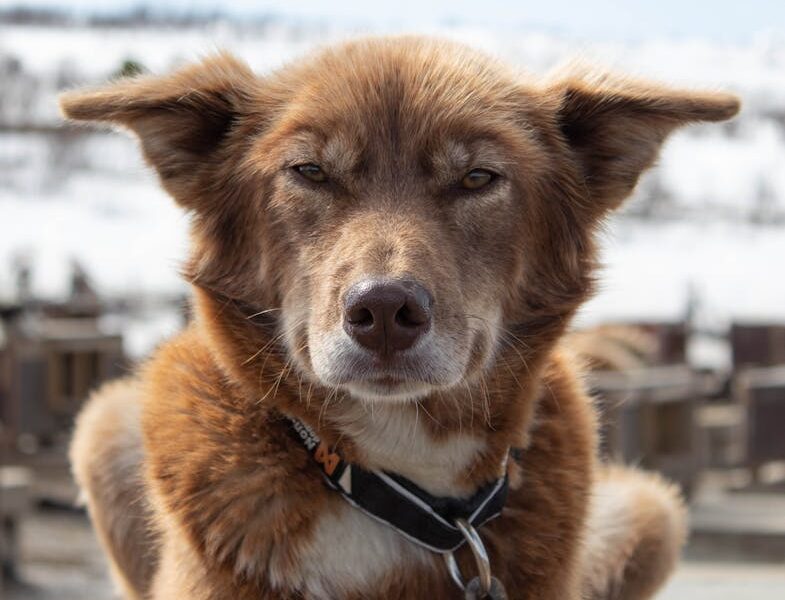
The coat is dense and double-layered, providing excellent insulation against the cold Norwegian climate. The outer coat is harsh and lies fairly flat, while the undercoat is soft and dense. Colors include reddish-brown to fawn, with black-tipped hairs and varying amounts of white. The coat is self-cleaning and relatively easy to maintain. The face is alert and fox-like, with medium-sized eyes that convey intelligence and curiosity. The tail curls over the back in typical spitz fashion.
Temperament and Personality
The Norwegian Lundehund is a complex, independent breed with a personality shaped by centuries of working alone in challenging, dangerous environments. They are alert, curious, and intelligent, approaching the world with a watchful interest that reflects their heritage as dogs who needed to assess and navigate difficult terrain independently.
Lundehunds bond closely with their families and can be affectionate and playful in the comfort of their home. They have a cheerful, sometimes clownish side that emerges when they feel safe and comfortable, and their unusual physical capabilities — including their ability to contort into seemingly impossible positions — provide endless entertainment for their owners.
However, they are also reserved, sensitive dogs that can be cautious with strangers and wary of new situations. This is not a breed that warms up to everyone quickly. They need time to assess new people and environments, and pushing them beyond their comfort zone too quickly can result in fearfulness or shutdown. Patient, gentle socialization that respects their pace is essential.
With other dogs, Lundehunds are generally tolerant and can coexist peacefully in multi-dog households. They are not typically aggressive, though they may be indifferent to dogs they do not know well. Their small size and non-confrontational nature usually prevent conflicts, though supervision during introductions is always wise.
One trait that surprises many new Lundehund owners is their tendency to hoard items. They may collect toys, socks, shoes, and other objects and cache them in hidden spots around the house — a behavior possibly connected to their heritage of retrieving and carrying puffins. While endearing, it means keeping valuables out of reach is a practical necessity.
Exercise and Training Needs
Norwegian Lundehunds have moderate exercise requirements. Two daily walks of 20 to 30 minutes each, plus some playtime and mental stimulation, generally satisfies their physical needs. They enjoy exploring and are particularly interested in scents, so walks that allow them to investigate their surroundings are more satisfying than brisk, purposeful marches.
Their unique flexibility and agility make them natural candidates for certain canine sports. Agility, in particular, can be an excellent outlet for their physical capabilities, though their independent nature means they may approach courses on their own terms. Nose work and scent games also tap into their natural instincts and provide excellent mental stimulation.
Training a Norwegian Lundehund is an exercise in patience and creativity. They are intelligent dogs — their problem-solving ability is impressive — but they are also among the most independent-minded breeds. Traditional obedience training can be challenging, as Lundehunds often see little reason to comply with arbitrary commands. They are not being defiant; they genuinely do not understand why sitting on command should be a priority.
Positive reinforcement is the only effective training approach, and even then, expectations should be calibrated to the breed. Many experienced Lundehund owners focus on functional behaviors — recall, walking nicely on leash, basic manners — rather than formal obedience exercises. Finding what motivates your individual Lundehund, whether treats, toys, or simply the opportunity to explore, is the key to any training progress. This breed is definitely not among the easiest dogs to train, but their unique qualities more than compensate for training challenges.
House training can be particularly challenging with Lundehunds. The breed has a reputation for being one of the most difficult to house-train, and patience, consistency, and creative solutions may all be needed. Crate training, regular schedules, and generous rewards for outdoor elimination help, but progress may be slower than with other breeds.
Health Issues and Lifespan
The Norwegian Lundehund has a lifespan of 12 to 15 years, but the breed faces a significant and breed-specific health challenge that every prospective owner must understand: Lundehund Syndrome, also known as Intestinal Lymphangiectasia.
Lundehund Syndrome is a complex of digestive disorders that affects a large percentage of the breed — some estimates suggest that the majority of Lundehunds carry the genetic predisposition, though not all develop clinical symptoms. The condition involves protein-losing enteropathy, where the intestines lose their ability to properly absorb nutrients and proteins. Symptoms can include chronic diarrhea, vomiting, weight loss, lethargy, and fluid accumulation in the abdomen or limbs.
The severity of Lundehund Syndrome varies enormously between individuals. Some dogs show mild, manageable symptoms, while others develop severe, life-threatening disease. Management typically involves dietary modifications — particularly low-fat, highly digestible diets — along with nutritional supplementation and, in some cases, medication. Regular monitoring of protein levels through blood tests helps track the condition and adjust management strategies.
Working with a veterinarian who is familiar with the breed and this specific condition is crucial. Many Lundehund owners find that proactive dietary management from an early age, even before symptoms appear, can help reduce the severity of the condition. For more information about managing dietary sensitivities, see our guide on food allergies in dogs.
Beyond Lundehund Syndrome, the breed can also be affected by patellar luxation, eye conditions, and issues related to their limited gene pool. Regular veterinary checkups and awareness of the breed’s specific health profile are essential for responsible ownership.
Grooming Requirements
The Norwegian Lundehund’s double coat requires moderate grooming attention. Weekly brushing with a slicker brush or medium-bristle brush removes loose hair, distributes natural oils, and keeps the coat in good condition. During seasonal shedding periods — typically spring and fall — daily brushing helps manage the increased hair loss.
The coat is naturally self-cleaning to a degree, and bathing is needed only every six to eight weeks or when the dog is particularly dirty. A gentle shampoo that does not strip natural oils is recommended. The coat dries relatively quickly thanks to its texture, but thorough drying is important, especially in cooler weather.
Special attention should be paid to the extra toes. The additional toenails need regular trimming — ideally every two weeks — as they can grow into the pads if neglected. Check between the toes for debris, irritation, or injury, especially after outdoor activities. Some Lundehunds’ extra toes require occasional veterinary attention if they become caught or injured.
Ear care is straightforward, as the Lundehund’s ability to fold their ears provides some natural protection. However, weekly checks and cleaning are still recommended to prevent wax buildup or infection. Dental care, including regular brushing, supports overall health and is particularly important given the breed’s potential for digestive issues — oral health can influence gastrointestinal function.
Norwegian Lundehund Compared to Similar Breeds
The Norwegian Lundehund is sometimes compared to other Nordic spitz breeds, though their unique physical adaptations set them truly apart. The Norwegian Elkhound shares their Norwegian heritage and spitz-type appearance but is a larger, more robust hunting dog with a very different temperament and purpose. While both breeds are loyal and intelligent, the Elkhound is more confident and outgoing, whereas the Lundehund tends toward reserve and sensitivity.
Among small breeds, the Lundehund’s independence and difficulty with traditional training set them apart from more biddable companions. Potential owners who are accustomed to eager-to-please breeds should understand that the Lundehund operates on a fundamentally different wavelength — they are partners to be negotiated with, not subordinates to be commanded.
Who Is the Norwegian Lundehund Best For?
The Norwegian Lundehund is best suited for experienced dog owners who appreciate uniqueness, are patient with independent temperaments, and are prepared to manage the breed’s specific health challenges. They are not the right breed for someone seeking instant obedience, easy house training, or a dog that is immediately friendly with everyone.
Ideal Lundehund owners are calm, patient people who enjoy the process of building a relationship with a complex, interesting dog. They find satisfaction in understanding their dog’s unique perspective rather than imposing their own expectations. They are committed to proactive health management and willing to work closely with veterinary professionals familiar with the breed.
Families with older children who can be gentle and respectful, couples, and individuals who spend significant time at home all make good matches. The breed’s moderate exercise needs make them suitable for various living situations, including apartments, provided they receive adequate daily activity and mental stimulation.
If you are drawn to the Norwegian Lundehund’s extraordinary qualities and are prepared for the challenges that come with such a unique breed, you will be rewarded with a truly remarkable companion. Owning a Lundehund is unlike any other dog ownership experience — it is a privilege that connects you to centuries of Norwegian history and to one of nature’s most extraordinary canine creations.
Frequently Asked Questions
Why do Norwegian Lundehunds have six toes?
The Norwegian Lundehund’s six toes on each foot are an evolutionary adaptation for their historical role of hunting puffins on steep, slippery cliff faces along the Norwegian coast. The extra toes, along with additional paw pads, provided superior grip and traction on wet rock surfaces. This polydactyly is a natural, breed-defining characteristic — not a defect — and is one of several unique physical adaptations that make the Lundehund perfectly suited to their original purpose.
How rare is the Norwegian Lundehund?
The Norwegian Lundehund is one of the rarest dog breeds in the world. The global population is estimated at only a few thousand dogs. The breed nearly went extinct in the 1940s when a distemper epidemic reduced the population to just six individuals. While careful breeding has increased numbers since then, the limited gene pool remains a challenge. Most Lundehunds are found in Scandinavia, though small populations exist in other countries. Finding a Lundehund puppy typically involves waiting lists and significant patience.
Are Norwegian Lundehunds good family dogs?
Norwegian Lundehunds can be good family dogs for the right family. They are gentle, non-aggressive, and can form strong bonds with all family members. However, their sensitivity, reserve with strangers, and independent nature mean they are better suited to calm, patient households than chaotic or high-energy environments. Families with respectful older children who understand the breed’s need for gentle handling are the best match. They are not the ideal choice for families seeking an exuberantly friendly, always-eager-to-please dog.
What is Lundehund Syndrome and how serious is it?
Lundehund Syndrome is a complex of intestinal disorders that affects a significant portion of the breed. It primarily involves protein-losing enteropathy, where the intestines cannot properly absorb nutrients. Severity varies widely — some dogs have mild symptoms manageable with diet, while others develop severe, potentially fatal disease. Proactive management with low-fat diets, regular veterinary monitoring, and appropriate supplementation can significantly improve outcomes. Any prospective Lundehund owner should discuss this condition thoroughly with a veterinarian before committing to the breed.
Looking to adopt a Norwegian Lundehund Breed Profile?
Browse Norwegian Lundehund Breed Profile dogs and mixes available for adoption from shelters and rescues near you.
Find Norwegian Lundehund Breed Profile Dogs for Adoption