Last updated: April 27, 2026
In this article
Pekingese Breed Profile: The Ancient Chinese Companion
The Pekingese is a dog of legend — literally. Ancient Chinese myth holds that the breed was created when the Buddha shrunk a lion to the size of a small dog, giving rise to the “lion dog” that would guard Buddhist temples and warm the laps of Chinese emperors for centuries. While the true origin is somewhat less mythical, the pekingese breed carries itself with a regal confidence that suggests it takes the legend very seriously indeed. Compact, dignified, and absolutely certain of its own importance, the Pekingese is a small dog with a personality that fills every room it enters.
History and Origin of the Pekingese
The Pekingese is one of the oldest dog breeds in the world, with a history that stretches back over 2,000 years to the Chinese Imperial Court. DNA studies confirm the breed’s ancient lineage, placing it among the most genetically primitive dog breeds still in existence. For centuries, the Pekingese was exclusively owned by members of the Chinese Imperial family. Commoners were forbidden from keeping the breed, and stealing a Pekingese was punishable by death.
Within the Forbidden City, Pekingese lived lives of extraordinary luxury. They were attended by dedicated servants, fed delicacies, and pampered with silk cushions and jeweled collars. The smallest specimens, known as “sleeve dogs” because they could be carried inside the wide sleeves of imperial robes, were especially treasured. Breeding was strictly controlled, and the dogs were never sold or given to outsiders.
The breed’s introduction to the Western world came through one of history’s darker chapters. During the Second Opium War in 1860, British and French forces sacked the Old Summer Palace in Beijing. When the troops entered the palace, they found five Pekingese in the quarters of an imperial aunt who had taken her own life rather than face capture. These dogs were brought to England, and one was presented to Queen Victoria, who named it “Looty.” These five dogs became the foundation of the Western Pekingese breeding population.
The American Kennel Club recognized the Pekingese in 1906. The breed has maintained a loyal following ever since, prized for its distinctive appearance, bold temperament, and deep historical significance. Enthusiasts of the breed will find interesting parallels with the Japanese Chin, another ancient Asian companion breed that shares some ancestry and some personality traits with the Pekingese.
Appearance and Physical Characteristics
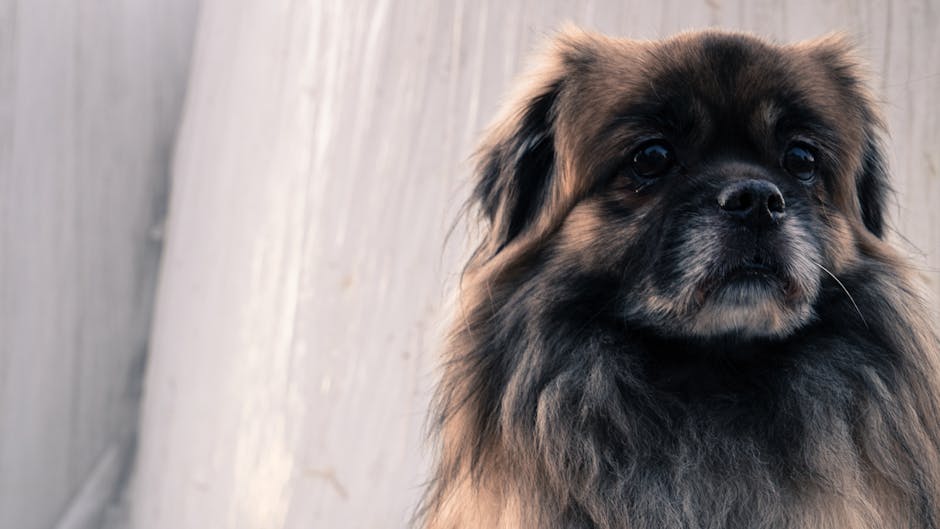
The Pekingese is a compact, stocky toy breed that stands 6 to 9 inches at the shoulder and weighs up to 14 pounds, with most falling between 7 and 12 pounds. The breed standard emphasizes a heavy front, with broad shoulders and a deep chest that taper to a lighter, narrower hindquarters, creating a distinctive pear-shaped body when viewed from above.
The most striking feature of the Pekingese is its lion-like mane — a thick ruff of long, coarse hair that frames the flat face and cascades over the shoulders. The double coat is long, straight, and abundant, with heavy feathering on the ears, legs, tail, and toes. The tail is set high and carried up over the back, creating an impressive plume. Virtually any color is acceptable, including gold, red, sable, black, white, and various combinations, with or without a black mask.
The Pekingese face is flat and broad, with a wide, wrinkled muzzle that sits between large, dark, luminous eyes. The expression should convey boldness, dignity, and self-importance. The nose is short and black, set deep between the eyes. This extreme brachycephalic structure gives the Pekingese its characteristic look but also predisposes it to certain health challenges that we will address later in this profile.
Despite its small size and luxurious coat, the Pekingese is surprisingly heavy and solid when picked up. The breed was designed to look like a small lion, and the dense bone structure contributes to a weight that often surprises those encountering the breed for the first time. This is not a fragile lap dog — it is a compact, substantial companion with a low center of gravity and a surprisingly sturdy build.
Temperament and Personality
The pekingese breed has a personality that is perfectly suited to a dog with 2,000 years of imperial pampering in its background. Pekingese are confident, independent, and dignified, carrying themselves with an air of self-importance that many owners find both amusing and endearing. They are not eager-to-please dogs in the conventional sense; rather, they expect to be pleased, and they will let you know when your efforts fall short of their standards.
This regal attitude masks a deeply affectionate and loyal nature. Pekingese bond closely with their favorite person and can be remarkably tender and loving in private, even if they maintain an aloof facade in public. They are classic lap dogs, happiest when curled up beside or on top of their chosen person, and they can become quite possessive of their owner’s attention.
Pekingese are brave to the point of foolhardiness. They seem utterly unaware of their small size and will not hesitate to confront dogs many times their weight if they feel threatened or if they perceive a threat to their family. This courage is admirable but can be dangerous, and owners must be vigilant about protecting their Pekingese from encounters with much larger dogs.
With strangers, the Pekingese is typically reserved and may be openly suspicious. They are not naturally friendly toward unfamiliar people and may take considerable time to warm up, if they warm up at all. Early socialization helps temper this tendency, but the breed’s fundamental wariness of strangers should be respected rather than forced. Pekingese are not ideal candidates for homes that entertain frequently or have a constant flow of visitors.
The breed is generally not recommended for homes with young children. Pekingese have little tolerance for rough handling, grabbing, or the unpredictable behavior of toddlers, and they may snap if they feel threatened or uncomfortable. Families with older, respectful children who understand how to interact gently with a small dog may have better success.
Exercise and Training Needs
The Pekingese has modest exercise needs that align well with a more sedentary lifestyle. A short daily walk of 20 to 30 minutes, combined with some indoor play, is usually sufficient to keep a Pekingese healthy and content. These dogs are not built for long hikes or vigorous athletic pursuits. Their heavy front, short legs, and flat face all limit their exercise tolerance, particularly in warm or humid weather.
Overexertion and overheating are real dangers for the pekingese breed. The breed’s brachycephalic anatomy makes it difficult to cool itself efficiently through panting, and Pekingese can quickly overheat during exercise in warm conditions. Always exercise your Pekingese during the cooler parts of the day, carry water, and watch for signs of heat stress including excessive panting, drooling, and lethargy. Air conditioning is not a luxury for this breed — it is a necessity in warm climates.
Training a Pekingese requires a special approach. These dogs are intelligent but headstrong, and they see no particular reason to do anything that does not serve their own interests. Harsh training methods are completely counterproductive with this breed, producing either a shutdown dog or one that becomes more stubborn and resistant. Positive reinforcement using high-value treats, gentle praise, and patience is the only effective approach.
Housetraining is often cited as one of the breed’s biggest challenges. Many Pekingese are notoriously difficult to housetrain, and the process can take longer than with many other breeds. Consistency, patience, a regular schedule, and generous rewards for success are essential. Many owners supplement outdoor training with indoor pee pads, particularly during extreme weather when the Pekingese’s flat face makes outdoor excursions uncomfortable or dangerous.
Health Issues and Lifespan
The Pekingese has a lifespan of 12 to 14 years, with many individuals living even longer with attentive care. However, the breed’s extreme physical characteristics predispose it to several health conditions that prospective owners should understand.
Brachycephalic obstructive airway syndrome (BOAS) is the most significant health concern. The breed’s extremely flat face and shortened airways can cause chronic breathing difficulties, snoring, snorting, and exercise intolerance. In severe cases, corrective surgery may be necessary to improve airflow. Keeping the Pekingese at a lean body weight and avoiding heat stress are critical management strategies.
Intervertebral disc disease (IVDD) is a common spinal condition in the breed, caused by the long body and short legs that put extra stress on the spinal discs. Symptoms range from mild back pain to severe paralysis. Preventing the Pekingese from jumping on and off furniture, using ramps instead of stairs, and maintaining a healthy weight can help reduce the risk.
Eye injuries and conditions are common due to the breed’s prominent, exposed eyes. Corneal ulcers, progressive retinal atrophy, cataracts, and dry eye are all seen in the Pekingese. The eyes should be checked daily for signs of irritation, redness, or discharge, and any eye injury should be treated as a veterinary emergency.
Patellar luxation, heart disease, dental problems (exacerbated by the breed’s crowded jaw), and skin fold infections are additional health concerns. Regular veterinary checkups, meticulous grooming, and attention to the breed’s specific needs are essential for maintaining good health.
Grooming and Coat Care
The Pekingese’s magnificent coat demands serious grooming commitment. That thick, flowing double coat requires brushing at least three to four times per week to prevent mats and tangles, with daily brushing being ideal. A pin brush, slicker brush, and metal comb should all be part of your grooming toolkit. Work through the coat methodically, section by section, paying special attention to the heavy mane, the feathering behind the ears, the leg furnishings, and the heavily plumed tail.
Bathing every two to four weeks keeps the coat clean, but thorough brushing before each bath is essential to prevent existing tangles from tightening. After bathing, dry the coat completely using towels and a blow dryer on a cool setting, as trapped moisture can lead to skin problems. The facial wrinkles must be cleaned regularly — at least every few days — with a damp cloth and then dried thoroughly to prevent bacterial or yeast infections in the skin folds.
Many pet owners opt for a shorter “puppy cut” or “lion cut” that reduces the coat to a more manageable length while preserving the breed’s characteristic silhouette. This is perfectly acceptable for pet dogs and can make daily life much more comfortable for both the dog and the owner, particularly in warmer climates.
Dental care deserves special emphasis in the Pekingese, as the breed’s shortened jaw leads to crowded teeth and an increased risk of periodontal disease. Daily tooth brushing is ideal, and regular veterinary dental cleanings are important. Nail trimming every two to three weeks and weekly ear inspections complete the grooming regimen.
Who Is the Pekingese Best For?
The pekingese breed is best suited to devoted owners who appreciate a dog with a strong personality, a regal bearing, and very specific needs. The ideal Pekingese owner is patient, attentive, and willing to accommodate the breed’s preferences rather than expecting the dog to conform to a generic mold. Singles, couples, and seniors who can provide a calm, climate-controlled environment and plenty of one-on-one attention are the best match.
Apartment living suits the Pekingese well, given its small size and modest exercise needs. The breed does best in air-conditioned homes, particularly in warmer climates. Homes with no children or only older, gentle children are preferred, as the Pekingese has little patience for rough handling.
If you love the idea of a small, dignified companion with a personality that far exceeds its physical size, the Pekingese may be your perfect match. For those who also enjoy exploring compact companion breeds, our guide to the best small dog breeds offers additional options worth considering.
As always, we encourage you to check rescue organizations and shelters before purchasing from a breeder. Many Pekingese end up in need of new homes, and adopting a rescue Pekingese can be an incredibly rewarding experience. Walk Me Home Rescue is here to help you find your ideal companion.
Frequently Asked Questions About the Pekingese
Are Pekingese good for first-time dog owners?
The Pekingese can work for first-time owners who are prepared for the breed’s independent personality and specific care needs, but they are not the easiest first dog. Their stubbornness in training, difficulty with housetraining, and grooming demands can be overwhelming for inexperienced owners. If you are a first-time owner drawn to the breed, research thoroughly and be prepared to invest in professional training support if needed.
Do Pekingese bark a lot?
Pekingese can be vocal, though they are not typically excessive barkers. They will alert to strangers at the door, unusual sounds, and anything they find concerning. Some individuals develop a habit of demand barking for attention or food, which should be addressed through training. Overall, the Pekingese is alert and watchful, making it a decent watchdog for its size, but it is less likely to bark incessantly than some other toy breeds.
Can Pekingese tolerate hot weather?
Pekingese are very sensitive to heat due to their brachycephalic anatomy and thick double coat. They cannot efficiently cool themselves through panting, making them highly susceptible to heatstroke. In warm climates, air conditioning is essential. Exercise should be limited to the coolest parts of the day, and the dog should always have access to shade and fresh water. Never leave a Pekingese in a parked car, even for a short time, as temperatures can become lethal within minutes.
How much grooming does a Pekingese need?
A Pekingese in full coat requires brushing at least three to four times per week, with daily brushing being preferred. Bathing every two to four weeks, regular facial wrinkle cleaning, dental care, nail trimming, and ear inspections round out the routine. The grooming commitment is significant. Many owners opt for a shorter pet clip to reduce maintenance while still keeping the dog comfortable and attractive.
Looking to adopt a Pekingese Breed Profile?
Browse Pekingese Breed Profile dogs and mixes available for adoption from shelters and rescues near you.
Find Pekingese Breed Profile Dogs for Adoption