Last updated: May 4, 2026
In this article
- Overview
- Quick Facts About the Pomsky
- Where the Pomsky Came From
- Temperament and Personality
- Size and Appearance
- Exercise and Activity Needs
- Grooming and Care
- Training Approach
- Health and Lifespan
- Adopting a Pomsky or Buying From a Breeder
- Living With a Pomsky Day to Day
- Is the Pomsky Right for You?
- Frequently Asked Questions
Overview
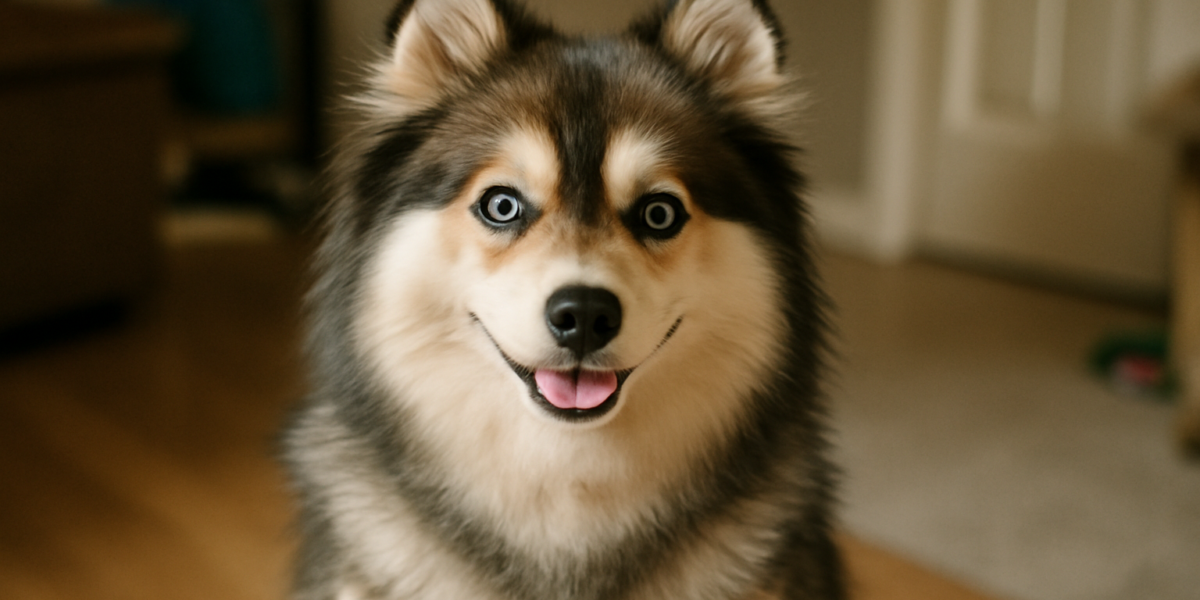
This pomsky breed profile takes an honest look at one of the most photographed and misunderstood designer crosses on social media. The Pomsky is the offspring of a Pomeranian father and a Siberian Husky mother, almost always produced through artificial insemination because of the size mismatch between the two breeds. The result is a small to medium dog with Husky markings, a fluffy double coat, and an outsized opinion about how the household should run.
Because Pomskies are still a fairly new cross with no formal standard, adult size, coat, and temperament vary widely. Most adults land between 15 and 30 pounds, but plenty fall outside that range in either direction. Each puppy is essentially a coin flip between two strong-personality breeds, and a viral cute photo on Instagram does not capture what daily life with one is actually like.
Pomskies are also among the most expensive designer dogs to buy, often selling for several thousand dollars. That price tag has fueled aggressive backyard breeding and high surrender rates when reality sets in. Many end up in Husky-specific rescues and small-dog rescues by their second birthday.
Quick Facts About the Pomsky
Use this snapshot before you go deeper into the pomsky breed profile.
- Parent breeds: Pomeranian (sire) and Siberian Husky (dam), bred via artificial insemination
- Adult size: Typically 15 to 30 pounds, 10 to 15 inches at the shoulder
- Lifespan range: Generally in line with small to medium mixes, often into the teens with care
- Energy level: Moderate to high, with vocal, busy bursts
- Grooming needs: High, with heavy seasonal shedding and weekly brushing year-round
- Coat colors: Husky-style black and white, gray and white, agouti, red and white, and pure white
Where the Pomsky Came From
The Pomsky surged onto the designer-dog scene around 2012, fueled almost entirely by viral social-media photos of fluffy puppies with blue eyes. The first deliberate litters were bred in the United States, using artificial insemination to overcome the obvious size mismatch between a Pomeranian sire and a Husky dam. Natural breeding is dangerous and unethical for this combination.
This cross is controversial in the working-dog and small-dog communities. Critics point out that breeding Husky temperament into a small frame creates a dog with high prey drive, escape skills, vocalization, and grooming demands packed into a body that owners often expected to behave like a Pomeranian. If you are considering one, weigh the realities of Husky temperament seriously.
Temperament and Personality
Pomskies are bold, playful, and almost always vocal. They can inherit Husky stubbornness, prey drive, and escape-artist tendencies, packed into a small or medium body that still wants to act like a sled dog. Many are also affectionate and goofy with their humans once a routine is established.
Training takes patience and consistency. Force-free methods work well because both parent breeds shut down under harsh corrections. Use food rewards generously, keep sessions short, and accept that recall in open spaces will probably never be reliable. Most Pomskies should stay on a long line or in a fenced area outside.
Pomskies often “talk” the way Huskies do, with howls, woos, and grumbles. They are not the quiet apartment dog the Instagram photos imply. Plan for vocal neighbors-relations management, and consider whether your living situation can absorb a vocal small dog who likes to share her opinions.
Size and Appearance
Most Pomskies finish between 15 and 30 pounds, with some smaller and some larger depending on the size of the Pomeranian parent and which traits dominated. There is no reliable way to predict adult size from a puppy photo, despite breeder claims to the contrary. Size also tends to drift larger across generations as breeders cross Pomskies back to Huskies.
Coats are dense double coats that shed heavily twice a year and lightly the rest of the time. Markings often follow Husky patterns, including black and white, gray and white, agouti, red and white, and pure white. Eye color is sometimes blue, sometimes brown, sometimes one of each, but eye color does not predict temperament.
Exercise and Activity Needs
A Pomsky is not a couch dog. Plan on at least 60 minutes of daily exercise, plus mental enrichment through training, puzzle feeders, and scent games. Underexercised Pomskies become destructive, vocal, and escape-prone, which is one of the top reasons they end up in rescue.
Be realistic about heat. The dense Husky-style double coat does not tolerate hot, humid weather well, even in a smaller body. Walk early in the morning and late in the evening during summer, and provide shade and cool water during outdoor time. Never shave a double coat down to the skin, as it disrupts the insulation that actually helps regulate body temperature.
Indoor enrichment is also essential. Snuffle mats, food puzzles, and short training sessions cover the mental side. A bored Pomsky will entertain herself by chewing baseboards, digging, or escaping the yard, so prevention through enrichment is much easier than damage control.
Grooming and Care
Plan for serious grooming. Pomskies have a thick double coat that sheds year-round and “blows” twice a year, meaning huge volumes of undercoat come out over a few weeks. Brush at least weekly with an undercoat rake plus a slicker, and increase to daily during shedding seasons.
Bathe only when truly dirty. Frequent baths strip the coat’s natural oils and dry the skin underneath. When you do bathe, dry thoroughly all the way down to the skin, because moisture trapped under a thick coat invites hot spots. Many of the same routines work as for grooming a Pomeranian or Husky parent.
Watch ears closely; doodle and double-coated breeds both grow hair that traps moisture. Dry ears thoroughly after baths and ask your vet whether plucking or trimming is appropriate for your individual dog. Nail trims and dental brushing should round out a weekly care routine.
Training Approach
Training a Pomsky is rewarding but demanding. Both parent breeds are intelligent, opinionated, and quick to figure out which behaviors get them what they want. Force-free methods, where you reward what you like and ignore or redirect what you do not, work much better than corrections. Husky-line dogs especially shut down or escalate when scolded.
Build training into daily life rather than treating it as a separate session. Ask for a sit before meals, a wait at the door, and a settle on a mat during dinner. These small reps add up fast and build impulse control around the things that matter most. Recall in open spaces is the one cue that may never be reliable; plan for long-line management or fenced areas instead of trusting an open recall.
Health and Lifespan
The Pomsky’s health profile draws from both parent breeds. Pomeranians contribute patellar luxation, tracheal collapse, dental crowding, and a coat condition called alopecia X. Huskies contribute eye issues like juvenile cataracts and progressive retinal atrophy, hip dysplasia, and zinc-responsive dermatosis. Both breeds are prone to ear infections when ear hair is not managed.
The popular hybrid-vigor claim, that mixing two breeds prevents inherited disease, is overstated when parent breeds share predispositions or when artificial insemination concentrates a small founding gene pool. Many Pomskies trace back to a small number of original lines, which limits genetic diversity. Insist on documented health testing of both parents and be honest that no test eliminates risk.
For adults, schedule yearly bloodwork, dental cleanings, eye exams, and orthopedic checks. With careful management, many Pomskies live well into their teens, which is a long-term commitment to plan for financially and emotionally.
Adopting a Pomsky or Buying From a Breeder
Many Pomskies in rescue arrive after first homes underestimated their energy or vocalization. Most are healthy adults with known habits and personality, which makes adoption a far lower-risk path than buying. Browse our adopt-a-dog hub, contact husky rescues and small-dog rescues, and check shelters in your area regularly.
If you go the breeder route, vet operations very carefully because Pomsky breeding involves artificial insemination and a small founding gene pool. Ask to visit in person, meet both parents (including the dam), see eye, hip, and cardiac health-testing paperwork, and walk away from any breeder who refuses. The comparison of all-breed and breed-specific rescues can help you choose.
Living With a Pomsky Day to Day
Daily life with a Pomsky is busier than most people expect. Mornings need a real walk, not a quick potty break. Afternoons benefit from a training session, a puzzle feeder, or a sniff outing. Evenings often include another walk and some structured play. Pomskies who get less than this become vocal, destructive, or escape-prone within a few weeks.
House training is usually faster than with toy breeds, but vocalization training is harder. Pomskies “talk” the way Huskies do, with woos, howls, and grumbles. Train an explicit “quiet” cue from puppyhood using force-free methods, reward calm behavior heavily, and avoid yelling at the dog when she vocalizes; both parent breeds escalate when scolded for noise.
Travel and boarding planning matters because Pomskies bond intensely and can struggle alone. A small-dog-only daycare or a trusted pet sitter who comes to your home generally works better than traditional boarding. Always meet any sitter or facility in advance, and bring your dog’s familiar bed and toys to reduce stress in unfamiliar environments.
Is the Pomsky Right for You?
The Pomsky suits active households with experience training stubborn, vocal, escape-prone breeds. People who already know they enjoy Husky energy in a smaller package, who have secure fencing, and who can commit to daily exercise and grooming, will do well. First-time owners drawn to the Instagram aesthetic almost always struggle.
If your day involves long absences, no fenced area, close neighbors who hate barking, or no budget for grooming and vet care, look at a different match. Read about the 3-3-3 rule for rescue dogs and consider adopting from a foster rather than buying. Foster homes can tell you exactly what an adult Pomsky’s energy and temperament look like.
Budget honestly. Pomskies often cost several thousand dollars to buy, on top of grooming, vet care, secure fencing upgrades, and possible behavior consults if vocalization or escape habits become serious. The rescue adoption application walkthrough can help you think through whether your home is actually a good fit before committing.
Frequently Asked Questions
How big does a full-grown Pomsky get?
Most Pomskies finish between 15 and 30 pounds and 10 to 15 inches tall. Adult size is hard to predict from puppy weight, and dogs sometimes grow larger or smaller than their breeder estimated.
Are Pomskies good apartment dogs?
They can be, but only when their exercise and enrichment needs are fully met. Vocal tendencies, shedding, and escape-prone curiosity make them harder than they look on paper.
Do Pomskies shed a lot?
Yes. The double coat sheds year-round and blows twice a year. Allergy sufferers should not assume a Pomsky will be a low-shedding match.
How long do Pomskies live?
With attentive care, many Pomskies live well into their teens. Weight management, dental care, and joint care are the three biggest factors in that lifespan.
Can I find a Pomsky in rescue?
Yes. Husky-specific and small-dog rescues see Pomskies often. Browse our adopt-a-dog hub and check listings frequently.
Why do Pomskies cost so much?
Pomsky breeding requires artificial insemination because of the size mismatch, plus careful Cesarean delivery in many cases. The expensive process and high demand drive prices into the thousands.
Are Pomskies escape artists?
Often, yes. They inherit Husky problem-solving and digging tendencies in a small body that can squeeze through gaps. Secure fencing, supervised yard time, and training a reliable recall on a long line all help.
Looking to adopt a Pomsky Breed Profile?
Browse Pomsky Breed Profile dogs and mixes available for adoption from shelters and rescues near you.
Find Pomsky Breed Profile Dogs for Adoption