
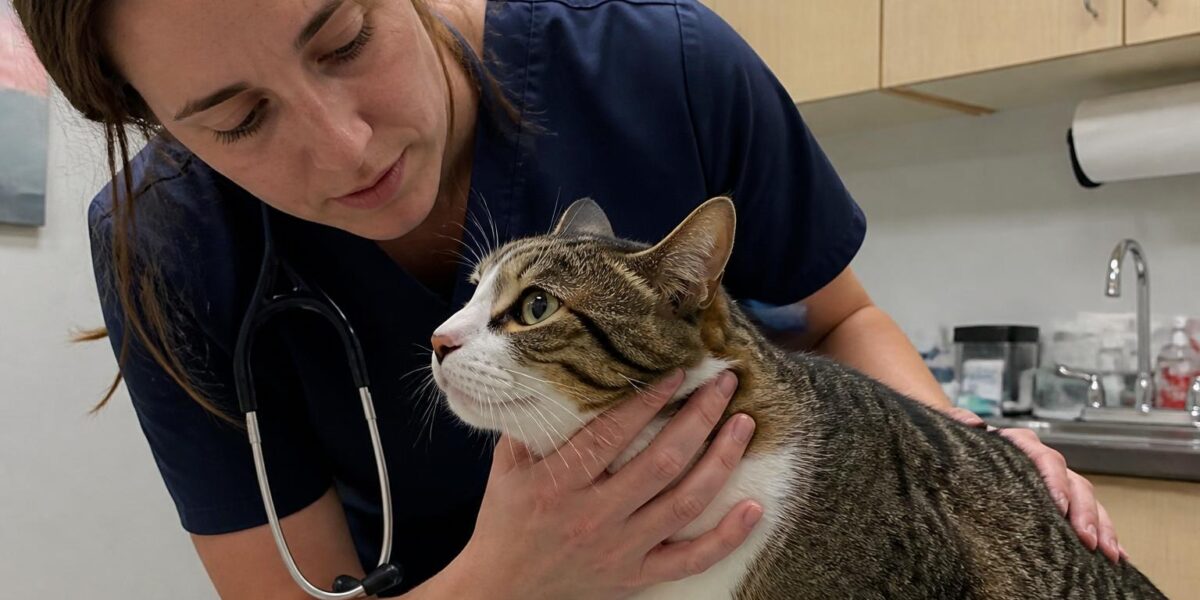
Why a Prescription Kidney Diet Is the Cornerstone of Feline CKD Care
Chronic kidney disease (CKD) is one of the most common diagnoses in older cats, affecting more than one in three cats over fifteen years old. A prescription kidney diet for cats is the single most evidence-supported intervention for slowing progression once your veterinarian confirms the diagnosis through bloodwork and urinalysis. These therapeutic foods are formulated to ease the workload on damaged nephrons while keeping your cat well-nourished.
In this article
- Why a Prescription Kidney Diet Is the Cornerstone of Feline CKD Care
- How Phosphorus Restriction Slows CKD Progression
- Why Protein Is Moderately Reduced — Not Slashed
- The Palatability Problem — Why Many Cats Refuse It
- Never Force-Feed a Cat Refusing Renal Food
- Major Brands of Prescription Kidney Diets for Cats
- Wet vs Dry — Why Canned Usually Wins for CKD Cats
- Transitioning to a Renal Diet Without an Aversion
- What Else Goes Alongside the Diet
- What to Monitor Once Your Cat Is on the Diet
- Frequently Asked Questions
The International Renal Interest Society (IRIS) provides the staging framework that veterinary internists (ACVIM-Small Animal Internal Medicine) and primary care vets use to decide when to introduce a renal diet. By the time CKD reaches IRIS Stage 2 or beyond, dietary therapy is universally recommended. Earlier stages may benefit too, depending on bloodwork trends and clinical signs.
This is not a food you pick off the shelf or order online without veterinary supervision. The therapeutic adjustments — particularly the lowered phosphorus and modified protein — can be harmful for healthy cats and require a prescription for purchase in most jurisdictions.
How Phosphorus Restriction Slows CKD Progression
Phosphorus restriction is the single most important therapeutic effect of a prescription kidney diet for cats. Damaged kidneys lose the ability to excrete phosphorus efficiently, so circulating phosphorus rises and drives a cascade of secondary problems: renal secondary hyperparathyroidism, mineral deposition in soft tissues, further kidney damage, and accelerated decline.
By cutting dietary phosphorus to roughly 0.3 to 0.6 percent on a dry-matter basis (compared with 1 percent or more in maintenance foods), therapeutic diets help keep serum phosphorus in the IRIS target range for each stage. When diet alone cannot achieve the target, your vet may add an oral phosphorus binder such as aluminum hydroxide, lanthanum carbonate, or chitosan-calcium combinations.
Multiple long-term feeding studies have shown a meaningful survival benefit and quality-of-life improvement when cats are maintained on a renal diet from Stage 2 onward. Cats who stay on the diet consistently tend to experience fewer uremic crises than cats who refuse it.
Why Protein Is Moderately Reduced — Not Slashed
Older renal diets cut protein aggressively, but current formulations take a more nuanced approach. A typical prescription kidney diet for cats now provides moderate protein — roughly 28 to 35 percent on a dry-matter basis — using high-biological-value sources to reduce nitrogenous waste while still preserving lean muscle mass.
This balance matters because CKD cats are at high risk of sarcopenia (age- and disease-related muscle loss). Slashing protein too aggressively used to leave cats thin, weak, and protein-malnourished even while their bloodwork looked better on paper. Today’s formulations aim for the sweet spot: enough protein to keep the body strong, not so much that the kidneys are overburdened.
If your cat has significant proteinuria (protein leaking into the urine), your vet may layer in an ACE inhibitor or angiotensin receptor blocker like telmisartan to reduce protein loss further. Diet and medication often work hand in hand.
The Palatability Problem — Why Many Cats Refuse It
Here is the hardest truth about prescription kidney diets for cats: many cats simply will not eat them on day one. Renal diets are reformulated to be lower in phosphorus, lower in sodium, and higher in B-vitamins and omega-3 fatty acids, and the flavor profile is different from the foods your cat has eaten for years. Some cats turn up their nose immediately.
This matters because anorexia in a cat — even a few days of refusing food — is a medical emergency. Cats who go off food are at risk of hepatic lipidosis, a life-threatening liver complication where fat is mobilized into the liver faster than it can be processed. A CKD cat with concurrent hepatic lipidosis is a critical patient.
So palatability is not just a comfort issue — it is a survival issue. Your veterinarian will help you choose a diet your cat will accept, and there are several brands and formats to try.
Never Force-Feed a Cat Refusing Renal Food
If your cat refuses the new diet, do not force-feed by syringe, do not withhold all other food, and do not let an aversion develop. Force-feeding around a stressful new food often creates a strong negative association that makes future acceptance even harder. Instead, return to your previous diet temporarily and contact your vet for a different approach.
Options include trying a different brand, switching from dry to wet (or vice versa), warming the food slightly to release aroma, adding a low-sodium broth, mixing with a small amount of the familiar food, or starting an appetite stimulant such as mirtazapine (oral or transdermal Mirataz) or capromorelin (Elura). Appetite stimulants are a legitimate part of CKD management for cats who eat reluctantly.
Major Brands of Prescription Kidney Diets for Cats
Several manufacturers produce FDA-recognized therapeutic kidney diets. The major lines you and your vet will discuss include:
- Hill’s Prescription Diet k/d — available in dry, canned pate, canned stew, and an “Early Support” formula for IRIS Stage 1 or borderline cases.
- Royal Canin Veterinary Diet Renal Support — multiple sub-lines (A, D, E, F, S, T) designed for different flavor preferences so cats who reject one variant may accept another.
- Purina Pro Plan Veterinary Diets NF Kidney Function — comes in early-care and advanced-care formulas plus several wet options.
- Blue Buffalo Natural Veterinary Diet KS Kidney Support — a newer entrant, similar therapeutic profile.
If your cat refuses every commercial renal diet, your vet may refer you to a board-certified veterinary nutritionist (DACVN — Diplomate, American College of Veterinary Nutrition). The consumer-accessible platforms balanceit.com and petdiets.com can formulate a homemade renal diet tailored to your cat. Homemade renal diets must never be improvised without DACVN supervision because calcium-phosphorus balance, taurine, and trace minerals are easy to get wrong.
Wet vs Dry — Why Canned Usually Wins for CKD Cats
CKD cats are at constant risk of dehydration because damaged kidneys cannot concentrate urine the way healthy kidneys can. Wet food — roughly 75 to 80 percent moisture compared with 8 to 12 percent for kibble — is a quiet daily IV drip your cat takes by mouth. Most veterinarians recommend canned forms first, with dry kibble offered only if your cat strongly prefers it.
Beyond the calories-per-bowl, hydration through diet pairs well with the hydration strategies covered in our senior cat hydration guide: multiple water stations, ceramic or glass bowls (cats often dislike plastic), a pet water fountain, and a willingness to add a tablespoon or two of water or low-sodium broth to canned meals.
Subcutaneous fluids at home become part of the protocol for many cats once CKD reaches Stage 3. Diet, oral hydration support, and fluids work together rather than in competition.
Transitioning to a Renal Diet Without an Aversion
Take the transition slowly. A standard seven-day transition protocol works for most cats: 25 percent new with 75 percent old for two days, 50/50 for two days, 75/25 for two days, and 100 percent new from day seven onward. CKD cats often do better with a fourteen-day transition.
If your cat is already nauseated or uremic at diagnosis, your vet will treat the underlying illness first — antiemetics, fluids, appetite stimulants, sometimes hospitalization — before asking your cat to accept a new food. Trying to introduce a renal diet to a sick, nauseated cat almost guarantees a permanent food aversion.
Track which flavors your cat accepts and reject those they refuse. Cats are individuals, and a cat who hates Hill’s k/d may love Royal Canin Renal Support D, or vice versa. The best kidney disease cat food roundup on this site discusses brand-by-brand differences in more detail.
What Else Goes Alongside the Diet
Diet is foundational but rarely the only intervention for a CKD cat. Your veterinarian will likely add:
- Subcutaneous fluids — administered at home several times per week in Stage 3-4.
- Antihypertensive medication — amlodipine is standard for cats with high blood pressure, common in CKD.
- Phosphate binders — added if dietary phosphorus restriction alone cannot meet IRIS targets.
- Potassium supplementation — many CKD cats become hypokalemic; potassium gluconate is commonly prescribed.
- B-vitamin supplementation — water-soluble vitamins are lost in the dilute urine of CKD cats.
- Antiemetics and appetite stimulants — maropitant (Cerenia), ondansetron, mirtazapine, capromorelin.
Senior cats with multiple coexisting conditions — CKD plus hyperthyroidism, CKD plus diabetes, CKD plus arthritis — need a nutrition plan that respects all of them. A DACVN can help when dietary needs conflict.
What to Monitor Once Your Cat Is on the Diet
Once your cat is established on a prescription kidney diet, your vet will schedule recheck bloodwork every three to six months in stable cases and more frequently in advanced disease. The trends to watch include creatinine, SDMA, BUN, phosphorus, potassium, urine protein-creatinine ratio, blood pressure, and body weight or body condition score.
Weight loss is one of the earliest warning signs of progression. A cat who silently drops half a pound between visits — particularly if muscle condition is declining — deserves attention even if appetite seems acceptable. Bring up the senior cat care checklist with your vet so nothing is missed.
Tracking water intake (where feasible), urine clumps in the litter box, and overall demeanor at home gives your vet useful clinical data between visits. CKD is a progressive disease, but with diet, supportive care, and regular monitoring, many cats live happy years past diagnosis.
Frequently Asked Questions
How early in CKD should my cat start a prescription kidney diet?
Most veterinarians introduce a renal diet from IRIS Stage 2 onward, when creatinine and SDMA elevations are confirmed. Some early-care formulations are appropriate for borderline Stage 1 cats. Your vet decides based on bloodwork trends, urine concentration, blood pressure, and clinical signs.
What if my cat absolutely refuses every prescription kidney diet?
Refusal is common and not a failure. Try different brands, different flavors, wet versus dry, warming the food, and short-term appetite stimulants under veterinary direction. If none of the commercial diets work, ask your vet about a DACVN-formulated homemade renal diet through balanceit.com or petdiets.com. Never let your cat go more than 24-48 hours without eating — hepatic lipidosis is a real and deadly complication.
Can a healthy cat eat my CKD cat’s prescription food?
It is not ideal. The phosphorus restriction that helps a CKD cat is below the AAFCO minimum for adult maintenance, and a healthy cat eating only renal food long-term could develop nutritional deficiencies. Use a separate feeding station, microchip feeders, or scheduled meals to keep the diets apart.
Are over-the-counter “kidney support” cat foods the same as prescription renal diets?
No. Over-the-counter foods marketed for “urinary health” or “kidney support” are not therapeutic foods and do not meet the phosphorus, protein, and electrolyte targets required to slow CKD progression. Only foods sold through veterinarians (or with a veterinary prescription) carry the regulatory standing of true therapeutic diets.
How long will my CKD cat live on a prescription diet?
Survival depends heavily on IRIS stage at diagnosis, response to therapy, and any concurrent conditions. Many cats diagnosed at Stage 2 live years with good quality of life when diet, hydration, and medication are managed proactively. Cats diagnosed in Stage 4 have a shorter prognosis. Your vet can give you a more specific estimate based on your cat’s bloodwork and overall health.


