
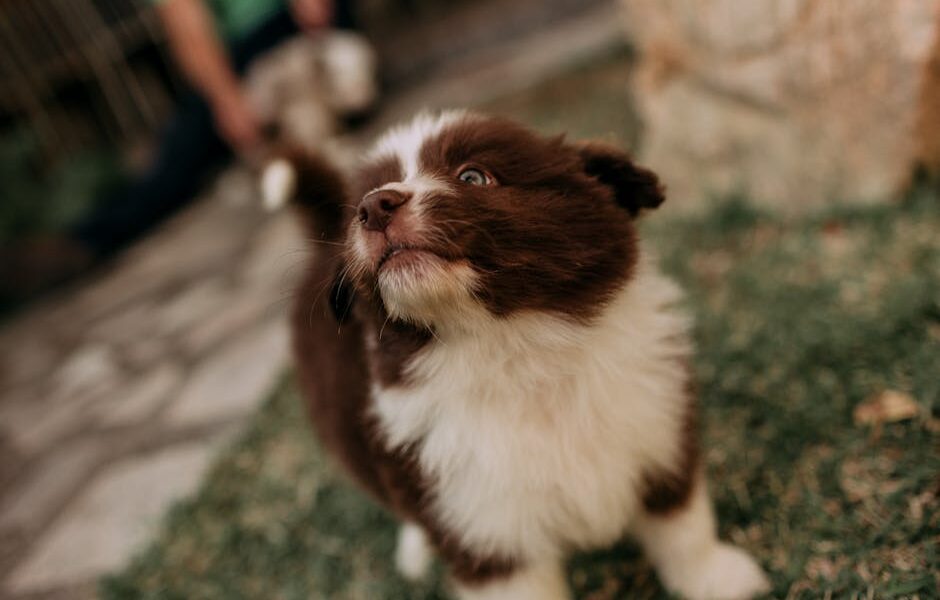
Why Name Recognition Is the First Real Cue
Puppy name recognition training is the work of making your puppy’s name function as a pure attention cue: every time you say it, the puppy orients toward you and expects something good. Done well, the name becomes a reliable bridge to every other cue you teach. Done poorly (used for scolding, used to demand a recall, used so often it becomes background noise), the name becomes useless within weeks.
In this article
- Why Name Recognition Is the First Real Cue
- Prerequisites and Choosing the Name
- Step One: Charge the Name
- Step Two: Increase the Difficulty Gradually
- Step Three: Generalize Across Environments
- What Never to Pair With the Name
- Name Versus Recall: Keep Them Separate
- Integrating Marker Training
- Troubleshooting Stalled Progress
- Maintenance and Reinforcement Schedule
- Tone, Volume, and Body Language
- Multi-Dog Households and Shared Cues
- When to Call a Professional
- Frequently Asked Questions
This protocol uses positive-reinforcement methods aligned with CCPDT and KPA-CTP standards. Treat the name like a charged battery; you spend its charge every time you use it, and you must keep recharging it through consistent reward pairing.
Foundationally, name is different from recall. Name means “look at me.” Recall means “come all the way to me.” Conflating the two is one of the most common mistakes in puppy training; we will keep them clean throughout this protocol.
Prerequisites and Choosing the Name
Pick a name your puppy can clearly distinguish from common household sounds. One or two syllables works best; soft consonants (Bella, Luna, Milo) hold attention longer than harsh ones for some puppies, but the bigger factor is consistency of use. Avoid names that sound like cues (Kit sounds like “sit,” Bo sounds like “no”).
Have high-value soft treats ready, a marker word (“yes”) or clicker already charged, and a quiet starting environment. Sessions should be sixty to ninety seconds, repeated five to ten times across a day. Long sessions actually slow name recognition by causing fatigue.
Step One: Charge the Name
Stand or sit close to the puppy. Wait until they are looking away or doing something neutral. Say the puppy’s name once in a warm, neutral tone. The instant their head turns toward you, mark “yes” and deliver a high-value treat. Repeat ten to fifteen times across a short session.
If the puppy does not look up after the name, do not repeat the name two or three times in a row. Saying the name to a non-responsive puppy teaches them to ignore it. Instead, make a soft kissy noise, click your tongue, or move your hand to attract attention, then mark and reward the orient. Try the name again on the next rep.
Step Two: Increase the Difficulty Gradually
Once the puppy reliably orients to the name in a quiet room with you nearby (typically after two to three days of short sessions), increase difficulty by stepping a few feet away, by waiting until the puppy is engaged with a low-value toy, or by moving to a new room. Each new context is a fresh learning opportunity; expect the puppy to need a few easy reps before generalizing.
Avoid layering difficulty too fast. If you move from “puppy at my feet” straight to “puppy fifteen feet away in the back yard,” you set the puppy up to fail. Build in five-foot increments and ten-percent-distraction increments.
Step Three: Generalize Across Environments
Practice the name response in every room of the home, in the yard, on the front porch, in the car (parked), in the elevator, at the vet waiting room. Each environment is a context, and dogs do not automatically generalize from one to another. Bring high-value treats and run quick refresher reps wherever you go.
If your puppy struggles with name recognition in a new environment, the environment is too distracting for the current level of training. Move farther from the distraction, lower the criteria, or come back another day.
What Never to Pair With the Name
Three habits will burn out a charged name fast. First, using the name as a scolding (“Bella, no!” “Bella, stop that!”). The name then predicts unpleasantness, and the puppy learns to disengage when they hear it. Second, using the name as a recall demand when the puppy is far away and unmotivated; if the puppy ignores it once, the name has just paid out zero, and its charge is depleted. Third, repeating the name multiple times in sequence when the puppy is not attending; this teaches the puppy that the name does not require a response.
If you need to interrupt undesirable behavior, use a separate interrupter sound (“eh-eh” or a tongue click) that you have not charged with reward. Keep the name purely positive.
Name Versus Recall: Keep Them Separate
Name is the precursor; recall is the action. The clean sequence is: say the name, puppy orients and looks at you, deliver “come” cue, puppy runs to you, reward at your feet. Many puppies arrive at adolescence with a fused “name-equals-come” pattern that has been poisoned by every time the recall did not pay off (you called, the puppy did not come, you eventually grabbed them, the experience was unpleasant).
Train recall as a separate skill with its own cue word, its own protocol, and its own jackpot rewards. Our puppy recall foundation training piece covers the full recall sequence; the name work in this article feeds into recall but is not the same skill.
Integrating Marker Training
If you are using a clicker or marker word, the timing is precise: name, orient, click or “yes” the instant the puppy’s eyes meet yours, then deliver the treat within two seconds. The marker captures the exact moment of the desired behavior; the treat reinforces it. Our marker training for dogs piece covers the underlying mechanics.
For households training multiple species or planning to add a cat, our clicker training for cats piece uses the same fundamentals; the same family can charge separate markers for each animal.
Troubleshooting Stalled Progress
If your puppy is not orienting to the name after two weeks of consistent practice, audit three things. First, treat value: are the rewards genuinely high-value for this puppy in this environment? Boiled chicken or cheese typically beats kibble. Second, frequency of poisoning: is someone in the household using the name in irritated tones? Coach everyone in the home to use the name only with rewards for two weeks. Third, attention baseline: is the puppy getting enough sleep, enrichment, and structured rest? Over-tired puppies do not learn cleanly.
If a name has been truly poisoned through scolding or recall failures, you can rehabilitate it or, in some cases, start fresh with a new “secret” name used only for training contexts. The two-name approach is sometimes the cleanest path.
Maintenance and Reinforcement Schedule
A trained name still needs maintenance. Continue marking and rewarding occasional name responses for the life of the dog; once a day at minimum during early adulthood, fading to once a week as the response stays reliable. Variable reinforcement (sometimes a treat, sometimes verbal praise, sometimes a life reward like access to a sniff) keeps the behavior strong.
During adolescence (six to ten months) you may see name responsiveness drop temporarily as hormones and distraction levels surge. Tighten the rate of reinforcement during this window; do not assume the training has failed.
Tone, Volume, and Body Language
The way you say the name shapes the response. Warm, slightly upbeat tone, a clear single utterance, and open body language (not leaning over the puppy, not staring intently) produce the best orient response. Sharp, loud, or commanding tone tends to startle puppies and can produce avoidance rather than engagement, even when paired with rewards.
If you have called the puppy’s name softly and they have not responded, do not escalate the volume on the second attempt. Volume escalation teaches the puppy to wait for the louder version before responding. Instead, close the distance, get the puppy’s attention with a kissy noise or hand movement, and treat any orient as a small win before saying the name again from a fresh setup.
Multi-Dog Households and Shared Cues
In multi-dog homes, each dog’s name should produce orient from that specific dog. To teach this, practice individual name reps with the other dogs out of the room or behind a gate at first. Build to reps with all dogs present, marking and rewarding the named dog for orienting while the non-named dogs ignore (or get a smaller reward for politely not responding).
Add a “group” cue (“everyone” or “all of you”) that means all dogs orient at once; this is useful for meal time, recall to come inside, or a quick all-dogs check-in. Keep individual names and the group cue distinct so each dog knows when the cue is for them versus the whole group.
When to Call a Professional
If your puppy shows zero name response after four weeks of consistent reward-based practice, see your veterinarian for a hearing check; congenital deafness is common in certain breeds (Dalmatians, white boxers, double-merles) and a normally responsive name protocol will not work for a deaf puppy. Our training cues for newly adopted blind dogs and adopting-a-deaf-dog resources walk through the visual-marker adaptations.
For puppies who startle, freeze, or flinch when you say their name (often seen in puppy mill survivors, formerly hoarded pets, or street-trauma survivors), pause this protocol and consult a CDBC or IAABC behavior consultant. The puppy may be carrying a poisoned association from previous handling that needs counter-conditioning before name work can begin.
Frequently Asked Questions
How long does it take a puppy to learn their name?
Most puppies orient reliably to their name in quiet environments within three to seven days of focused practice. Generalization to distracting environments takes several more weeks.
Should I change my rescue puppy’s name?
You can. Puppies adapt quickly to a new name. If the old name has negative associations, a fresh start helps. Pair the new name with rewards from day one and avoid using the old name in the transition.
How often should I say my puppy’s name during the day?
Only when you can pay for it. If you say the name twenty times a day with no reward eighteen of those times, you are teaching the puppy that the name is meaningless. Save name use for training reps and important attention moments.
My puppy only looks at me if I have a treat in my hand. Is that okay?
That means the food has become the cue, not the name. Hide treats in your pocket or hip pouch, say the name first, and only produce the treat after the orient. The name should predict the food, not the visible food predict the orient.
Can I use a nickname or call my puppy “buddy” or “sweetie”?
You can, but those words function as casual affection terms, not trained cues. Reserve the formal name for trained attention contexts so the cue stays sharp.


