
Last updated: May 23, 2026
In this article
- Why Bath Time Looks Different for Seniors
- Workup Before You Bathe a Frail Senior
- Non-Slip Surfaces Are Step One
- Water Temperature, Duration, and Pressure
- Shampoo Choice
- Dry Shampoo and No-Rinse Options for Frail Seniors
- Drying Is Where Many Bath Plans Fail
- Watching for Warning Signs During and After
- Pair Bathing With Grooming Wisely
- Setting Up Your Bath Space in Advance
- Bathing Frequency: Less Is Often More
- Frequently Asked Questions
Why Bath Time Looks Different for Seniors
Safe bathing for senior pets is about lowering risk while still keeping skin and coat healthy. A 5-year-old Labrador shrugs off a 20-minute scrub in lukewarm water and bounces out fine. A 13-year-old Labrador with arthritis and a heart murmur is a different story. Cold floors, slippery tubs, prolonged restraint, and incomplete drying can trigger pain flares, hypothermia, syncope, or even collapse in frail seniors. The goal is not to avoid bathing entirely — it is to bathe smarter.
Many seniors need fewer full baths than they used to. Coat oils change, activity drops, and skin becomes more fragile. Over-bathing strips natural oils and causes dryness and itch. Most senior dogs do well with a full bath every 4 to 8 weeks; senior cats almost never need full baths unless they are unable to groom themselves or have soiled coats from incontinence. Spot cleaning between baths is often safer and more useful.
Workup Before You Bathe a Frail Senior
If your senior has not had a wellness exam in the last six months, the bath plan starts at the vet. Cardiac disease, advanced arthritis, vestibular disease, and respiratory compromise all change how you should bathe. Your vet may approve a full bath, recommend dry shampoo only, or steer you toward a mobile groomer.
Watch your senior for two days before any planned bath. Are they eating, walking, breathing normally? A senior who is “off” today is not a good candidate for a bath today. Postpone. There is no urgency that beats the risk of stressing an already-compromised pet.
Non-Slip Surfaces Are Step One
The single biggest preventable injury at bath time is a slip. Wet porcelain and ceramic are dangerously slick. Lay a thick rubber-backed bath mat or a folded yoga mat in the tub or shower floor — this gives your senior something to grip. Place a second non-slip mat on the bathroom floor for the dry-off zone.
For dogs who cannot lift their hind legs into the tub, walk-in showers are far easier than step-over tubs. Some senior owners switch to bathing in a backyard or driveway with a warm-water hose attachment in fair weather, which removes the slip risk entirely. For mobility-impaired dogs, a rear-support harness like Help ‘Em Up, Walkabout, or GingerLead can help you ease them in and out — see rear-end harness comparison for fit details.
Water Temperature, Duration, and Pressure
Water should be warm to the touch on your wrist, not hot. Senior pets thermoregulate less well than younger pets — hot water can cause real overheating, while cold water can trigger shivering and shock. Test on your inner wrist before any water hits your pet.
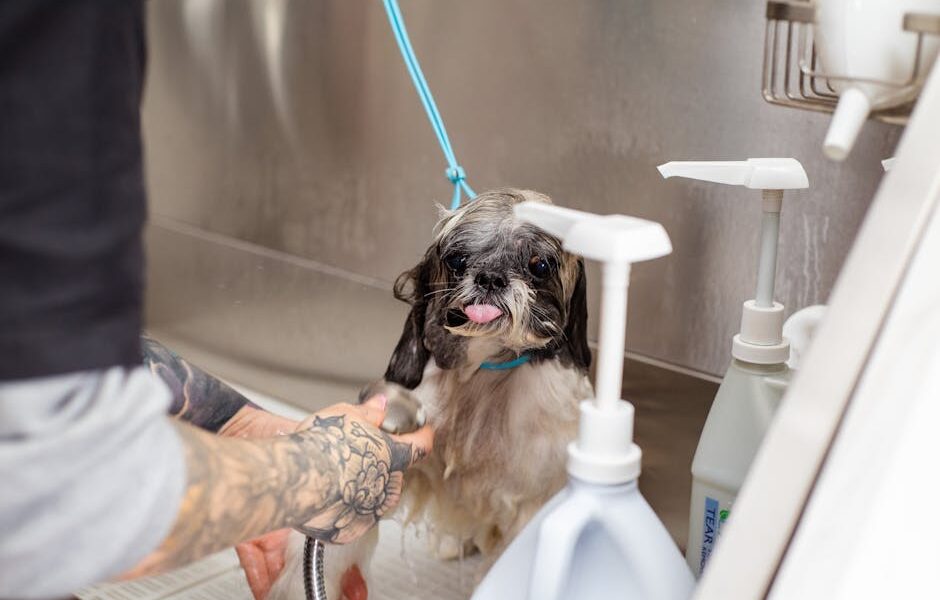
Keep the bath short: 8 to 12 minutes from wet to towel. Long baths exhaust senior pets and can trigger pain, anxiety, or syncope in frail dogs with cardiac disease. Use a low-pressure handheld sprayer rather than a high-pressure shower head, and avoid spraying directly at the face. Wet from the neck back, then use a damp cloth to wipe the face — never pour water over the head.
Shampoo Choice
Use a vet-approved, gentle pet shampoo. Hypoallergenic and oatmeal-based formulas work for most senior pets without irritation. If your pet has a skin condition or is being treated for a specific dermatologic issue, your vet may prescribe a medicated shampoo with specific contact-time instructions — follow those exactly. Never use human shampoo; the pH is wrong for pets.
Lather minimally, focus on dirty areas (perineum, paws, belly), and rinse thoroughly. Shampoo residue is a major cause of post-bath itch and skin irritation. When you think you have rinsed enough, rinse one more time.
Dry Shampoo and No-Rinse Options for Frail Seniors
For very frail seniors — those with advanced heart disease, severe arthritis, vestibular dysfunction, or anyone where a full bath feels risky — dry shampoos and no-rinse foams are excellent alternatives. These products contain mild surfactants and odor neutralizers, are applied without water, and are wiped or brushed off after a brief contact time. They are not as deep-cleaning as a full bath but they keep coat fresh, manage odor, and protect skin without the stress of immersion.
Pet-safe wipes serve a similar purpose for spot cleaning — perineal hygiene, muddy paws, food beard. Unscented, alcohol-free wipes are kind to senior skin. For incontinent seniors, daily spot-cleaning around the perineum prevents urine scald better than a single weekly bath ever could.
Drying Is Where Many Bath Plans Fail
Damp, cold senior pets are at risk for chills, skin issues, and mood crashes. Plan drying as carefully as you plan bathing. Have two or three thick, dry towels stacked and warm (run them through the dryer for ten minutes before bath time). Lift your pet onto a non-slip surface immediately after the bath and squeeze gently — do not vigorously rub, which is painful for arthritic joints.
Use a low-heat, low-noise pet dryer if your senior tolerates it. High-velocity grooming dryers are too loud and too forceful for most seniors. Many senior dogs prefer to be wrapped in a towel and allowed to rest in a warm room with a heating pad on the lowest setting under their bed (never directly against skin). Continue checking that they are warm and dry for the next 30 to 60 minutes.
Watching for Warning Signs During and After
Stop the bath immediately if you see: pale gums, sudden weakness, collapse, labored breathing, vomiting, or visible distress. Get your senior dry, warm, and to your vet or emergency clinic. These can signal cardiac strain, syncope, or another acute event. Bath stress is a known trigger in dogs with heart disease.
After the bath, watch for the next several hours. Decreased appetite, lethargy beyond a normal post-bath nap, shivering that persists, or behavioral changes warrant a call to your vet. Most baths go fine — but knowing the warning signs makes the difference if they do not.
Pair Bathing With Grooming Wisely
Bathing and grooming go together, but stacking too much into one session exhausts seniors. If you are doing a bath, save nail trims and ear cleaning for a different day. Mat removal should happen before bathing (wet mats become harder to remove) — clip mats out gently with a guarded clipper rather than scissoring close to skin. For full grooming sessions, see our companion piece on senior pet grooming adaptations.
If at-home bathing is too much, professional and mobile groomers experienced in senior care are worth their cost. Look for Fear Free Certified Groomers and ask about senior accommodations: shorter sessions, supportive harnesses, low-stress handling, and minimal cage time. Our senior pet bathing adaptations guide goes deeper into equipment and home setup.
Setting Up Your Bath Space in Advance
Bathing a senior pet goes far better when the space is set up before you ever bring your pet in. Gather everything in advance: shampoo, towels (warm and dry), a non-slip mat in the tub, a soft brush for post-bath, treats, your handheld sprayer attachment, and the warm towel-wrap rest area. Close doors and windows. Run the water until it is consistently warm so the first stream is not cold. Put a familiar non-slip rug in the bathroom doorway so your senior walks in on something they can grip.
Keep the room warm — open the heat or run a small space heater (placed safely, never near water) before the bath. A chilled bathroom multiplies cold-water shock and slows drying. A small radio playing soft music masks the scarier sounds of running water and helps anxious seniors settle. Pre-warming towels in the dryer is a small touch that makes a real difference to a frail senior emerging from a bath.
Bathing Frequency: Less Is Often More
The pet care world has shifted in recent years toward less-frequent bathing for most pets, and senior pets benefit especially. Over-bathing strips natural skin oils, disrupts the skin barrier, and can trigger seborrhea or chronic dryness. Most healthy senior dogs do well with a full bath every 4 to 8 weeks; some dry-skinned breeds may need even less. Cats almost never need a full bath unless they are unable to self-groom or have soiled coats.
Between baths, spot cleaning with pet wipes handles muddy paws, food beards, and small messes. Daily brushing distributes skin oils and removes loose fur — a far gentler maintenance routine than frequent full baths. If your senior smells “doggy” between baths, the answer is often a skin or dental workup, not more shampoo. Persistent odor signals an underlying issue worth investigating with your vet.
Frequently Asked Questions
How often should I bathe my senior dog?
Most healthy senior dogs do well every 4 to 8 weeks. Dogs with skin conditions or incontinence may need more frequent bathing or spot cleaning. Less is usually more.
Do senior cats need baths?
Rarely. Cats who can still self-groom typically need no full baths. Senior cats with mobility issues, obesity, or matted coats may benefit from occasional grooming or veterinary help.
Can I use a human hair dryer on my senior dog?
Only on the lowest, coolest setting and at a distance. Pet-specific dryers are gentler. Never aim hot air at skin — senior skin burns more easily than younger skin.
What is the safest shampoo for a frail senior?
A gentle, vet-approved hypoallergenic or oatmeal-based pet shampoo. Medicated shampoos require a prescription and specific instructions. Never use human shampoo.
When should I skip the bath entirely?
Skip when your pet is recovering from illness, has an open wound, is acting “off,” or has known cardiac instability. Use dry shampoo or wipes until a vet clears a bath.


