
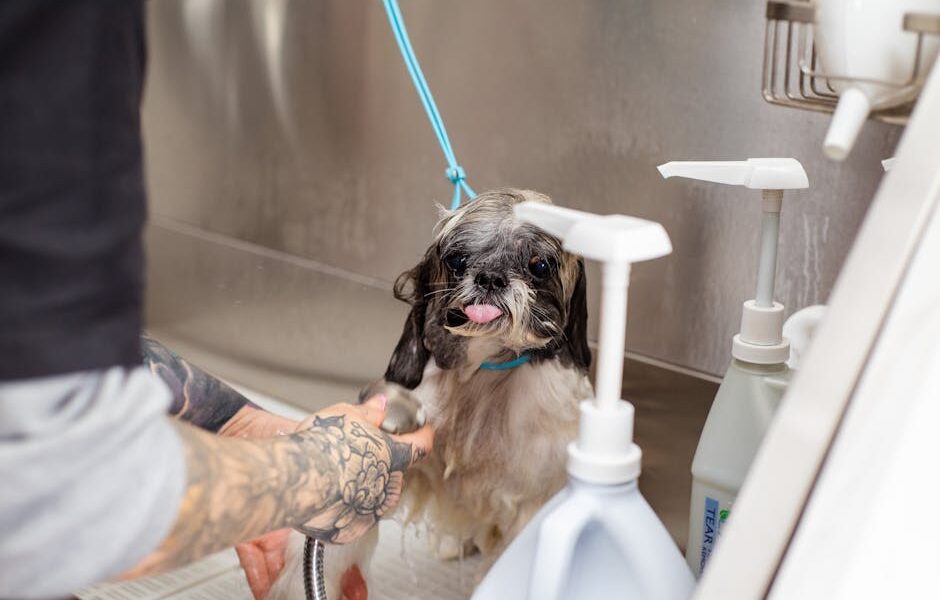
Why Bathing Changes as Pets Age
The bathing routine that worked when your dog or cat was three years old often becomes unsafe and stressful by the time they are twelve. Senior pets present a stack of physical limitations that make traditional bathing risky: arthritis in the hips and spine, reduced muscle mass, weakened tendons, thinner skin, less body fat for temperature regulation, declining vision and hearing, and sometimes cognitive changes that make familiar routines feel unfamiliar.
In this article
- Why Bathing Changes as Pets Age
- The Non-Slip Surface Is Non-Negotiable
- Ramps, Lifts, and Walk-In Showers
- Water Temperature: Warmer, Not Hotter
- Shorter Sessions, Smaller Goals
- Waterless Shampoo and Wipe-Down Routines
- Supporting Arthritic Joints During the Bath
- Drying: The Critical Step for Seniors
- Frequency: Less Is Often More
- When the Senior Routine Becomes Too Much
- When to Call a Professional Groomer or Vet
- Frequently Asked Questions
A wet, slippery bathtub becomes a fall hazard. Cold water becomes a chilling risk. A 20-minute bath becomes too long to tolerate physically. The good news is that with deliberate adaptations, you can keep grooming your senior comfortably and safely well into their late years.
The Non-Slip Surface Is Non-Negotiable
The single most important upgrade for bathing any senior pet is a non-slip surface in the tub or shower. Slipping is the leading cause of bath-related injuries in older pets — a slip can tear a cruciate ligament, dislocate a hip, fracture a fragile bone, or trigger a back injury in a dog with disc disease. A simple rubber-backed bath mat or silicone shower mat with strong suction cups eliminates almost all of that risk.
For dogs, the mat should cover the entire standing area and extend a little past the front and back so paws cannot land on slick porcelain. For cats, a soft towel folded into the sink or a small basin works similarly. Senior cats often refuse traditional bathing entirely, and that is fine — a wipe-down routine (see below) usually substitutes well.
Ramps, Lifts, and Walk-In Showers
Many senior dogs cannot step into a high-sided tub safely anymore. Options that help:
- A pet ramp into the tub, made of non-slip surface, with railings if possible.
- A walk-in shower with a low or zero-threshold entry — by far the easiest option for large senior dogs.
- An outdoor bath setup with a non-slip pad and warm water hookup, for warm-climate yards.
- A supportive grooming harness or sling that helps you lift the dog into and out of the tub without straining their joints or your back.
- A second person to help with lifting any dog over 30 pounds.
Our ramps for senior dogs guide and senior dog mobility aids overview cover related adaptations that pair well with bathing setup.
Water Temperature: Warmer, Not Hotter
Senior pets have less body fat insulation and slower temperature regulation. Cold water that a young dog tolerated easily will leave a senior shivering, and shivering itself is hard on arthritic joints. The right water temperature for senior bathing is comfortably warm to your wrist — not hot, not lukewarm. Aim for slightly warmer than body temperature.
Heat the bathroom slightly if you can. A bathroom space heater (kept far from the water and the pet) raises ambient temperature so the wet pet does not chill during the bath. After the bath, have warm towels ready immediately. The transition from wet-in-tub to wrapped-in-towel should be quick.
Shorter Sessions, Smaller Goals
Twenty-minute full-body baths are too long for most seniors. Plan for ten minutes or less. Strategies:
- Pre-bath brushing reduces in-bath time significantly.
- Use a fast-rinsing shampoo formulated for senior or sensitive skin.
- Spot-clean rather than full-body bathe between scheduled baths — wet just the soiled areas.
- Split a full grooming session across multiple short visits: bath one day, dry and brush the next, nail trim the third.
This is the inverse of how we groom younger pets, where one efficient session is the goal. For seniors, breaking the work up is kinder.
Waterless Shampoo and Wipe-Down Routines
For pets who can no longer tolerate a traditional bath — arthritic seniors, cats that refuse water, dogs with severe anxiety around bathing — waterless shampoo and a daily wipe-down can replace most full baths. Options:
- Pet waterless shampoo foam — apply, work into coat, towel off.
- Waterless shampoo spray — useful for spot cleaning soiled areas.
- Fragrance-free pet wipes for the face, paws, sanitary area, and any small accident spots.
- Dry shampoo powders for very oily coats — used sparingly so the powder is fully brushed out.
For senior cats, who often refuse traditional bathing entirely and find it deeply stressful, a daily wipe-down combined with regular brushing can replace baths almost entirely. Our senior cat grooming guide walks through this adapted routine.
Supporting Arthritic Joints During the Bath
If your dog has confirmed arthritis or is showing signs of joint stiffness, the bath itself should be designed around that. Allow the dog to stand naturally — do not ask for sit or down on slippery surfaces. Avoid lifting one leg at a time to wash; instead, work around the body with the dog stable. For very stiff dogs, use a handheld sprayer attachment so you can reach all areas without asking the dog to turn or step around. Our chronic pain management guide for senior dogs covers the broader picture of arthritis support, and the signs of pain in senior cats guide helps owners recognize when their cat is uncomfortable rather than just uncooperative.
Pre-medicate per your vet’s instructions if your dog or cat is on pain management — sometimes a scheduled dose of gabapentin or NSAIDs an hour before grooming makes the whole session more comfortable. This is a vet decision, not an at-home one.
Drying: The Critical Step for Seniors
Wet seniors chill fast. A wet older cat or dog left to air-dry can drop body temperature noticeably and the chill can trigger arthritis flare-ups. The drying step matters more for seniors than for any other age group.
- Have pre-warmed towels ready before the bath ends.
- Lift the pet out (with support) and wrap immediately.
- Towel-blot (do not rub vigorously) until the coat is no longer dripping.
- For dogs, use a low-noise, low-heat pet dryer on a cool or barely-warm setting. Skip the high-velocity dryer on small fragile seniors who may find it overwhelming.
- Keep the pet in a warm room until fully dry. A heated pet bed or warm room is helpful for the recovery period.
For double-coated seniors, drying takes longer than for younger dogs and proper undercoat drying still matters to prevent hot spots — see our post-bath drying guide for double-coated dogs.
Frequency: Less Is Often More
Most senior pets do not need bathing as often as adult pets. The skin produces less oil, the coat sheds slower, and over-bathing dries out aging skin. For a healthy senior dog without specific skin issues, every six to eight weeks is often sufficient, with spot cleaning between. For a senior cat, full bathing may not be necessary at all — well-established wipe-down and brushing routines keep most cats clean. Adjust based on the individual: pets with chronic skin issues, incontinence, or mobility issues that cause soiling may need more frequent care, while otherwise healthy seniors often do well with less.
When the Senior Routine Becomes Too Much
There comes a point for some pets when traditional bathing becomes more stress than it is worth. Signs that you have reached that point:
- The pet shakes, hides, or panics for hours before and after the bath.
- Joint pain flares up in the days following each bath.
- The pet has had a slip or near-fall on previous baths.
- You dread the routine because you know it is hard on the pet.
At this point, the right plan is usually a switch to wipe-down maintenance combined with professional groomer or vet-clinic bathing on a less-frequent schedule, possibly with mild sedation when needed. NDGAA or IPG certified groomers experienced with seniors are worth the cost and can handle the bath while the dog stays calm in a low-stress environment with professional restraint and equipment.
When to Call a Professional Groomer or Vet
Outsource the bath, or part of it, when:
- You cannot safely lift the dog into and out of the tub at home.
- The pet panics during home baths despite adaptations.
- Your senior pet has chronic skin issues that need medicated bathing.
- Matting has reached a level that needs professional dematting first.
- Your pet has mobility issues that make at-home handling unsafe.
Some senior pets benefit from a hybrid plan: professional groomer for the full bath and clip every six to eight weeks; owner wipe-downs, brushing, and spot cleans in between. The senior dog care checklist and senior cat care checklist help you build the full senior-pet routine into a sustainable plan.
Frequently Asked Questions
How often should I bathe a senior dog?
Most healthy senior dogs do well with a bath every six to eight weeks, with spot cleaning in between. Pets with skin issues or incontinence may need more frequent care; otherwise less is more for aging skin.
My senior cat refuses baths. What should I do?
Many senior cats are best maintained with daily wipe-downs and regular brushing rather than full baths. Cats are generally clean self-groomers; a wipe-down for face and rear, plus weekly brushing, replaces traditional bathing for most senior cats.
What water temperature is safe for a senior dog?
Warm to your wrist — slightly warmer than body temperature. Cold or lukewarm water chills senior pets, and chilling triggers shivering that is hard on arthritic joints.
Should I use a high-velocity dryer on my senior?
Usually not. The noise and force can be overwhelming for a fragile senior. A low-noise, low-heat pet dryer on cool setting, or gentle towel-drying in a warm room, works better. Your senior may also be more tolerant of the dryer used at a distance for short periods.
When should I switch from home bathing to professional grooming?
When home bathing becomes unsafe (slip risk, lift risk), too stressful for the pet (shaking, hiding, panicking), or no longer effective (recurrent skin issues, severe matting). A certified groomer experienced with seniors, possibly with light vet-supervised sedation, can keep grooming sustainable.


