
Last updated: May 6, 2026
In this article
One of the most frustrating realities of living with cats is that they are remarkably skilled at concealing their discomfort. A cat can be dealing with a painful dental abscess, a urinary blockage, or severe arthritis and show almost no outward signs until the condition has progressed significantly. Recognizing the signs cat is in pain early can mean the difference between a quick recovery and a prolonged, more complicated medical situation.
Veterinary professionals estimate that pain is significantly underdiagnosed in cats, largely because owners do not know what to look for. This guide covers twelve subtle indicators of feline pain, explains the Feline Grimace Scale, and outlines safe treatment options.
Why Cats Are Masters at Hiding Pain
Domestic cats descend from solitary predators that were also small enough to be prey for larger animals. In the wild, an animal that appears injured or weakened becomes an immediate target. Showing vulnerability is, from an evolutionary standpoint, dangerous — and this instinct has persisted even in cats that live in safe homes with no predators.
A cat in pain will not cry out or limp dramatically the way a dog might. Instead, cats become quieter, withdraw from normal activities, and make subtle behavioral shifts that are easy to attribute to aging or mood. Many owners live with a painful cat for weeks or months before realizing something is wrong — not because they are inattentive, but because cats are genuinely excellent at masking their internal state. Learning to read the signs cat is in pain requires knowing your cat’s baseline behavior and watching for specific changes.
12 Subtle Signs Your Cat Is in Pain
No single sign in isolation necessarily confirms pain. However, two or more of these signs together — particularly if they represent a change from normal — warrant a veterinary evaluation.
1. Hiding More Than Usual
A cat in pain will often seek out hiding places it does not normally use — under the bed, behind furniture, or in dark corners. This reflects the survival instinct to withdraw from visibility when feeling vulnerable. If your normally social cat has become reclusive, pain is one of the most likely explanations.
2. Not Eating or Eating Less
Dental disease can make chewing painful. Abdominal pain from pancreatitis or a urinary obstruction can suppress appetite entirely. Even musculoskeletal pain can reduce interest in food if walking to the bowl or leaning down is uncomfortable. Any cat that has not eaten for more than twenty-four hours should see a veterinarian, as cats are uniquely susceptible to hepatic lipidosis when they stop eating.
3. Decreased Grooming or Unkempt Fur
Pain in the spine, hips, or shoulders can make the twisting motions required for grooming too uncomfortable. You may notice matted fur along the back or hindquarters. Conversely, over-grooming or excessive licking focused on one area can indicate localized pain at that site.
4. Hunched Posture
A cat in pain often adopts a hunched, tense posture — back arched, head low, body tucked tightly together. This protective stance is the cat’s attempt to guard the painful area. Cats with abdominal pain are especially likely to display this posture.
5. Squinting or Half-Closed Eyes
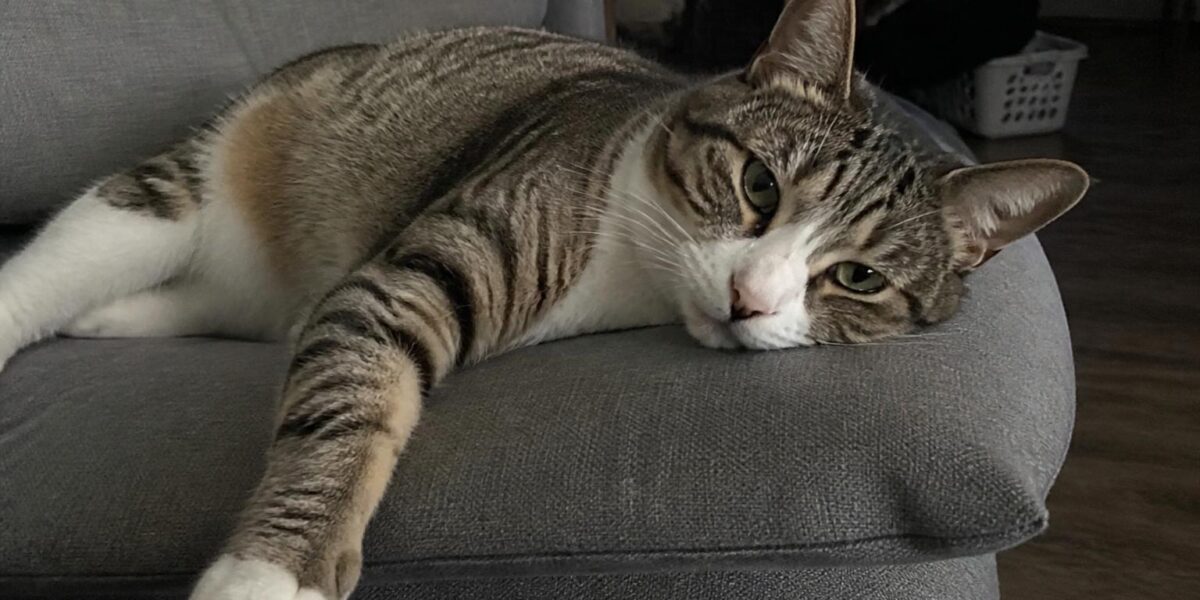
Orbital tightening is one of the most reliable facial indicators of pain in cats. A comfortable cat has soft, open eyes. A painful cat holds its eyes partially closed with visible tension around the eye muscles, even when awake and alert. This sign is a key component of the Feline Grimace Scale discussed below.
6. Aggression or Flinching When Touched
A cat that suddenly hisses, swats, or flinches when touched where it previously accepted handling is very likely experiencing pain near that location. If the reaction is consistent — always triggered by touching a specific spot — that localized response is highly suggestive. General irritability or a newfound dislike of being picked up can indicate widespread discomfort.
7. Reluctance to Jump or Climb
A cat that hesitates before jumping, uses intermediate steps, or has stopped jumping altogether is usually dealing with pain. Owners often misinterpret this as aging, but healthy older cats remain capable jumpers. Reluctance to jump is a behavioral change driven by discomfort, not simply a consequence of getting older.
8. Litter Box Changes
Joint pain can make stepping into a high-sided litter box difficult. Urinary pain may cause a cat to associate the box with discomfort and avoid it. Straining, frequent trips with little output, or vocalizing while using the box are all potential signs cat is in pain. A sudden change in litter box habits should always prompt a medical evaluation before considering behavioral explanations.
9. Purring When It Does Not Make Sense
Cats also purr when they are in pain, stressed, or frightened. This self-soothing mechanism may have healing properties — the low-frequency vibrations of purring are thought to promote tissue repair. If your cat is purring while also hiding, not eating, or hunching, the purring is more likely an indicator of distress than happiness.
10. Changed Breathing Patterns
Pain can cause faster, shallower breathing. Panting in cats is never normal the way it is in dogs — a panting cat is either in pain, severely stressed, or experiencing a respiratory emergency. Any significant change in breathing warrants prompt veterinary attention.
11. Social Withdrawal
A cat that normally greets you at the door or sleeps on the bed but suddenly stops participating in social routines may be hurting. Unlike hiding, the cat may remain visible but simply decline interaction — sitting in the same room but staying distant, refusing to be petted, or showing no interest in play.
12. Facial Expression Changes
Beyond squinting, painful cats may display flattened or rotated ears, a tense muzzle, and whiskers held stiffly forward or pressed close to the face. These changes are subtle and easiest to detect if you know your cat’s normal resting expression. Comparing a current photo with older photos can make these differences more apparent.
The Feline Grimace Scale
The Feline Grimace Scale (FGS) is a scientifically validated tool developed by researchers at the Université de Montréal to assess pain in cats based on facial expressions. It evaluates five action units — ear position, orbital tightening, muzzle tension, whisker position, and head position — each scored from zero to two. The total score correlates with the cat’s pain level.
The FGS provides an objective, repeatable method for evaluating pain that works even when used by non-veterinarians. To use it, observe your cat when it is awake but calm — not eating, grooming, or being handled. A score at or above the intervention threshold suggests pain treatment should be initiated or adjusted. Many veterinary clinics now incorporate the FGS into post-surgical and chronic pain monitoring.
Acute Pain vs. Chronic Pain in Cats
Acute pain results from a specific event — injury, surgery, a urinary obstruction, or sudden illness. It tends to produce more obvious behavioral changes because the cat has not had time to adapt. Acute pain is generally time-limited but requires aggressive management to prevent suffering and reduce the risk of it becoming chronic.
Chronic pain develops gradually over months or years from conditions like arthritis, dental disease, or cancer. It is far harder to recognize because the behavioral changes occur so slowly that owners adjust their perception of normal. A cat that once jumped to the refrigerator now only reaches the couch, and the owner barely notices the transition. Chronic pain in cats is believed to be massively underdiagnosed and represents one of the most significant welfare concerns in feline medicine.
When to See the Vet
If you suspect your cat is in pain, schedule a veterinary appointment promptly. Cats hide pain so effectively that by the time you notice signs, the condition is often already significant. Many conditions that cause pain — urinary obstructions, dental infections, internal injuries — worsen rapidly without treatment.
Seek emergency care if your cat is straining without producing urine (especially male cats), panting or breathing with difficulty, unable to stand, crying out in pain, or has experienced trauma. For less urgent situations, a visit within a few days is appropriate. Bring video recordings of your cat’s behavior at home, as cats often act differently in the clinic. If you are considering adding a feline companion to your family, explore cats available through our adoption page.
Pain Management Options for Cats
Most veterinarians favor a multimodal approach, combining two or more therapies for better pain control with fewer side effects than any single treatment alone.
NSAIDs (Non-Steroidal Anti-Inflammatory Drugs)
NSAIDs reduce pain and inflammation but require extra caution in cats, which metabolize these drugs differently from dogs. Meloxicam is the most commonly prescribed feline NSAID, used at carefully calibrated low doses with regular blood work to monitor kidney and liver function. Human NSAIDs such as ibuprofen and aspirin are toxic to cats and should never be given without veterinary supervision.
Gabapentin
Originally an anti-seizure medication, gabapentin is now one of the most widely prescribed pain drugs in feline medicine. It is effective for neuropathic and chronic pain including arthritis, well-tolerated by most cats, and available in liquid form for easy dosing. Mild sedation may occur initially but typically resolves within days. Many veterinarians consider gabapentin a first-line option for chronic feline pain.
Buprenorphine
Buprenorphine is an opioid analgesic useful for moderate to severe acute pain. In cats, it can be administered transmucosally — absorbed through the gum tissue — making it easier to give at home than injectable medications. It is commonly prescribed after surgery, dental extractions, or traumatic injuries. Because it is a controlled substance, your veterinarian will provide specific handling instructions. Buprenorphine is generally used short-term rather than for chronic management.
Solensia (Frunevetmab)
Solensia is a monoclonal antibody therapy and the first treatment of its kind approved specifically for osteoarthritis pain in cats. Administered as a monthly injection at the veterinary clinic, it works by neutralizing nerve growth factor (NGF), a protein central to pain signaling. Because Solensia does not pass through the liver or kidneys the way NSAIDs do, it can be used safely in cats with kidney disease or other organ compromise — a population that historically had very limited pain management options. Many owners report visible improvements in activity, jumping, and grooming within the first one to two injections. To learn about breeds predisposed to arthritis and joint conditions, visit our cat breeds directory.
Frequently Asked Questions
How can I tell if my cat is in pain or just tired?
A tired cat returns to normal behavior after resting — eating, grooming, and engaging socially. A painful cat shows persistent changes that do not resolve with rest, typically involving multiple concurrent signs like reduced appetite, decreased grooming, and postural changes. When in doubt, a veterinary evaluation is the safest course.
Do cats cry when they are in pain?
Rarely. Some cats with acute, severe pain may cry out or yowl, but most cats experiencing chronic pain become quieter rather than louder. The absence of vocalization should never be interpreted as evidence that a cat is not in pain.
Can I give my cat human pain medication?
No. Acetaminophen causes severe liver damage and red blood cell destruction in cats and can be lethal. Ibuprofen and aspirin can cause kidney failure and gastrointestinal ulceration. Never administer any medication without veterinary guidance.
How long can a cat hide pain before showing signs?
Cats with chronic conditions like arthritis or dental disease can mask pain for months or years. Acute pain from injuries tends to produce detectable signs within hours to days. Regular veterinary checkups — ideally twice yearly for cats over age seven — are the most reliable way to catch painful conditions early.
Is purring always a sign that my cat is happy?
No. Cats also purr when in pain, frightened, or anxious. A cat purring while relaxed with soft eyes is likely content. A cat purring while hiding, refusing food, or displaying a tense posture may be using purring as a coping mechanism for distress.
What is the most common cause of pain in cats?
Dental disease and arthritis are the two most prevalent causes of chronic pain. The majority of cats over age three have some degree of dental disease, and up to 90 percent of cats over twelve show radiographic signs of arthritis. Urinary tract issues are among the most common causes of acute pain.


