Last updated: May 6, 2026
In this article
Tonkinese Cat Breed Profile: The Best of Both Worlds
What happens when you combine the chatty, outgoing personality of the Siamese with the affectionate, mellow warmth of the Burmese? You get the Tonkinese — a breed that many enthusiasts consider the perfect middle ground between two beloved feline companions. With their stunning aqua eyes, silky coats, and irresistibly social personalities, Tonkinese cats have earned a devoted following among cat lovers worldwide.
The Tonkinese cat is playful, intelligent, and remarkably people-oriented. It brings together the best qualities of its parent breeds while adding a unique charm all its own. In this complete breed profile, we will explore the Tonkinese cat’s history, appearance, temperament, health considerations, grooming needs, and the type of home where this delightful breed thrives.
History and Origin of the Tonkinese
The Tonkinese breed has a more complex history than many people realize. While the deliberate breeding program that established the Tonkinese as a recognized breed began in the 1960s, the cross between Siamese and Burmese cats had been occurring naturally and intentionally for much longer. In fact, Wong Mau — the foundation cat of the modern Burmese breed, brought to the United States in 1930 — is now widely believed to have been a Tonkinese herself, carrying both Siamese and Burmese genes.
The formal development of the Tonkinese breed is credited to Canadian breeder Margaret Conroy (later Margaret Fawcett) and American breeder Jane Barletta, who independently began crossing Siamese and Burmese cats in the 1960s. Their goal was to create a breed that combined the best physical and personality traits of both parent breeds — the Siamese’s striking color points and vocal personality with the Burmese’s rounded build and affectionate, calmer nature.
The breed was originally called the “Golden Siamese,” but the name was later changed to Tonkinese — a reference to the Gulf of Tonkin, suggesting an exotic Southeast Asian heritage that complemented the origins of its parent breeds. It is worth noting that the breed does not actually originate from the Tonkin region; the name was chosen purely for its evocative quality.
The Canadian Cat Association was the first to grant the Tonkinese championship status in 1971. The Cat Fanciers’ Association followed in 1984, and today the breed is recognized by all major cat registries worldwide. For more about one of the Tonkinese’s parent breeds, see our Burmese cat breed profile.
Appearance and Physical Characteristics
The Tonkinese is a medium-sized cat with a body type that falls between the slender, angular Siamese and the compact, stocky Burmese. The result is a well-balanced, moderately muscular cat that feels surprisingly heavy for its size — a trait inherited from the Burmese side. Males typically weigh 8 to 12 pounds, while females range from 6 to 8 pounds.
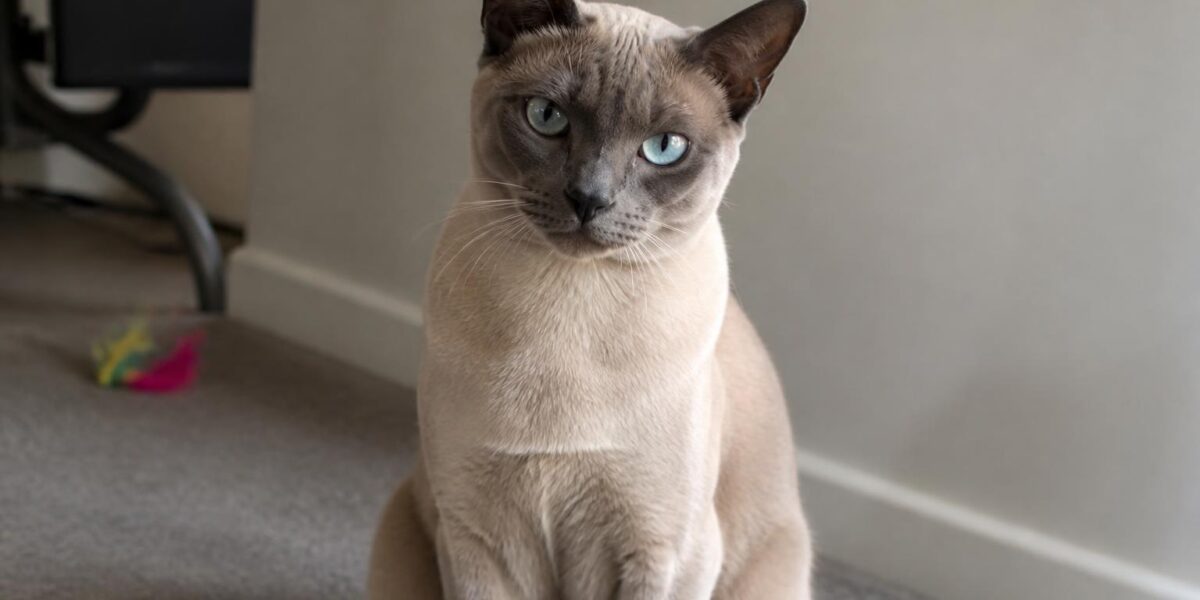
The head is a modified wedge shape — not as extreme as the Siamese and not as rounded as the Burmese. The ears are medium-sized, broad at the base, and set slightly toward the outside of the head. The eyes are one of the Tonkinese’s most captivating features. They are almond-shaped and open, and in the breed’s signature “mink” coat pattern, they display a stunning aqua color that is unique to the Tonkinese breed.
The Tonkinese coat comes in three pattern variations, each with a different eye color. The “mink” pattern features soft, blended points with an aqua eye color and is the most sought-after and recognizable look. The “point” pattern resembles the Siamese, with higher contrast between body and point colors and blue eyes. The “solid” pattern is more reminiscent of the Burmese, with minimal contrast and gold or green eyes.
Accepted colors include natural (a warm brown), champagne (a soft buff-cream), blue (a soft blue-gray), and platinum (a pale silvery gray). Each color can appear in any of the three coat patterns, creating a wide range of beautiful combinations. The coat itself is short, silky, and close-lying with a luxurious feel. It has a subtle sheen that highlights the breed’s elegant musculature.
Temperament and Personality
If you are looking for a cat with an outgoing, engaging personality, the Tonkinese cat delivers in abundance. This breed is social, playful, and incredibly people-focused. Tonkinese cats want to be involved in everything their humans do. They will supervise your cooking, assist with your homework (by sitting on your papers, naturally), and join you in bed at night.
The Tonkinese inherits the Siamese love of conversation but typically at a softer volume and with a less insistent tone. They will happily chat with you throughout the day, sharing their opinions on everything from mealtime schedules to the bird activity outside the window. Their voice is pleasant and melodic, and most owners find it charming rather than annoying.
Intelligence is a standout trait of the Tonkinese. These cats are quick learners who enjoy puzzle toys, interactive games, and even learning tricks. Many Tonkinese cats can be taught to fetch, walk on a leash, and come when called. They need mental stimulation to stay happy, so providing a variety of cat enrichment activities is important.
Like their Burmese parent, Tonkinese cats are extremely social and do not do well when left alone for long periods. Loneliness can lead to stress, depression, and destructive behavior. If your household is empty during the day, a second cat is almost essential. Tonkinese cats get along beautifully with other cats, dogs, and even children, making them one of the best cats for families.
One thing to be aware of is that the Tonkinese’s friendly, trusting nature can be a vulnerability. These cats do not have strong survival instincts when it comes to traffic, predators, or other outdoor dangers. They should be kept as indoor cats or given outdoor access only through secure catios or supervised leash walks.
Health Issues and Lifespan
The Tonkinese is generally a healthy breed with a lifespan of 12 to 16 years, though many individuals live well beyond that with proper care. As a hybrid breed, the Tonkinese benefits from a broader genetic pool than either the Siamese or Burmese, which can contribute to overall vigor and health.
However, the Tonkinese can inherit health predispositions from both parent breeds. From the Siamese side, there may be a slightly elevated risk of dental disease, amyloidosis (a condition where abnormal proteins accumulate in organs), and certain respiratory issues. From the Burmese side, some Tonkinese may be predisposed to diabetes and hypokalemia (low blood potassium).
Gingivitis and periodontal disease are among the most commonly reported health issues in Tonkinese cats. Regular dental care — including brushing, dental treats, and annual professional cleanings — is important for maintaining oral health. Starting a dental hygiene routine early in your Tonkinese’s life will make it much easier to manage throughout adulthood.
Obesity can also be a concern, particularly for indoor cats that do not get enough exercise. The Tonkinese’s love of food, combined with a sedentary indoor lifestyle, can lead to weight gain. Monitor your cat’s body condition, measure meals carefully, and ensure daily play sessions to keep weight in check.
As with any breed, routine veterinary care is essential. Schedule annual wellness exams, stay current on vaccinations and parasite prevention, and discuss any breed-specific concerns with your veterinarian. With attentive care, the Tonkinese is a hardy, vibrant companion that will share your life for many wonderful years.
Grooming and Care
Grooming the Tonkinese is wonderfully straightforward. The short, silky coat requires only a weekly brushing to remove loose hair and keep it looking lustrous. A soft-bristled brush or a chamois cloth works beautifully on the Tonkinese coat, bringing out its natural sheen with minimal effort.
The Tonkinese is a naturally clean cat that takes pride in its appearance. Baths are rarely needed unless the cat gets into something messy. During shedding seasons, a second weekly brushing session can help manage loose hair and reduce hairballs.
Standard grooming tasks apply: trim nails every two to three weeks, check and clean ears weekly as needed, and maintain a regular dental hygiene routine. Because Tonkinese cats are prone to dental issues, brushing their teeth several times a week or providing dental-focused toys and treats is especially important.
Environmental enrichment deserves special emphasis with the Tonkinese. These active, intelligent cats need plenty of stimulation to stay happy and out of trouble. Cat trees, climbing shelves, window perches, interactive toys, and regular play sessions are all essential. A bored Tonkinese will find its own entertainment, and that usually involves getting into things you would prefer it did not.
Litter box maintenance is important, as Tonkinese cats prefer a clean environment. Scoop daily and perform full litter changes regularly. Providing at least one litter box per cat plus one extra is the standard recommendation for multi-cat households.
Who Is the Tonkinese Best For?
The Tonkinese cat is an excellent choice for active, social households that can provide plenty of interaction and stimulation. This breed thrives in homes where someone is present for much of the day, whether that is a stay-at-home parent, a remote worker, or a retiree who enjoys feline companionship.
Families with children are often a wonderful match for the Tonkinese. These cats are patient, playful, and sturdy enough to enjoy interactive games with kids. Their social nature means they typically welcome the attention and activity that comes with a family environment.
Multi-pet households are also ideal for the Tonkinese. If you already have a friendly cat or a cat-friendly dog, a Tonkinese will likely integrate beautifully. Their confident, outgoing nature helps them form bonds with other animals quickly, and they genuinely seem to enjoy having companions.
The Tonkinese is less suited for households where everyone is away for long hours and there are no other pets. A lonely Tonkinese can develop anxiety and behavioral issues. If you live alone and work outside the home full-time, consider adopting two Tonkinese cats together — they will keep each other company and be much happier as a pair.
If you want a cat that is interactive, vocal, affectionate, and endlessly entertaining, the Tonkinese is a breed that will fill your home with warmth, laughter, and love. Their unique blend of Siamese and Burmese traits creates a personality that is truly special.
Frequently Asked Questions About the Tonkinese Cat
What is the difference between a Tonkinese and a Siamese cat?
While related, the Tonkinese is a distinct breed created by crossing Siamese and Burmese cats. Compared to the Siamese, the Tonkinese has a more moderate body type (less angular), a softer voice, and a slightly calmer temperament. The Tonkinese also comes in unique “mink” coat patterns with aqua eyes, which are not found in the Siamese breed.
Are Tonkinese cats hypoallergenic?
No, Tonkinese cats are not considered hypoallergenic. They produce normal levels of the Fel d 1 allergen protein. However, their short coat does shed less than long-haired breeds, which may reduce the amount of allergen-carrying dander in the environment. People with cat allergies should spend time with a Tonkinese before committing to adoption.
How much attention does a Tonkinese cat need?
Tonkinese cats need a significant amount of social interaction and attention. They are not independent cats and genuinely suffer when left alone for extended periods. Plan for at least two to three interactive play sessions daily, plus general companionship throughout the day. If you cannot be home frequently, a second pet is strongly recommended.
Do Tonkinese cats like water?
Many Tonkinese cats are curious about water and may play with dripping faucets or dip their paws in water dishes. However, most do not enjoy full baths. Their water curiosity is a playful trait rather than a love of swimming, so do not be surprised if your Tonkinese investigates the bathtub or sink.
Looking to adopt a Tonkinese Cat Breed Profile?
Browse Tonkinese Cat Breed Profile cats and mixes available for adoption from shelters and rescues near you.
Find Tonkinese Cat Breed Profile Cats for Adoption