Last updated: May 4, 2026
In this article
Overview of the Ukrainian Levkoy
The Ukrainian Levkoy cat is a rare hairless folded-ear breed developed in Ukraine in the early 2000s. It is the result of crossing the Donskoy, a hairless breed from Russia, with the Scottish Fold, the breed known for cartilage-folded ears. The Levkoy combines both traits in one cat, producing an unusual, sometimes startling appearance often described as elf-like or alien.
Before going further, an important note. The folded-ear trait that gives this breed its distinctive look is the result of an osteochondrodysplasia mutation, a cartilage abnormality that affects ear cartilage and, in many cats with this gene, can also affect joint cartilage elsewhere in the body. Combining that mutation with hairlessness means a Levkoy needs particularly attentive care for both skin and joints throughout its life.
The breed is recognized by some Eastern European registries but is not recognized by major Western registries such as CFA or TICA. If you are considering this breed, take time to understand both its charm and the realistic medical responsibilities involved. Our hairless cat breeds comparison places the Levkoy alongside its peers for a fuller picture.
History and Origins
The Ukrainian Levkoy was created by Elena Biriukova in Kyiv in the early 2000s. She crossed a male Donskoy with female Scottish Folds with the goal of producing a hairless cat with folded ears. The breed name draws from a Ukrainian term reflecting the breed’s distinctive appearance and origin.
Levkoys remain rare even within Ukraine and neighboring countries, and outside Eastern Europe they are seldom seen. Recognition status varies and continues to be debated within the cat fancy because of the welfare concerns associated with combining the folded-ear cartilage mutation with hairlessness. Some registries have specifically declined to recognize the breed for those reasons.
Anyone considering this breed should know its parent breeds well. The Donskoy cat breed profile covers the hairless side of the lineage, while looking at Scottish Fold resources gives context for the folded-ear cartilage mutation and its long-term implications.
Appearance
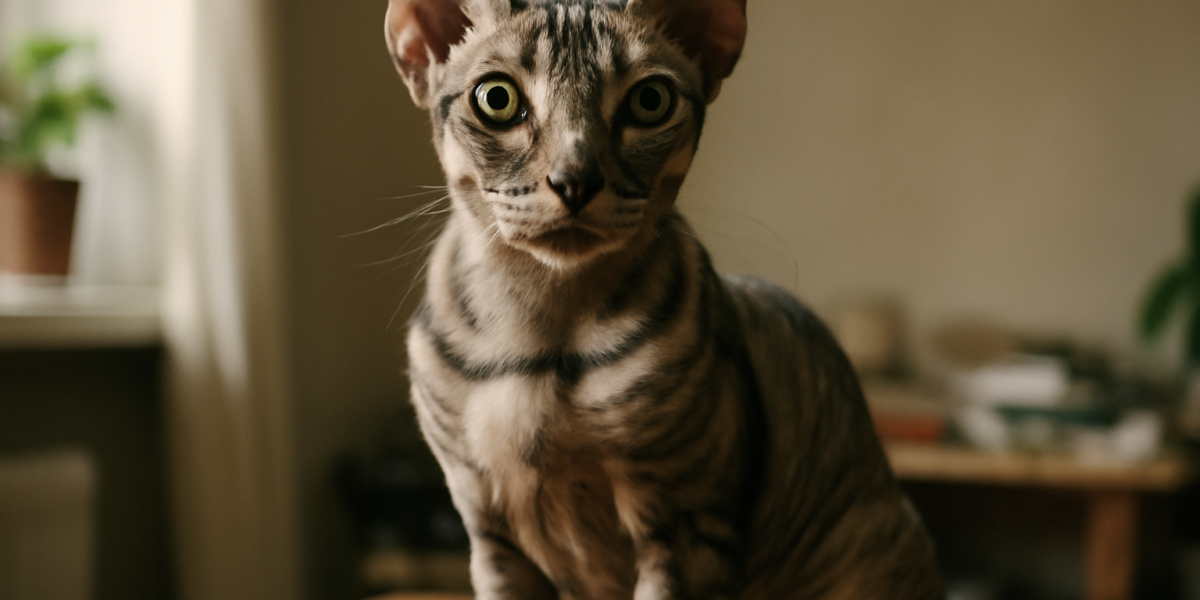
The Levkoy’s body is medium-sized, lean, and angular. The skin can be completely bare or have a light fuzz, similar to the spectrum seen in Donskoys. Folded ears sit forward and downward, creating a striking silhouette. Eyes are almond-shaped and often slightly slanted, contributing to the breed’s distinctive expression.
Coat or skin colors and patterns are diverse because the breed inherited the genetic palette of both parent lines. You can see solid, pointed, tabby, and tortoiseshell patterning in the visible pigment of the skin even in fully hairless cats.
The Ear Trait
Not every Levkoy carries the full folded-ear expression. Some kittens are born with straight ears and others with a partial fold. Both can occur within the same litter. This variation reflects how the gene that creates folded ears is inherited and expressed. From a welfare standpoint, ears that fold less dramatically can suggest a milder degree of cartilage abnormality, but every cat with the folded-ear gene carries some level of cartilage involvement.
Temperament and Personality
Levkoys are typically affectionate, curious, and people-oriented. They enjoy human company and dislike being left alone for long stretches. Many owners describe them as dog-like in their attachment, following you around, demanding lap time, and greeting visitors.
They tend to be playful into adulthood and benefit from interactive games and climbing structures. Like other intelligent cats, they thrive when given puzzle feeders and rotating toys to keep their minds engaged. Our guide to puzzle feeders for cats offers ideas that work well for clever and energetic breeds.
Most Levkoys get along with other cats and friendly dogs in the household, especially when raised together. They are not usually aggressive, though their activity level means they can overwhelm a very calm older cat if introductions are rushed.
Care Requirements
Hairless cats require more daily care than people often realize. Skin produces sebum that, without a coat to absorb it, leaves a slightly oily film on the body and can collect in folds and ear creases. Most Levkoys need regular bathing, gentle ear cleaning, and skin checks for irritation, sunburn, or pressure marks.
Temperature regulation is another concern. Without a coat, Levkoys lose heat quickly in cold weather and overheat readily in warm weather. They need a climate-controlled indoor environment year round. Cat sweaters can help in cooler rooms, while shaded resting spots and good airflow matter in summer.
Joint Care
Because every cat carrying the folded-ear gene has some degree of cartilage abnormality, the Levkoy benefits from joint-conscious care across its life. Avoid jumps from extreme heights by providing intermediate landings on cat trees, watch for stiffness or reluctance to jump, and discuss orthopedic monitoring with your veterinarian as your Levkoy ages. The adult cat wellness checklist and senior cat care checklist outline the kinds of checks that should be on your radar.
Diet
Levkoys often have higher energy needs than typical cats because hairlessness means greater calorie burn for thermoregulation. Feed a complete and balanced food appropriate for the cat’s life stage and adjust portions to match body condition rather than the bag’s recommendation alone.
Health Considerations
The Levkoy carries the health considerations of both parent breeds. From the Scottish Fold side comes osteochondrodysplasia, a cartilage condition that can cause arthritis and joint problems, particularly in the tail, ankles, and knees. From the Donskoy side comes the suite of issues that can come with hairlessness, including skin care needs and temperature sensitivity.
Some Levkoys may also be prone to dental crowding, gum issues, and ear cleanliness problems. Schedule regular dental care, monitor oral health, and address gingivitis early. Our resources on gingivitis in cats and tooth resorption in cats cover dental conditions that any cat can develop.
Honest discussion of welfare concerns matters. Reputable breeders avoid pairing two folded-ear cats together, since doing so significantly increases the severity of cartilage problems in offspring. Ask any breeder about their pairing practices and review documentation of joint health in the parents.
Cost Considerations
Levkoy ownership tends to come with a higher running cost than ownership of an average domestic cat. Bath supplies, ear cleaning supplies, occasional skin treatments, and clothing for cool weather all add up. Climate control across the year keeps the home thermostat in a range that supports a hairless cat year round, which can affect utility bills modestly. None of this is dramatic, but it should not be a surprise after adoption.
Veterinary costs can also run higher than for a typical cat. Joint monitoring as a cat ages, routine skin checks, and the diagnostic work that may follow any new symptom all add to the lifetime cost. Building an emergency fund and budgeting for routine care is wise for any cat, and especially so for a breed with known structural and skin considerations.
Adopting a Ukrainian Levkoy
Levkoys are rarely available in the United States, and almost never appear in general shelters. If one does end up in rescue, it tends to be through specialty hairless-cat rescues or through Donskoy or Sphynx-focused networks that occasionally take in Levkoys as well.
Start with our cat-only rescues overview and the guide to finding a reputable rescue in your state. Read the list of reputable rescue red flags before reaching out to any breeder, especially internationally, since cross-border imports can carry significant health and welfare risks.
If you are open to similar cats already in shelters, hairless cats from other breeds appear more often than Levkoys. The adopting a rescue Sphynx cat guide is a strong starting point if you simply love the hairless look.
Daily Life with a Levkoy
Living with a Levkoy means committing to routines that owners of furred cats rarely need to think about. Bath time happens every couple of weeks for most Levkoys, with gentle cat-safe shampoo and lukewarm water. Between baths, a soft damp cloth wipe-down keeps the skin clean and helps you spot any irritation, scratches, or unusual marks early.
Ear cleaning is more involved than for furred breeds. Without protective fur in and around the ear opening, debris and wax can build up faster. A gentle ear cleaning routine, done weekly with a vet-approved cleaner, prevents most issues. Always check the ears as part of any after-bath drying session.
Skin protection matters in unexpected ways. Even sunlight through a window can cause sunburn on lighter-skinned areas of a Levkoy. Position favorite resting spots away from direct strong sun, or use UV-blocking window film in particularly bright rooms. Watch for redness, peeling, or dry patches that suggest sun exposure has been too much.
Toy choices benefit from extra thought too. Rough or sharp-edged toys that a furred cat would handle without injury can scratch or bruise a hairless Levkoy. Soft fabric toys, smooth wand toys, and rounded puzzle feeders are safer choices.
Is a Ukrainian Levkoy Right for You?
This breed asks a lot from its owner. Hands-on grooming, climate control, joint-aware home setup, and ongoing veterinary engagement are not optional. If you are interested in the look but new to hairless cats or to breeds with cartilage concerns, you may want to start with a more established hairless breed and learn the care rhythms before committing to a Levkoy.
For experienced cat households who go in clear-eyed about both the joys and the medical realities, the Levkoy can be a deeply rewarding companion. Just be honest with yourself before adopting, and never adopt a Levkoy from a breeder who minimizes the welfare concerns surrounding the folded-ear gene.
Frequently Asked Questions
Are Ukrainian Levkoys hypoallergenic?
No cat is truly hypoallergenic. Hairless cats including Levkoys still produce the Fel d 1 protein in saliva and skin oil that causes most cat allergies. Some allergic people tolerate hairless cats slightly better, but reactions vary and a trial visit before adopting is essential.
Do all Levkoys have folded ears?
No. Some Levkoys are born with straight ears even when both parents carry the gene. Both straight-ear and folded-ear cats can come from the same litter. Folded ears are the breed’s signature, but they are not universal.
Is the folded-ear gene a problem?
Yes, in honesty. The gene that produces folded ears is a cartilage mutation, and every cat carrying it has some degree of cartilage abnormality. Severity varies, and reputable breeders never pair two folded-ear cats together. This is a real welfare concern worth understanding.
How much grooming does a Levkoy need?
More than a furred cat. Plan on regular bathing, weekly ear cleaning, and daily checks for skin irritation. Hairless does not mean low maintenance.
Where can I find a Ukrainian Levkoy?
The breed is very rare outside Ukraine and Russia. If one is available domestically, it is most often through breed-specific networks or Donskoy and Sphynx rescues. Be patient and avoid international imports unless you have done thorough due diligence on the breeder and the welfare standards involved.
Looking to adopt a Ukrainian Levkoy Cat Breed Profile?
Browse Ukrainian Levkoy Cat Breed Profile cats and mixes available for adoption from shelters and rescues near you.
Find Ukrainian Levkoy Cat Breed Profile Cats for Adoption