Last updated: May 4, 2026
In this article
Overview of the Ural Rex
The Ural Rex cat is a rare wavy-coated breed that traces its origins to the Ural region of Russia. Unlike the better-known Cornish and Devon Rex breeds, the Ural Rex carries its own distinct rex mutation, meaning the gene that produces its curly coat is genetically separate from the curl genes found in those western European breeds. That makes the Ural Rex a genuine Russian native rather than a transplant or close relative.
The breed is medium-sized, athletic, and graceful, with a soft wavy coat that varies from a tight crimp to a looser ripple depending on the individual. Its temperament is friendly and people-oriented, and it has none of the extreme physical features that some rare breeds carry. Personality and coat are the main draws, not exaggerated structure.
Ural Rex cats are very rare outside of Russia. Population numbers are modest, and most cats live within their country of origin or in a handful of European programs. If you are drawn to wavy coats, it helps to understand all your options. Our roundup of cat breeds with curly coats shows the Ural Rex alongside its peers in a single comparison.
History and Origins
The Ural Rex emerged from naturally occurring wavy-coated cats spotted in Russia’s Sverdlovsk Oblast in the Ural region during the mid twentieth century. Local breeders worked over decades to stabilize the coat trait and develop a consistent type. Recognition came slowly, with the breed gaining recognition through some European registries in recent decades.
Genetic studies suggest the Ural Rex carries a recessive coat mutation that is independent of the Cornish Rex and Devon Rex genes. That distinction matters because crossing a Ural Rex with another rex breed does not necessarily produce wavy-coated kittens. The trait is uniquely Ural.
For more on the Russian breed scene, our overview of cat breeds from Russia places the Ural Rex among the country’s bobtailed, longhaired, and color-defined breeds, and shows how its coat trait stands apart.
Appearance and Coat
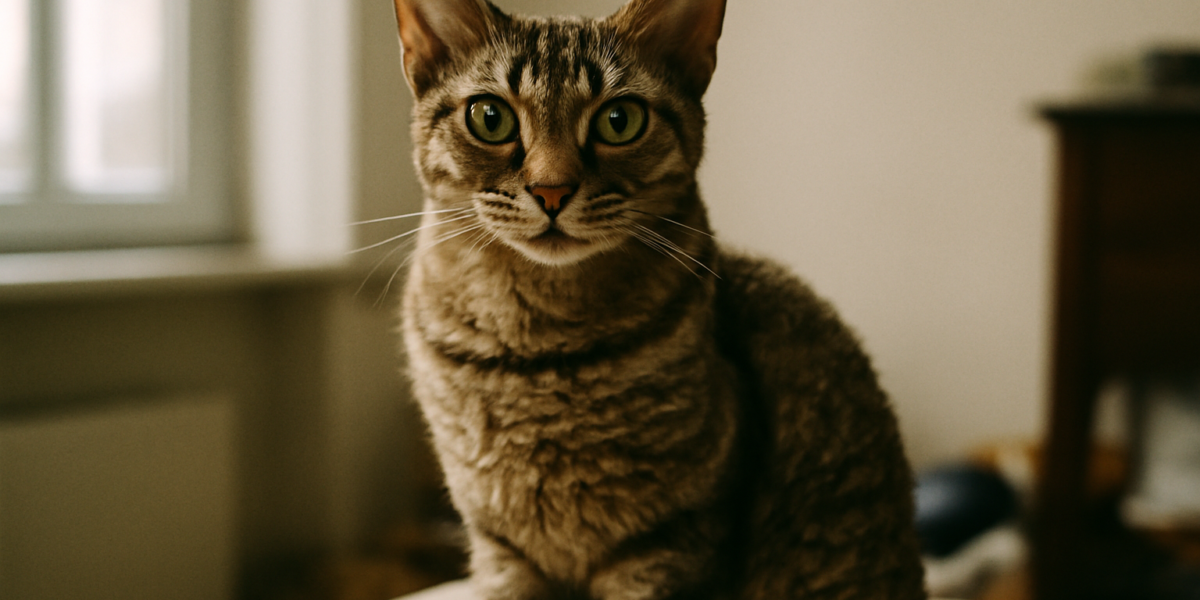
The Ural Rex has a medium build with balanced proportions. The head is wedge-shaped with rounded contours, the ears are medium and set wide, and the eyes are oval and expressive. The body is muscular without being heavy, and the legs are slender but strong.
The defining feature is the coat. Each hair has a wavy or curly structure, and the texture feels soft and slightly silky to the touch. The coat sits close to the body and rarely sheds heavily, which appeals to people who prefer a tidier home environment. Coat length varies from short to semi-long, with both versions accepted within the breed.
Coat Care
Despite the curls, the Ural Rex coat is not high-maintenance. A weekly comb-through with a wide-tooth tool is usually enough to keep waves intact and prevent any tangling. Bathing is rarely needed unless the cat gets into something. Avoid stiff brushes that can damage the curl pattern, and let the coat air dry naturally after any wash.
Coat Compared to Cornish and Devon Rex
If you have met a Cornish Rex or Devon Rex before, you will notice the Ural Rex coat sits between the two. It is not as flat as the Cornish or as loose as the Devon. Our Devon Rex vs Cornish Rex comparison gives useful baseline reading for understanding what each rex variation looks and feels like.
Temperament and Personality
Ural Rex cats are warm, friendly, and adaptable. They tend to bond closely with their humans, follow them around the house, and prefer company over solitude. They are not especially demanding or noisy, but they do want to be involved in your day. Many owners describe them as quietly devoted rather than dramatically expressive.
The breed is intelligent and curious. They learn routines quickly, appreciate puzzle toys, and often pick up small games or tricks if rewarded with patience and treats. They are usually compatible with calm dogs and other cats, especially when raised together from kittenhood.
Ural Rex cats often do well in multi-pet households where introductions are handled gradually. If you already have a resident cat, the steps in introducing a kitten to a resident cat apply directly to introducing a young Ural Rex.
Care and Daily Living
Practical care for a Ural Rex looks much like care for any healthy medium-sized cat. Provide a complete and balanced food matched to life stage, fresh water in clean bowls or fountains, and a litter setup that keeps up with their cleanliness preferences. Most Ural Rex cats are fastidious about their litter areas.
Enrichment matters because this is a thinking cat. Window perches, climbing trees, rotating toys, and short play sessions across the day prevent boredom. Our guide to the best indoor cats includes setup tips that translate well to keeping a Ural Rex content as a fully indoor companion.
Veterinary Care
Maintain a yearly wellness exam, follow age-appropriate vaccinations, and watch dental health from kittenhood. The cat vaccination schedule and annual vet exam for cats guides are good baseline references for any new cat owner.
Health Considerations
The Ural Rex is generally a healthy breed with no widely documented breed-specific issues. The relatively narrow gene pool of any rare breed warrants ongoing careful breeding to avoid the inbreeding-related issues that can creep in when populations stay small, but the Ural Rex coat mutation itself is not associated with any known welfare concerns the way some other coat or structure mutations are.
Standard feline health monitoring applies. Watch for changes in appetite, weight, litter habits, and activity level, and address them early. As your Ural Rex enters senior years, the senior cat care checklist covers what to keep on your radar.
The Rex Coat Genetics Briefly
The Ural Rex coat trait is recessive, meaning a kitten needs to inherit the gene from both parents to show the wavy coat. Two carrier parents who do not themselves show the trait can produce wavy-coated kittens, while a Ural Rex paired with a non-rex cat produces only carriers in the first generation. This is part of why preserving the breed requires careful breeding rather than open outcrossing.
Importantly, because the Ural Rex coat gene is genetically distinct from the Cornish and Devon Rex genes, crossing breeds does not produce wavy kittens. A Ural Rex paired with a Cornish Rex would produce kittens carrying one copy of each gene but showing neither coat trait. This is one reason the Ural Rex is considered a unique breed rather than a regional variation of an existing rex line.
For adopters, the genetics matter mostly because it affects availability. The recessive trait means that not every kitten in a Ural Rex litter is necessarily wavy-coated, and some kittens are placed in pet homes specifically because they did not inherit the visible coat trait. These kittens still have wonderful temperaments and the breed’s general health profile.
Adopting a Ural Rex
Ural Rex cats are extremely rare in the United States, and finding one through a shelter is unlikely. Most adoption opportunities run through breed-specific networks in Europe or through occasional surrenders to rex-aware rescues. Patience and willingness to wait are essential.
If you are open to a wavy-coated cat in general, your odds of finding one through ethical channels rise significantly. Cornish Rex and Devon Rex cats appear in shelters more often, and rescues sometimes have curly-coated mixed-breed cats whose coats look similar to a Ural Rex even without the pedigree. Our cat-only rescues overview and the guide to finding a reputable rescue in your state outline how to expand your search.
Whether you go rescue or breeder, screen carefully. Read our list of reputable rescue red flags and ask any breeder about coat genetics, parent health, and socialization before committing.
Daily Life with a Ural Rex
The Ural Rex slots easily into most households because the breed is adaptable and reasonably independent. They are not as demanding as some highly social breeds, but they appreciate consistent attention and a daily play session or two. A morning play burst followed by quieter afternoon company often works well, especially in households where humans work from home.
Resting spots matter for any cat, and the Ural Rex is no exception. They like soft elevated perches that overlook the room, and they often pick a few favorite spots that they rotate through during the day. A window perch in a quieter room can become their preferred observation deck, while a soft bed near the family’s main living area becomes their evening lounge.
Multi-cat households often work well because the breed tends to be tolerant rather than territorial. Resource sharing matters as always, with multiple food bowls, water sources, and litter boxes spread through the house to prevent any single cat from feeling cornered. The principle of one litter box per cat plus one extra holds for any multi-cat home.
If you are considering a Ural Rex specifically because you want a unique-looking pet, take a moment to weigh whether the visual difference matters more than the genuinely available alternatives. Curly-coated cats with similar charm appear in shelters and through better-known rex breed rescues, and many would be happy in your home. Our Selkirk Rex breed profile covers another curly-coated option that may be easier to find domestically.
Is a Ural Rex Right for You?
The Ural Rex suits people who love the look of a wavy-coated cat and want a friendly, mid-energy companion. They do well in apartments, family homes, and quieter households, and they prefer not to be left alone for very long stretches.
If you specifically want a Ural Rex pedigree, set realistic expectations about availability and travel. If you simply want a curly-coated cat with a sweet temperament, broaden your search to include other rex breeds and shelter cats with similar looks.
Frequently Asked Questions
What makes the Ural Rex different from other rex breeds?
The Ural Rex carries a coat mutation that is genetically distinct from the Cornish and Devon Rex genes. The visual result is similar curls, but the genetic origin is unique to Russian native lines.
Are Ural Rex cats hypoallergenic?
No cat is truly hypoallergenic. Some people tolerate rex coats slightly better because the curly fur sheds less, but the Fel d 1 protein responsible for most cat allergies is still present.
Do Ural Rex cats need a lot of grooming?
No. A gentle weekly comb is usually enough to keep the curls looking tidy. Avoid stiff brushes that can flatten the wave pattern.
Can I find a Ural Rex in the United States?
It is very rare. Most Ural Rex cats live in Russia and a few European countries. If finding the breed itself proves impossible, related rex breeds offer a similar look and are easier to source through ethical channels.
Are Ural Rex cats good with families?
Yes, generally. They are gentle, sociable, and adaptable to households with children and other respectful pets. Calm introductions and supervised play set them up to thrive.
Looking to adopt a Ural Rex Cat Breed Profile?
Browse Ural Rex Cat Breed Profile cats and mixes available for adoption from shelters and rescues near you.
Find Ural Rex Cat Breed Profile Cats for Adoption