
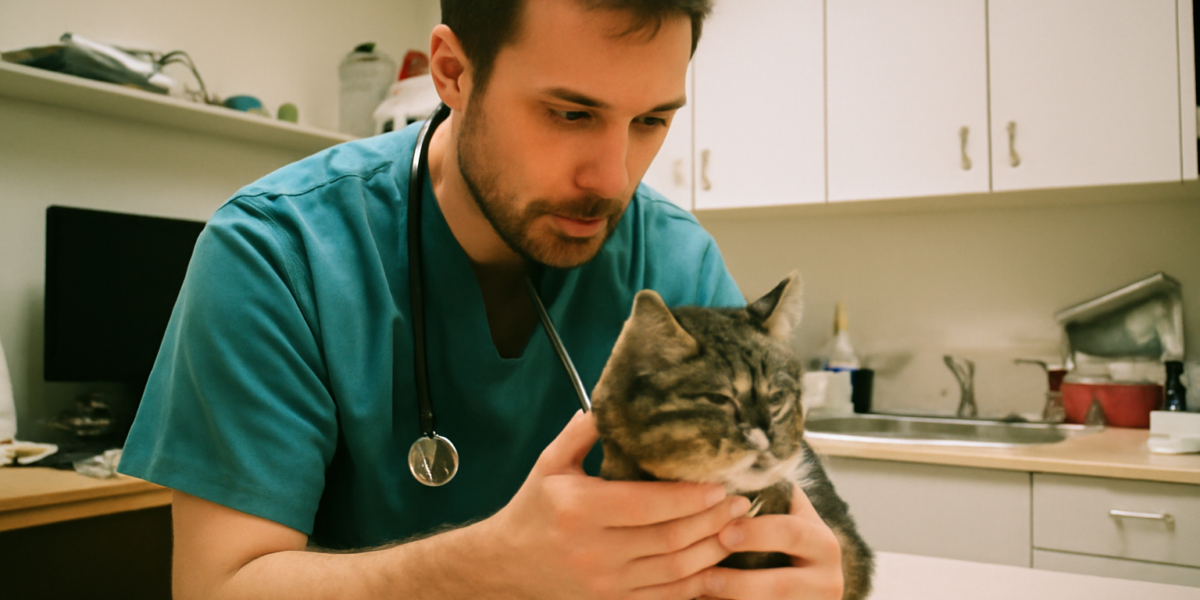
Cats are masters at hiding illness, which makes the annual vet exam for cats uniquely important. Unlike dogs, who often show obvious signs when something is wrong, cats can have advanced kidney disease, hyperthyroidism, dental disease, or hypertension while still eating, drinking, and acting “normal” at home. The annual visit is your earliest detection tool — and your vet’s best chance to catch problems while they’re treatable.
In this article
- Why Cats Need Annual Exams Even Indoors
- Reducing Carrier and Travel Stress
- What to Bring
- Check-In and Vital Signs
- The Hands-On Physical Exam
- Diagnostic Testing
- Vaccinations and Preventive Care Updates
- Dental Assessment
- Lifestyle, Behavior, and Nutrition Discussion
- Questions Worth Asking
- Cost Expectations
- After the Visit
- Frequently Asked Questions
This guide walks through everything that happens at a feline wellness exam, what to bring, questions worth asking, and strategies for reducing stress for cats who hate the carrier and the clinic. For broader yearly planning, pair with our adult cat wellness checklist.
Why Cats Need Annual Exams Even Indoors
Surveys consistently show cats see vets less often than dogs, despite generally having more silent disease. Indoor-only cats are not exempt from chronic kidney disease, hyperthyroidism, diabetes, hypertension, dental disease, or cancer — these conditions develop independent of outdoor exposure.
The annual exam catches:
- Heart murmurs that may indicate hypertrophic cardiomyopathy
- Dental disease invisible to owners (especially tooth resorption)
- Subtle weight loss often signaling early kidney disease or hyperthyroidism
- Abdominal masses or organ changes
- Hypertension (high blood pressure causing retinal damage and kidney injury)
- Behavior changes the owner didn’t realize were medical
Many cat owners discover their cat has been losing weight only when the vet weighs them — kitchen-counter eyeballing isn’t reliable. The exam is also when vaccines, parasite prevention, and bloodwork get scheduled.
Reducing Carrier and Travel Stress
Half the battle of the annual exam is getting the cat there calmly. Strategies that work:
- Leave the carrier out year-round as a familiar piece of furniture, with bedding inside and treats placed occasionally — it stops being a “vet trap”
- Use a hard-sided carrier with a removable top — your vet can examine the cat in the carrier bottom without forcing them out
- Spray Feliway (synthetic feline pheromone) on a towel placed in the carrier 15 minutes before transport
- Cover the carrier with a towel in the car and waiting room to reduce visual stimulation
- Drive smoothly — secure the carrier with a seatbelt to prevent sliding
- Ask about pre-visit medications like gabapentin, which has good evidence for reducing feline travel and exam stress
- Find a Cat Friendly Practice (cfp.catvets.com) — these clinics meet AAFP standards for feline-specific handling and environment
Many vets also offer house calls for severely stressed cats. The cost is higher but the data quality may be better.
What to Bring
Before the appointment, gather:
- A current medication and supplement list with doses
- A fresh stool sample if your vet requested one (collected within 12 hours, kept cool)
- Notes on any changes in eating, drinking, litter box use, weight, activity, or behavior since the last visit
- A written list of questions or concerns
- Vaccination and medical records if you’re new to the practice
- Pet insurance information if applicable
- Photos or videos of any concerning behaviors at home (cats often won’t reproduce odd behaviors in the clinic)
Check-In and Vital Signs
The visit usually starts with weighing your cat, recording temperature (cats run 100 to 102.5°F), pulse, and respiration rate. Weight is one of the most useful pieces of data — losing 10% body weight in a year signals a problem until proven otherwise.
The technician will ask about diet, water intake, litter box habits, indoor/outdoor status, and any changes you’ve noticed. Be specific — “she eats less than she used to” is less helpful than “she’s leaving half her morning meal twice a week.”
The Hands-On Physical Exam
Your veterinarian will systematically examine your cat. Expect them to:
- Check eyes for clarity, retinal abnormalities (visible signs of hypertension), and discharge
- Look in ears for redness, mites, debris, or polyps
- Examine teeth and gums for tartar, gingivitis, fractured teeth, resorptive lesions, and oral masses
- Palpate lymph nodes
- Listen to the heart for murmurs, rate, rhythm, and gallop sounds
- Listen to the lungs for wheezes or crackles (asthma is more common in cats than people realize)
- Palpate the abdomen for kidneys, liver, spleen, intestines, and bladder size
- Palpate the thyroid (an enlarged thyroid often signals hyperthyroidism)
- Check joints for stiffness or pain (arthritis is grossly underdiagnosed in cats)
- Run hands over the entire body checking for lumps and skin issues
- Assess body condition and muscle condition scores
Many cats have subtle abnormalities that owners miss — small thyroid enlargements, slight kidney size changes, early dental disease — that the trained hands of a vet catch immediately.
Diagnostic Testing
Depending on age and history, your vet may recommend:
- Baseline bloodwork — CBC, chemistry, T4 (thyroid), urinalysis. Often starting at age 1 to 3 and continued annually. SDMA is now standard on most chemistry panels for early kidney disease detection. See our annual bloodwork for cats guide.
- FeLV/FIV testing — at adoption and after exposure to outdoor or unknown-status cats. See our FeLV and FIV testing for cats guide.
- Fecal exam — checks for intestinal parasites; some are zoonotic
- Blood pressure measurement — recommended starting at mature adult years (7+)
- Urinalysis — important for kidney function and urinary tract health
- Heartworm testing — annual for cats on prevention in heartworm-endemic regions
Vaccinations and Preventive Care Updates
Per AAFP 2020 Feline Vaccination Guidelines, core vaccines (FVRCP and rabies) are typically boostered every three years after the initial kitten series and one-year booster. FeLV is recommended annually for at-risk cats (outdoor or multi-cat households with unknown status).
This is also when parasite preventives are refilled. Indoor cats benefit from year-round broad-spectrum products like Revolution Plus or Bravecto for cats — fleas, mosquitoes (heartworm vector), and intestinal parasites all reach indoor cats. See our adult cat vaccination schedule guide for details.
Dental Assessment
Your vet will grade dental disease and look specifically for tooth resorption — a painful, progressive condition unique to cats where tooth structure is reabsorbed by the body. Resorption can only be confirmed by dental x-rays under anesthesia and treated by extraction. If your vet recommends a dental cleaning, take it seriously; cats hide oral pain extremely well.
For home dental care strategies, see our adult cat dental care guide.
Lifestyle, Behavior, and Nutrition Discussion
The annual visit is the right time to discuss anything that doesn’t fit a clean diagnostic category: appetite changes, finicky eating, multi-cat household tensions, litter box issues, vocalization changes, grooming changes (over-grooming or under-grooming), travel plans, or food preferences.
Bring up nutrition — many cats benefit from wet food primary diets, especially as they age. See our adult cat nutrition guide.
Questions Worth Asking
Adapt to your cat:
- Is my cat at an ideal body weight? What body condition score did you give?
- How does the dental disease look? Does she need a cleaning?
- Are there any new lumps or skin issues I should monitor?
- Is the heart murmur (if present) significant? Should we follow up?
- Should we start baseline bloodwork? Is anything trending?
- Should we measure blood pressure today?
- Am I using the right parasite prevention?
- Are there any vaccines I’m overdue for or could skip?
- Any signs I should watch for at home given his age and history?
- When should we transition toward senior care protocols?
Cost Expectations
Costs vary by region, practice type, and what tests are run. A basic exam with rabies booster and a simple parasite check is one tier; a full workup with bloodwork, urinalysis, dental cleaning estimate, and lifestyle vaccines is much higher. Always ask for an estimate before tests are run if cost is a concern.
Wellness plans (monthly subscriptions covering routine care) can spread cost over the year. Pet insurance with wellness add-ons may offset annual visit costs; standard accident-and-illness coverage typically does not include routine exams.
After the Visit
You should leave with a written summary including weight, vaccinations administered, prescriptions written, recommendations, and any follow-up items. Schedule the next visit before you leave — and consider booking that follow-up bloodwork recheck or dental cleaning before stress and forgetting take over.
Once home, give your cat a quiet space to decompress. Some cats are stressed for a day or two after a vet visit, especially in multi-cat homes where they return smelling of clinic. A Feliway plug-in helps the transition.
Frequently Asked Questions
How long does an annual cat exam take?
Plan for 30 to 60 minutes from check-in to checkout. Stress-reducing protocols (slower pacing, in-carrier exam, frequent breaks) can extend this — and that’s a good thing.
What if my cat hates the carrier?
Leave the carrier out year-round as familiar furniture, use Feliway, and ask about pre-visit medications like gabapentin. Some cats also do better with house calls. Cat Friendly Practices (cfp.catvets.com) follow protocols designed to reduce feline stress.
Should I feed my cat before the visit?
A small meal is usually fine. Skip food entirely if your vet ordered fasting bloodwork (typically a 12-hour fast). Bring high-value treats for distraction.
Does my indoor-only cat really need an annual exam?
Yes. Indoor cats develop kidney disease, hyperthyroidism, diabetes, dental disease, and cancer at the same rates as outdoor cats. Annual exams catch silent disease early.
What if my cat is too stressed for a thorough exam?
Talk to your vet about pre-visit gabapentin, fear-free or Cat Friendly Practice protocols, or sedation for a more thorough workup. Skipping the visit entirely is not the answer.
How often should mature and senior cats see the vet?
Twice yearly starting around age 7 (mature adult), continuing into senior years. The interval shortens because age-related diseases progress between annual visits.


