
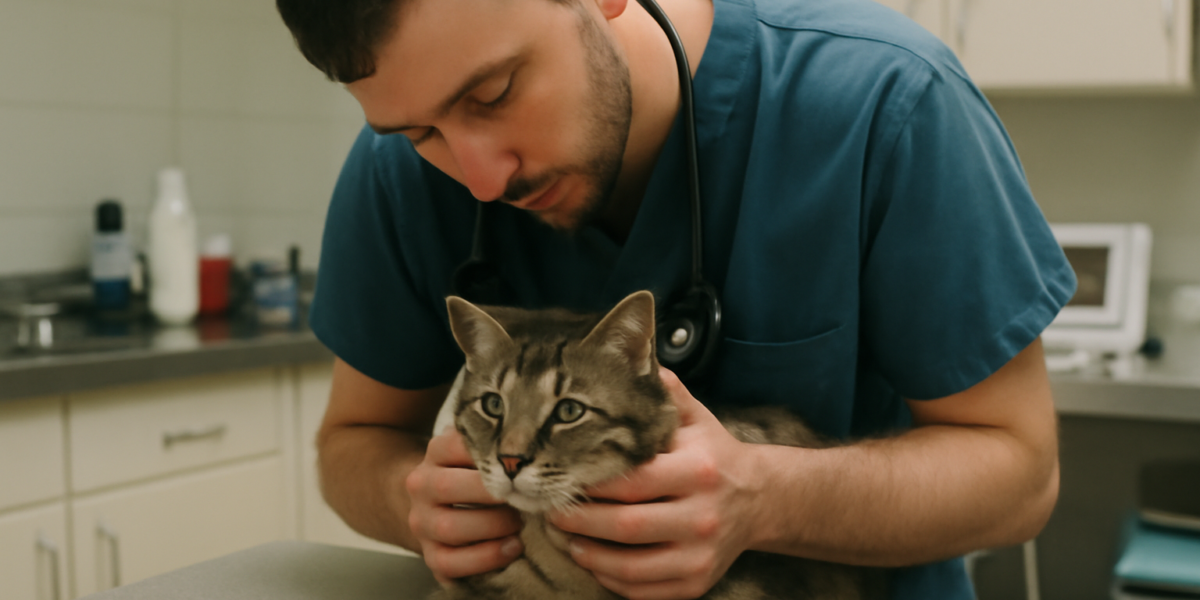
Cats hide illness so effectively that bloodwork is often the earliest detector of serious disease — frequently catching chronic kidney disease, hyperthyroidism, and diabetes long before any clinical signs appear. Annual bloodwork for cats is recommended starting in adulthood and shifts to twice yearly in mature and senior years. Catching silent disease early changes outcomes dramatically: a cat with stage 1 kidney disease has a much different prognosis than one diagnosed at stage 3.
In this article
- Why Bloodwork Matters So Much in Cats
- What’s in a Standard Wellness Panel
- When to Start Annual Bloodwork
- Understanding Key Kidney Values
- Hyperthyroidism Screening
- Diabetes Screening
- Blood Pressure: Often Overlooked
- Pre-Anesthetic Bloodwork
- Cost Considerations
- Working With Your Vet
- How to Prepare Your Cat for Bloodwork
- Tracking Trends Over Time
- Frequently Asked Questions
This guide covers what tests to run at each life stage, what the values mean, and why senior wellness panels are some of the most valuable veterinary spending you can do. For broader yearly care, see our adult cat wellness checklist.
Why Bloodwork Matters So Much in Cats
The conditions most common in adult and senior cats — chronic kidney disease (CKD), hyperthyroidism, diabetes mellitus, hypertension — all develop slowly and silently. By the time owners notice clinical signs (weight loss, increased thirst, vomiting, behavior changes), the disease is often well advanced.
Early detection through routine bloodwork allows:
- CKD — dietary management, hydration support, and BP control can substantially extend quality life
- Hyperthyroidism — multiple effective treatments (methimazole, I-131, surgery, y/d diet) that work best when started before secondary cardiac and kidney damage develops
- Diabetes — early intervention with diet and insulin can sometimes achieve remission, especially in newly diagnosed cats
- Hypertension — treatable with amlodipine before retinal damage, kidney injury, or stroke occur
None of these conditions reverse on their own. Catching them early is the entire point of routine screening.
What’s in a Standard Wellness Panel
A complete adult cat wellness panel typically includes:
- Complete Blood Count (CBC) — red blood cells, white blood cells, platelets. Detects anemia, infection, inflammation, certain cancers.
- Chemistry panel — kidney values (BUN, creatinine, SDMA), liver values (ALT, AST, ALP, GGT, bilirubin), electrolytes (sodium, potassium, chloride), protein (total protein, albumin, globulin), glucose, calcium, phosphorus
- T4 (total thyroid hormone) — screens for hyperthyroidism (and rare hypothyroidism)
- Urinalysis — concentration, pH, protein, glucose, blood, sediment exam. Critical for kidney assessment.
- FeLV/FIV testing — at adoption and after exposure. See our FeLV and FIV testing for cats guide.
For mature and senior cats, add:
- Blood pressure measurement — using doppler or oscillometric methods
- SDMA (already standard on most chemistry panels now) — sensitive early kidney marker that catches CKD before creatinine rises
- Urine protein:creatinine ratio — detects early kidney protein leakage
- Free T4 — added when total T4 is borderline or hyperthyroidism is suspected despite normal total T4
When to Start Annual Bloodwork
AAFP and feline veterinary specialists generally recommend:
- Kitten — initial baseline at the kitten wellness visits, especially before sedation or anesthesia
- Young adult (1-6 years) — baseline wellness panel by age 1 to 3, then annually for monitoring trends
- Mature adult (7-10 years) — twice-yearly exams with annual to biannual bloodwork. Add SDMA emphasis and BP measurement.
- Senior (11+ years) — twice-yearly exams with twice-yearly bloodwork. Full senior wellness panel each time.
Some young healthy cats can run annual bloodwork on a biennial basis if budget is constrained, but established baselines matter when problems eventually develop. The longitudinal trend is often more diagnostic than any single value.
Understanding Key Kidney Values
Cats lose 60% to 75% of kidney function before traditional markers (creatinine, BUN) rise out of normal range. SDMA (symmetric dimethylarginine) is more sensitive — it can rise when only 25% to 40% of function is lost.
What to track:
- SDMA — rising values, even within normal range, warrant attention
- Creatinine — increases with muscle loss as well as kidney loss; interpret in context
- BUN — affected by hydration, diet, GI bleeding
- Urine specific gravity — cats should concentrate urine to >1.035; lower values suggest kidney compromise
- Phosphorus — rises in advanced kidney disease
- Potassium — often drops in CKD, contributing to weakness
If your cat’s bloodwork shows trends suggesting CKD, see our chronic kidney disease in cats guide for management.
Hyperthyroidism Screening
Hyperthyroidism is the most common endocrine disease in older cats. T4 measurement at the wellness visit is the standard screen. A high T4 confirms diagnosis; a borderline T4 may prompt free T4 testing or repeat measurement.
Hyperthyroid cats often present with:
- Weight loss despite increased appetite
- Increased thirst and urination
- Hyperactivity, irritability, vocalization
- Vomiting or diarrhea
- Unkempt coat
- Heart murmur or elevated heart rate
Many cats are diagnosed before signs are obvious because routine T4 caught the early elevation. See our hyperthyroidism in cats guide for treatment options.
Diabetes Screening
Glucose on the chemistry panel screens for diabetes, but interpretation requires care — stress hyperglycemia is common in cats during vet visits. A single elevated glucose in a stressed cat doesn’t equal diabetes.
Better diagnostic tools:
- Fructosamine — reflects average glucose over 1-2 weeks, unaffected by acute stress
- Urine glucose — present when blood glucose has been elevated long enough to spill
- Clinical signs — increased thirst, urination, weight loss despite eating, plantigrade stance from neuropathy
Diabetes caught early — especially in cats with appropriate body condition and diet adjustment opportunities — has the best chance of remission. See our diabetes mellitus in cats guide for management.
Blood Pressure: Often Overlooked
Hypertension is common in older cats and frequently goes undiagnosed. It causes:
- Sudden blindness from retinal detachment
- Stroke
- Worsening kidney disease
- Cardiac changes
BP measurement should be added to the senior wellness exam. Cat-friendly measurement protocols (calm room, doppler with gel and cuff on the tail or limb, multiple readings, allow cat to relax) yield more reliable values than rushed measurements.
If your cat is diagnosed with hypertension, treatment is typically amlodipine, often with secondary causes (CKD, hyperthyroidism) treated concurrently.
Pre-Anesthetic Bloodwork
Any anesthetic procedure (dental cleaning, mass removal, sedation for imaging) should be preceded by bloodwork to assess organ function and red blood cell counts. Cats with previously unrecognized kidney disease, anemia, or liver problems are at higher anesthetic risk; pre-anesthetic bloodwork allows protocol adjustment.
If you’re scheduling an annual exam and a dental cleaning, your vet may bundle the wellness panel with pre-anesthetic screening.
Cost Considerations
A standard wellness panel costs more than a basic visit but is one of the highest-value diagnostic spending in feline care. Many practices offer discounted “senior wellness packages” combining exam, bloodwork, urinalysis, and BP.
Pet insurance typically does not cover wellness bloodwork (it’s preventive, not diagnostic of an active illness), though wellness add-on plans may. Saving on bloodwork is generally false economy — a missed early CKD diagnosis costs far more in eventual emergency care.
Working With Your Vet
At the annual exam (or biannual for mature/senior cats), discuss:
- What bloodwork is currently due
- How to interpret recent results in context of trends
- Whether any values warrant retesting sooner
- Whether to add specialty tests (free T4, urine protein:creatinine, etc.)
- Pre-anesthetic screening if dental cleaning is being scheduled
For everything else that happens at the visit, see our annual vet exam for cats guide.
How to Prepare Your Cat for Bloodwork
Bloodwork in cats can be stressful, both for the cat and for the team drawing the sample. Some preparation reduces the stress and improves data quality:
- Fasting — many panels are most accurate after a 12-hour fast. Confirm with your vet; some screening panels don’t require it.
- Hydration — never withhold water before bloodwork. Dehydrated cats yield less reliable values, especially for kidney function.
- Pre-visit medications — gabapentin given 1 to 2 hours before the appointment significantly reduces stress in many cats. Ask your vet about a trial dose ahead of time.
- Carrier acclimation — keep the carrier out year-round, with familiar bedding inside. Spray Feliway 15 minutes before placing your cat in.
- Cat Friendly Practice — clinics certified through the AAFP Cat Friendly Practice program follow protocols designed to reduce feline stress. Find one at cfp.catvets.com.
Stress hyperglycemia is a real phenomenon — stressed cats can have glucose values that look diabetic without actually being diabetic. Calmer cats produce more interpretable bloodwork. The investment in stress reduction pays off in diagnostic accuracy.
Tracking Trends Over Time
A single bloodwork value matters less than the trend. A creatinine of 1.8 in a cat whose values have been steady at 1.6 to 1.8 for three years means something different than a creatinine of 1.8 in a cat who was 1.2 last year. Annual bloodwork builds the trend; trends drive earlier and better diagnoses.
Many vet portals now display historical results graphically. If yours doesn’t, request copies of past results so you can compare year over year. For cats with established conditions (CKD, hyperthyroid, diabetes), trend tracking guides treatment adjustment more than any single number.
Frequently Asked Questions
When should I start annual bloodwork on my cat?
By age 1 to 3 for baseline establishment, then annually for healthy adults. Twice yearly starting around age 7 (mature adult) and continuing into senior years.
What does SDMA test for?
Symmetric dimethylarginine — a sensitive marker for kidney function that detects CKD earlier than creatinine. Standard on most modern chemistry panels.
Does my cat need to fast before bloodwork?
Some chemistry values (glucose, triglycerides) are affected by recent meals. A 12-hour fast is often recommended. Confirm with your vet — a small meal is usually fine for screening panels but may affect specific values.
How is hyperthyroidism diagnosed?
Total T4 on the wellness panel screens for it; elevated T4 confirms diagnosis. Borderline values may prompt free T4 testing or repeat measurement. Many cats are caught before clinical signs are obvious.
Why is blood pressure measurement important?
Hypertension is common in older cats, often silent until it causes blindness, stroke, or kidney damage. Treatable with amlodipine. Add BP to senior wellness exams.
How often should senior cats have bloodwork?
Twice yearly starting around age 7 (mature adult). Cats with diagnosed conditions or significant trends may need more frequent monitoring. Discuss the right cadence with your vet.


