
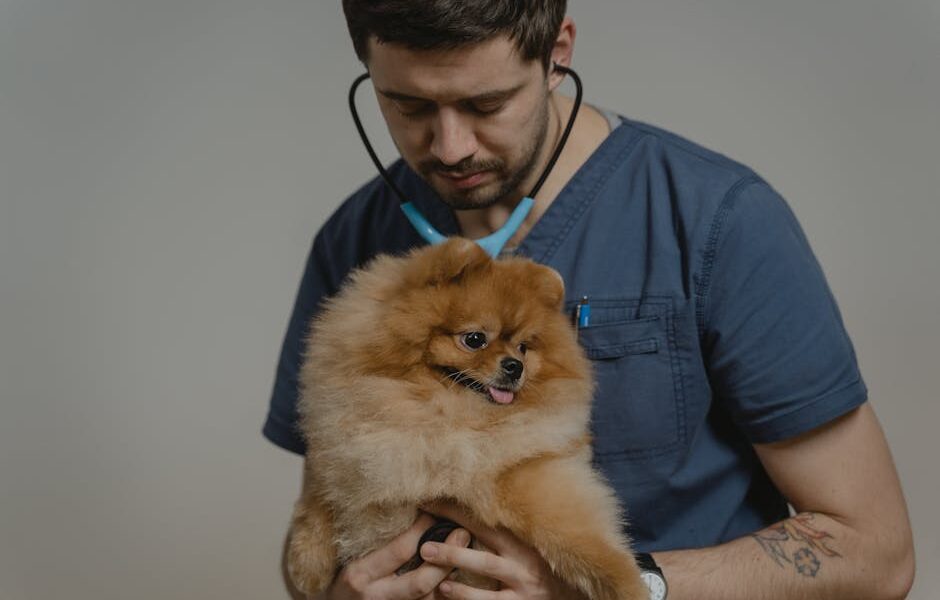
What Veterinary Massage Is — and Why It Sits in a Different Tier
Veterinary massage is the systematic application of hands-on soft tissue techniques to companion animals for therapeutic purposes — increasing circulation, reducing muscle tension, supporting recovery from injury or surgery, and improving comfort and mobility in chronic conditions. Techniques range from light effleurage (gliding strokes) and petrissage (kneading) used for general relaxation and circulation, to more focused work such as cross-fiber friction, trigger-point therapy, and myofascial release used for specific soft-tissue dysfunction.
In this article
- What Veterinary Massage Is — and Why It Sits in a Different Tier
- Evidence Tier — STRONG for Circulation and Relaxation, EMERGING for Specific Pain Syndromes
- Certification Pathways and Practitioner Types
- Where Veterinary Massage Earns Its Place
- Myofascial Release — What It Is and When It Helps
- Owner-Trainable Home Massage Routines
- Massage in Hospice and End-of-Life Care
- Where Massage Fits Among Other Manual Therapies
- Cost Framing and Practical Application
- Owner Role — Coordination, Tracking, Home Application
- Frequently Asked Questions
Myofascial release specifically addresses the fascia — the connective-tissue network surrounding muscles and binding the musculoskeletal system together. Restrictions in fascia can contribute to chronic pain, restricted range of motion, and compensatory dysfunction; myofascial release techniques (fascial unwinding, sustained pressure on restricted tissue, trigger-point work) aim to release these restrictions and restore normal tissue mobility.
Compared to several other manual modalities covered in this batch, veterinary massage sits in a more evidence-supported tier for its core indications (circulation, relaxation, soft-tissue rehab) and has the additional virtue of being a modality where owners can be taught to participate at home. That combination — solid evidence support plus owner-trainable home application — gives massage a particularly practical role in many integrative-medicine plans.
Evidence Tier — STRONG for Circulation and Relaxation, EMERGING for Specific Pain Syndromes
Evidence tier — STRONG (for circulation, relaxation, and general soft tissue work); EMERGING (for specific pain-syndrome benefit). The mechanistic and clinical evidence for massage’s effect on circulation, parasympathetic activation, soft tissue mobility, and general well-being is robust in human medicine and well-extrapolated to veterinary patients. The evidence for massage as a specific intervention for defined pain syndromes — myofascial pain, chronic back pain, post-injury pain — is more EMERGING, with case series and small clinical-practice studies supporting application.
The mechanism is well-understood: mechanical stimulation increases local blood flow, reduces muscle tension through both mechanical and neurologic pathways, activates parasympathetic nervous system response (reducing stress hormones), and modulates pain signaling through gate-control mechanisms. None of these mechanisms is controversial; they are conventional physiology.
The honest framing is: for the foundational indications (circulation, relaxation, soft tissue support during rehabilitation), massage is solidly evidence-supported. For more specific clinical applications (defined pain syndromes, neurologic rehabilitation, oncologic palliation), the evidence is emerging and supports massage as a reasonable adjunct rather than a stand-alone treatment.
Certification Pathways and Practitioner Types
Several certification pathways exist for veterinary massage practitioners. The NBCAAM (National Board of Certification for Animal Acupressure and Massage) provides one of the more recognized credentialing frameworks. Other established programs include the Northwest School of Animal Massage (Washington), the Bancroft School of Massage Therapy canine program (Massachusetts), and Equissage (which trains both equine and canine practitioners). Some human licensed massage therapists complete animal-specific training and add canine or feline work to their practice; others train specifically for animal practice from the start.
State scope-of-practice rules for animal massage vary. Some states have explicit licensing pathways, others have minimal regulation, and others fold animal massage into the veterinary practice act. The framing this article uses throughout: practitioners should be working in coordination with the pet’s primary vet, and owners should be skeptical of practitioners who claim to treat conditions outside their training scope.
Many veterinary rehabilitation practices (DACVSMR, CCRP, CCRT-staffed) include trained massage therapists as part of the rehab team. For broader rehabilitation framing see canine rehabilitation — CCRP and CCRT. The rehab-integrated environment is often the safest and most clinically supported context for massage work.
Where Veterinary Massage Earns Its Place
Veterinary massage is widely used and clinically supported for several specific contexts. Post-operative rehabilitation — improving circulation around surgical sites, reducing compensatory muscle tension as the pet adapts gait, supporting overall recovery. Chronic musculoskeletal complaints — relieving compensatory muscle tension in dogs with OA, IVDD residuals, or other chronic pain. Senior pets — general comfort, circulation, and mobility support. Athletic and working dogs — pre- and post-event tune-up, recovery between high-demand training sessions.
For specific applications, our pillars on post-operative therapeutic exercise for pets, range of motion and stretching for pets, and osteoarthritis in dogs cover the broader contexts where massage commonly fits as one piece of a multimodal plan.
Massage is also valuable in cancer palliation and hospice care, where the comfort and parasympathetic-activation effects support general well-being even when the underlying disease cannot be treated. For senior dogs in particular, massage is often the most accessible integrative modality — gentle, well-tolerated, and supportive of overall comfort.
Myofascial Release — What It Is and When It Helps
Myofascial release techniques address fascial restrictions specifically. The practitioner identifies restricted areas through palpation and applies sustained pressure (typically held for 90 seconds or more) to allow the tissue to release. Cross-fiber friction works perpendicular to muscle fiber direction to address localized adhesions. Trigger-point work applies focused pressure to identified hyperirritable points within muscle that may radiate referred pain.
For chronic pain dogs with significant secondary muscle tension and compensatory dysfunction — common in IVDD residuals, chronic OA, and post-surgical recovery — myofascial release can be a particularly valuable component. The release of compensatory muscle tension often improves both comfort and mobility beyond what conventional analgesia alone provides.
The technique requires training. Identifying restricted fascia versus normal tissue, applying appropriate pressure, and timing the release work properly are skills developed over training and clinical practice. Owners are not generally expected to perform formal myofascial release; that is the practitioner’s role. Owners can be taught simpler home-massage routines for daily maintenance.
Owner-Trainable Home Massage Routines
One of the practical strengths of massage as an integrative modality is that owners can be taught to perform supportive home-massage routines under practitioner guidance. The professional sessions establish the treatment plan, address specific restrictions, and progress the work; the home routines maintain benefits between visits.
A typical home-massage routine might involve 10 to 15 minutes daily — light effleurage along the back and limbs, gentle range-of-motion encouragement, focused work at identified tension points the practitioner has taught the owner to address. This is not formal therapy; it is gentle supportive maintenance. Most owners find the routine builds connection with the pet and is easy to incorporate into daily care.
For pets with mobility limitations who cannot tolerate frequent clinic visits, home-massage becomes particularly valuable. Senior dogs, dogs in hospice care, and dogs with chronic IVDD residuals often benefit from daily home-massage that maintains the gains made in less frequent professional sessions.
Massage in Hospice and End-of-Life Care
Veterinary massage is one of the modalities most consistently used in hospice and end-of-life pet care. The gentle, comforting nature of massage suits frail patients who may not tolerate more intensive interventions. The parasympathetic-activation and comfort effects support quality of life when underlying disease cannot be reversed.
Many hospice-focused integrative DVMs incorporate massage as a core element of in-home hospice visits, along with acupuncture, pain medication adjustment, and quality-of-life assessment. See hospice pain management for pets and our broader hospice framework for context. For families managing the broader hospice decision, hospice care decision framework covers the path forward.
The owner-trainable aspect of massage is particularly valuable in hospice — families can provide ongoing comfort and connection through gentle daily massage even between or after professional hospice visits. This is meaningful both for the pet’s comfort and for the family’s experience of caregiving.
Where Massage Fits Among Other Manual Therapies
Veterinary massage overlaps in clinical scope with several other manual-therapy modalities. Veterinary chiropractic (see veterinary chiropractic overview) addresses joint restriction; massage addresses soft-tissue restriction. Tui Na — the TCVM manual therapy framework — uses similar techniques to Western massage but within a meridian-based theoretical framework; see Tui Na TCVM massage for pets for that distinction. Veterinary osteopathy (see veterinary osteopathy overview) is another European-rooted manual modality.
In practice, many integrative DVMs and rehabilitation practices use techniques from several of these frameworks fluidly — applying massage, chiropractic adjustment, acupuncture, and rehab exercises in whatever combination suits the specific patient. The theoretical distinctions matter for practitioners; the clinical effect for patients comes from skilled application of whatever technique fits.
For owners, the practical question is not “which manual modality is best?” but “which credentialed practitioner has the training and clinical judgment to assess my pet and apply appropriate techniques?” A well-trained massage therapist working within a rehab team is often more valuable than a less-trained practitioner of any single technique.
Cost Framing and Practical Application
Veterinary massage session pricing varies by region and practice setting. Massage performed within a rehabilitation practice or integrative-medicine clinic is often priced as part of bundled rehab visits. Standalone canine massage practitioners typically price sessions at a level competitive with human massage in the same market. Pricing current as of 2024–2025 should be confirmed with the practice directly.
The home-massage component reduces effective long-term cost — owners trained to perform daily maintenance massage maintain benefits between less frequent professional sessions. This is one of massage’s practical strengths as a long-term integrative modality, particularly for chronic and hospice-phase pets.
For owners managing premium-priced integrative care alongside other veterinary costs, our pillar on senior dog monthly care cost offers a broader financial-planning framework that helps situate massage and other integrative modalities within total pet-care spending.
Owner Role — Coordination, Tracking, Home Application
Your role with veterinary massage is straightforward. Coordinate care through your primary vet — the vet should know your pet is receiving massage and should agree it is appropriate for the pet’s current condition. Track outcomes — comfort, mobility, sleep quality, willingness to engage — and share data with the practitioner. Learn home-massage techniques the practitioner teaches and apply them consistently between sessions.
For pets with specific complaints — chronic pain, post-surgical recovery, hospice comfort — set clear goals with the practitioner. What does success look like at four weeks? What home routines should you be doing daily? When should you call for an interim session if pain escalates? These questions, asked early, frame the work productively.
Massage rarely produces dramatic single-session transformation. Its value accumulates — gentle, supportive, daily and weekly improvement in comfort and mobility. Pets who receive regular massage tend to be more comfortable, more mobile, and more engaged than they would be without it; the gains are real but rarely showy.
Frequently Asked Questions
Is veterinary massage safe for my senior pet?
Yes, in nearly all cases. Massage is one of the most generally well-tolerated integrative modalities for senior pets — gentle, supportive, and adjustable to individual tolerance. Specific cautions apply to pets with severe coagulopathy, severe pain on specific tissue handling, or acute injury that requires diagnostic workup before manipulation. Discuss your pet’s specific condition with the practitioner.
How is veterinary massage different from petting or general handling?
Veterinary massage is a deliberate therapeutic application of specific techniques (effleurage, petrissage, cross-fiber friction, myofascial release, trigger-point work) by a trained practitioner. General petting and handling are valuable for the human-animal bond and for general comfort but do not apply the targeted soft-tissue techniques that produce specific therapeutic effects.
Can I learn to massage my own pet at home?
Yes — and this is one of the practical strengths of massage as an integrative modality. A trained practitioner can teach you supportive home-massage routines (typically 10 to 15 minutes daily) that maintain benefits between professional sessions. Home routines are not formal therapy, but they support overall comfort meaningfully.
How often should my pet receive professional massage?
Frequency varies by indication. Post-operative or acute-injury cases may receive weekly sessions during the recovery phase. Chronic-pain and senior maintenance cases typically settle at every two to four weeks. Hospice-phase pets may receive weekly or more frequent sessions, often as part of in-home hospice visits.
How do I find a credentialed veterinary massage practitioner?
Ask your primary vet for a referral — many practices have established relationships with local practitioners. The NBCAAM directory and the Northwest School of Animal Massage directory list certified graduates. Rehabilitation practices (DACVSMR, CCRP, CCRT) frequently have massage therapists on the team. Confirm certification and ask about training before booking.


