
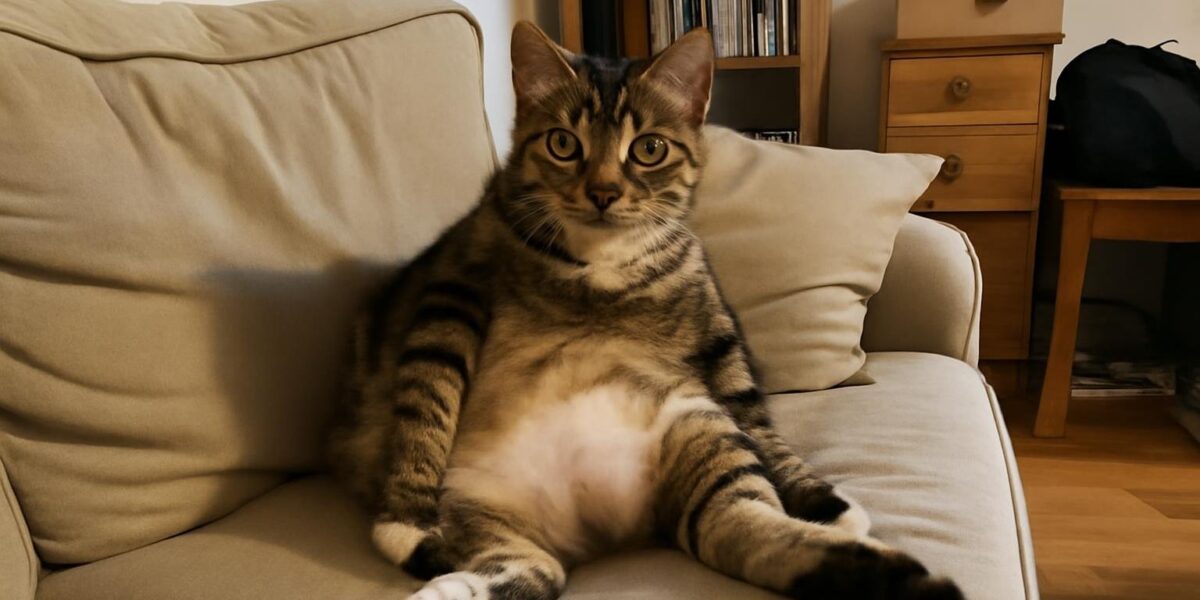
The Quick Answer: A Happy, Friendly Hello
If you are wondering what does it mean when my cat holds her tail straight up, the delightful answer is that it is one of the friendliest signals a cat can give. An upright tail, often with a little curl or hook at the tip, usually means your cat is happy, confident, and pleased to see you. It is the feline equivalent of a warm hello.
In this article
- The Quick Answer: A Happy, Friendly Hello
- What the Straight-Up Tail Communicates
- Reading the Tip and the Rest of the Body
- The Straight-Up Tail Versus the Puffed Tail
- Where the Tail-Up Greeting Comes From
- How to Respond to a Tail-Up Greeting
- When the Tail Posture Might Signal Stress
- When to Consult a Vet or Behaviorist
- Frequently Asked Questions
Kittens learn this early, raising their tails to greet their mother. Adult cats carry the gesture into their relationships with the people and animals they trust. When your cat trots toward you with her tail held high, she is approaching with friendly, positive intentions.
As always, context shapes the finer meaning, and the tip of the tail and the rest of her body add detail. But the straight-up tail is overwhelmingly a good sign, and it is one you can usually greet with a smile.
What the Straight-Up Tail Communicates
The upright tail carries several friendly, related meanings.
A Friendly Greeting
The most common message is a simple, happy hello. Cats raise their tails when approaching individuals they like and trust. If your cat lifts her tail as she walks toward you, she is greeting you warmly.
Confidence and Contentment
An upright tail signals a cat who feels secure and at ease in her environment. It is the posture of a relaxed, confident cat moving through her territory without worry.
Sociability and Affection
Cats use the high tail to invite interaction. It often comes right before a head rub, a leg wind, or a request for attention. It says, “I am open to connecting with you.”
The Question-Mark Tail
When the upright tail curls into a question-mark or hook shape at the top, it usually adds an extra dose of playful friendliness. This is an especially inviting, cheerful version of the high-tail greeting.
Reading the Tip and the Rest of the Body
The tip of the tail and the surrounding body language refine the meaning of an upright tail. Watch them together.
- The tip: A relaxed or gently curled tip means pure friendliness. A high tail with a quivering tip can signal excited greeting and happiness.
- Ears: Forward, neutral ears support the friendly reading. Flattened or sideways ears would tell a different story.
- Eyes: Soft, relaxed eyes, perhaps with a slow blink, confirm contentment.
- Body: A loose, smooth approach with a relaxed body means your cat is genuinely happy. A puffed-up tail, by contrast, is not a friendly straight-up tail at all but a fear or threat display.
When the upright tail comes with forward ears, soft eyes, and an easy walk, you have a friendly, affectionate cat saying hello. The combination confirms the welcome.
The Straight-Up Tail Versus the Puffed Tail
It is worth separating the friendly upright tail from a very different signal that can look similar at a glance. A slim, smooth tail held straight up is happy and social. A tail held up but puffed out like a bottle brush is the opposite. That puffed posture is a fear or defensive display, where the cat is trying to look bigger because she feels threatened.
The fur tells the story. Sleek and upright means a friendly hello. Bushy, fluffed, and often paired with an arched back and flattened ears means a frightened or startled cat who needs space and calm. Reading the fur and the rest of the body keeps you from mistaking fear for friendliness.
Where the Tail-Up Greeting Comes From
The upright tail greeting has charming roots in kittenhood. When kittens are very young, they raise their little tails straight up as they approach their mother. This serves a practical purpose, inviting her to inspect and groom their rear ends, and it also signals friendliness and a desire to be close.
Cats carry this early behavior into adulthood and direct it at the family members, both feline and human, they feel bonded to. So when your adult cat lifts her tail to greet you, she is essentially treating you the way she once approached her mother: as a trusted, safe, and welcome presence in her life.
This is part of why the gesture feels so heartwarming once you understand it. Cats are often described as aloof, yet the tail-up greeting is a genuine, affectionate hello rooted in their earliest experiences of safety and care. It is a sign that you have earned a real place in your cat’s social world.
You may also notice that cats who live together often greet each other with raised tails before rubbing faces or bodies. It is a friendly ritual that smooths social interactions and confirms a peaceful relationship. When your cat extends that same greeting to you, she is including you in her circle of trust.
How to Respond to a Tail-Up Greeting
Receiving an upright-tail hello is a lovely opportunity to strengthen your bond, and a few simple responses make the most of the moment.
- Acknowledge her warmly: Speak softly, offer a gentle greeting, and let her know you have noticed her friendly approach.
- Offer a slow blink: Returning a calm, slow blink adds another layer of affectionate communication she will understand.
- Let her initiate contact: Many tail-up cats want a head rub or a chance to wind around your legs. Allow her to make contact on her own terms rather than grabbing at her.
- Offer your hand: Extending a relaxed finger or hand at her level lets her choose to rub against it, a classic friendly exchange.
By responding with calm warmth rather than overwhelming enthusiasm, you confirm that you are a safe and pleasant companion. Over time, these small, positive exchanges deepen your cat’s confidence and make her tail-up greetings even more frequent and enthusiastic.
When the Tail Posture Might Signal Stress
A friendly straight-up tail is a positive signal, so concern usually comes from the surrounding context rather than the upright tail itself.
- If the tail is upright but puffed and bristled, your cat is frightened or threatened, not greeting you.
- If a normally friendly, tail-up cat suddenly stops raising her tail and seems withdrawn, a change in mood or health may be behind it.
- If the upright tail comes with flattened ears, a tense body, or hissing, the situation is not a friendly one despite the raised tail.
The straight-up greeting tail is healthy and welcome. It is the puffed version, or a sudden change in your cat’s usual tail-up friendliness, that tells you to look more closely. As with so much of cat communication, the meaning lives in the whole body and in the contrast with your cat’s normal habits, never in the tail alone.
It is also worth keeping your cat’s individual personality in mind. Some cats are naturally exuberant greeters who raise their tails high every time you walk through the door, while others are quieter and more reserved, offering the upright tail only occasionally. Neither style is better or worse, and neither tells you anything is wrong. What matters is your particular cat’s baseline. A normally enthusiastic greeter who suddenly stops, or a reserved cat who suddenly seems agitated, is showing you a change worth noticing. Knowing your own cat’s everyday patterns is what lets you tell a meaningful shift from simple personality.
When to Consult a Vet or Behaviorist
The friendly upright tail needs no professional help. Reach out in these cases.
- Sudden withdrawal: If a normally social, tail-up cat becomes withdrawn, hides, or stops greeting you, a vet visit can rule out pain or illness.
- Tail injury: If your cat cannot raise her tail normally, holds it oddly, or seems sore when it is touched, see your veterinarian.
- Chronic fear: If puffed, fearful tail postures are frequent, a behaviorist can help you build a calmer environment for your cat.
It is worth paying attention to the little variations within the upright tail, because they add shades of meaning. A tail held straight up and stiff with a relaxed body usually signals a confident, friendly cat. A tail held up with a soft curl or hook at the tip leans playful and especially affectionate. And a tail held up but quivering at the tip signals an extra burst of excitement, often when your cat is delighted to see you. None of these are warnings. They simply tell you how enthusiastic her friendly greeting is.
Context, as always, completes the read. The same upright tail means a warm hello at the front door, a request for dinner in the kitchen, and an invitation to play in the living room. By noticing what your cat does right after she raises her tail, whether she winds around your legs, leads you toward her bowl, or pounces on a toy, you learn to anticipate what she wants. This kind of attentiveness is exactly what makes a cat feel understood, and an understood cat is a relaxed, contented companion who greets you with that lovely upright tail again and again.
Learning to read tail signals makes you a more attuned cat companion. Our guide to cat tail language decodes height, shape, and movement, and our complete cat body language guide ties the tail together with ears, eyes, and posture.
The upright tail is one of many tail messages. It helps to compare it with the excited tail quiver that often accompanies a happy greeting, and with the very different fear display of a puffed-up tail.
Frequently Asked Questions
Why does my cat raise her tail straight up when she sees me?
It is a friendly greeting. Cats raise their tails to say a warm hello to people and animals they trust, a habit that begins in kittenhood. An upright tail means your cat is happy and pleased to see you.
What does it mean when the tip of the tail curls into a hook?
That question-mark or hook shape adds extra friendliness and a playful, inviting mood. It is an especially cheerful version of the high-tail greeting and often comes right before a request for attention or play.
Is a straight-up tail the same as a puffed-up tail?
No. A sleek, smooth upright tail is friendly and happy. A puffed, bristled tail is a fear or defensive display where your cat tries to look bigger. Check whether the fur is smooth or fluffed to tell them apart.
My cat stopped holding her tail up. Should I worry?
A sudden change in a normally tail-up cat can reflect a shift in mood or health, or a tail injury. If she also seems withdrawn, sore, or off her food, schedule a veterinary checkup to be safe.


