
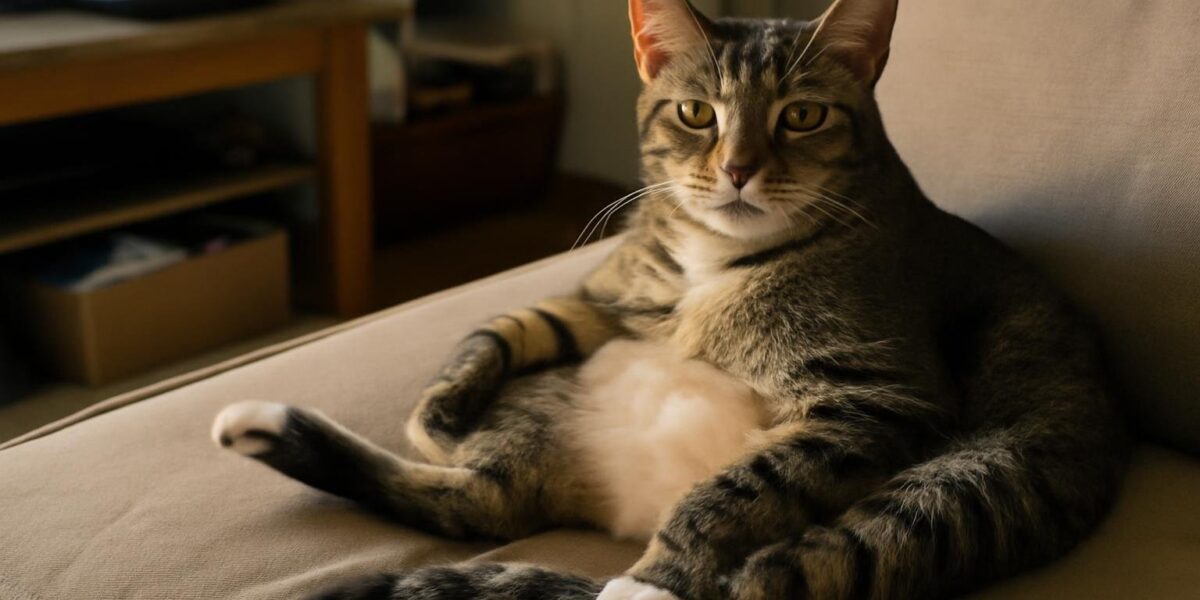
When your cat presses her paws into your lap in a slow, rhythmic push-and-release, she is doing something often called “making biscuits,” and it is one of the sweetest things a cat can offer. Understanding what it means when my cat kneads me usually comes down to comfort and affection: kneading is a leftover kitten behavior tied to feeling safe, content, and bonded to you. As with every signal, context matters, and the same motion can also mean she is settling in, marking you as hers, or simply getting cozy before a nap.
In this article
- Why Cats Knead in the First Place
- The Most Common Meanings of Kneading
- Reading the Rest of Her Body
- When Kneading Signals Comfort and Affection
- The Connection Between Kneading and Scent Marking
- When Kneading Might Mean Stress or Discomfort
- How to Handle the Claws
- What Kneading Tells You About Your Bond
- When to Consult a Vet or Behaviorist
- Frequently Asked Questions
Far from a problem to fix, kneading is generally a compliment. It means your cat associates you with the same warmth and security she felt as a nursing kitten. Reading the rest of her body tells you just how relaxed and happy she is in the moment.
Why Cats Knead in the First Place
Kneading begins in the very first days of life. Nursing kittens push against their mother to stimulate milk flow, and the motion becomes linked with comfort, nourishment, and safety. Many cats carry the behavior into adulthood, especially when they feel relaxed and cared for.
That early association is why kneading so often appears at calm, happy moments, like when you settle onto the couch or she curls up for sleep. The behavior soothes her, much the way a familiar habit soothes us.
The Most Common Meanings of Kneading
When your cat kneads you specifically, several friendly messages are usually at play.
- Affection and contentment: She feels happy and safe in your company.
- Bonding: Kneading on you marks you as part of her trusted inner circle.
- Scent marking: Scent glands in her paw pads leave her signature on you, claiming you as hers.
- Settling in: Like the way cats circle before lying down, kneading helps her get comfortable before resting.
- Self-soothing: The rhythmic motion calms her, especially in a cozy, low-stress moment.
Most kneading you receive is a blend of these. The common thread is that she feels good and connects that feeling to you.
Reading the Rest of Her Body
To gauge just how content your kneading cat is, look at her eyes, ears, tail, and the sounds she makes. A deeply happy cat will often purr, half-close her eyes or slow-blink, hold her ears in a neutral forward position, and keep her tail loose and still. Some cats even drool when especially blissful, a throwback to nursing.
If the kneading comes with a relaxed, droopy posture, you are simply being loved. If it comes with a lashing tail, flattened ears, or sudden tension, she may be overstimulated or about to shift gears, so ease up on petting. The ear signal is especially worth knowing, and our guide to what flattened ears mean explains how that small tilt warns you she has had enough. Reading these combinations is a skill our cat body language guide breaks down clearly, and it makes interpreting kneading far easier.
Pay attention to the whole sequence over time. Most cats settle into a rhythm: they climb up, circle or paw at a spot, begin kneading, and then either drift toward sleep or curl up contentedly. That predictable arc is the signature of a relaxed, happy cat. A knead that stays gentle and unhurried is a far cry from frantic, restless pawing, which would suggest agitation rather than bliss.
When Kneading Signals Comfort and Affection
The vast majority of kneading is pure positive feeling. When your cat climbs into your lap, settles down, and starts kneading with a purr, she is telling you she trusts you and feels at home. This is a behavior to cherish and gently encourage.
You can make these moments even better by staying calm and still, offering a soft blanket on your lap to protect against claws, and speaking quietly. Avoid pulling away abruptly, which can break the cozy spell. Many cats pair kneading with other bonding gestures, so if she also rubs her face on you or settles in to sleep against you, you are firmly in her circle of trust.
Different cats develop their own kneading styles. Some use only their front paws, while others knead with all four. Some knead the air, blankets, or soft toys rather than people, and some reserve it almost exclusively for the human they love most. None of these variations is better or worse; they simply reflect your cat’s individual personality and history. A cat who kneads a particular blanket every night has likely claimed it as her comfort object, much as she might claim your lap.
Timing offers clues too. Kneading at bedtime, during a quiet evening cuddle, or first thing in the morning usually marks her most relaxed, affectionate moments of the day. Learning when your cat tends to knead helps you create the calm, predictable conditions that invite it, deepening the trust between you over time.
The Connection Between Kneading and Scent Marking
One often-overlooked layer of kneading is scent communication. Cats have scent glands in their paw pads, and the pressing motion releases tiny amounts of their personal scent onto whatever they knead. When your cat kneads you, she is subtly marking you as part of her territory and her family group.
This is the same reason cats rub their cheeks and foreheads against the people and objects they love. Scent marking is a peaceful, reassuring behavior for cats, helping them create a familiar, safe-smelling environment. Being marked through kneading means your cat counts you among the things that make her world feel secure.
Far from being possessive in a negative way, this scent claiming is part of how cats build comfort and belonging. A home that smells like the cat, and like her trusted people, is a home where she feels at ease. So when those little paws press into you, she is weaving you into the fabric of her safe space.
When Kneading Might Mean Stress or Discomfort
Although kneading is usually happy, it can occasionally be self-soothing in a stressful situation. A cat in a new or tense environment may knead a soft surface to calm herself, much like a person fidgeting to ease nerves. In that case you would also see other stress signals, such as hiding, a low tail, or wide eyes.
Pay attention if kneading suddenly becomes frantic, obsessive, or paired with overgrooming, restlessness, or appetite changes. While the kneading itself is harmless, those surrounding signs can point to anxiety that is worth addressing. Most of the time, though, a kneading cat is simply a happy one.
How to Handle the Claws
The one downside of kneading is the claws. Even an affectionate cat can dig in, and that can hurt. The solution is never to punish or push her away, which would teach her that showing affection leads to rejection.
- Lay down a barrier. Keep a folded blanket or thick towel on your lap so she can knead without reaching skin.
- Keep nails trimmed. Regular, gentle nail trims dramatically reduce the discomfort.
- Redirect if needed. Gently guide her onto a soft cushion beside you if it becomes too much.
- Stay relaxed. The calmer you are, the more she will enjoy the moment, and the lighter her kneading tends to be.
With these small adjustments, kneading stays a joy for both of you rather than a painful surprise.
What Kneading Tells You About Your Bond
More than almost any other behavior, kneading is a window into how your cat feels about you. Because it is rooted in the earliest, most comforting experiences of her life, choosing to knead you is a sign that she associates you with that same deep sense of safety and care. It is one of the most flattering things a cat can do.
This is especially meaningful for rescue and newly adopted cats. A cat who has had a rough start may take weeks or months before she feels secure enough to knead a person. When she finally does, it signals that she has begun to trust her new home and the people in it. Many adopters describe that first lap-kneading session as the moment they truly felt their cat had settled in.
If your cat does not knead you, it does not mean she lacks affection. Cats express love in many ways, from head bumps to following you around to sleeping nearby. Kneading is just one item in a rich vocabulary. But when you do receive it, you can take it as a clear, comforting message that your cat feels at home and at peace in your company.
When to Consult a Vet or Behaviorist
Kneading on its own is healthy and normal, so it rarely calls for professional help. Still, see your veterinarian if kneading becomes compulsive, is accompanied by overgrooming or skin issues, or appears alongside other signs of stress like hiding, reduced appetite, or litter box changes.
A certified feline behaviorist can help if your cat seems generally anxious and uses kneading as one of several coping behaviors. To better understand the full range of her gestures and sounds while you observe her, our comprehensive cat body language signals guide is a helpful companion that puts kneading in the context of everything else she does.
Frequently Asked Questions
Why does my cat knead me but not other people?
Because she trusts and bonds with you most strongly. Kneading is tied to comfort and security, so choosing you as her kneading spot is a sign that she feels safest and happiest in your company.
Why does my cat drool when she kneads me?
Drooling during kneading is a throwback to nursing as a kitten, when kneading and feeding went together. It usually signals deep contentment and relaxation, not a health problem, though sudden excessive drooling outside these moments warrants a vet check.
Should I stop my cat from kneading me?
No, kneading is a loving behavior you should welcome. To avoid scratches, keep a blanket on your lap and your cat’s nails trimmed rather than pushing her away, which could discourage her affection.
Is it normal for a cat to knead before lying down?
Yes. Kneading often helps a cat settle and get comfortable before resting, similar to circling. It is a self-soothing, instinctive routine that signals she feels safe enough to relax and nap.


