
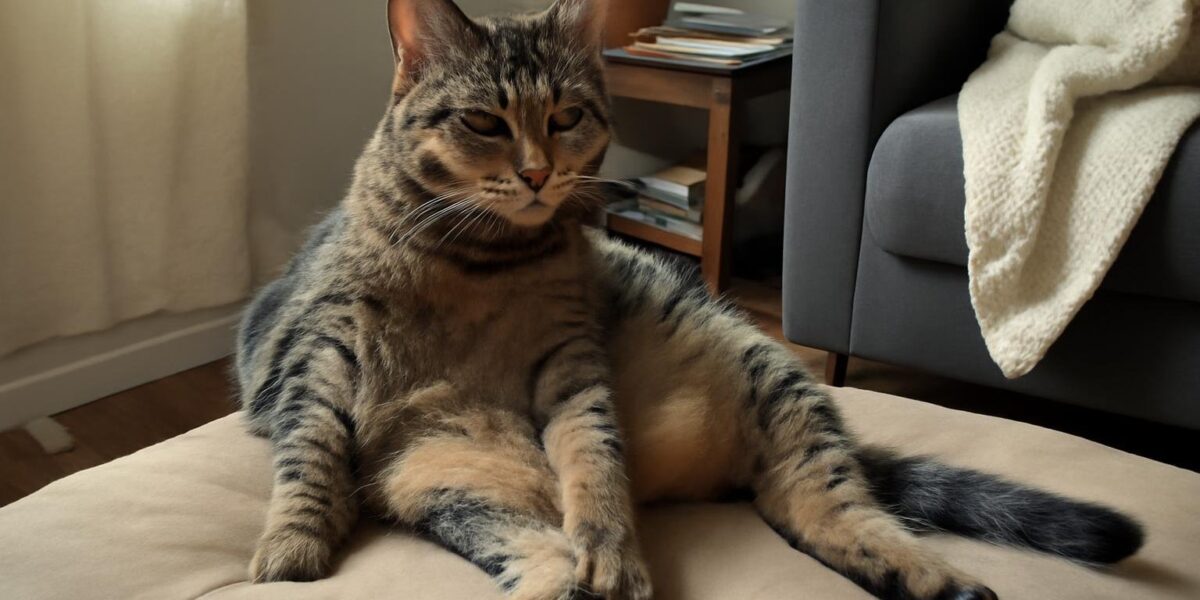
When your cat flops over and exposes her soft underside, it is one of the highest compliments she can pay you. Understanding what it means when my cat shows me her belly comes down to a single idea: the belly is a cat’s most vulnerable area, so revealing it usually signals deep trust and relaxation. That said, context matters, and a belly display is not always an invitation for a belly rub. Some cats are simply saying “I feel safe here,” while others may be inviting play or even bracing to defend themselves.
In this article
- The Most Common Meanings of a Belly Display
- Reading the Rest of Her Body
- Why the Belly Is So Special to Cats
- Should You Rub the Belly?
- When the Belly Display Means Trust and Comfort
- When It Could Signal Play or Defense
- Helping a Shy Cat Reach the Belly-Display Stage
- When to Consult a Vet or Behaviorist
- Frequently Asked Questions
Learning to tell the difference keeps your hands happy and your bond strong. The same rolled-over pose can mean comfort, an invitation, or a warning depending on the rest of her body, so read the whole picture before you reach in.
The Most Common Meanings of a Belly Display
Cats expose their bellies for several reasons, and most of them are positive. Here are the meanings you will encounter most often.
- Trust and security: A relaxed roll-over in your presence says she feels completely safe with you.
- Contentment: Stretching out belly-up in a sunbeam is the feline version of total ease.
- An invitation to interact: Some cats roll over to greet you or to start a play session.
- A play or wrestling stance: Belly-up with paws ready can be a playful “come get me” during games.
- Defensive position: On her back with claws out and ears flat, she may be preparing to fight back with all four paws.
The key insight is that trust does not automatically equal “please rub my tummy.” Many cats show their belly as a sign of love but still dislike being touched there, because instinct tells them to protect that area.
Reading the Rest of Her Body
To know which belly display you are seeing, scan her ears, eyes, tail, and paws. A relaxed, trusting cat will have soft eyes, possibly a slow blink, neutral or forward ears, and a loose tail. Her paws will be relaxed rather than clenched, and her whole body will look loose and at ease.
A playful cat keeps a springy, wiggly energy, may bat at your hand, and often has dilated pupils from excitement. Her movements are bouncy and inviting rather than tense. A defensive cat, by contrast, pins her ears back, dilates her pupils from fear, lashes her tail, and holds her claws ready. Same belly, very different message.
The tail is an especially useful tiebreaker. A loose, still, or gently swishing tail reads as relaxed, while a hard, thumping, or puffed tail warns of agitation. Pair that with the ears, and you will rarely misread her. A cat whose ears stay forward and soft during a roll is genuinely relaxed, while ears that swivel flat are a clear caution sign.
Building the habit of reading several signals at once is the most reliable way to interpret your cat. Our cat body language guide lays out how ears, tail, and eyes combine, which makes the belly roll much easier to decode. With practice, you will read the whole picture in a glance.
Why the Belly Is So Special to Cats
To appreciate why a belly display means so much, it helps to understand feline instinct. The belly houses vital organs and is poorly protected, so in the wild, exposing it would leave a cat dangerously vulnerable to predators. Cats are hardwired to guard this area carefully.
That instinct is exactly why a relaxed belly display in your home carries such weight. By choosing to expose her most vulnerable side, your cat is overriding a deep survival reflex because she feels safe enough to let her guard down. It is the feline equivalent of a person fully relaxing in a place they trust completely.
This also explains the seeming contradiction many owners notice: a cat will happily show her belly yet protest if you touch it. The display itself is a sign of trust, but the area remains so instinctively protected that direct contact can trigger a reflexive defensive grab, even from a cat who adores you. Both reactions are normal and not a sign she is confused or fickle.
Should You Rub the Belly?
This is the question every cat owner asks, and the honest answer is: it depends on the cat. A minority of cats genuinely love belly rubs and will melt into them. The majority enjoy showing you the belly but prefer you admire it rather than touch it.
To find out which camp your cat is in, start with a slow, gentle test. Offer your hand near her chest or chin first, and watch her reaction. If she leans in and stays loose, you can try a light belly touch. If she stiffens, grabs your hand, or her ears flatten, take the hint and stop.
Respecting that boundary is how you keep her trust. A cat who learns that exposing her belly does not lead to unwanted handling will do it more freely, because she knows you read her signals well.
When the Belly Display Means Trust and Comfort
The most heartwarming belly roll is the relaxed, sleepy one. When your cat stretches out on her back in a warm spot, half-closes her eyes, and lets her paws dangle, she is in a state of complete security. Cats only sleep or rest in such an exposed position when they feel safe from threats.
If she does this near you, take it as a genuine sign of affection and confidence in your home. You can return the sentiment with a soft, slow blink rather than reaching to touch. This kind of relaxed trust often shows up in other affectionate behaviors too, like the contented kneading and head-pressing many cats do when they greet you.
Cats are also drawn to warmth and comfort, and a belly-up stretch often appears in a favorite sunny spot or on a soft surface. Combining a secure environment with a warm, cozy resting place encourages this happy, exposed posture. The more safe and settled your cat feels day to day, the more often you will catch her in this trusting position. A cat who feels at home in a calm household will loaf, sprawl, and roll over freely, all signs of a low-stress life.
Returning her trust is simple: admire her, speak softly, and let her come to you. If she wants more interaction, she will roll closer or reach a paw toward you. Following her lead rather than rushing in is the surest way to keep these tender moments coming, and to deepen the bond she is already showing you.
When It Could Signal Play or Defense
During play, a belly-up position is part of the hunting and wrestling repertoire. Kittens and playful adults will roll to grab a toy or your hand with all four paws, “bunny kicking” with their back legs. This is normal and fun, though you should redirect those kicks to a toy rather than your skin to avoid scratches.
The defensive belly roll is rarer but important to recognize. A cornered or frightened cat may flip onto her back to bring all her weapons into play. You will see flattened ears, a tense body, bared teeth, and a hard stare. The same pinned-back ears that warn you here are covered in our guide to what flattened ears mean, and they are your clearest cue that a roll is defensive rather than friendly. This is not an invitation, it is a last-resort warning, and the right move is to back away and give her room.
Helping a Shy Cat Reach the Belly-Display Stage
If you have a newly adopted or naturally timid cat who never exposes her belly, do not take it personally. Many cats simply feel safer keeping that vulnerable area protected, and trust builds at each cat’s own pace. The belly display is something a cat offers only when she feels deeply secure, so its absence early on is normal.
You can encourage that security over time with a few gentle steps. Let her approach you rather than reaching for her, respect her hiding spots, and keep her routine calm and predictable. Slow blinks, soft talking, and quiet companionship all signal that you are safe to be around. As her confidence grows, you may notice her relaxing more fully in your presence, lying down nearby, stretching out, and eventually rolling over.
When that first relaxed belly display finally appears, treat it as the meaningful milestone it is. It tells you the cat has decided your home, and you, are safe. Resist the urge to immediately reach for the belly; instead, simply appreciate the trust she is showing. Honoring that moment keeps the door open for many more, and it deepens the bond you have worked to build.
When to Consult a Vet or Behaviorist
A belly display is almost never a medical concern on its own. However, pay attention if your cat suddenly stops exposing her belly and becomes guarded, or if she seems unwilling to lie down comfortably, as abdominal pain can change her posture and habits.
It is also worth a vet visit if she reacts with surprising pain or aggression to gentle belly contact she once tolerated, since that can point to discomfort in her abdomen. For ongoing fearfulness, frequent defensive rolling, or trouble reading your cat’s moods, a certified feline behaviorist can help. Pairing professional advice with the detailed signal breakdowns in our comprehensive cat body language signals guide will help you respond to her with confidence.
Frequently Asked Questions
Does showing the belly always mean my cat wants a belly rub?
No. Most cats show their belly to signal trust and comfort, not to request a rub. Test gently with a chin or chest touch first, and stop if she stiffens or grabs your hand.
Why does my cat roll over but then bite me when I touch her belly?
The belly is highly sensitive, so even a trusting cat may reflexively defend it. The roll was a sign of trust, but the touch crossed her comfort line. Admire rather than rub if she reacts this way.
Is a belly display ever a warning?
Yes. A defensive cat may flip onto her back with flattened ears, bared teeth, and claws out to protect herself. This is a warning, not an invitation, so give her space and avoid touching her.
Why does my cat show her belly only to me?
Because she trusts you the most. The belly is her most vulnerable area, so choosing to expose it around you specifically is a strong sign of the bond and safety she feels in your presence.


