
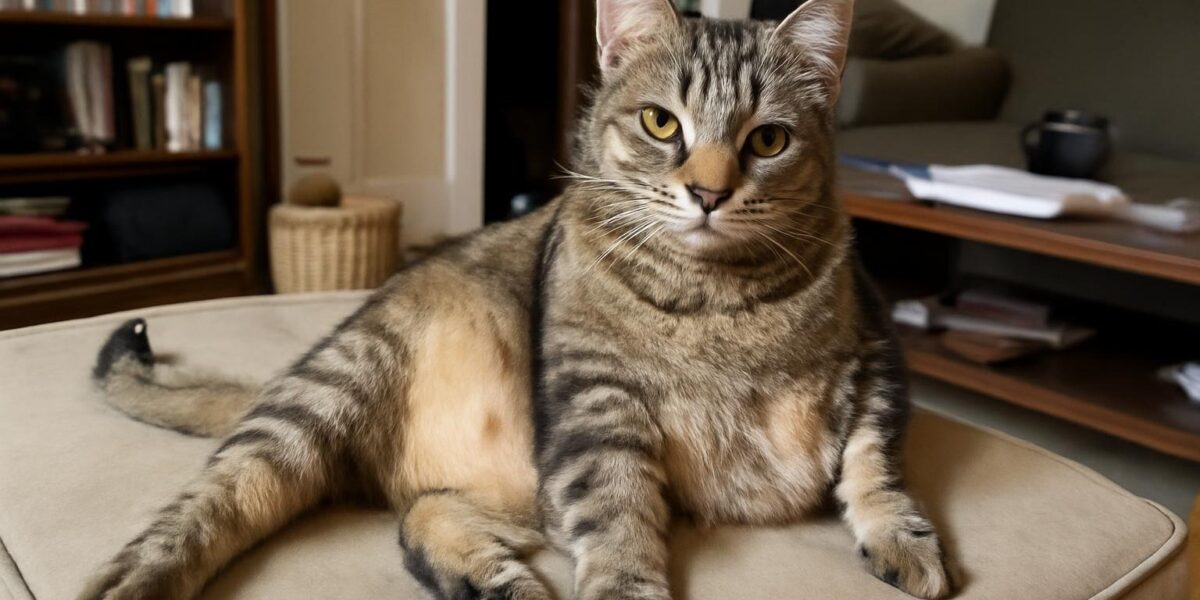
The Quick Answer
If you are asking what does it mean when my cat twitches the tip of her tail, the short answer is that a small flick at the very end of the tail usually signals mild focus, curiosity, or a flicker of mild irritation. It is one of the most subtle signals in your cat’s vocabulary, and it rarely means anything dramatic on its own.
In this article
- The Quick Answer
- The Most Common Meanings
- How to Read the Twitch Alongside the Rest of Her Body
- Twitching the Tail Tip vs. Bigger Tail Movements
- When the Twitch Means She Has Had Enough Petting
- When a Tail Twitch Signals Stress or Discomfort
- When to Talk to Your Vet or a Behaviorist
- Frequently Asked Questions
A tail-tip twitch is a low-intensity message. Think of it as your cat thinking out loud. She might be watching a bird at the window, mulling over whether to pounce on a toy, or letting you know she is reaching the edge of her patience during a petting session. Context tells you which.
Because one signal is never a fixed meaning, the trick is to read the twitch alongside everything else her body is doing. A relaxed cat with a gently twitching tail tip is in a very different mood than a crouched cat whose tail tip is snapping back and forth. The same small motion can mean playful interest or building annoyance, and the surrounding cues are what separate the two.
The Most Common Meanings
Most tail-tip twitches fall into a handful of familiar categories. Once you know them, you will start spotting them everywhere, and you will be surprised how often your cat is quietly narrating her mood.
Focused attention. When your cat is watching something intently, the tip of her tail often ticks side to side while the rest of her body stays still. This is the classic hunter’s twitch. You will see it during play, while she stalks a toy, or when she spots movement outside. It reflects the concentration of a predator lining up her next move.
Mild curiosity or anticipation. A slow, small twitch can appear when your cat is interested but not yet committed. She is gathering information and deciding what to do next. You might notice it when you open a new bag, rustle a wrapper, or do something she finds intriguing but not quite worth getting up for.
Mild irritation. If the twitch speeds up or grows sharper, it can mean she is getting annoyed. This is the gentle early warning that often shows up during petting, when she is enjoying the attention but starting to feel it is a bit much. It is her polite way of saying she is approaching her limit.
Contentment with a touch of alertness. A cat dozing in a sunbeam might give a lazy tail-tip flick when she hears your voice. She is relaxed but still tuned in to her surroundings. This kind of twitch is a soft acknowledgment rather than a sign of any real feeling brewing.
How to Read the Twitch Alongside the Rest of Her Body
A tail tip never works alone. To interpret it accurately, scan the whole picture: ears, eyes, whiskers, posture, and how fast the twitch is moving. Each of these adds a layer of meaning that turns a single flick into a complete sentence.
Check the ears first. Forward, relaxed ears paired with a gentle twitch usually mean curiosity or playful focus. Ears that swivel sideways or flatten back signal rising tension, and the twitch becomes a warning rather than an invitation. Cats use their ears almost constantly, so they are one of the most honest barometers of mood.
Look at her eyes. Soft, half-closed eyes suggest comfort. Wide eyes with large pupils mean she is highly aroused, which could be excitement during play or building overstimulation. The pupils tell you how intense the feeling is, while the tail tells you which direction it is heading.
Then consider her body. A loose, sprawled cat with a flicking tail tip is content. A tense, low-to-the-ground cat with a snapping tail tip is focused or on edge. Speed matters too: the faster and harder the twitch, the stronger the feeling behind it. If you want to go deeper, our full cat body language guide walks through how these signals stack together.
Twitching the Tail Tip vs. Bigger Tail Movements
It helps to separate a tail-tip twitch from larger, whole-tail motions, because they carry different weight. Mistaking one for the other is a common reason people are surprised by a sudden swat.
A tail-tip twitch is small and contained. The base of the tail stays still while only the last inch or two ticks back and forth. This is the subtle, everyday signal that you can usually treat as a gentle heads-up rather than a hard stop.
A full tail flick or swish involves more of the tail and usually means stronger emotion, often frustration or agitation. If the whole tail is thrashing, your cat is telling you she is genuinely annoyed, and it is wise to give her space. The more of the tail that is moving, the bigger the feeling behind it.
Other tail signals carry their own meanings entirely. A quivering tail can mean excitement and greeting, while a slow, deliberate twitch during hunting is pure concentration. A puffed-up tail signals fear or startle. Comparing these movements is easier with our breakdown of what your cat’s tail is telling you, and you can see the broader picture in how she flicks her tail when emotions run higher.
When the Twitch Means She Has Had Enough Petting
One of the most useful times to read the tail tip is during cuddle sessions. Many cats enjoy petting up to a point, then tip into overstimulation. The tail tip is often the first thing to tell you, well before anything else changes.
If you are stroking your cat and the tip of her tail starts twitching faster, treat it as a polite heads-up. She may still look relaxed, but the signal is asking you to slow down or pause. Cats vary enormously in how much touch they enjoy, and learning your individual cat’s threshold is one of the kindest things you can do.
Ignore it, and the twitch can escalate into a tail thump, skin twitching along her back, a turn of the head toward your hand, or a quick nip. None of this means she dislikes you. It simply means her tolerance for touch in that moment has been reached, and she ran out of quieter ways to tell you.
The kind response is to stop petting when you see the early twitch and let her decide when she wants more. This builds trust and keeps your interactions positive. Over time, a cat who learns that you listen to her early signals often becomes more relaxed and tolerant of handling, because she no longer needs to escalate to be heard.
When a Tail Twitch Signals Stress or Discomfort
Most tail-tip twitching is harmless, everyday communication. Still, there are moments when it points to stress, fear, or even physical discomfort, and those are worth noticing so you can respond appropriately.
Stress-related twitching usually comes with other tense signals: a crouched body, flattened or sideways ears, dilated pupils, and a generally guarded posture. A new pet, a houseguest, loud noises, fireworks, or a change in routine can all bring this on. In these cases the twitch is part of a larger picture of unease.
Pain can also show up in the tail. If your cat suddenly becomes sensitive around her tail base, twitches more than usual, or reacts sharply when that area is touched, she may be uncomfortable. Cats hide pain well by instinct, so subtle changes in tail behavior can be one of the few clues you get.
Trust patterns over single moments. An occasional twitch is normal. A clear shift toward more frequent, intense twitching paired with hiding, reduced appetite, or irritability deserves closer attention. The change from your cat’s normal baseline is what matters most, which is why knowing her usual habits is so valuable.
When to Talk to Your Vet or a Behaviorist
Tail-tip twitching almost never needs professional help on its own. It becomes worth a conversation when it pairs with other changes that suggest something is off, either physically or emotionally.
Reach out to your veterinarian if you notice the twitching alongside signs of pain, such as flinching when touched near the tail or spine, difficulty jumping, grooming changes, or sudden grumpiness. A condition sometimes called feline hyperesthesia can cause exaggerated skin and tail twitching, rippling skin along the back, and frantic grooming, and a vet can rule out medical causes and offer relief.
A feline behaviorist is helpful when the twitching is part of a bigger anxiety or aggression picture. If your cat seems chronically tense, easily overstimulated, or quick to lash out, a behavior professional can help you find the triggers and build a calmer routine. Often small changes to her environment and how you interact with her make a big difference.
For everyday twitches, though, the best response is simply to watch, learn your individual cat, and respect what she is telling you. Reading her well is the heart of a happy relationship, and our overview on reading cat body language is a great companion for that. The more fluent you become in her signals, the easier it gets to tell an idle flick from a genuine request.
Frequently Asked Questions
Is tail-tip twitching a sign my cat is angry?
Not usually. A small tail-tip twitch most often means focus or mild interest. It only edges toward annoyance when it speeds up or pairs with flattened ears and a tense body. Read the whole picture before assuming anger, since the same small motion can mean playful concentration just as easily.
Why does my cat twitch her tail tip while sleeping?
A relaxed cat often gives a lazy tail-tip flick in response to a sound or your voice. It simply means she is comfortable but still aware of her surroundings. It is a normal, contented signal and nothing to worry about.
My cat twitches her tail tip when I pet her. Should I stop?
Slow down or pause. A faster twitch during petting is an early sign she may be reaching her limit for touch. Stopping before the twitch escalates keeps the moment positive and builds her trust in you. Over time, listening to that early cue often makes her more tolerant of handling.
When should I worry about tail twitching?
Worry if the twitching is sudden, intense, or paired with pain signs, hiding, appetite changes, or sensitivity around the tail base. In those cases, a vet visit is the safest next step to rule out discomfort or a medical cause such as feline hyperesthesia.


