
Last updated: May 6, 2026
In this article
Why Do Cats Meow? Reasons, Types, and What to Do
If you share your home with a cat, you have almost certainly been on the receiving end of a pointed, insistent meow and found yourself wondering exactly what your cat is trying to tell you. Why do cats meow? It is a surprisingly layered question. Meowing is not simply noise — it is a sophisticated, flexible vocalization that cats use to navigate their relationship with the people in their lives. The reasons behind it range from the mundane to the medically significant, and learning to read your cat’s vocal cues can meaningfully improve the bond between you. This guide covers the science of why cats meow, the most common triggers, what different meow types signal, when excessive meowing is cause for concern, and how to respond in ways that benefit both you and your cat.
Cats Meow Primarily to Communicate with Humans
One of the most striking facts about feline vocalization is that adult cats rarely meow at each other. In the wild, meowing is largely a kitten behavior — young cats meow to signal their location to their mother and to solicit warmth, food, and comfort. As cats mature, they shift to communicating with other cats almost entirely through scent marking, body posture, facial expression, and subtle vocalizations such as hissing, chirping, and caterwauling. The sustained, conversational meow that cat owners know so well is a behavior that domesticated cats appear to have developed — and refined — specifically for interacting with people.
Research into cat domestication suggests that this is not accidental. Over thousands of years of living alongside humans, cats learned that vocalizing in ways that resembled the sound profiles of human infant cries — high-pitched, variable, and attention-grabbing — produced reliable responses from their human companions. In this sense, when your cat meows at you, it is drawing on a learned communicative strategy shaped by thousands of years of cohabitation. You are the intended audience, and your cat has become remarkably good at reaching you.
Common Reasons Cats Meow
Why do cats meow in day-to-day life? There is rarely a single explanation. Context, timing, tone, and your individual cat’s personality all shape what a given meow means. That said, most meowing falls into one of several well-recognized categories.
Greeting. Many cats meow when their owner walks through the door or enters a room. This greeting vocalization is social rather than transactional — your cat is acknowledging your presence and reinforcing the bond between you. Cats who do this reliably tend to be sociable, confident animals with a secure attachment to their person. The meow is typically short, bright, and without urgency.
Hunger and food anticipation. Meowing around mealtimes is one of the most universal feline behaviors. Cats quickly learn when feeding time is and will vocalize — sometimes insistently, and often starting well before the bowl appears — to communicate that they are ready to eat. The hunger meow is frequently more persistent and repetitive than other types, and some cats escalate in volume or frequency if they feel they are not being heard promptly enough.
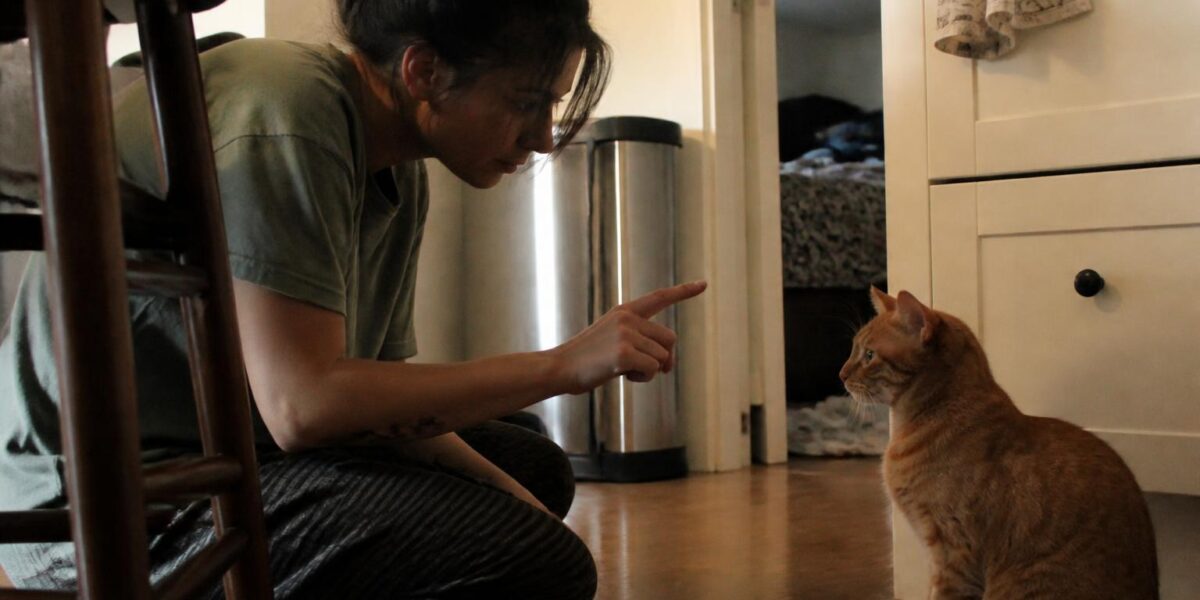
Attention and social engagement. Cats are often characterized as solitary and self-sufficient, but many domestic cats actively seek human interaction. A cat that meows while following you around the house, nudging at your hands, or positioning itself directly in your line of sight is requesting engagement — play, petting, or simply your company. This type of meowing tends to increase if a cat is under-stimulated or spending long stretches alone.
Stress and environmental change. Cats are creatures of habit, and disruptions to their routine or environment frequently trigger increased vocalization. Moving house, the arrival of a new pet or family member, rearranged furniture, or a change in the owner’s schedule can all cause a cat to meow more than usual. This is a stress response — the cat is unsettled and vocalizing its discomfort. The meowing typically diminishes once the cat has had time to adjust.
Illness and pain. A cat that begins meowing significantly more than usual — especially if the change is sudden and unprovoked by environmental factors — may be in pain or experiencing a health issue. Cats are instinctively good at masking discomfort, so increased vocalization can be one of the clearer signs that something is wrong. Conditions including hyperthyroidism, dental pain, urinary tract infections, hypertension, and internal injury have all been associated with increased meowing.
Aging and cognitive decline. Senior cats sometimes develop a pattern of frequent, repetitive, and often nighttime meowing that has no obvious external cause. This can be a sign of feline cognitive dysfunction syndrome — a condition similar to dementia in humans — in which the cat becomes disoriented, anxious, and vocal, particularly after dark. Hearing or vision loss that comes with age can compound the problem, leaving an older cat more reliant on vocalization to orient itself and seek reassurance.
Excessive Meowing
There is a meaningful difference between a communicative cat and one whose meowing has become excessive. Excessive meowing — persistent, high-frequency, or nighttime vocalization that does not respond to your usual interactions — warrants attention rather than simply more patience.
The first step when a cat’s meowing increases markedly or changes in character is a veterinary evaluation. A number of medical conditions cause cats to vocalize more than usual, and treating the underlying issue is the only reliable way to resolve the meowing. Hyperthyroidism is one of the most common culprits in middle-aged and older cats — an overactive thyroid accelerates metabolism, disrupts sleep, and produces a restless, vocal animal. Hypertension, or high blood pressure, often occurs alongside thyroid disease and kidney disease in cats and can independently cause confusion and increased vocalization. Chronic pain from conditions like arthritis, dental disease, or internal illness will also drive a cat to meow in ways that can easily be mistaken for behavioral problems.
If a veterinary examination rules out medical causes, excessive meowing is likely behavioral and can often be addressed through environmental enrichment, consistent routine, interactive play before bedtime, and careful attention to how you respond when your cat vocalizes. Cats that have been unintentionally rewarded with food or attention each time they meow will meow more, not less — a pattern worth identifying and breaking thoughtfully rather than abruptly.
Different Meow Types and What They Mean
Not all meows are the same, and learning to distinguish between them is one of the more useful skills a cat owner can develop. Why do cats meow in so many different ways? Because different situations call for different signals, and cats modulate their vocalizations accordingly.
Short, chirp-like meow. A brief, rising meow is typically a greeting or a casual acknowledgment. This is the “hello” meow — light, social, and not particularly urgent. Many cats use it when they first make eye contact with their owner after a period of separation.
Long, drawn-out meow. A sustained meow with a falling or variable pitch usually signals a demand — for food, for a door to be opened, or for attention. The longer and more insistent it is, the more urgently your cat feels its need is going unmet.
Yowl. A low-pitched, mournful, and repetitive vocalization, the yowl is one of the more alarming sounds a cat can make. It can indicate pain, extreme distress, disorientation (particularly in older cats at night), or — in unspayed females — the call associated with being in heat. A yowl should not be ignored.
Chirp and trill. These higher-pitched, rapidly modulated sounds are typically used by cats watching prey they cannot reach — a bird outside the window, for example — or as a form of friendly greeting. Mother cats also use trills to call their kittens. In adult cats living with people, the trill is generally a warm, social sound directed at a favored person.
How to Respond to Your Cat’s Meowing
The way you respond to your cat’s meowing shapes how much and how insistently your cat will continue to vocalize. The goal is to be responsive to genuine needs without inadvertently training your cat to meow constantly for things it does not actually require.
Pay attention to context first. A cat meowing at an empty bowl has a clear need. A cat meowing at 3 a.m. for no apparent reason may be reacting to illness, disorientation, or a learned behavior that has been reinforced by a sleepy owner getting up to investigate. Meeting genuine needs — food, water, a clean litter box, physical security — promptly and consistently helps cats feel safe and reduces anxious or stress-driven vocalization over time.
When meowing appears attention-driven rather than need-driven, avoid responding to the vocalization directly. Instead, reward quiet behavior with engagement and affection, and redirect your cat to play or activity before the meowing begins. Keeping a consistent daily routine — regular feeding times, predictable play sessions, and calm, unhurried interactions — gives your cat reliable reference points and tends to reduce background anxiety that contributes to excessive vocalization.
For more guidance on feline behavior and care, visit our cat care blog.
Frequently Asked Questions
Why do cats meow at night?
Nighttime meowing in younger cats is often hunger, boredom, or leftover energy from a day without enough stimulation. Interactive play in the evening followed by a small meal can help reduce this significantly. In older cats, nighttime vocalization is more commonly linked to cognitive dysfunction syndrome, pain, or sensory decline. A cat that develops a new pattern of nighttime meowing after years of sleeping quietly deserves a veterinary evaluation — the change in behavior is meaningful clinical information, not simply a nuisance.
Why do cats meow when they are alone?
Cats that meow when left alone may be experiencing separation anxiety, boredom, or stress related to an insufficiently enriched environment. While cats have a reputation for independence, many domestic cats form strong social bonds with their owners and find prolonged solitude genuinely distressing. Signs that meowing-when-alone is anxiety-driven include excessive vocalization captured on a camera or reported by neighbors, along with other indicators like over-grooming, house soiling, or destructive behavior. Environmental enrichment — puzzle feeders, window perches, and interactive toys — can make time alone less stressful for these cats.
Is it normal for some cats to barely meow at all?
Yes, entirely. Individual cats vary enormously in how vocal they are, and much of this variation comes down to personality and breed. Some breeds — including the Siamese and the Bengal — are famously chatty and will vocalize throughout the day. Others, like the Russian Blue or the British Shorthair, tend toward quiet reserve and may go hours without making a sound. A cat that has always been quiet and remains quietly content is healthy and normal. What matters is not how much your cat meows relative to other cats, but whether its vocalization pattern changes unexpectedly.
Can I teach my cat to meow less?
You cannot silence a cat, and attempting to do so through punishment will only increase anxiety and damage your relationship. What you can do is shape the pattern of meowing by ensuring your cat’s core needs are consistently met, keeping its daily routine stable and predictable, providing enough physical and mental stimulation to prevent boredom, and being careful not to reward attention-seeking meows by immediately responding to them. Gradual, consistent changes in how you interact with your cat around vocalization — paired with ruling out any medical causes — are the most effective and humane approach over time.


