
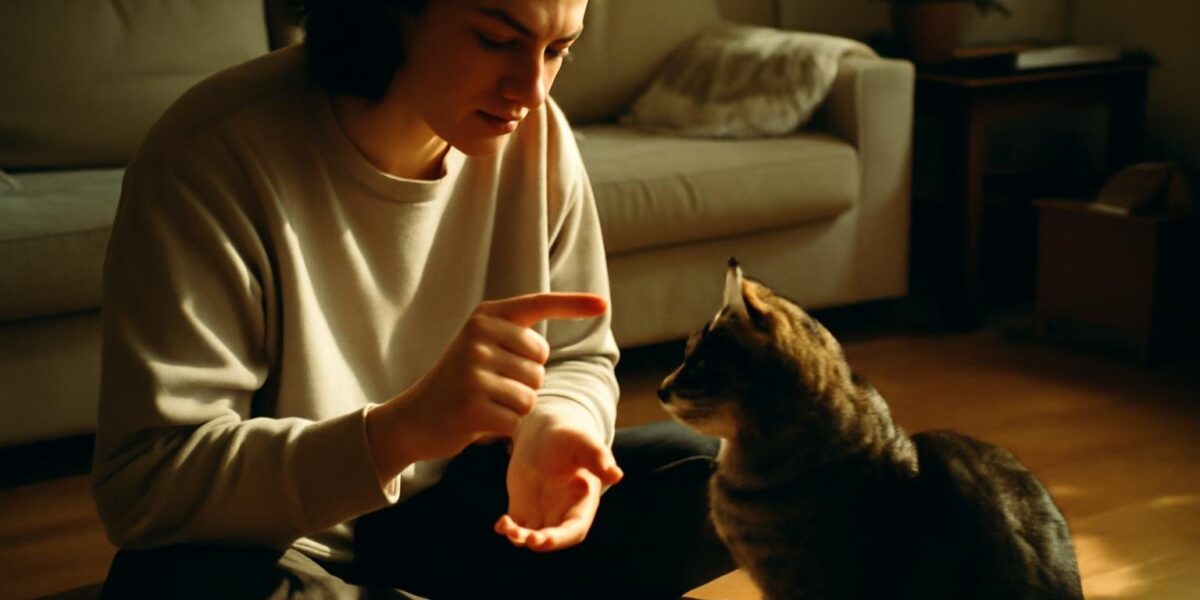
If your cat scratches at the floor around her bowl as though trying to bury her dinner, you may be puzzled and asking, “why does my cat cover her food?” The good news is that this quirky behavior is almost always perfectly normal and rooted in deep instinct. In the wild, cats are both hunters and cautious survivors, and burying or caching leftover food helps hide the scent from rivals and predators, keeps it for later, and keeps the den area clean. Your well-fed house cat has no real predators to hide her kibble from, but the instinct lives on — so she goes through the motions of covering food even though there is nothing but smooth floor to “bury” it with. In the vast majority of cases, this is harmless. Occasionally, though, food-covering can accompany appetite or health changes worth a closer look.
In this article
The Instinct to Cache Food
Wild and feral cats often bury or cover prey they cannot finish in one sitting. This “caching” behavior serves several survival purposes: it conceals the smell of a carcass from larger predators and competing cats, protects a future meal from scavengers, and keeps the immediate area free of rotting food and the parasites it can attract. A cat who covers food is tapping into a behavior that helped her ancestors stay safe and fed.
Your domestic cat inherited this drive even though she will never need to use it. When she paws at the floor, the air, or the wall near her bowl, she is performing the same motions her wild relatives use to scrape dirt and leaves over leftovers. The fact that there is nothing to push over the food does not stop the instinct from firing — it is automatic, much like a cat going through grooming motions in her sleep.
This behavior is sometimes called “food caching” or “food burying,” and it is a normal part of feline behavior. Watching her body language while she does it usually reveals a calm, matter-of-fact cat just following an ancient script. Understanding these instincts through a broader look at cat body language can make a lot of your cat’s quirks suddenly make sense.
Keeping the Den Clean and Safe
Cats are famously tidy, and food-covering is partly about hygiene. In the wild, leftover food near a sleeping or nesting area attracts insects, bacteria, and unwanted attention. Covering or moving food away from the core living space keeps the den clean and reduces health risks — an instinct that dovetails neatly with the same fastidiousness that makes cats bury their waste in the litter box.
Some cats extend this tidiness to the area around the bowl, scratching at the floor as if to “file away” the meal until later. Others may carry a piece of food away from the bowl before eating it, or paw at nearby surfaces. These variations are all normal expressions of the same underlying drive to manage food and keep the eating area orderly.
You may also notice that the behavior is more pronounced with strong-smelling wet food than with dry kibble. That makes sense — the stronger the scent, the more a cat’s instincts say “hide this.” If your cat covers wet food enthusiastically but ignores dry food, the smell is likely the trigger, and it is nothing to worry about.
It is worth noting how closely this echoes litter box behavior. The same instinct that drives a cat to scrape litter over her waste — concealing scent and keeping the area clean — drives her to scrape at the floor around her bowl. In both cases your cat is performing an inherited tidying ritual, even when modern indoor life makes it unnecessary. Seeing the two behaviors as branches of the same instinct can make the food-covering feel a lot less mysterious.
Could It Mean She Dislikes the Food?
Sometimes cats paw around the bowl not to save food but to signal “I’m done” or “I don’t want this.” A cat who sniffs her meal, scratches at the floor, and walks away may be telling you the food doesn’t appeal to her — it could be stale, too cold, an unfamiliar flavor, or simply not to her taste. In multi-cat homes, a cat may also “cover” food to avoid drawing another cat to the bowl.
Bowl issues can play a role too. Some cats dislike deep or narrow bowls that touch their whiskers, plastic bowls that hold odors, or a feeding spot that feels exposed or too close to the litter box or water. If your cat reliably covers or rejects food in one setup but eats happily in another, the environment may be the issue. Giving her a calm, appealing feeding station — and fresh water, ideally from a cat water fountain — can make mealtimes more comfortable.
None of this is cause for concern as long as your cat is eating enough overall. But persistent food refusal, as opposed to harmless covering, is a different matter and shades into the territory of when to call your vet.
Normal vs. When to See a Vet
Food-covering is normal when your cat performs the scratching ritual but is still eating well, maintaining her weight, and acting like herself. The behavior is purely instinctive and needs no correction. Many perfectly healthy cats “bury” food their entire lives.
It is worth a veterinary visit when food-covering comes alongside changes that suggest something is off:
- A noticeable drop in appetite or refusing meals she used to enjoy.
- Weight loss, vomiting, or signs of nausea like drooling or lip-licking.
- Pawing at the mouth, reluctance to chew, or bad breath, which can signal dental pain.
- Lethargy, hiding, or other behavior changes paired with the food behavior.
- Sudden onset of obsessive scratching around the bowl in a cat who never did it before.
In these cases, the concern is not the covering itself but the appetite or health change accompanying it. Watching for the broader signs of stress in cats can also help you distinguish a harmless instinct from a cat who is unwell or anxious. When in doubt, a vet can check her teeth, run bloodwork, and rule out medical causes.
How to Respond to Food Burying
For harmless instinctive covering, the best response is simply to let her do it — there is no need to stop a natural behavior. If the floor-scratching annoys you or makes a mess, you can place the bowl on a washable mat and remove uneaten wet food after 20 to 30 minutes so she has less to “bury” and the food stays fresh.
If covering seems tied to disliking the meal, experiment with the basics: serve wet food at room temperature, offer smaller fresh portions, try a shallow wide bowl that doesn’t crowd her whiskers, and move the feeding spot away from the litter box and high-traffic areas. Small tweaks often make a big difference for a picky eater.
Multi-cat homes deserve special attention here. When cats share a feeding area, a cat may cover or rush her food to keep it from a housemate, or eat anxiously and then scrape at the floor. Feeding cats in separate spots, or even separate rooms, removes that competitive pressure and lets each cat eat at her own pace. Spacing out bowls and providing more than one feeding station also cuts down on the low-level tension that can turn mealtime into a stressful event rather than a relaxed one.
Channel that food-focused instinct into enrichment, too. Puzzle feeders and foraging toys let your cat “work” for her meal in a more satisfying way, and they slow down fast eaters. You can find plenty of ideas in our guide to cat enrichment activities. And always keep an eye on how much she is actually eating — as long as her appetite and weight stay steady, food-covering is just one of the many endearing instincts that make a cat a cat.
Frequently Asked Questions
Is it normal for my cat to cover her food?
Yes, it is very normal. Covering or “burying” food is an instinctive caching behavior inherited from wild ancestors who hid leftovers to mask the scent from predators and keep the den clean. As long as your cat is eating well, it is harmless.
Does covering her food mean my cat doesn’t like it?
Sometimes. If your cat sniffs, scratches around the bowl, and walks away without eating, she may be signaling that the food is stale, too cold, or not to her taste. Try fresh, room-temperature food in a shallow bowl in a calm spot.
Should I stop my cat from burying her food?
There is no need to stop a normal instinct. If it makes a mess, use a washable mat and remove uneaten wet food after 20 to 30 minutes. Only worry if food-covering comes with appetite loss, weight loss, or other signs of illness.
Why does my cat only cover wet food?
Wet food has a stronger smell than dry kibble, and a strong scent triggers the instinct to hide food from would-be competitors and predators. Covering wet food while ignoring dry food is common and completely normal.
When should I worry about my cat covering her food?
Be concerned if the behavior comes with reduced appetite, weight loss, vomiting, drooling, pawing at the mouth, bad breath, or lethargy. These can signal dental disease, nausea, or other illness. In those cases, schedule a veterinary exam.


