
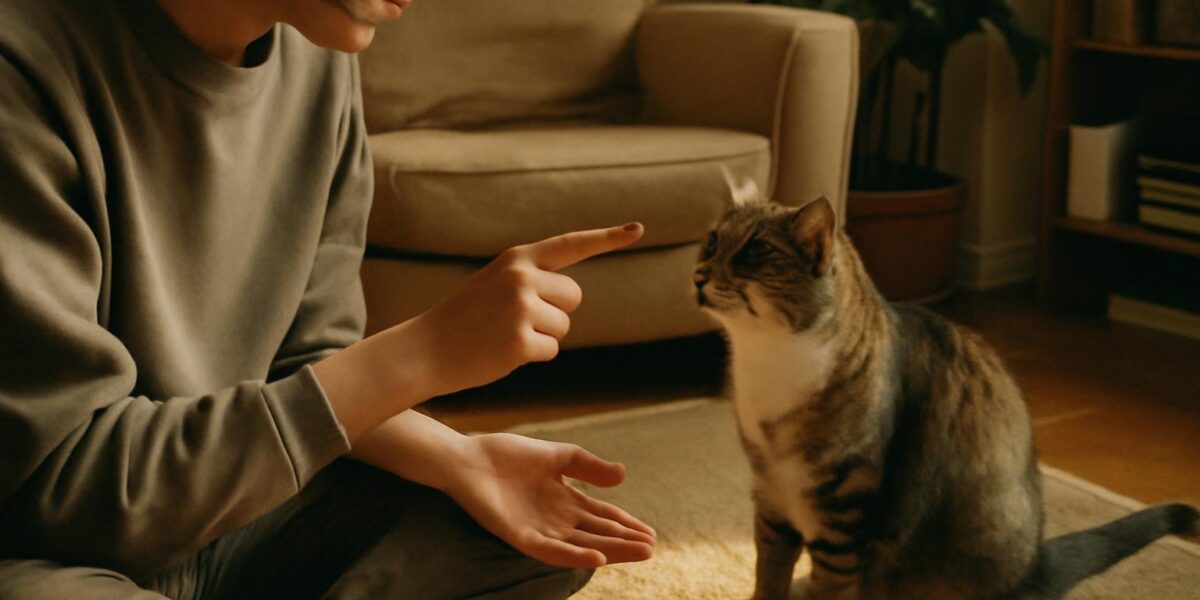
The Short Answer: They Probably See or Hear Something You Can’t
If your cat fixes its gaze on an empty corner and you find yourself asking, “why does my cat stare at nothing?” — take comfort, because this is usually completely normal. To you the spot looks empty, but to your cat, armed with extraordinary senses, it may be full of sounds, movement, and detail you simply cannot perceive.
In this article
- The Short Answer: They Probably See or Hear Something You Can’t
- Common Normal Reasons Cats Stare at Nothing
- Why It Looks Like Staring at Absolutely Nothing
- The Predator Brain Behind the Stare
- When Staring Might Signal a Health Problem
- Normal vs. When to Worry: A Quick Checklist
- What You Can Do at Home
- Special Attention for Senior Cats
- Frequently Asked Questions
Cats hear higher frequencies than humans, see better in dim light, and pick up the faintest motion. A tiny insect, a shadow, a vibration in the wall, or a distant noise can all hold your cat’s attention while you stand there seeing nothing at all.
That said, prolonged, glassy, or disoriented staring — particularly in an older cat — can occasionally point to a medical issue such as cognitive decline, high blood pressure, or seizures. This guide will help you separate the ordinary watchfulness from the kind that warrants a vet visit.
Common Normal Reasons Cats Stare at Nothing
Most “staring at nothing” comes down to your cat’s remarkable senses and instincts.
They hear something you can’t. Cats detect ultrasonic sounds far beyond human range. A mouse in the wall, an insect, or electronics emitting high-pitched tones can all command their focus, even when the room seems silent to you.
They see subtle movement or light. A flicker of shadow, a drifting dust mote in a sunbeam, or a faint reflection can trigger that intense, motionless stare. Cats are built to freeze and track before they pounce.
They are resting and zoning out. Sometimes a cat simply parks itself and lets its gaze drift while it relaxes. This is the feline version of daydreaming, and the “nothing” is exactly the point.
They are processing or decompressing. After excitement or stress, a cat may stare quietly to self-soothe. Reading the rest of their body through the cat body language guide tells you whether they are relaxed or tense.
Why It Looks Like Staring at Absolutely Nothing
The reason this behavior unsettles us is that we cannot perceive whatever the cat is locked onto. Our senses are simply less acute.
A cat’s hearing and night vision dramatically outclass ours, and their sensitivity to movement is finely tuned for hunting. So the “nothing” is usually a very real something — just below the threshold of human perception.
It can also help to think about what changes in the environment when the staring starts. Electronics powering on, the heating or air conditioning kicking in, plumbing running through the walls, or insects becoming active at dusk all introduce sounds and vibrations your cat notices long before you would. Time of day matters too: many cats grow more watchful around dawn and dusk, the natural peak of hunting activity, so a sudden bout of intense staring in the early evening is often just your cat’s instincts switching on.
If your cat stares, then relaxes, grooms, or wanders off, and responds the moment you call their name, you are almost certainly watching ordinary feline attentiveness rather than anything concerning.
The Predator Brain Behind the Stare
That intense, frozen focus is not idle — it is your cat operating in hunting mode, even from the comfort of your couch. Recognizing this helps the behavior feel a lot less eerie.
Cats are ambush predators. Their entire hunting strategy depends on detecting the faintest cue, holding perfectly still to avoid being noticed, and waiting for the right instant to strike. When your cat locks onto an apparently empty corner, they are running this exact program. Something — a sound, a flicker, a vibration — has registered as potentially interesting, and the freeze-and-watch response kicks in automatically.
This is also why staring so often ends in a sudden burst of action. Your cat may stare for a while, then dart across the room, swat at the air, or race off in a fit of the zoomies. The energy that built up during the watchful pause has to discharge somewhere, especially in an indoor cat without real prey to chase.
Far from being a sign of confusion, this kind of staring usually reflects a healthy, engaged predatory mind. The “nothing” your cat is fixated on is simply the trigger that activated an instinct millions of years in the making.
When Staring Might Signal a Health Problem
While usually harmless, staring into space can occasionally indicate a medical issue, especially when it is prolonged or paired with other changes. Watch the whole picture, not the staring alone.
Feline cognitive dysfunction. In senior cats, blank staring at walls or into empty space can be an early sign of age-related cognitive decline. Look for confusion, disrupted sleep, increased nighttime yowling, or litter box accidents.
High blood pressure (hypertension). Feline hypertension, often linked to kidney disease or hyperthyroidism, can affect vision and behavior. A cat that suddenly stares oddly, bumps into objects, or has dilated pupils should be seen promptly.
Focal seizures. Brief staring spells combined with twitching, lip-smacking, drooling, a frozen posture, or unresponsiveness can sometimes indicate a partial seizure rather than ordinary watching.
Pain or illness. A cat that feels unwell may withdraw and fixate quietly. If staring comes with hiding, appetite changes, or other shifts, review cat stress signs and arrange a check-up.
Normal vs. When to Worry: A Quick Checklist
Use this to decide whether to relax or call the vet.
Likely normal if your cat:
- Stares briefly, then moves on, grooms, or naps
- Snaps to attention the instant you call or shake a treat bag
- Is eating, playing, and using the litter box as usual
- Often fixates near vents, baseboards, or windows
Call your vet if your cat:
- Stares for long stretches with a glassy, unresponsive look
- Is a senior with new confusion, pacing, or nighttime yowling
- Bumps into furniture or shows possible vision changes
- Twitches, drools, or freezes during episodes
- Also has appetite, weight, thirst, or litter box changes
If you ever witness an episode that looks like a seizure, keeping a home pet first-aid and emergency station ready and filming the event for your vet can make a real difference.
What You Can Do at Home
If the staring is the harmless variety but you want to redirect that intense focus, give your cat more genuine things to watch and chase.
- Add daily interactive play. Wand toys that mimic prey satisfy the predatory drive behind staring. Explore these cat enrichment activities.
- Build vertical territory. Cat trees and window perches give your cat real scenery to survey instead of blank space.
- Use puzzle feeders. Working for food keeps the mind engaged and reduces aimless fixation.
- Keep a calm routine. Predictability and quiet retreats help anxious cats settle without needing to zone out.
- Note any patterns. Track when and how long the staring happens, and share that with your vet if anything seems off.
Special Attention for Senior Cats
While staring is usually harmless at any age, it deserves a more careful eye in older cats. The senior years bring a higher chance that a behavior change reflects an underlying medical shift rather than ordinary instinct.
Feline cognitive dysfunction, sometimes described as a form of dementia, becomes more common as cats age. Blank staring into corners or empty space can be one of its early signs, especially when it appears alongside other clues: disrupted sleep, increased nighttime yowling, confusion in familiar rooms, reduced interest in interaction, or accidents outside the litter box. Together, these changes paint a picture worth discussing with your vet.
Senior cats are also more prone to high blood pressure, frequently secondary to kidney disease or an overactive thyroid. Hypertension can affect the eyes and brain, leading to disoriented staring, bumping into objects, or dilated pupils. The good news is that these conditions are often manageable when caught early, which is exactly why regular senior wellness checks and prompt attention to new behaviors matter so much.
If your older cat develops new or frequent staring spells, do not simply chalk it up to age. A timely veterinary exam can distinguish normal aging from a treatable condition and give your cat the best possible quality of life in their later years.
Frequently Asked Questions
Is my cat seeing ghosts when it stares at nothing?
There is no evidence cats see ghosts. They respond to sounds, movement, light, and vibrations below human perception. The space only looks empty to you, not to your cat.
Should I worry if my senior cat stares into space a lot?
It is worth a vet conversation. In older cats, frequent blank staring can be an early sign of cognitive decline or high blood pressure, especially alongside confusion, night yowling, or litter box accidents.
How can I tell a seizure from normal staring?
Normal staring breaks the moment you get your cat’s attention. A focal seizure often involves unresponsiveness, twitching, lip-smacking, or drooling, with disorientation afterward. Record a video for your vet if you can.
My cat stares at nothing and then suddenly runs off — is that normal?
Yes, that is typical predatory behavior. Your cat tracked something, lost interest, or got startled and bolted. A sudden case of the “zoomies” after staring is usually just pent-up energy.
When should I take my cat to the vet?
See your vet if the staring is prolonged and glassy, comes with vision changes, twitching, or disorientation, or appears alongside changes in appetite, weight, thirst, or litter habits.


