
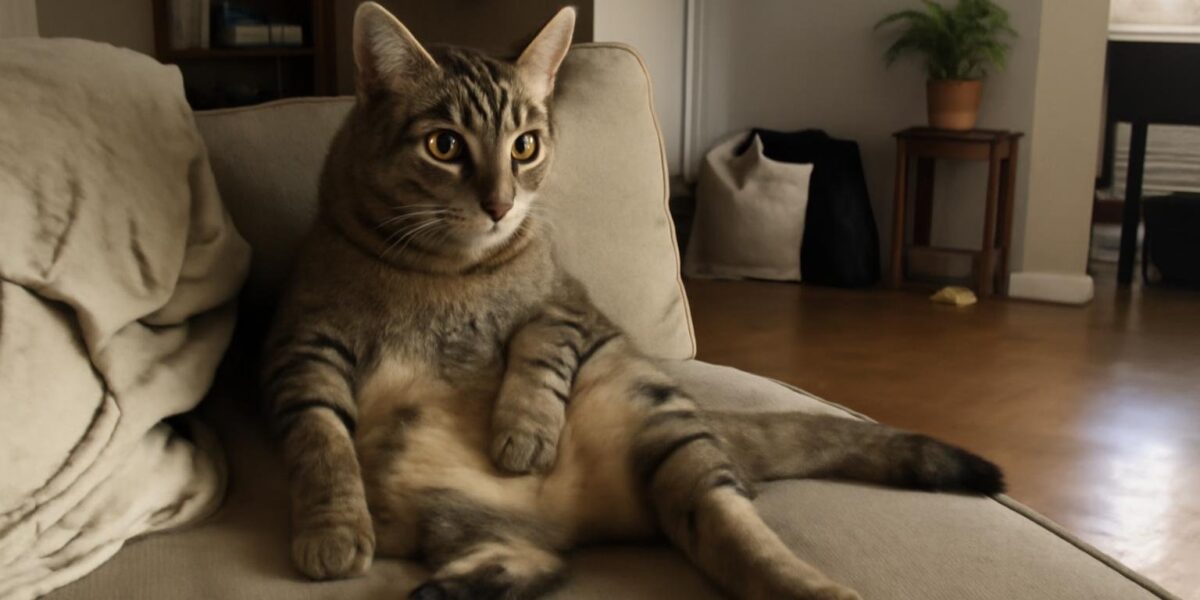
If you are asking “why is my cat breathing fast while sleeping,” the answer can range from completely normal dreaming to a serious sign of heart or lung disease, so this is one symptom worth understanding precisely. Brief, rapid breathing during active dream sleep, often with twitching paws and whiskers, is usually harmless. But a consistently fast resting breathing rate while your cat is calm or deeply asleep can be an early warning of heart failure or respiratory disease and should prompt a vet visit. The single most useful thing you can do is learn to count your cat’s resting respiratory rate, which we explain below.
In this article
The Resting Respiratory Rate Rule
This is the most important takeaway, so we will start with it. A healthy cat at rest or asleep should take fewer than about 30 breaths per minute. Counting this number is one of the best home tools you have for catching heart and lung problems early.
To count it, wait until your cat is calm, resting, or sleeping deeply (not actively dreaming or purring). Watch the chest rise and fall: one rise plus one fall counts as a single breath. Count the breaths over 30 seconds and multiply by two, or count for a full 60 seconds for accuracy.
A resting rate consistently above 30 breaths per minute, especially if it is climbing over days or if breathing also looks labored, is a reason to call your vet promptly. Keeping a simple log of this number gives your vet genuinely valuable information.
It is worth taking the rate on several different occasions before drawing conclusions, since a single reading can be thrown off by a recent play session, a warm room, or a dream. Counting at the same calm time each day, such as when your cat is settled in the evening, gives you the most reliable baseline. Once you know your cat’s normal resting rate, any meaningful rise becomes much easier to spot.
When Fast Sleep Breathing Is Normal
The good news is that some rapid breathing during sleep is completely normal. Cats, like people, have an active dream phase called REM sleep. During it you may notice:
- Faster, slightly irregular breathing
- Twitching paws, whiskers, ears, or tail
- Soft sounds, little chirps, or mouth movements
- Eyes moving under closed lids
This kind of breathing is brief and tied to dreaming. It should settle as your cat moves into deeper, calmer sleep. Kittens in particular often breathe faster and dream more actively than adult cats.
The key difference is that normal dream breathing comes and goes with the dream, while concerning breathing is sustained, fast, or labored even when your cat is fully relaxed and not twitching.
Where your cat is in their sleep cycle also matters. Cats cycle between light sleep, deep sleep, and active REM sleep many times a day. During REM, the brain is highly active and breathing naturally speeds up and becomes irregular, often with the twitching described above. During deep, restful sleep, breathing should be slow, even, and effortless. When you count a resting rate, you want to do it during that calm, deep phase rather than during dreaming, or you will get a falsely high number.
It is worth remembering that a single high reading during a dream is not a cause for panic. What matters is the pattern over time when your cat is genuinely at rest. One twitchy, fast-breathing nap tells you very little, while a consistently elevated rate across several calm readings is the signal that deserves attention.
Causes That Need Attention
When fast breathing persists during true rest, several medical causes deserve consideration. Some are serious:
- Heart disease and heart failure: Fluid can build up around or in the lungs, raising the resting breathing rate. A rising rate is often one of the earliest signs.
- Respiratory disease: Asthma, infections, or fluid in the chest can cause fast, sometimes labored breathing.
- Pain or stress: Discomfort or anxiety can elevate the breathing rate, though this usually eases at rest.
- Anemia: A low red blood cell count makes the body work harder to deliver oxygen.
- Fever or systemic illness: Many conditions raise the breathing rate as the body responds.
- Heat or overexertion: Cats may breathe fast after activity or in hot conditions, which should settle with rest.
Because heart and lung disease can be quiet until they are advanced, a sustained high resting rate is never something to simply watch indefinitely.
When to See a Vet or Treat It as an Emergency
Contact your veterinarian promptly if your cat’s resting breathing rate is consistently above 30 breaths per minute, or if you notice it climbing over time. Seek emergency care right away if you see any of these:
- Open-mouth breathing or panting (cats rarely pant; this is a serious red flag)
- Labored breathing, heaving sides, or visible effort to breathe
- Pale, blue, or gray gums or tongue
- Stretching the neck out to breathe, or breathing with elbows held away from the body
- Weakness, collapse, or sudden lethargy
- Restlessness combined with fast or noisy breathing
Open-mouth breathing and any sign of breathing difficulty in a cat is a respiratory or cardiac emergency. Do not wait and see. Keep your cat calm, minimize stress, and get to an emergency vet immediately. Our home pet first-aid and emergency station guide explains what to have ready for exactly this kind of situation, and knowing your nearest emergency clinic in advance saves precious time. If your cat is already breathing with an open mouth, our piece on a cat breathing with mouth open explains why this is so urgent.
What You Can Do at Home
If your cat is otherwise well and you are establishing a baseline, these steps help you monitor safely:
- Count the resting respiratory rate regularly. Do it when your cat is calm or in deep, still sleep, and write the number down so you can spot trends.
- Note the breathing pattern. Watch whether breaths look easy or labored, and whether the rate settles or stays high.
- Reduce stress and heat. Keep your cat cool, calm, and in a comfortable environment, especially if they tend toward anxiety.
- Track other signs. Note any coughing, lethargy, reduced appetite, or exercise intolerance.
- Share your records with your vet. A log of resting rates is one of the most useful things you can bring to an appointment.
Never attempt to medicate breathing problems at home. If your cat is also showing other worrying signs, our note on a cat who is restless at night may help you connect related symptoms, since discomfort and breathing changes can disrupt sleep together.
How Vets Investigate Fast Breathing
Understanding what happens at the clinic can take some of the fear out of a visit and helps you arrive prepared. When you bring in a cat with a persistently elevated resting breathing rate, your vet will start by watching your cat breathe and listening to the chest with a stethoscope, checking for muffled heart sounds, crackles, or a murmur.
From there, depending on what they find, your vet may recommend chest X-rays to look for fluid around or in the lungs, an ultrasound of the heart (echocardiogram) to assess heart function, or blood tests to check for anemia, infection, or organ problems. These tests sound daunting, but they are how a vet distinguishes a heart problem from asthma, an infection, or another cause, and the right diagnosis leads to the right treatment.
This is where your home records become genuinely valuable. A log showing your cat’s resting breathing rate climbing over days or weeks gives your vet objective evidence that something is changing, often before your cat looks visibly ill. Many cats with early heart disease are caught precisely because an attentive owner noticed the resting rate creeping up and acted on it.
The encouraging news is that many of the conditions behind fast breathing can be managed well, especially when found early. Heart disease, asthma, and other causes often respond to treatment that keeps cats comfortable and active for a long time, which is the best argument for paying attention to that resting breathing rate now.
Frequently Asked Questions
What is a normal breathing rate for a sleeping cat?
A resting or sleeping cat should take fewer than about 30 breaths per minute. A rate consistently above this, especially if it is rising, is a reason to contact your vet.
How do I count my cat’s resting respiratory rate?
Wait until your cat is calm or deeply asleep, then watch the chest. One rise and fall equals one breath. Count for 30 seconds and double it, or count for a full minute for accuracy.
Is it normal for my cat to breathe fast and twitch while sleeping?
Yes. Brief fast breathing with twitching paws and whiskers usually means your cat is dreaming during REM sleep. It should settle as they move into deeper, calmer sleep.
When is fast breathing in a cat an emergency?
Open-mouth breathing, panting, labored or heaving breaths, pale or blue gums, or a cat stretching its neck to breathe are emergencies. Keep your cat calm and go to an emergency vet immediately.
Can fast breathing while sleeping mean heart problems?
It can. A consistently elevated resting breathing rate is one of the earliest signs of heart disease and fluid in the lungs. Tracking the rate and sharing it with your vet helps catch this early.


