
Last updated: May 23, 2026
In this article
- Normal Cat Hiding Behavior
- New Cat Hiding: What to Expect
- Stress and Anxiety as Causes of Cat Hiding
- Illness Signs: When Cat Hiding Means Something Medical
- Environmental Changes That Trigger Hiding
- How to Help a Cat That Is Hiding
- When Cat Hiding Is an Emergency
- Creating Safe Spaces for Your Cat
- Frequently Asked Questions
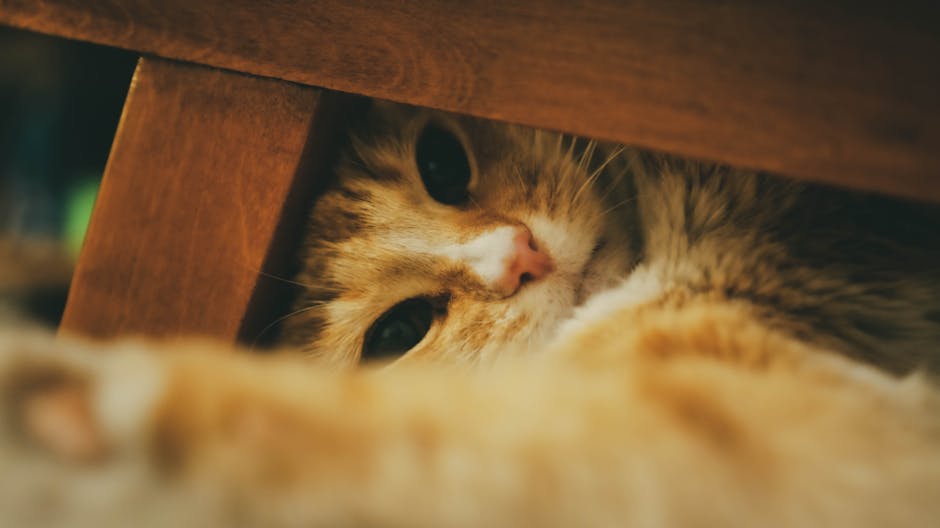
You walk through the door and your cat is nowhere to be found. You check under the bed, behind the couch, inside the closet — and there they are, tucked into the darkest corner they could find. If you have ever asked yourself “why is my cat hiding?”, you are not alone. Cat hiding is one of the most common behavioral concerns reported by cat owners, and while it is often completely harmless, there are times when it signals something that needs your attention.
Understanding why your cat hides — and knowing the difference between normal behavior and a warning sign — is an essential part of responsible cat ownership.
Normal Cat Hiding Behavior
Before you worry, it helps to understand that a certain amount of cat hiding is completely normal and healthy. Cats are crepuscular animals, meaning they are most active at dawn and dusk. During the middle of the day and late at night, many cats retreat to a quiet spot to sleep deeply for several hours. This is not avoidance — it is simply how cats rest.
Cats also hide when they want uninterrupted alone time. Unlike dogs, who tend to seek companionship throughout the day, cats are solitary hunters by nature. They need periods of quiet to recharge, and a cat that retreats to a favorite hiding spot for a nap is a cat that feels comfortable enough in its environment to relax. A cat that hides briefly after a loud noise, such as a thunderstorm or a dropped pan, is also showing a perfectly natural startle response. As long as the cat returns to normal behavior within a reasonable time — usually minutes to a few hours — there is nothing to worry about.
Some cats are also simply more private than others. Breed, personality, and early socialization all play a role. A cat that was well socialized as a kitten may be outgoing and rarely hide, while a cat with less early human exposure may be more reserved throughout its life. Neither temperament is a problem on its own.
New Cat Hiding: What to Expect
If you have recently brought a new cat home and they have immediately disappeared under the bed or behind a piece of furniture, do not panic. New cat hiding is one of the most predictable behaviors in feline adoption, and it is not a sign that your cat is unhappy or that the adoption was a mistake.
When a cat enters an unfamiliar environment, every instinct tells it to find a safe, enclosed space and observe before exploring. Everything is new — the smells, the sounds, the layout of the home, and the people in it. A new cat may hide for anywhere from a few hours to several weeks, depending on their personality and history. Cats from shelters or rescue backgrounds may take longer because they have already experienced significant upheaval. If you are considering adopting a cat, understanding this adjustment period ahead of time will help you set realistic expectations and respond with patience rather than concern.
During this settling-in phase, provide food, water, and a litter box near (but not directly next to) the hiding spot. Sit quietly in the same room without trying to coax the cat out. Let them come to you on their own timeline. Most new cats begin venturing out within one to two weeks, especially when they learn that your presence is associated with food and calm energy.
Stress and Anxiety as Causes of Cat Hiding
Stress is one of the most common reasons a previously social cat begins hiding. Cats are creatures of routine, and even changes that seem minor to humans can feel overwhelming to a cat. Common stressors that trigger cat hiding include the arrival of a new pet or family member, changes in the household routine, construction noise or renovation activity, conflict between cats in a multi-cat home, visitors or houseguests, and the absence of a familiar person.
Anxiety-driven hiding typically follows a pattern. The cat may be perfectly normal when the house is quiet and then retreat the moment a trigger appears. Over time, if the source of stress persists and the cat does not feel it has control over its environment, the hiding can become chronic. A cat that once hid only when guests came over may start hiding preemptively, spending entire days in a single room.
Cats in multi-pet households are especially vulnerable to stress-related hiding. If one cat is bullying or resource-guarding — blocking access to food, water, or litter boxes — the targeted cat may retreat and hide as a survival strategy. Owners sometimes mistake this for a personality quirk when it is actually a sign that the household dynamic needs intervention.
Fear-based hiding is a related but distinct category. A cat that has experienced trauma — loud fireworks, a visit to the veterinarian, or a negative encounter with a person or animal — may associate specific triggers with danger and hide whenever those triggers appear. This is a learned fear response, and it tends to intensify over time without intervention.
Illness Signs: When Cat Hiding Means Something Medical
This is the section every cat owner needs to read carefully. One of the most important things to understand about cats is that they are masters at concealing illness. In the wild, a visibly sick or injured animal is a target for predators, so cats have evolved to hide signs of pain and weakness. When a cat is not feeling well, its instinct is often to retreat to a quiet, hidden location and stay there.
Cat hiding that is driven by illness looks different from normal hiding in several important ways. The cat hides more than usual, often in new or unusual locations — not their favorite perch, but under the bathtub or behind the washing machine. The hiding is accompanied by changes in eating, drinking, grooming, or litter box habits. The cat may refuse food for more than 24 hours, drink significantly more or less water than usual, stop grooming (leading to a dull or matted coat), or have changes in urination or defecation.
Medical conditions that commonly cause cats to hide include urinary tract infections and blockages, kidney disease, dental pain, gastrointestinal problems, upper respiratory infections, arthritis and chronic pain, hyperthyroidism, diabetes, and cancer. A cat with a urinary blockage, for example, may hide because it is in severe pain and cannot urinate — this is a life-threatening emergency that requires immediate veterinary attention.
The key rule is this: if your cat is hiding and showing any other change in behavior, appetite, energy, grooming, or litter box habits, a veterinary visit is warranted. Cats do not hide because they are “dramatic.” If a cat is both hiding and showing signs of feeling unwell, take it seriously.
Environmental Changes That Trigger Hiding
Cats map their environment in extraordinary detail. They know every surface, every scent, every route through the house. When that map changes suddenly, it can feel destabilizing. Environmental triggers for cat hiding include moving to a new home, rearranging furniture, bringing in new furniture or removing old pieces, new appliances with unfamiliar sounds, changes in lighting or household scents, outdoor cats appearing near windows, and seasonal changes like holiday decorations or opening windows for the first time in spring.
Moving to a new home is perhaps the most significant environmental disruption a cat can experience. Everything they have learned about their territory is suddenly irrelevant, and they must start over. It is extremely common for a cat to hide for the first several days in a new home, and the recommended approach is the same as for new cat hiding — provide a single room with all necessities and let the cat expand its territory at its own pace.
Even smaller changes can trigger hiding in sensitive cats. Something as simple as a new piece of furniture can cause a cat to avoid a room for days until the unfamiliar object acquires the household scent. Using plug-in pheromone diffusers can help ease the transition during any kind of environmental change by releasing calming synthetic pheromones that mimic the facial marking scent cats produce when they feel safe.
How to Help a Cat That Is Hiding
Helping a hiding cat starts with understanding the cause. Once you have identified the likely reason — whether it is a new environment, stress, illness, or personality — you can take targeted steps to help.
Do not force a cat out of hiding. Pulling a frightened cat from its safe spot removes the one thing making it feel secure and can damage the trust between you. Instead, make the area around the hiding spot comfortable and rewarding. Place food and water nearby. Sit quietly in the same room and read or work — your calm, non-threatening presence teaches the cat that you are safe.
Reduce stressors where possible. If the hiding was triggered by a new pet, slow down the introduction process. If household noise is the issue, provide a quiet room the cat can retreat to. In multi-cat homes, ensure there are enough resources — the general rule is one litter box per cat plus one extra, and food and water stations in multiple locations so no cat can guard them all.
Use positive reinforcement. When your cat does emerge from hiding, reward the behavior with a treat, gentle words, or play — whatever your cat enjoys. Never punish a cat for hiding. Punishment increases fear and will make the hiding worse.
Try interactive play sessions near the hiding area using a wand toy or feather toy. Play activates a cat’s predatory instincts, which can override fear and draw a timid cat out. Keep sessions short and low-pressure, and let the cat set the pace.
Consider calming aids. Synthetic pheromone diffusers, calming supplements recommended by your veterinarian, and even calming music designed for cats can help reduce anxiety and encourage a hiding cat to re-engage with its environment. These are not substitutes for addressing root causes, but they can support the process.
If you are adopting a cat from a shelter or rescue, ask about the cat’s temperament and history beforehand. Rescue organizations can often tell you whether a cat tends to be shy or outgoing, which helps you prepare appropriately.
When Cat Hiding Is an Emergency
While most cases of cat hiding resolve on their own or with patience, there are situations where hiding is an emergency that requires immediate veterinary attention. Treat hiding as urgent if your cat is hiding and has not eaten for more than 24 hours, your cat is hiding and straining to urinate or not urinating at all, your cat is hiding and breathing rapidly or with an open mouth, your cat is hiding and has experienced a known trauma such as a fall, being hit, or ingesting something toxic, your cat is hiding and is visibly injured or limping, or your cat is hiding and vomiting repeatedly or having diarrhea.
A cat that is hiding and not eating is particularly concerning. Cats that stop eating for even 48 to 72 hours can develop hepatic lipidosis (fatty liver disease), a potentially fatal condition. This is especially true for overweight cats. Do not assume your cat is simply being stubborn or picky — a cat that has retreated and refuses food needs a veterinary evaluation.
Urinary blockages in male cats are another critical emergency. A male cat that is hiding, visiting the litter box frequently without producing urine, crying out, or licking its genital area may have a complete urethral blockage. Without treatment, this can cause kidney failure and death within 24 to 48 hours.
When in doubt, call your veterinarian. It is always better to have a healthy cat checked unnecessarily than to miss an illness because the cat was “just hiding.”
Creating Safe Spaces for Your Cat
Rather than discouraging hiding, the best approach is to provide your cat with appropriate, comfortable safe spaces where they can retreat when they need to. A cat that has access to a designated safe space is less likely to hide in inconvenient or hard-to-reach locations, and having a secure retreat actually reduces overall anxiety.
Effective safe spaces for cats share a few common features. They are enclosed on at least three sides, providing a sense of security. They are elevated off the ground when possible, since height gives cats a sense of control and safety. They are located in quiet areas of the home, away from heavy foot traffic and loud appliances. And they are always accessible — a safe space that a cat cannot reach when it needs to is not a safe space at all.
Practical options include covered cat beds, cat trees with enclosed cubbies, cardboard boxes with a hole cut in one side, shelving units with a blanket draped over part of them, and dedicated cat shelves mounted on walls. Many cats also appreciate having a window perch where they can observe the outside world from a secure vantage point. If you have a multi-cat home, each cat should have its own safe space that the other cats do not invade.
Placing a piece of your clothing — an unwashed t-shirt, for example — in the safe space can help a shy or anxious cat associate the area with your comforting scent. For new cats, this simple step can significantly speed up the adjustment process.
Understanding why your cat hides is one of the most valuable things you can learn as a cat owner. Most of the time, it is nothing more than a natural feline behavior. But when hiding is sudden, prolonged, or accompanied by other changes, it deserves attention. By providing safe spaces, reducing stressors, and knowing the warning signs of illness, you give your cat the best chance at a comfortable, confident life. If you are ready to open your home to a cat who needs one, explore our adoptable cats and take the first step. You can also browse our cat breeds directory to learn about different breeds and their typical temperaments, which can help you find a match that suits your household.
Frequently Asked Questions
How long is it normal for a new cat to hide?
It is normal for a new cat to hide for anywhere from a few hours to two or three weeks. Cats with previous shelter or rescue experience may take longer. The most important thing is to let the cat set the pace and not force interaction. As long as the cat is eating, drinking, and using the litter box, the hiding is a normal part of the adjustment process.
Should I pull my cat out of their hiding spot?
No. Forcing a cat out of hiding removes their sense of security and can damage the bond between you. It can also cause a frightened cat to scratch or bite in self-defense. Instead, make the surrounding area inviting with food, water, and your calm presence, and let the cat come out when it is ready.
Why does my cat hide when visitors come over?
Many cats are uncomfortable around unfamiliar people. The new voices, scents, and body language of visitors can feel threatening. This is especially common in cats that were not extensively socialized with different people during their critical socialization period (roughly 2 to 7 weeks of age). Providing a safe room that guests do not enter can help your cat feel secure during visits.
Can cat hiding be a sign of pain?
Yes. Cats instinctively hide when they are in pain because showing vulnerability can attract predators in the wild. If your cat is hiding more than usual and also showing changes in appetite, grooming habits, activity level, or litter box behavior, pain or illness may be the cause. A veterinary examination is the only way to rule out a medical issue.
When should I take my hiding cat to the vet?
Take your cat to the vet if hiding is sudden and out of character, if it is accompanied by loss of appetite for more than 24 hours, if your cat shows any changes in urination or defecation, if your cat appears lethargic or is breathing abnormally, or if the hiding persists for more than a few days without an obvious environmental cause. Trust your instincts — you know your cat best, and if something feels off, it is worth a veterinary visit.


