
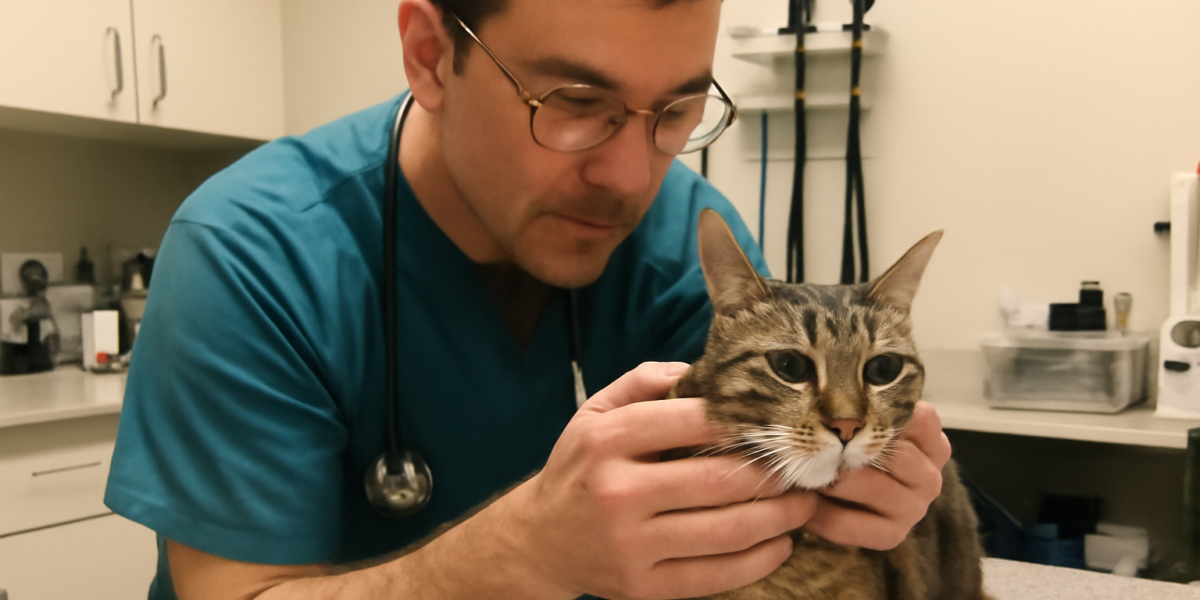
What Zylkene Is and Why It Suits Cats
Zylkene is a calming supplement made from alpha-casozepine, a peptide derived from the milk protein casein. The peptide was identified through research into the calming effect that nursing has on infant mammals, isolated, and brought to market as a behaviorally targeted nutraceutical for both dogs and cats. For cats specifically, Zylkene fills a useful niche — a low-risk, prescription-free option for short-term stressors like vet visits, boarding, travel, or moving to a new home.
In this article
- What Zylkene Is and Why It Suits Cats
- How Alpha-Casozepine Works in Cats
- Common Situations Where Zylkene Helps
- Dosing Approach for Cats
- How to Give Zylkene to a Cat
- What Realistic Effects Look Like
- Safety Profile
- Zylkene vs Other Calming Options for Cats
- Combining Zylkene with Environmental Support
- Where Zylkene Is Not Enough
- Frequently Asked Questions
Zylkene for cats is not a sedative, not a controlled substance, and not a substitute for prescription anxiolytics in cases of severe behavior problems. It is a nutritional supplement with a gentle calming effect that some cats respond to noticeably and others respond to subtly or not at all. The safety profile is favorable, which is why veterinarians often suggest a trial of Zylkene before stepping up to prescription medications for mild to moderate situational stress.
Cats are challenging anxiety patients in many ways — they hide stress behaviors, they often refuse oral medications, and many become more anxious about the act of medicating itself. Zylkene’s open-and-sprinkle capsule format addresses one of these problems by making administration relatively easy.
How Alpha-Casozepine Works in Cats
After oral administration and digestion, alpha-casozepine appears to interact gently with GABA-A receptors in the brain, the same receptor family that benzodiazepine drugs target — but at a vastly lower potency. The interaction is partial and mild, which is why Zylkene produces a calming, settling effect rather than the overt sedation seen with prescription drugs.
The product is processed to be lactose-free, so cats with lactose intolerance (which is most adult cats) tolerate it without GI upset. The one important exception: cats with severe milk protein allergies should not use Zylkene because trace casein components remain in the finished product. Severe cow milk allergy is uncommon in cats but does exist.
Common Situations Where Zylkene Helps
Zylkene for cats fits best in these scenarios:
- Predictable short-term stress — vet visits, grooming, boarding
- Travel by car or air
- Moving to a new home
- Adjustment to a new pet, family member, or roommate
- Adoption transition for a newly adopted cat
- Holiday gatherings or houseguests
- Renovation or significant household disruption
- Mild ongoing stress in a multi-cat household
For severe cases — established urine marking that has continued for months, panic-level anxiety, persistent inter-cat hostility — Zylkene alone is unlikely to be sufficient. These warrant a multi-modal approach that may include environmental enrichment, behavior modification, pheromone products, and prescription medications like fluoxetine, clomipramine, or gabapentin for cats.
Dosing Approach for Cats
Zylkene comes as capsules in several strengths sized to body weight categories. Dosing should follow the product label and your veterinarian’s guidance. The general timing approach:
- Start 1–2 days before the stressor: Effects build with daily dosing. A single dose given on the day of a vet visit is unlikely to produce noticeable benefit.
- Continue through the event: Daily dosing for the duration of boarding, travel, or the multi-day stressor
- Stop after the event: No tapering needed — start and stop are simple
For longer-term use — say, the four to six week adjustment period after adopting a cat — daily dosing for the full window is appropriate. Zylkene does not produce dependency or withdrawal.
How to Give Zylkene to a Cat
Cats are notoriously difficult to medicate, but Zylkene capsules are designed to be opened and the powder sprinkled on food. Most cats accept the powder mixed into a small amount of strongly flavored wet food — tuna in water, salmon pâté, or a high-value treat. The taste is mild and most cats do not object.
If your cat is suspicious of mixed food, try these approaches:
- Mix the powder into a small first portion (a teaspoon or two) of strongly flavored food, given before the regular meal when the cat is hungriest
- Stir the powder into a lickable treat tube formulation
- Mix into a tiny amount of canned tuna juice and offer in a saucer
- For cats who eat mostly dry food, sprinkle on a small amount of moistened kibble
Avoid mixing the powder into a full bowl of food — if the cat eats only part of the bowl, you cannot tell whether they got the full dose. Always use a small portion first, and feed the rest of the meal once the medicated portion is consumed.
What Realistic Effects Look Like
Zylkene is gentle. A reasonable expectation is a cat that seems slightly more relaxed, less reactive to mild triggers, more able to settle. You should not see overt sedation, behavioral flatness, or dramatic personality changes. If you see significant sedation, that is unusual and may warrant a vet conversation rather than being attributed to the supplement.
Some cats respond visibly. Some respond modestly. Some show no observable response. There is no way to predict in advance. A one-week trial is generally enough to form an initial impression for shorter events; multi-week trials are appropriate for longer adjustments.
Safety Profile
Zylkene for cats has an essentially clean safety profile. Reported side effects are rare and generally mild:
- Occasional mild GI upset (loose stool) — usually transient
- Rare appetite changes
- Allergic reaction in cats with severe milk protein allergy (uncommon)
There are no known significant drug interactions, no contraindications for major medical conditions like kidney or heart disease, and no controlled-substance scheduling. Zylkene can be combined with most other calming tools — pheromone diffusers like Feliway, calming treats, behavior modification — without concern. Combining with prescription anxiolytics is generally safe but should be done with veterinary direction.
Zylkene vs Other Calming Options for Cats
How does Zylkene compare to other tools available for feline stress?
- vs Feliway pheromone: Feliway works through pheromone signaling at the vomeronasal organ; Zylkene works through gut absorption of a calming peptide. Different mechanisms; often combined for additive effect.
- vs Calming treats with L-theanine or tryptophan: Different mechanisms (L-theanine modulates alpha brain wave activity; tryptophan is a serotonin precursor). Zylkene’s mechanism has more peer-reviewed research.
- vs Gabapentin: Gabapentin is a prescription drug with measurable systemic effects, often used for vet visit anxiety in cats. Effects are more pronounced and predictable than Zylkene, but with prescription requirements and dosing complexity. Many vets use Zylkene for ongoing mild stress and gabapentin for specific high-stress events.
- vs SSRIs like fluoxetine: SSRIs are reserved for chronic, severe anxiety or established behavior problems. Zylkene is gentler and lower-risk but less powerful.
- vs CBD products: CBD acts pharmacologically through the endocannabinoid system. Zylkene is gentler with fewer drug interaction concerns. See our overview of CBD oil for cats.
Combining Zylkene with Environmental Support
For cats, environmental enrichment is foundational and supplements like Zylkene work best as a layer on top. Make sure the basics are addressed:
- Adequate litter boxes — one per cat plus one extra, in different locations
- Vertical space — cat trees, shelves, perches
- Multiple resting spots in different rooms
- Separate feeding stations in multi-cat homes
- Window perches for visual enrichment
- Food puzzles and play sessions
- Hiding spots for cats who need them
A cat in a well-resourced environment with Zylkene as support has a much better chance of settling than a cat with environmental stressors uncorrected. Pheromone diffusers like Feliway add another layer that is well-suited to combine with Zylkene. For newly adopted cats, the first two to four weeks at home are usually the most stressful, and a layered support plan (Zylkene plus Feliway plus a quiet starter room before introducing the rest of the house) gives the cat the best chance of settling smoothly. Many shelters and rescues now recommend this kind of layered approach as standard for adoption transitions.
Where Zylkene Is Not Enough
Some situations require more than a gentle nutraceutical. Talk to your veterinarian about prescription options if your cat has:
- Established urine marking despite litter box optimization and pheromone use
- Persistent inter-cat aggression with injuries
- Severe travel or vet visit panic where the cat becomes uncontrollable
- Compulsive behaviors like over-grooming or wool sucking
- Anxiety severe enough to interfere with eating, sleeping, or daily function
For these, Zylkene may still play a supporting role, but it is unlikely to be the primary intervention.
Frequently Asked Questions
How long does Zylkene take to work in cats?
Most veterinarians recommend starting one to two days before an anticipated stressor. Effects are gentle and build with daily dosing. For ongoing use during an adjustment period, plan to evaluate after one to two weeks.
Can Zylkene be combined with Feliway?
Yes — they work through completely different mechanisms (gut absorption vs pheromone signaling) and are often combined for an additive effect. There are no interaction concerns.
Is Zylkene safe for cats with kidney disease?
Generally yes — there are no known issues with use in cats with chronic kidney disease, though as always, run any new supplement past your veterinarian. Many calming options are restricted in cats with kidney disease, but Zylkene’s gentle mechanism and lack of systemic drug effects make it a reasonable option.
Will Zylkene help my cat with car travel?
It might help mild travel stress when started 1–2 days before a trip. For severe car panic — vocalization, drooling, vomiting — Zylkene alone is rarely enough, and your vet may recommend gabapentin or trazodone given before the trip. Pair any medication with a familiar carrier and short conditioning trips.
Can my cat take Zylkene long-term?
Yes, it can be used long-term without known issues, though most owners use it for defined event windows of days to weeks. For chronic anxiety lasting months, talk to your veterinarian about whether a prescription anxiolytic might be a better fit for your cat’s situation.
What if Zylkene does not help my cat?
Some cats simply do not respond. If a reasonable trial shows no perceived benefit, talk to your veterinarian about other options — pheromone products, environmental adjustments, behavior modification, or prescription medications. Also revisit the environmental basics like litter box numbers, vertical space, and resource competition in multi-cat homes.
Zylkene for cats is a low-risk, sometimes very helpful tool for short-term stressors, especially when paired with environmental enrichment and pheromone support. Any persistent or severe anxiety deserves a veterinary conversation. For broader feline calming options, see our guides to calming treats for cats and the cat care library.


