Last updated: May 6, 2026
In this article
- What “Formerly Hoarded” Actually Means
- The First Vet Visit Matters More Than You Think
- Decompression Looks Different for Hoarding Survivors
- One New Thing at a Time
- Handling, Touch, and Body Language
- Resilience and Surprises
- When to Bring in Professional Help
- Multi-Pet Hoarding Cases and Group Dynamics
- Setting the Household Up for Success
- Realistic Lifestyle Adjustments
- Frequently Asked Questions
What “Formerly Hoarded” Actually Means
Adopting a formerly hoarded pet means welcoming an animal that was kept in overcrowded, under-resourced conditions, often by a person whose intentions outpaced their capacity. These pets are not “abused” in the cruelty-case sense, but they are profoundly under-socialized. They lived in chaos, scarcity, and sensory overload. Many never walked on a leash, never met a stranger calmly, never had their own food bowl, and never experienced silence.
Hoarding rescues vary widely. A cat from a 60-cat home might be a friendly tabby who simply needs deworming and dental work. A dog pulled from a 30-dog backyard might be terrified of doorways, hardwood floors, or men. The common thread is sensory deprivation followed by sudden sensory flood when they arrive in a normal household. Trauma-informed care means slowing the flood.
If you are weighing this adoption, read this honestly. Most formerly hoarded pets become wonderful companions. Some take six weeks. Some take a year. A few will always be quirky, sound-sensitive, or one-person bonded. None of that is failure. It is the texture of the life you are signing up for.
The First Vet Visit Matters More Than You Think
Hoarded pets often arrive with a stack of hidden medical issues. Crowded environments breed parasites, upper respiratory infections, untreated dental disease, and skin conditions. Cats from hoarding cases routinely test positive for fleas, ear mites, and intestinal worms even after a rescue’s intake protocol. Dogs may have heartworm, broken teeth, untreated ear infections, or musculoskeletal issues from confinement.
Schedule a baseline vet exam within the first week, even if the rescue says everything looks good. Ask for a full physical, dental check, fecal test, and bloodwork. Mention to your vet that the pet came from a hoarding situation so they know to look for stress-related issues like chronic GI inflammation or stereotypic behaviors with a medical component.
Treat any pain or untreated illness before you start behavior work. A cat with dental pain will not relax. A dog with chronic ear infections will flinch every time you reach toward the head. Medical first, behavior second.
Decompression Looks Different for Hoarding Survivors
The standard 3-3-3 rule for rescue dog decompression assumes a baseline of normal socialization. For hoarding survivors, multiply each phase. Three days becomes three weeks of barely emerging. Three weeks becomes three months of cautious exploration. Three months becomes a full year before you see the pet you adopted.
Set up a single quiet room with food, water, a litter box or pee pads, soft bedding, and one hiding spot. Do not introduce the rest of the home until the pet is eating, drinking, and using the bathroom reliably in this room. Sit on the floor and read a book aloud. Do not reach. Do not stare. Let the pet approach you.
Many adopters describe a “switch flip” moment somewhere between week three and month four. The pet suddenly walks into the living room, jumps on the couch, or asks for a belly rub. Until that moment, you are a patient houseguest in their hospice. After it, you are family.
One New Thing at a Time
Adopting a formerly hoarded pet means you are the first person introducing them to a normal life. Leashes, harnesses, car rides, vacuum cleaners, doorbells, hardwood floors, stairs, baths, brushing, nail trims, kibble flavors, toys, even grass under their paws can all be brand new.
Pick one new experience per week. Pair every new thing with high-value food. Keep sessions under five minutes. If the pet shakes, hides, or freezes, you went too fast. Back up two steps and try again next week.
- Week 1: harness on for ten minutes in the safe room with cheese
- Week 2: harness plus leash dragging in the safe room
- Week 3: short leash walk down the hallway
- Week 4: walk to the front door and back
- Week 5: front yard for two minutes
This pacing feels glacial. It is exactly right. Pushing faster usually creates a setback that costs you a month, so the slow path is also the fast path.
Handling, Touch, and Body Language
Hoarded pets often missed the early socialization window for human handling. They may flinch at being picked up, recoil from grooming tools, or freeze when you reach for their collar. None of this means they hate you. It means hands are unfamiliar.
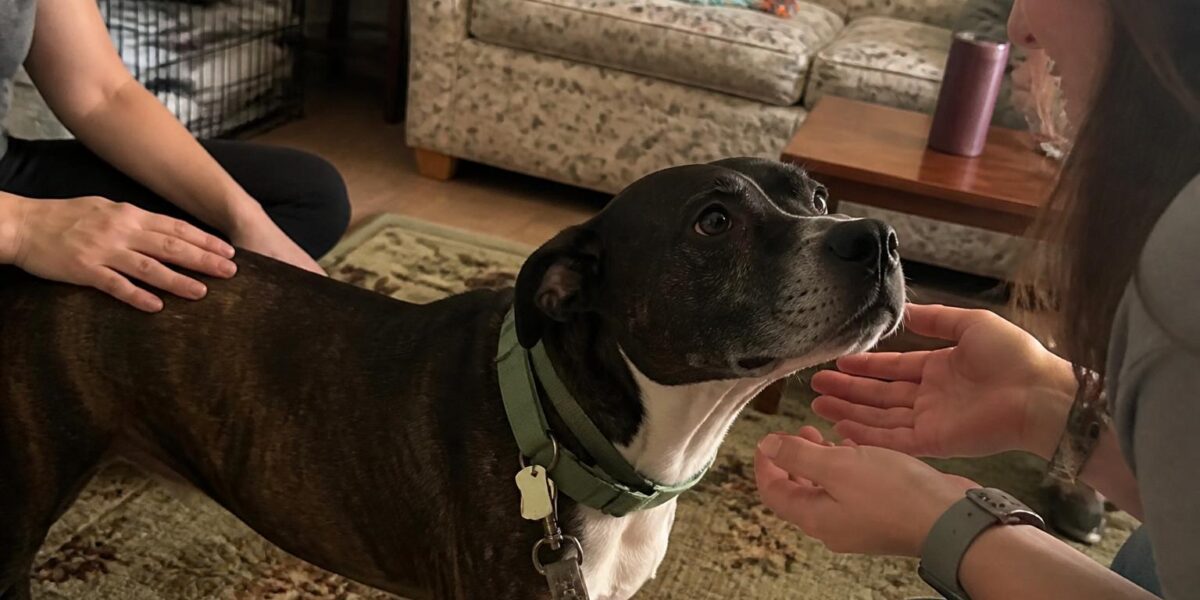
Practice consent-based touch. Offer a flat hand and let the pet sniff. Give one short stroke down the shoulder, then withdraw. If the pet leans in or stays put, offer another. If they move away, respect it. This is the same principle behind reading cat body language and dog body language basics, and it builds trust faster than any forced handling.
For nail trims, ear cleaning, and brushing, use cooperative care techniques. A peanut butter lick mat smeared on the wall lets a dog focus on licking while you work on one paw. A churu tube held by a helper lets a cat tolerate a quick brushing. Build duration in seconds, not minutes.
Resilience and Surprises
Here is the hopeful part. Formerly hoarded pets are often more resilient than people expect. Because their core experience was neglect rather than active cruelty, many have not learned to fear humans, only to ignore them. Once you become a reliable source of food, soft beds, and quiet, the bond can form quickly even if outward affection takes longer.
Many hoarding survivors are deeply social with other pets. They lived in groups their whole lives and may decompress faster with a calm, confident resident dog or cat as a guide. If you have an existing pet who is good with newcomers, the adjustment period can be cut dramatically. Read about the first week with a rescue dog or the first month with a rescue cat for pacing the introduction.
Expect quirks to remain. A cat who hoards food in their bedding for life. A dog who panics at plastic bags. A puppy mill alum who never quite learns to enjoy car rides. These are reasonable adaptations, not problems to fix.
When to Bring in Professional Help
Most formerly hoarded pets do not need a behavior consultant. They need time, routine, and patience. But certain signs warrant a force-free professional. Persistent self-injurious behaviors, severe sound phobia that does not improve, fear aggression toward household members, or compulsive behaviors that interfere with eating and sleeping all benefit from expert eyes.
For dogs, look for an IAABC-certified consultant or a CSAT for separation issues. For severe cases, a veterinary behaviorist (DACVB) can rule out medical causes and prescribe anxiety medication when warranted. Medication is not a moral failure. For some hoarding survivors, a low daily SSRI is the difference between functional and frozen.
Avoid any trainer who uses prong collars, e-collars, choke chains, or “alpha” or “dominance” framing. These methods are particularly harmful to under-socialized pets and can convert a fearful animal into a defensively aggressive one.
Multi-Pet Hoarding Cases and Group Dynamics
Many hoarding rescues come from situations with dozens or hundreds of animals, often the same species living in close quarters. Pets from these scenarios may have unusual social skills. Some are deeply bonded to specific cage-mates, with separation causing days of pacing and vocalizing. Others have learned to keep their heads down and avoid all interaction, which looks like withdrawal in a new home but is actually a survival strategy.
If your hoarded pet has a sibling or kennel-mate available for adoption together, seriously consider the bonded pair option. Two hoarding survivors who already know each other can decompress in tandem, giving each other comfort while you become a trusted presence over months. The alternative, a solo hoarding survivor in a brand-new home, is harder for the pet though still very doable.
Watch for “shelter throwback” behaviors during the first few weeks. Hoarded pets sometimes hoard food themselves, hide treats in bedding, or pace in patterns that match their old enclosure dimensions. These behaviors usually fade within two to four months as the pet learns abundance is real. Provide steady food access and ignore minor weirdness during this phase.
Setting the Household Up for Success
Before pickup day, prep the home. Close doors to rooms you do not want the pet to access. Pick up small objects, electrical cords, and houseplants. Set up baby gates to create a clear safe zone. Have a crate or covered carrier with the door open as a default hideout.
Buy two of everything: water bowls, beds, scratchers, hiding spots. Hoarded pets often display resource anxiety in early weeks, and abundance solves it without training. Do not invite friends over for at least two weeks. Tell extended family the pet is in decompression and visits are paused.
Plan your work schedule around the first two weeks. Take time off, work from home, or arrange a slow handoff so the pet experiences gradual alone time rather than a sudden eight-hour gap. Browse available pets and adoptable dogs with this preparation in mind.
Realistic Lifestyle Adjustments
Adopting a formerly hoarded pet may reshape your daily life for the first six to twelve months. Plan for quieter evenings, fewer dinner parties at home, and a slower pace of household activity. The pet’s nervous system needs predictability to build trust, and chaotic schedules slow the process measurably.
Common adjustments adopters make:
- Limiting visitors to one or two calm guests at a time
- Skipping dog parks and busy pet stores for the first six months
- Choosing a fear-free certified vet and a quiet groomer
- Using a pet sitter who comes to the home rather than boarding
- Keeping work-from-home hours when possible during the early phase
Once the pet is settled, normal life resumes gradually. By month nine or twelve, many adopters report a relatively standard household with a few specific accommodations remaining. The early investment pays dividends for the rest of the pet’s life.
Frequently Asked Questions
Will my formerly hoarded pet ever act normal?
Most do, with realistic timelines of three months to a year. A small percentage retain lifelong quirks like sound sensitivity or one-person bonding. None of that prevents a great life together.
Should I adopt a hoarded pet as a first-time owner?
It depends on the individual pet. A friendly cat from a hoarding case can be a great first pet. A severely shut-down dog with sound phobia is better matched with an experienced adopter who can navigate setbacks.
Is it safer to adopt a bonded buddy from the same hoarding case?
Often yes. Two hoarding survivors who already know each other can decompress faster together than alone. Ask the rescue if any of the intake group are bonded.
How long until I should worry if my pet is still hiding?
Hiding for the first two to four weeks is normal. If at week six the pet is not eating, drinking, or eliminating reliably, contact your vet. Otherwise, keep being patient.
Can I take my newly adopted hoarded pet to the vet right away?
Yes for medical priorities, but use a fear-free vet, schedule a low-traffic appointment time, and bring high-value treats. Mention the hoarding background so the team can adjust their handling.