Last updated: May 4, 2026
In this article
Overview of the Aegean Cat
The Aegean cat is the only naturally occurring breed native to Greece, descended from semi-feral cats that have lived alongside fishermen and shopkeepers on the Cycladic islands for centuries. Unlike most pedigreed cats, the Aegean is a true landrace — a breed shaped by environment and casual human selection rather than by deliberate cattery breeding programs.
You will not find an Aegean cat at most American shelters or breeders. They are still primarily a regional breed, recognized by some smaller registries and championed by Greek and European fanciers, but rarely exported. If you have ever vacationed in Mykonos or Santorini and seen friendly cats weaving through tavernas, you have likely met the breed already.
This profile covers what the Aegean is actually like to live with, what its history can and cannot tell us, and where the breed sits in the wider cat world today. If you are drawn to a hardy, social, low-maintenance cat with deep cultural roots, the Aegean rewards getting to know.
History and Origins
The Aegean cat’s history is the history of the Aegean islands themselves. Cats traveled to the Cyclades on trading ships and settled into a niche that suited them — warm climate, abundant fish scraps from harbors, and tolerant human neighbors who appreciated mousers in granaries and homes. Over generations they developed traits that helped them thrive: a water-tolerant disposition, lean athletic build, and a sociable temperament toward people.
Formal breed development began in the 1990s when Greek breed enthusiasts started documenting the islands’ street cats and selecting individuals that conformed to a recognizable type. Today the Aegean is recognized by some smaller European registries, while major international bodies have not all granted full championship status. Status varies by registry, and the breed remains rare outside Greece.
Appearance and Coat
The Aegean is a medium-sized cat with a moderately muscular, athletic body — neither stocky like a British Shorthair nor delicate like a Siamese. The head is a softened wedge with a straight profile, almond-shaped eyes that are usually green, and ears set fairly upright on the skull. Tails are medium-long and tapered.
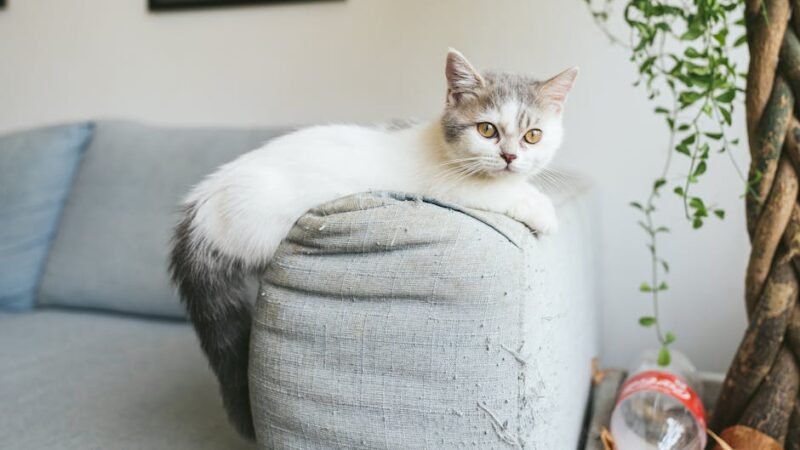
The defining coat trait is bicolor or tricolor patterning, almost always with white as a base. White-and-red, white-and-black, white-and-tabby, and various Calico-style combinations are common. Solid colors are not characteristic of the breed. The coat itself is semi-long, dense without being plush, and lacks a heavy undercoat — a sensible adaptation to a hot Mediterranean climate.
Size and Build
Adult males typically weigh 9 to 12 pounds, with females running smaller at 7 to 10 pounds. The body should look ready for action — long enough for fluid movement, with strong legs and a confident stance. There is no breed preference for extreme features.
Temperament and Personality
Aegeans are famously sociable cats. Decades of living near humans without being formally bred for show traits has produced a cat that genuinely likes people, including strangers. They are alert, talkative without being demanding, and tend to involve themselves in whatever you are doing — cooking, reading, working from home.
They are also smart and active. Expect a cat that learns the rhythm of your household quickly, figures out which cabinets contain treats, and may surprise you with how readily it walks on a harness. Many Aegeans retain a fishing-cat heritage and show interest in water — drinking from running taps, batting at sinks, even tolerating shallow baths better than most breeds.
With other pets, well-socialized Aegeans usually do well. They are not typically aggressive toward other cats and can adjust to dogs that respect feline boundaries. Children who handle cats gently are generally welcomed.
Care and Daily Life
One of the Aegean’s strengths is low-fuss care. The semi-long coat does not mat readily and benefits from a weekly comb-through during normal weeks and slightly more during seasonal shedding. You do not need professional grooming, slicker brushes, or coat-conditioning sprays for this breed.
Like all cats, Aegeans need annual veterinary visits, parasite prevention, and a consistent vaccination schedule. The cat vaccination schedule is a useful reference if you are setting up care for a new arrival, and the adult cat wellness checklist covers what to track between vet visits.
Exercise and Enrichment
This is an active, curious breed. Aegeans need vertical space, daily play sessions, and ideally some form of mental challenge. Puzzle feeders, food-dispensing toys, and rotating toy bins all help. A cat tree positioned near a window will become a favorite perch.
Many owners successfully introduce Aegeans to harness walks or secure outdoor catios. Their landrace heritage means they are more outdoor-savvy than purely indoor lines, but in most American suburban or urban environments, supervised outdoor time is far safer than letting them roam.
Diet and Nutrition
Aegeans are not picky eaters and do well on standard high-quality commercial cat food. Many show enthusiasm for fish — unsurprising given the breed’s harbor-cat origins — but fish should be a treat or rotation protein, not the entire diet. Daily nutrition should be built around a complete, balanced food appropriate to your cat’s life stage.
Fresh water should be available at all times. If your Aegean drinks more readily from a fountain or running tap, a pet water fountain is a worthwhile investment for hydration. Adjust portions to maintain a lean body condition; this is an active breed that becomes uncomfortable carrying excess weight.
Health Considerations
Because the Aegean developed as a free-breeding landrace rather than from a small founding population, the breed has avoided the bottleneck that produces many of the genetic conditions seen in highly inbred lines. Generally, Aegeans are considered robust cats with good genetic diversity.
That said, all cats — pedigreed or not — face common feline health concerns as they age. Dental disease, kidney disease, and hyperthyroidism are species-wide rather than breed-specific. Annual exams, age-appropriate bloodwork, and prompt attention to changes in appetite or litter box habits remain the best preventive strategy. The annual bloodwork for cats guide is a helpful resource as your Aegean enters middle age.
Lifespan for healthy individuals is typically in the 12 to 15 year range, though well-cared-for cats often exceed that comfortably.
Living with an Aegean Cat
Aegeans suit a wide range of households. They are happy in apartments provided they get vertical space and play, and they thrive in homes with secure outdoor access. They are sociable enough to share their home with cats of similar temperament, and confident enough not to be destabilized by moderate household activity.
They are not the right cat for someone who wants a quiet, decorative pet. Aegeans want involvement. If you work long hours away from home and cannot provide a feline companion or enrichment, a more independent breed may be a better match. If you like company that follows you around and chats with you, the Aegean delivers.
Finding and Adopting an Aegean
Adopting an Aegean in North America is genuinely difficult. Very few breeders work with the line, and most pedigreed cats stay in Greece and surrounding European countries. Honest expectation-setting matters here: if a US-based breeder advertises Aegean kittens at high volume, ask careful questions about pedigree documentation and registry recognition.
For most American adopters, the realistic path is one of three options. First, check breed-specific rescue networks for surrenders or imports. Second, work with a reputable rescue listed in the finding a reputable rescue in your state guide and ask about Mediterranean landrace mixes — some shelter cats arrive via international rescue and may carry similar traits. Third, consider that any friendly, semi-long-haired bicolor cat from a shelter will give you much of what is loveable about the Aegean without the import logistics.
If you set your heart on a pedigreed Aegean, plan for international transport, paperwork, and a longer wait. The cat-only rescues overview can also help you find organizations that specialize in unusual breed placements.
Kitten and Senior Care Considerations
If you are bringing home an Aegean kitten, expect a lively, curious early life. Kittens benefit from early socialization to handling, household sounds, and routine veterinary care. Establish a consistent feeding schedule, introduce litter box habits early, and start grooming habits in kittenhood so the cat accepts brushing as normal. The breed’s intelligence means kittens learn quickly; capitalize on that with gentle training to common cues.
As Aegeans enter their senior years — typically around age ten — care priorities shift. Annual exams should become twice-yearly. Bloodwork helps detect early signs of kidney disease, hyperthyroidism, and other age-related conditions. Joint comfort matters as activity levels naturally decrease; consider lower-sided litter boxes, ramps to favorite perches, and softer bedding. The senior cat care checklist covers what to monitor as your cat ages.
Senior Aegeans often retain their sociable nature well into old age. Quality time, gentle play, and consistent routines support good quality of life through the senior years.
Is the Aegean Cat Right for You?
Choose an Aegean if you want a sociable, hardy, low-maintenance cat with a fascinating cultural backstory — and you have the patience to find one. They suit families, retirees, multi-cat households, and adopters who appreciate cats with a working-cat heritage rather than glamour-cat looks.
Skip the breed if you need a guaranteed pedigreed kitten in the next few months, if you want a placid lap cat that ignores guests, or if you are not ready to provide active enrichment. For comparable traits with easier availability, look at the Turkish Angora or browse the rarest cat breeds roundup to see how the Aegean fits among other uncommon Mediterranean and Eastern European breeds.
Frequently Asked Questions
Are Aegean cats recognized by major registries?
Recognition varies by registry. The breed is acknowledged by some smaller European bodies, while major international registries have varying status — current status changes over time, so confirm with the registry directly if pedigree paperwork matters to you.
Do Aegean cats actually like water?
Many do, more so than most domestic breeds. Their fishing-village heritage means they are often comfortable around running water, may bat at sinks or tubs, and tolerate the occasional bath better than average. Individual personality still varies.
How much grooming does an Aegean cat need?
Minimal. A weekly brushing keeps the semi-long coat tidy. There is no heavy undercoat to manage, no dense ruff to detangle, and no professional grooming required. Seasonal shedding may call for a few extra brushings.
Can I find an Aegean cat in the United States?
It is difficult. The breed is rare outside Greece, and most are bred and adopted within Europe. Your best paths are international breed-specific rescue networks, very occasional dedicated breeders, or accepting that a similar-looking Mediterranean shelter cat may meet your needs.
Are Aegean cats good with children and other pets?
Generally yes. The breed’s free-breeding history with humans has produced sociable cats that handle moderate household activity well. Always supervise young children with any cat and introduce new pets gradually.
Looking to adopt a Aegean Cat Breed Profile?
Browse Aegean Cat Breed Profile cats and mixes available for adoption from shelters and rescues near you.
Find Aegean Cat Breed Profile Cats for Adoption