Last updated: May 4, 2026
In this article
Alaskan Klee Kai Overview
This Alaskan Klee Kai breed profile is for adopters who saw a “miniature Husky” online and want to understand what is actually behind that label. The Alaskan Klee Kai is a relatively new breed developed in Alaska in the 1970s by Linda Spurlin, who set out to create a smaller spitz-type dog with the appearance of an Alaskan or Siberian Husky in a more apartment-friendly size. Important upfront: the Klee Kai is its own distinct breed, not a Husky cross. Spurlin used careful selective breeding from existing small spitz-type dogs (including American Eskimo and Schipperke contributions) to fix type at the smaller size.
The honest version is that the Klee Kai looks like a Husky but does not behave exactly like one. They are smaller, often more reserved with strangers, and sometimes more skittish than the famously social Husky. The shared traits — high energy, prey drive, escape skill, and vocal expressiveness — are very much present. Adopters drawn to the look need to plan for the temperament: this is a working-derived spitz in a small package, not a furry small lap dog.
Quick facts: Group: spitz / companion. Origin: Alaska, USA. Size: three size varieties — Toy (under 13 inches, under 10 pounds), Miniature (13–15 inches, 10–15 pounds), Standard (15–17 inches, 15–22 pounds). Coat: medium double coat, black-and-white, gray-and-white, or red-and-white. Energy: high. Lifespan: 13–16 years. Grooming: weekly brushing, seasonal coat blow. Best for: active owners, secure fencing, experienced spitz handlers.
History and Origin
The Klee Kai program began in Wasilla, Alaska in the 1970s after Linda Spurlin saw a small Husky-type dog and decided to develop a true small companion breed in that mold. The development used careful selective breeding rather than crossing — Spurlin worked from existing small dogs that approximated the type and bred forward. The breed was made available to the public in 1988 and was recognized by the United Kennel Club in 1997.
The breed is genuinely young and the gene pool is small. Reputable breeders work on outcrossing strategies and genetic diversity, and the breed club maintains a careful approach to limit popularity-related breeding problems. Most Klee Kai today come from a small network of breeders, and the breed appears in rescue periodically when adopters underestimate the energy or vocalization level.
Temperament and Personality
Expect intelligent, alert, energetic, and reserved with strangers. The Klee Kai bonds closely with its family and is often very affectionate inside that circle, but with strangers expect cool reserve at best. This is a notable difference from the typically gregarious Husky and is something adopters should plan for — the breed is not a social butterfly.
Some Klee Kai are notably skittish or shy. Early socialization helps significantly, but the breed has a higher baseline wariness than many spitz breeds and a poorly socialized Klee Kai can become reactive or fearful as an adult. Strangers, novel environments, and unfamiliar handling can all trigger withdrawal.
Prey drive is high. Despite the small size, Klee Kai retain strong hunting instincts and pursue cats, squirrels, and small animals readily. Force-free training works well; the breed is sensitive to harsh methods and shuts down quickly. Vocalization includes Husky-style “talking” — many Klee Kai are notably expressive, with howls, yips, and the famous Husky vocal range in a smaller package.
Size and Appearance
The Klee Kai comes in three size varieties: Toy (under 13 inches, under 10 pounds), Miniature (13–15 inches, 10–15 pounds), and Standard (15–17 inches, 15–22 pounds). Build is balanced and athletic — proportionally similar to a Husky, just smaller. The breed should look like a working spitz, not a fragile toy.
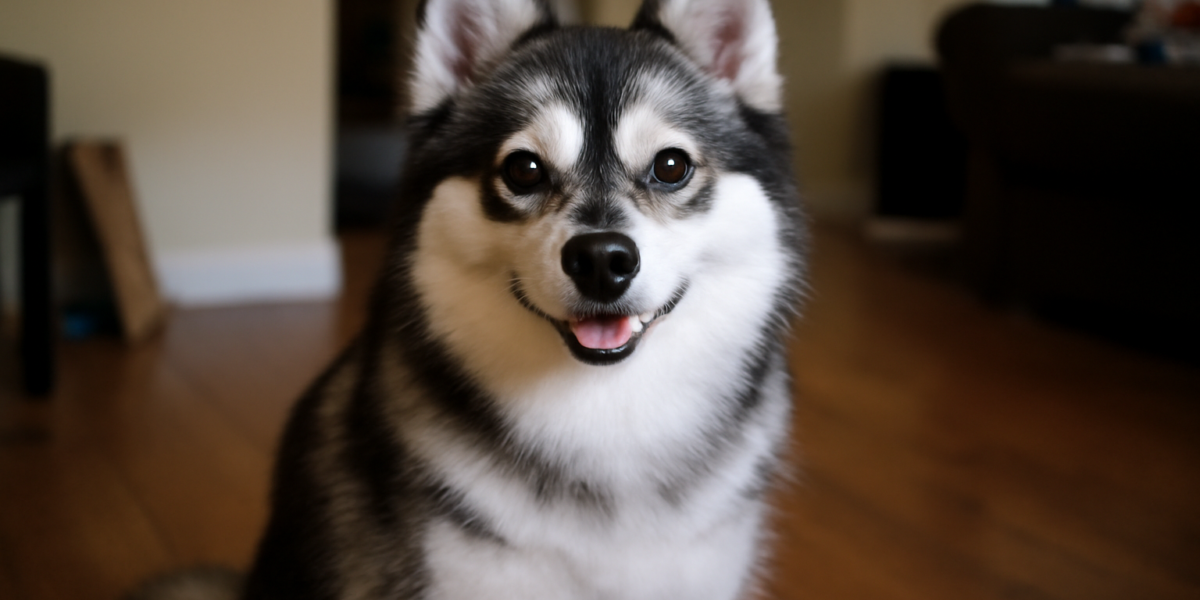
The coat is a medium-length double coat with a soft dense undercoat and a slightly longer harsh outer coat. The masks and patterns are striking and Husky-like — black-and-white, gray-and-white, and red-and-white all recognized. Eye colors include blue, brown, hazel, and bi-eye (one of each color), as well as parti-eye (mixed coloration in a single eye). The ears are pricked and triangular, the tail curls or fishhooks over the back.
Exercise and Activity Needs
The Klee Kai needs real daily exercise — long walks, off-leash running in safe fenced areas, and structured mental work. They are athletic and capable of much more than the small size suggests. Without consistent activity expect anxiety, vocalization, and destructive behavior.
Off-leash work outside secure fencing is generally a bad idea. Recall is unreliable, the breed is fast and agile, and the prey drive overrides cues regularly. Six-foot fencing is the standard recommendation, with attention to digging and climbing. The breed enjoys agility, dog sports, hiking, and structured play. Apartments can work for Klee Kai only with significant exercise commitment.
Grooming and Care
Plan for weekly brushing during normal months and daily brushing during the seasonal coat blow, which happens twice a year and is significant. Use a slicker brush and undercoat rake. Never shave a double-coated spitz — the coat regulates temperature in both directions and shaving can damage regrowth.
Bathe occasionally — the breed is generally clean by nature. Trim nails monthly, clean ears as needed, brush teeth regularly. Dental care matters across the lifespan for small dogs. The breed is naturally lean and a Klee Kai carrying extra weight is being overfed.
Health and Lifespan
The Klee Kai is generally a healthy breed thanks to careful breeding, but the small gene pool means responsible breeders test extensively. Concerns to discuss with a vet include patellar luxation, cardiac issues (juvenile cataracts, heart murmurs), thyroid disease, factor VII deficiency, and the standard concerns of a small active dog.
Lifespan is typically 13–16 years. Annual wellness exams, dental care, weight management, and a quality diet appropriate for an active small dog cover most needs. Find a vet familiar with the breed if possible — the Klee Kai is uncommon enough that some general practitioners have not seen one, and breed-specific health considerations may not be top of mind.
Living With an Alaskan Klee Kai
The functional setup is an active home with secure fencing, an owner who understands spitz independence and energy, and a household tolerant of vocal alerting. The breed bonds tightly with its family and prefers to be involved in household activity rather than left alone for long periods — separation anxiety is common.
The Klee Kai is generally good with family children, especially if raised together, but the breed has limited tolerance for rough handling and small children should be supervised. Cats and small pets are case-by-case, with better outcomes when raised together from puppyhood. The breed is not typically dog-park friendly with strangers — they prefer known dogs.
Training and Socialization
Start socialization very early — the breed’s higher baseline wariness means socialization matters more, not less, than for confident breeds. Calm, varied exposure to people, dogs, environments, and handling builds a balanced adult. Force-free methods build trust; harsh methods cause shutdown or fear-aggression.
Realistic obedience expectations: solid sit, down, stay, leave-it, and recall in low-distraction settings. Do not expect the dog to override prey drive on cue. Read dog body language early to catch the breed’s stress and warning signals. Compare with the parent-type Husky for context on Husky-family temperament.
Is the Alaskan Klee Kai Right for You?
The Klee Kai suits adopters who want a small spitz with high energy and watchdog temperament, who can commit to daily exercise and consistent training, and who understand that the breed is not a small lap dog. They suit experienced spitz owners or first-time owners with patience and good research.
If you are drawn to the Husky look but want a less reserved, more social temperament, the full-sized Husky is more outgoing — and still requires significant exercise and training. The Keeshond is a calmer spitz alternative. Read the 3-3-3 rule before bringing a reserved spitz home, and visit the adopt a dog hub or check breed-specific rescues.
Frequently Asked Questions
Is the Alaskan Klee Kai a miniature Husky?
No. The Klee Kai is a distinct breed developed through careful selective breeding from small spitz-type dogs, not a miniature or crossed Husky. They share a similar appearance but are a separate breed.
How big do Alaskan Klee Kai get?
Three size varieties: Toy (under 13 inches, under 10 pounds), Miniature (13–15 inches, 10–15 pounds), and Standard (15–17 inches, 15–22 pounds).
Are Alaskan Klee Kai good apartment dogs?
They can be, with significant exercise and training commitment. The breed is vocal, active, and prefers not to be alone for long periods. Apartment success depends on owner commitment.
Are Alaskan Klee Kai good with strangers?
Generally reserved or shy. Early socialization helps, but most Klee Kai are not naturally social with strangers and should not be expected to greet enthusiastically.
Where can I adopt an Alaskan Klee Kai?
Through breed-specific rescues (the Alaskan Klee Kai community maintains rescue networks), occasionally through general shelters, and through breed clubs. Visit the adopt a dog hub to start.
Looking to adopt a Alaskan Klee Kai Breed Profile?
Browse Alaskan Klee Kai Breed Profile dogs and mixes available for adoption from shelters and rescues near you.
Find Alaskan Klee Kai Breed Profile Dogs for Adoption