
Last updated: April 9, 2026
In this article
Quick Answer: Yes, mums are toxic to cats. Chrysanthemums contain multiple irritating compounds that can cause vomiting, drooling, skin irritation, and coordination problems in cats. Mums are considered mildly to moderately toxic — serious fatalities are uncommon but still possible with significant exposure. If your cat has eaten any part of a chrysanthemum, contact your veterinarian promptly.
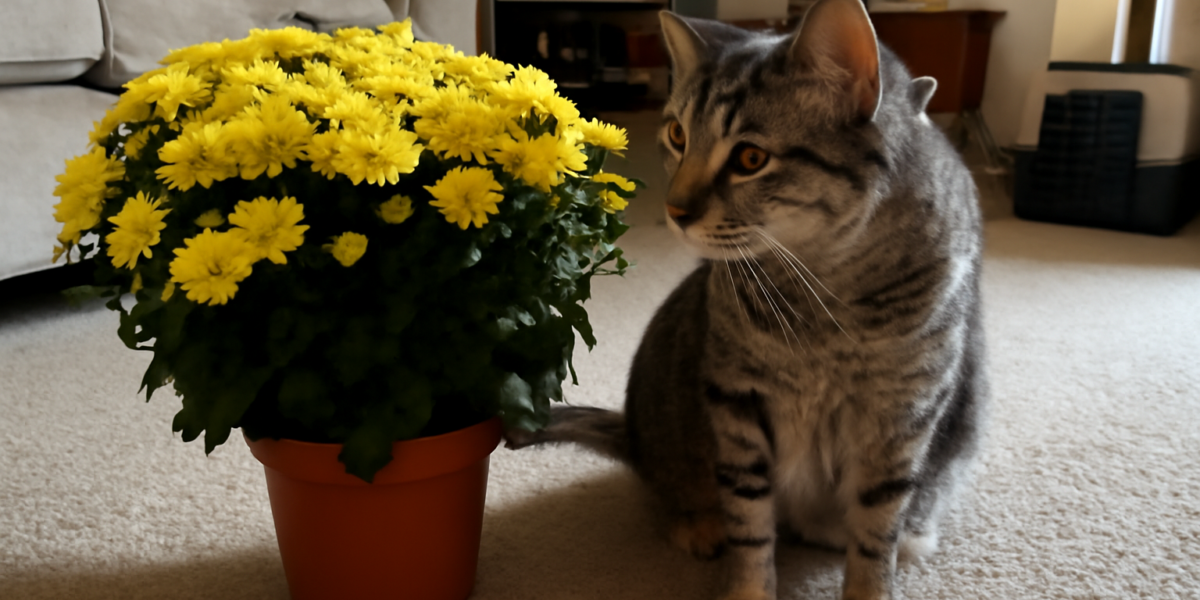
Every autumn, chrysanthemums — better known as mums — appear in garden centers, front porches, and flower arrangements across the country. Their vivid clusters of red, gold, and purple blooms are one of the signature sights of fall. But if you share your home with a cat, the cheerful mum carries a real risk. Mums are toxic to cats, and because they are so widely available and commonly displayed indoors and out during the fall season, exposure is more common than many pet owners expect. Understanding exactly what makes chrysanthemums dangerous, what signs to watch for, and what steps to take can help you protect your cat before a problem develops.
Why Are Mums Toxic to Cats?
Chrysanthemums (Chrysanthemum spp., also classified under Dendranthema) contain several naturally occurring compounds that are harmful to cats. The primary culprits are pyrethrins and sesquiterpene lactones, along with other irritants including volatile oils and potentially toxic alkaloids found throughout the plant.
Pyrethrins are naturally derived insecticidal compounds produced by chrysanthemums as a defense mechanism. While synthetic versions of these compounds are used in pet-safe flea treatments at carefully controlled doses, the naturally occurring forms found in mum plants can overwhelm a cat’s nervous system if ingested in meaningful quantities. Cats are particularly sensitive to pyrethrins because their liver lacks the enzyme pathways needed to metabolize these compounds efficiently.
Sesquiterpene lactones are a class of bitter, irritating chemicals found in the leaves, stems, and flowers of chrysanthemums. When a cat chews or rubs against the plant, these lactones cause immediate irritation to the mouth, skin, and gastrointestinal tract. All parts of the mum plant — the petals, leaves, stems, and pollen — contain these compounds, though concentrations are generally highest in the leaves and stems.
Symptoms of Mum Poisoning in Cats
If your cat has chewed, eaten, or had significant contact with a chrysanthemum, symptoms typically appear within one to four hours. Because chrysanthemum toxicity causes irritation rather than organ failure (unlike lilies), many cases are mild — but symptoms can still escalate and should never be ignored.
Gastrointestinal signs are usually the first to appear. Vomiting is the most common symptom, along with diarrhea, hypersalivation (excessive drooling), and a sudden loss of appetite. Your cat may also paw at its mouth or show reluctance to eat or drink.
Skin and eye irritation can occur when a cat rubs against the plant or makes contact with the sap. You may notice redness, itching, or localized swelling on exposed skin, and the eyes can become watery or irritated.
Neurological signs are less common but can develop with larger exposures, particularly if the cat ingested significant amounts of plant material containing pyrethrins. These signs include loss of coordination (ataxia), muscle tremors, weakness, and in severe cases, difficulty walking or standing. A cat showing any neurological symptom after contact with mums should be seen by a veterinarian immediately.
Incoordination and depression — a generally subdued, “off” demeanor combined with reluctance to move — can also indicate that the toxins are affecting the nervous system.
What to Do If Your Cat Ate Mums
Acting quickly makes a meaningful difference in how your cat recovers. Follow these steps as soon as you suspect your cat has been exposed to a chrysanthemum.
- Remove your cat from the plant immediately. Prevent any further ingestion. If there is pollen or plant debris on your cat’s coat, gently wipe the affected areas with a damp cloth to minimize additional contact and grooming-related ingestion.
- Assess what was eaten. Note which parts of the plant your cat chewed — petals, leaves, stem — and try to estimate how much. Photograph the plant for reference.
- Call your veterinarian right away. Do not wait to see whether symptoms develop or worsen. If your regular vet is unavailable, contact an emergency animal hospital. You can also call the ASPCA Animal Poison Control Center at (888) 426-4435 (a consultation fee may apply) or the Pet Poison Helpline at (855) 764-7661, both available 24 hours a day.
- Do not induce vomiting at home unless a veterinary professional explicitly instructs you to. Doing so incorrectly can cause additional harm.
- Bring the plant or a photo to the clinic. Accurate plant identification allows your veterinarian to determine the correct treatment approach quickly.
Even if your cat seems fine at first, mums are toxic to cats in ways that can progress. An early call to your vet is always the right decision. For more guidance on cat safety at home, visit our cat care blog.
Treatment for Chrysanthemum Poisoning in Cats
There is no specific antidote for chrysanthemum toxicity, but veterinary treatment is very effective when sought early. Your veterinarian will tailor the approach based on how much your cat ingested and which symptoms are present.
If ingestion was recent and your cat is not yet showing neurological signs, the vet may induce vomiting to remove plant material from the stomach. Activated charcoal may be given to reduce ongoing absorption of toxins in the gastrointestinal tract. Intravenous or subcutaneous fluids help prevent dehydration and support the body’s natural detoxification processes. Anti-nausea medications and gastrointestinal protectants are commonly used to manage vomiting and stomach irritation. Cats experiencing neurological signs such as tremors or incoordination may require additional supportive care and monitoring. Most cats with mild to moderate mum toxicity recover fully within 24 to 48 hours with appropriate veterinary care.
How to Keep Cats Safe Around Mums
Prevention is far simpler than treatment, and because mums are toxic to cats, the safest approach is to keep chrysanthemums out of any space your cat can access.
- Avoid bringing mums indoors. Fall decorating traditions often center around potted mums, but a display on a windowsill or dining table is within easy reach of a curious cat. Enjoy mums on an outdoor porch your cat cannot access, or skip them altogether in favor of cat-safe alternatives.
- Create barriers around garden mums. If you grow chrysanthemums in the garden, use fencing or raised planting areas to keep cats from reaching the plants. Cats are attracted to garden beds and may chew plants out of boredom or curiosity.
- Check cut flower bouquets carefully. Mixed autumn bouquets frequently include mums. If you receive a floral arrangement, examine it for chrysanthemums and remove them — or keep the bouquet in a room your cat cannot enter.
- Inform everyone in the household. Make sure all family members and anyone who brings flowers or plants into the home knows that mums are toxic to cats.
- Use the ASPCA plant database. Before any new plant comes into your home or garden, verify its safety using the ASPCA’s comprehensive toxic and non-toxic plant list at aspca.org.
Cat-Safe Fall Flower Alternatives
You do not have to give up fall color to keep your cat safe. Several popular autumn flowers and plants are considered non-toxic to cats and make excellent alternatives to mums.
- Sunflowers — bold, seasonal, and non-toxic to cats; a natural substitute for fall color
- Snapdragons — available in rich autumn shades and safe for cats
- Celosia (cockscomb) — vivid, dramatic blooms that are non-toxic to cats and long-lasting in arrangements
- Roses — a timeless option that is safe for cats (remove thorns); available in fall-appropriate deep reds and oranges
- Gerbera daisies — cheerful and cat-safe, available in autumn color palettes
- Statice — a popular filler flower in bouquets that is non-toxic to cats
When working with a florist, ask them to build arrangements using only cat-safe flowers and to leave out chrysanthemums. For more tips on creating a cat-friendly home environment, explore our cat care blog.
Frequently Asked Questions
Are chrysanthemums toxic to cats the same way mums are?
Yes — chrysanthemums and mums are the same plant. “Mums” is simply the common shorthand for chrysanthemums, which belong to the genus Chrysanthemum (sometimes classified as Dendranthema). All varieties of chrysanthemums, including garden mums, florist mums, and wild chrysanthemum species, contain the same toxic compounds — pyrethrins and sesquiterpene lactones — and are equally toxic to cats. There is no “safe” variety of mum for a household with cats.
Are mums toxic to cats if they only brush against the plant?
Brief skin contact with chrysanthemums can cause localized irritation, redness, or itching, but the primary danger comes from ingestion. The real concern with contact is that the pollen and sap from the plant can transfer to your cat’s coat, and when your cat grooms itself — which cats do constantly — it will ingest those compounds. This makes any close contact with mums a potential ingestion risk. It is safest to ensure your cat cannot reach the plants at all, even for casual sniffing or brushing.
How serious is mum toxicity compared to other toxic plants?
Mums are considered mildly to moderately toxic to cats, which places them in a different category from the most dangerous plants, such as true lilies, which cause fatal kidney failure. Most cats exposed to chrysanthemums experience gastrointestinal upset and skin irritation that resolves with basic veterinary care. However, “mild” does not mean harmless — neurological signs can develop with significant ingestion, and individual cats vary in their sensitivity. Any cat that has eaten any part of a chrysanthemum should still receive a veterinary assessment rather than home monitoring alone.
What if my cat only chewed the petals — are those less toxic than the leaves?
All parts of the chrysanthemum plant — petals, leaves, stems, and pollen — contain toxic compounds, though concentrations of sesquiterpene lactones and other irritants tend to be higher in the leaves and stems than in the petals. A cat that chewed only a few petals is less likely to develop severe symptoms than one that ingested leaves or stems, but there is no part of the plant that is entirely safe. Even petal ingestion warrants a call to your veterinarian to assess the situation and determine whether your cat needs to be seen.


