
Last updated: May 23, 2026
In this article
- Why Cats Need to Scratch
- Sisal vs. Carpet vs. Cardboard: Choosing the Right Material
- Vertical vs. Horizontal Scratching Posts
- Why Height Matters for Scratching Posts
- Scratching Post Placement Strategy
- How to Train Your Cat to Use a Scratching Post
- Why You Need Multiple Scratching Surfaces
- DIY Scratching Post Options
- Protecting Furniture While Training
- Best Scratching Posts for Kittens vs. Adult Cats
- Frequently Asked Questions
Best Cat Scratching Posts: Types, Placement & Training Tips
Every cat owner has experienced it: you walk into the living room to find your beloved feline shredding the corner of your couch. Before you panic, understand that scratching is one of the most natural and essential behaviors for cats. The solution is not to stop your cat from scratching but to redirect that instinct toward an appropriate cat scratching post. In this comprehensive guide, we cover everything you need to know about choosing the best scratching post, where to place it, and how to train your cat to use it consistently.
Why Cats Need to Scratch
Scratching is far more than a destructive habit. It serves several critical functions in your cat’s daily life, and understanding these reasons will help you appreciate why a quality cat scratching post is a non-negotiable item in any cat-friendly home.
First, scratching helps cats maintain healthy claws. The motion removes the dead outer sheath of the nail, revealing a sharp, fresh claw underneath. Without regular scratching, these sheaths can build up and cause discomfort or even ingrown nails.
Second, scratching is a full-body stretch. When a cat reaches up to scratch a tall post, it engages the muscles in its shoulders, legs, and paws. This stretching is vital for maintaining flexibility and muscle tone, especially for indoor cats that may not get as much varied exercise as outdoor cats.
Third, cats scratch to mark territory. Their paws contain scent glands that deposit pheromones onto surfaces. This chemical signature, combined with the visible scratch marks, communicates to other animals that this space is claimed. Even in single-cat households, this territorial marking behavior persists because it is hardwired into feline instincts.
Finally, scratching serves as an emotional outlet. Cats often scratch when they are excited, stressed, or simply waking up from a nap. Providing a dedicated scratching surface gives your cat a healthy way to express these emotions. If you are considering adopting a cat, having a scratching post ready before your new companion arrives will help them settle in more comfortably.
Sisal vs. Carpet vs. Cardboard: Choosing the Right Material
Not all scratching posts are created equal. The material covering the post plays a huge role in whether your cat will actually use it. Here is a breakdown of the three most common options.
Sisal rope and sisal fabric are widely considered the gold standard for cat scratching posts. Sisal provides a rough, fibrous texture that cats find deeply satisfying to dig their claws into. It is durable, lasting months or even years of heavy use. Sisal fabric, which lies flat rather than being wound in rope form, is especially popular because it offers consistent resistance without catching claws in gaps between rope coils.
Carpet-covered posts are common in budget-friendly cat furniture. While some cats enjoy them, carpet can present problems. The looped fibers can snag claws, and the texture is often too similar to your actual carpet, which may confuse your cat about what is acceptable to scratch. If you choose a carpet post, opt for one with a tight, low-pile weave rather than plush loops.
Cardboard scratchers are affordable, lightweight, and surprisingly popular with cats. The corrugated texture provides satisfying resistance, and many come infused with catnip to attract your pet. The downside is durability. Cardboard scratchers shred over time and need frequent replacement. They also produce small bits of debris that you will find scattered around the scratching area.
Many experienced cat owners keep a mix of materials throughout their home. Offering variety allows your cat to choose based on mood, and it helps you identify which texture your individual cat prefers.
Vertical vs. Horizontal Scratching Posts
Cats do not all scratch the same way. Some prefer to reach up and pull downward on a vertical surface, while others like to plant their claws in a flat surface and push forward. Observing how your cat scratches furniture will tell you which orientation to prioritize.
Vertical scratching posts are the classic upright design. They allow cats to fully extend their bodies and get a deep stretch while scratching. Vertical posts are ideal for cats that scratch the sides of furniture, door frames, or walls. The key requirement for a vertical post is stability. If the post wobbles or tips when your cat leans into it, they will abandon it and return to your couch.
Horizontal scratchers sit flat on the ground or at a slight angle. They are perfect for cats that tend to scratch carpets or rugs. Many cardboard scratchers come in this format. Angled scratchers, which sit at roughly 45 degrees, offer a compromise between vertical and horizontal and appeal to many cats.
The best approach is to provide at least one of each orientation. This gives your cat options and increases the chances that they will use the scratcher instead of your belongings.
Why Height Matters for Scratching Posts
One of the most common mistakes cat owners make is buying a scratching post that is too short. A proper vertical cat scratching post should be tall enough for your cat to fully extend its body while reaching upward. For most adult cats, this means a minimum height of 30 to 32 inches.
When a cat stretches up to scratch, it is engaging its entire spine, shoulders, and front legs. A short post forces the cat into a cramped, hunched position that does not provide the satisfying stretch it craves. This is one of the top reasons cats ignore their scratching posts and go for taller surfaces like couch arms and door frames instead.
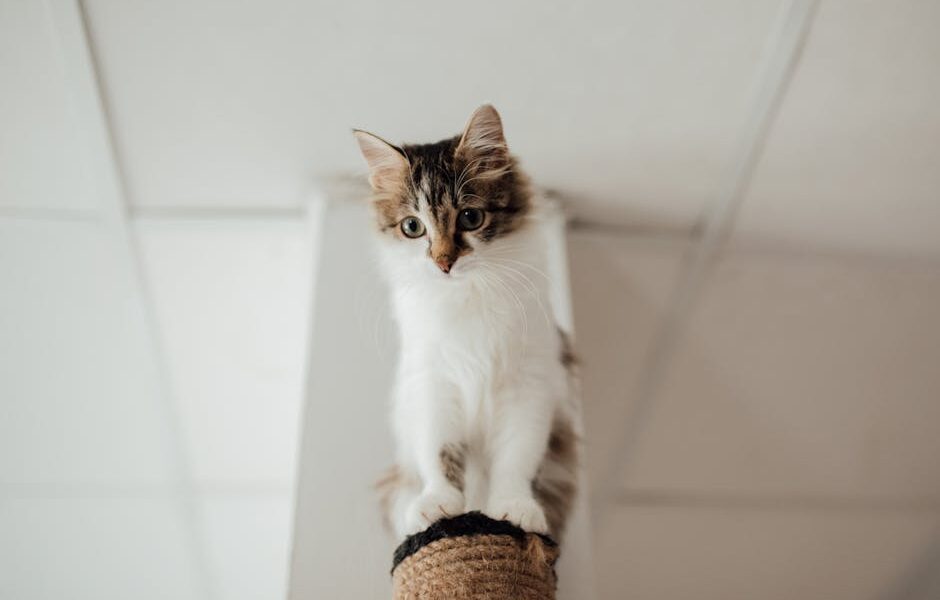
Taller posts also tend to be more stable because they usually have a wider, heavier base. Some premium posts reach 36 inches or more and include a platform or perch at the top, turning the scratcher into a multi-purpose piece of cat furniture that serves as both a scratching station and a vantage point.
If you have large breed cats, look for extra-tall posts designed for bigger felines. You can learn more about different breeds and their specific needs in our cat breeds directory.
Scratching Post Placement Strategy
Where you put the scratching post matters almost as much as what kind you buy. A beautiful sisal post tucked away in a basement corner will go unused because it is not where your cat naturally wants to scratch.
Near furniture your cat already scratches. If your cat has a favorite couch corner it attacks, place the scratching post right next to that spot. You are not hiding the post away; you are offering a better alternative in the exact location your cat has already chosen.
Near sleeping areas. Cats frequently scratch immediately after waking up. Placing a scratcher near your cat’s favorite napping spot capitalizes on this instinct. A small horizontal scratcher beside a cat bed is an easy win.
In high-traffic social areas. Because scratching serves a territorial marking function, cats prefer to scratch in areas where the household spends time. Living rooms, home offices, and hallways are prime locations. Avoid hiding scratchers in rooms that nobody uses.
Near entry points. If you have multiple cats or your cat can see outdoor animals through windows, placing a post near doors or windows allows your cat to mark territory in response to perceived intruders.
Do not be afraid to have scratching surfaces in multiple rooms. The more accessible they are, the more likely your cat is to use them.
How to Train Your Cat to Use a Scratching Post
Bringing home a new scratching post does not guarantee your cat will use it. Some cats take to a new post immediately, but many need encouragement. Here is a step-by-step approach to training.
Step 1: Make the post appealing. Rub dried catnip into the surface or sprinkle loose catnip around the base. You can also use a catnip spray. Some posts come with dangling toys attached, which can draw your cat to investigate.
Step 2: Use positive reinforcement. When your cat approaches, sniffs, or touches the post, immediately reward it with a treat, praise, or play. Never grab your cat’s paws and force them onto the post. This creates a negative association and will backfire.
Step 3: Incorporate play. Drag a wand toy or feather along the surface of the post. As your cat swipes at the toy, its claws will contact the scratching surface. Once the cat feels the satisfying texture, it often begins scratching on its own.
Step 4: Redirect, do not punish. When you catch your cat scratching furniture, calmly pick it up and place it near the scratching post. Then use a toy or treat to encourage scratching in the right place. Yelling or spraying water creates fear and anxiety without teaching the desired behavior.
Step 5: Be patient and consistent. Some cats need days or even weeks to fully transition to a new scratching post. Consistency in redirection and rewards will get you there. Cats that have recently been adopted may need extra time to adjust, so patience is especially important during the first few weeks in a new home.
Why You Need Multiple Scratching Surfaces
One scratching post is rarely enough, especially in a multi-cat household. The general guideline is to have at least one scratching surface per cat, plus one extra. This follows the same logic as the litter box rule and for similar reasons: cats are territorial and may not want to share.
Even in a single-cat home, multiple scratching options placed throughout the house ensure that your cat always has an appropriate surface within reach. A tall sisal post in the living room, a cardboard scratcher in the bedroom, and an angled scratcher in the hallway create a network of acceptable scratching stations that cover your cat’s entire territory.
Variety in material, orientation, and location also keeps things interesting. Cats can be particular, and their preferences may change with mood, time of day, or season. Having multiple options reduces the risk that your cat will default to furniture out of boredom or inconvenience.
DIY Scratching Post Options
If you are handy or on a budget, building your own cat scratching post is a straightforward project. The simplest design involves wrapping sisal rope tightly around a sturdy wooden post mounted on a heavy plywood base.
Basic vertical post: Cut a 4×4 lumber post to at least 30 inches. Sand the edges. Cut a base from 3/4-inch plywood, at least 16 by 16 inches. Attach the post to the base with wood screws from underneath. Starting at the bottom, wrap sisal rope tightly around the post, securing the starting end with a staple gun and adding a dab of wood glue every few inches. Pull the rope taut as you go to prevent gaps. Secure the top end with staples and glue.
Cardboard pad scratcher: Cut corrugated cardboard into strips of equal width. Stack and glue them together with the corrugated edges facing up, creating a textured scratching surface. Fit them tightly into a shallow box frame. This is an excellent weekend project and costs almost nothing if you have spare cardboard boxes.
Wall-mounted scratcher: Attach a piece of sisal fabric or a carpet remnant to a wooden board, then mount it on the wall at your cat’s preferred scratching height. This option takes up zero floor space and works well in small apartments.
The key to any DIY scratcher is stability. Use heavy bases, secure wall mounts, and quality materials. A wobbly homemade post will be ignored just as quickly as a wobbly store-bought one.
Protecting Furniture While Training
While you work on redirecting your cat to appropriate scratching surfaces, you may need temporary measures to protect your furniture.
Double-sided sticky tape applied to the areas your cat scratches is one of the most effective deterrents. Cats dislike the sticky sensation on their paws and will avoid those spots. Several brands make tape specifically for this purpose that will not damage upholstery.
Furniture covers and throws can physically block access to vulnerable surfaces. Tuck a tightly woven blanket over couch arms and corners. While not the most elegant solution, it buys time while your cat learns to use the scratching post.
Citrus sprays can deter scratching in specific areas because most cats dislike citrus scents. Lightly mist furniture corners with a diluted citrus solution. Reapply every few days as the scent fades.
Plastic or vinyl nail caps are a humane option that covers each claw with a small, soft cap. They prevent damage while your cat scratches and fall off naturally as the nail grows. They need to be replaced every four to six weeks.
These measures should be temporary. The goal is always to redirect the behavior to an appropriate surface, not to permanently restrict your cat. Once your cat is consistently using its scratching post, you can gradually remove the deterrents from your furniture.
Best Scratching Posts for Kittens vs. Adult Cats
Kittens and adult cats have different scratching needs, and the right post for each life stage varies.
Kittens are still developing their coordination and strength. A shorter scratching post, around 18 to 20 inches, is appropriate for very young kittens because they cannot reach the top of a full-sized post. Choose a post with a wide, stable base because kittens play energetically and can tip over lightweight furniture. Cardboard scratchers are excellent starter surfaces for kittens because they are soft enough for tiny claws and inexpensive enough to replace frequently. Start training early. Kittens that learn to use a scratching post from a young age rarely develop furniture-scratching habits as adults.
Adult cats need taller, sturdier posts. A minimum height of 30 inches allows full-body stretching. Sisal is generally the best material for adults because it withstands the stronger force of mature claws and lasts longer than cardboard. For senior cats or those with arthritis, an angled or horizontal scratcher may be more comfortable than a tall vertical post because it does not require reaching overhead. If you are thinking about adopting an adult cat, ask the shelter or foster about the cat’s scratching preferences so you can have the right setup ready at home.
As kittens grow, transition them to full-sized posts. Keep the smaller posts available during the transition period so they always have a familiar option while they adjust to the larger surface.
Frequently Asked Questions
How often should I replace a cat scratching post?
Replace a scratching post when it becomes unstable or when the scratching surface is worn smooth. Sisal posts typically last one to three years depending on use. Cardboard scratchers need replacement every one to three months. Interestingly, many cats prefer a well-used post because it carries their scent, so do not rush to replace a post that still has functional scratching surface left.
Why does my cat ignore the scratching post?
The most common reasons are wrong material, wrong height, wrong location, or instability. Try moving the post to a spot where your cat already scratches. Rub catnip on the surface. Make sure the post does not wobble. If your cat prefers horizontal scratching, a vertical post will be ignored no matter how nice it is. Observe your cat’s natural scratching habits and match the post accordingly.
Can I use a scratching post to stop my cat from scratching furniture completely?
Yes, in most cases. With proper placement, an appealing material, and consistent positive reinforcement, the vast majority of cats can be fully redirected to appropriate scratching surfaces. It requires patience, especially with adult cats that have established furniture-scratching habits, but it is achievable. The combination of making the post attractive and making the furniture less appealing with deterrents speeds up the process considerably.
Is declawing an alternative to a scratching post?
Declawing, or onychectomy, is an amputation of the last bone of each toe and is widely discouraged by veterinary organizations worldwide. It can cause chronic pain, behavioral problems, and long-term mobility issues. Providing appropriate scratching surfaces, using nail caps, and trimming nails regularly are humane and effective alternatives. Many countries and several U.S. states have banned the procedure entirely.
How many scratching posts does a multi-cat household need?
The recommended minimum is one scratching surface per cat plus one additional. In a household with three cats, aim for at least four scratching surfaces spread across different rooms. This prevents resource guarding and ensures every cat has access to a scratching surface without conflict. Varying the types and orientations of the posts accommodates different individual preferences.
Do cats prefer scratching posts with platforms or toys attached?
Many cats enjoy multi-feature scratching posts that include platforms, hammocks, or dangling toys. These additions can make the post more attractive and encourage the cat to spend more time around it. However, the scratching surface itself is the most important element. A plain, tall, stable sisal post will always outperform a fancy cat tree with a poor-quality scratching surface. Prioritize the basics and consider extras as bonuses.


