
Last updated: April 27, 2026
In this article
Boston Terrier Breed Profile
The Boston Terrier is one of the most recognizable and beloved small dogs in the United States. Dressed in a natural tuxedo of black and white, this compact, spirited breed has charmed dog lovers for well over a century. Whether you are considering adding one to your family or simply want to learn more, this complete Boston Terrier breed profile covers everything you need to know — from personality and exercise needs to health considerations and adoption resources.
Often called the “American Gentleman” for its dapper appearance and polished manners, the Boston Terrier is an adaptable companion that thrives in apartments and family homes alike. Friendly, lively, and people-oriented, this breed bonds deeply with its owners and tends to get along well with children, other dogs, and even cats when properly socialized.
Quick Facts
| Attribute | Details |
|---|---|
| Breed Group | Non-Sporting Group (AKC) |
| Size | Small |
| Weight | 12 to 25 pounds |
| Height | 15 to 17 inches at the shoulder |
| Life Expectancy | 11 to 13 years |
| Coat Type | Short, smooth, fine |
| Common Colors | Black and white, brindle and white, seal and white |
| Shedding Level | Low to moderate |
| Energy Level | Moderate |
| Good with Kids | Yes, with supervision |
| Good with Other Pets | Generally yes |
| Trainability | High |
| Origin | United States (Boston, Massachusetts) |
Personality and Temperament
The Boston Terrier has earned its nickname — the American Gentleman — not just from its tuxedo-like markings but from its well-rounded, amiable nature. This breed is genuinely people-focused. Boston Terriers thrive on human connection and often shadow their owners throughout the house, content simply to be nearby.
Lively and playful, the Boston Terrier brings a lot of energy and humor to everyday life. They are known for their expressive faces, bursts of zoomies, and an endearing tendency to make people laugh. At the same time, they can shift easily into calm, cuddly companions when the mood calls for it. This adaptability makes them well-suited to a wide range of households, from single individuals to large families.
Boston Terriers are generally friendly with strangers, though some individuals may be a bit more reserved. They are rarely aggressive. Their desire to please, combined with an alert and intelligent mind, makes them responsive to their owners’ moods and needs. They can pick up on anxiety or stress in the home and may reflect it, so a calm, consistent household tends to bring out their best qualities.
Occasional stubbornness is possible, particularly if training is inconsistent. However, with patience and positive reinforcement, the Boston Terrier’s eager-to-please nature typically wins out.
Appearance
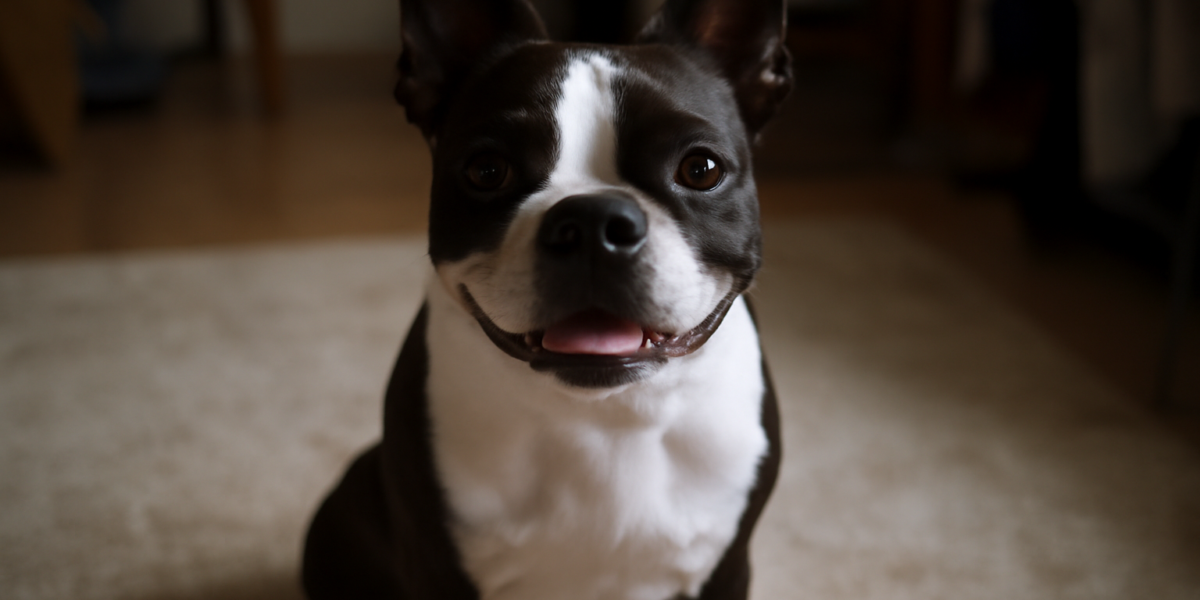
The Boston Terrier is a compact, well-muscled dog with a square-proportioned body and a sleek, short coat. The breed’s most iconic feature is its natural tuxedo pattern — a white blaze on the face, white chest, and white markings on the legs set against a dark base coat of black, brindle, or seal. This distinctive coloring is not just cosmetic; breed standards actually require specific tuxedo markings for show dogs.
The head is large and square in proportion to the body, with a flat, short muzzle that gives the breed its brachycephalic (flat-faced) profile. The eyes are large, round, and wide-set, giving the Boston Terrier an alert and curious expression that many owners find irresistible. Ears are small and erect, set high on the head, and may be natural or cropped.
The tail is short and low-set, either straight or screw-shaped. Despite their compact build, Boston Terriers carry themselves with an air of elegance and confidence. Their smooth, fine coat requires minimal grooming, and their overall clean, neat appearance suits their gentlemanly reputation.
Exercise Needs
The Boston Terrier has moderate exercise requirements. A couple of short to medium walks each day, along with some indoor playtime, is typically sufficient to keep this breed happy and healthy. They enjoy games of fetch, short jogs, and interactive play sessions, but they are not a breed that demands hours of rigorous activity.
One of the most important considerations for Boston Terrier exercise is heat sensitivity. Because of their flat faces, Boston Terriers are brachycephalic dogs, which means they have a shortened airway and cannot regulate body temperature as efficiently as longer-snouted breeds. Exercise in hot, humid conditions can quickly lead to overheating and breathing distress. Always exercise your Boston Terrier during the cooler parts of the day in warm months, keep fresh water available, and watch closely for signs of heat exhaustion such as excessive panting, drooling, or lethargy.
Mental stimulation is just as important as physical activity for this intelligent breed. Puzzle toys, training sessions, and interactive games help keep the Boston Terrier’s sharp mind engaged and prevent boredom-related behaviors. For more tips on keeping your dog active and healthy, visit our dog care blog.
Grooming Needs
One of the practical advantages of owning a Boston Terrier is the ease of grooming. Their short, smooth, fine coat sheds minimally and requires only a weekly brush-down with a soft bristle brush or grooming mitt to remove loose hair and keep the coat looking its best. The coat does not mat or tangle, making maintenance straightforward for owners of all experience levels.
Bathing is needed only occasionally — roughly once a month, or when the dog gets into something dirty. Use a gentle, dog-specific shampoo to avoid drying out the skin. After bathing, ensure the skin folds around the face are thoroughly dried, as trapped moisture in these areas can lead to irritation or infection.
Pay regular attention to the Boston Terrier’s large, prominent eyes by wiping away discharge with a damp cloth. Ears should be checked weekly for redness, odor, or buildup and cleaned gently as needed. Nails should be trimmed every two to three weeks. Dental hygiene is important for all dogs, and brushing your Boston Terrier’s teeth several times a week helps prevent tartar buildup and gum disease.
Health and Common Issues
The Boston Terrier is a generally robust breed, but its distinctive physical structure does make it prone to several health conditions that prospective owners should be aware of.
Brachycephalic Obstructive Airway Syndrome (BOAS) is the most significant health concern for the breed. The flattened facial structure can cause narrowed nostrils, an elongated soft palate, and a narrow trachea, all of which restrict airflow. Symptoms include loud breathing, snoring, and exercise or heat intolerance. Severe cases may require surgical correction.
Eye problems are also common, given the large, prominent nature of Boston Terrier eyes. They are susceptible to corneal ulcers, cataracts, glaucoma, and dry eye. Protect their eyes from rough play and debris.
Luxating patella, a condition in which the kneecap slips out of place, is seen in the breed and may require medical or surgical management. Deafness, particularly in dogs with excessive white coloring on the head, is another known concern and can be evaluated through BAER testing. Some Boston Terriers are also predisposed to hemivertebrae, a spinal malformation that can cause neurological problems in more severe cases. Regular veterinary check-ups are essential for early detection and management of these conditions.
Are Boston Terriers Good With Kids and Other Pets?
Boston Terriers are well-regarded as family dogs and generally get along well with children of all ages. They are playful and gentle enough to interact safely with kids, and their moderate size makes them less physically overwhelming than larger breeds. As with any dog, interactions between Boston Terriers and very young children should always be supervised to ensure safe, respectful play for both parties.
Their friendly, non-aggressive temperament also tends to translate well to multi-pet households. Boston Terriers typically coexist peacefully with other dogs, particularly when raised together or introduced gradually and properly. They can also adapt well to living with cats, especially when socialized from a young age.
Some Boston Terriers may display a degree of stubbornness or territorial behavior around food or toys, so early socialization and consistent boundaries are helpful. Overall, with thoughtful introductions and positive early experiences, the Boston Terrier is an excellent candidate for homes with children and other animals.
Training Tips
Boston Terriers are intelligent and eager to please, which makes them highly trainable compared to many small breeds. They respond exceptionally well to positive reinforcement techniques — praise, play, and treats are powerful motivators for this people-oriented dog. Harsh corrections or punishment-based methods are counterproductive and can cause a Boston Terrier to shut down or become anxious.
Start training and socialization as early as possible. Puppy classes are an excellent way to establish good habits while giving your Boston Terrier important exposure to new people, dogs, and environments. Basic obedience commands — sit, stay, come, leave it — form the foundation of a well-mannered dog.
Keep training sessions short and engaging, ideally five to ten minutes at a time, as Boston Terriers can become distracted or bored with lengthy drills. Consistency is key; mixed signals from different household members can slow progress. Crate training is also beneficial for housebreaking and giving the dog a secure space of its own. With patience and a positive approach, most Boston Terriers pick up commands quickly and genuinely enjoy the one-on-one time that training provides.
History and Origin
The Boston Terrier holds a distinguished place in American history as one of the few dog breeds developed entirely in the United States. The breed traces its origins to Boston, Massachusetts, in the 1870s, when a dog named Judge — a cross between an English Bulldog and a white English Terrier — was imported from England and bred locally. Judge is widely considered the founding sire of the breed.
Over successive generations, breeders refined the dog’s size, temperament, and distinctive tuxedo markings. The breed was originally known as the Round Head or American Bull Terrier before fanciers settled on the name Boston Terrier, honoring the city of its development.
In 1893, the Boston Terrier became the first American-bred dog to be recognized by the American Kennel Club, cementing its place in canine history. Throughout the early twentieth century, the breed rose rapidly in popularity and became one of the most common dogs in the country. Today, the Boston Terrier remains a beloved companion breed, celebrated for its charisma, adaptability, and undeniable charm.
Frequently Asked Questions
Do Boston Terriers bark a lot?
Boston Terriers are not excessive barkers compared to many other small breeds. They may bark to alert their owners to strangers or unusual sounds, but they are not typically considered yappy dogs. With proper training and socialization, unwanted barking can be kept to a minimum.
Can a Boston Terrier live in an apartment?
Yes, the Boston Terrier is one of the best breeds for apartment living. Their moderate exercise needs, manageable size, and relatively low noise level make them well-suited to smaller spaces. Regular daily walks and indoor play are sufficient to meet their activity requirements.
How much does a Boston Terrier shed?
Boston Terriers are considered low to moderate shedders. Their short, fine coat does not produce the heavy seasonal shedding seen in double-coated breeds. Regular weekly brushing helps manage loose hair and keeps the coat clean and healthy.
Are Boston Terriers prone to breathing problems?
Yes. As a brachycephalic breed, the Boston Terrier is prone to breathing difficulties related to its flat facial structure. Many Boston Terriers snore and breathe loudly, and some may require surgical intervention for more serious airway obstruction. Avoiding heat and overexertion is important for managing this condition throughout the dog’s life.
Adopt a Boston Terrier
If you are ready to welcome a Boston Terrier into your home, consider giving a rescue dog a second chance. Many Boston Terriers end up in shelters and rescue organizations through no fault of their own, and they have so much love left to give. Rescue dogs often come already vaccinated, spayed or neutered, and temperament-assessed, making the transition into your home smoother than you might expect.
At WalkMeHome Rescue, we are passionate about connecting dogs with the right families. Browse our available dogs and start your adoption journey today. Visit our dog adoption page to see Boston Terriers and other breeds currently in our care. For more resources on welcoming and caring for your new dog, explore our dog care blog.


