Last updated: April 27, 2026
In this article
If you have been searching for a dog that brings equal enthusiasm to a morning swim, an afternoon training session, and an evening curled up beside you on the couch, the Boykin Spaniel deserves your full attention. Born in the swamps and longleaf pine forests of South Carolina, this compact, richly brown sporting dog was purpose-built for waterfowl and turkey hunting — small enough to fit in a boat, eager enough to work all day, and warm enough in temperament to be a genuinely devoted family companion. The boykin spaniel is not a widely known breed outside the Southeast, but those who discover it tend to become lifelong admirers. It combines the drive and trainability of a serious hunting dog with a social ease and affectionate nature that makes it comfortable in almost any active household. For a family that can give this breed the exercise and engagement it needs, the boykin spaniel rewards that investment fully and then some.
| Origin | South Carolina, United States |
|---|---|
| Size | Small to medium |
| Weight | 25–40 lbs |
| Lifespan | 10–15 years |
| Coat | Medium-length, wavy or curly with feathering; rich chocolate brown |
| Temperament | Friendly, eager to please, energetic, trainable, affectionate |
| Good With | Active families, children, other dogs; thrives with swimming, hunting, and regular outdoor activity |
Personality & Temperament
The boykin spaniel has a temperament that is, in a word, irresistible. These are enthusiastic, warm-hearted dogs that approach life with an energy and openness that is entirely genuine. They are deeply social animals that form strong bonds with every member of the household, and they have an expressive, eager quality that makes them feel almost impossible to ignore. The boykin spaniel does not hover on the edge of things — it wants to be in the middle of whatever is happening, participating fully and with obvious joy.
That enthusiasm is matched by a trainability that sets the boykin spaniel apart from many other sporting breeds. These dogs were developed not only to hunt but to work closely with people in tight, confined spaces — a duck boat, a turkey blind, a dense cypress swamp — and that has produced a breed with a particular attentiveness to human cues. A boykin spaniel that trusts its handler is watching and listening constantly, ready to respond. They take well to positive reinforcement and have a genuine desire to please that makes structured training both efficient and rewarding.
The boykin spaniel is also a water dog in the truest sense. Given access to any body of water — pond, creek, river, or lake — most will enter it without hesitation and emerge looking like they have been waiting for that moment all day. That love of water is not incidental; it is bred-in, part of what makes the boykin spaniel the capable, versatile sporting companion it has always been. In the right household, that same quality makes for a dog that is always up for an adventure.
Appearance
The boykin spaniel is a compact, solidly built dog that carries itself with the alert, purposeful bearing of a working gun dog. It is small enough to be portable — fitting easily into a boat or truck cab — but muscular and well-proportioned enough to handle a full day in the field. Nothing about the boykin spaniel’s build is exaggerated; it is a functional dog in the truest sense, shaped by the demands of its work rather than by the show ring.
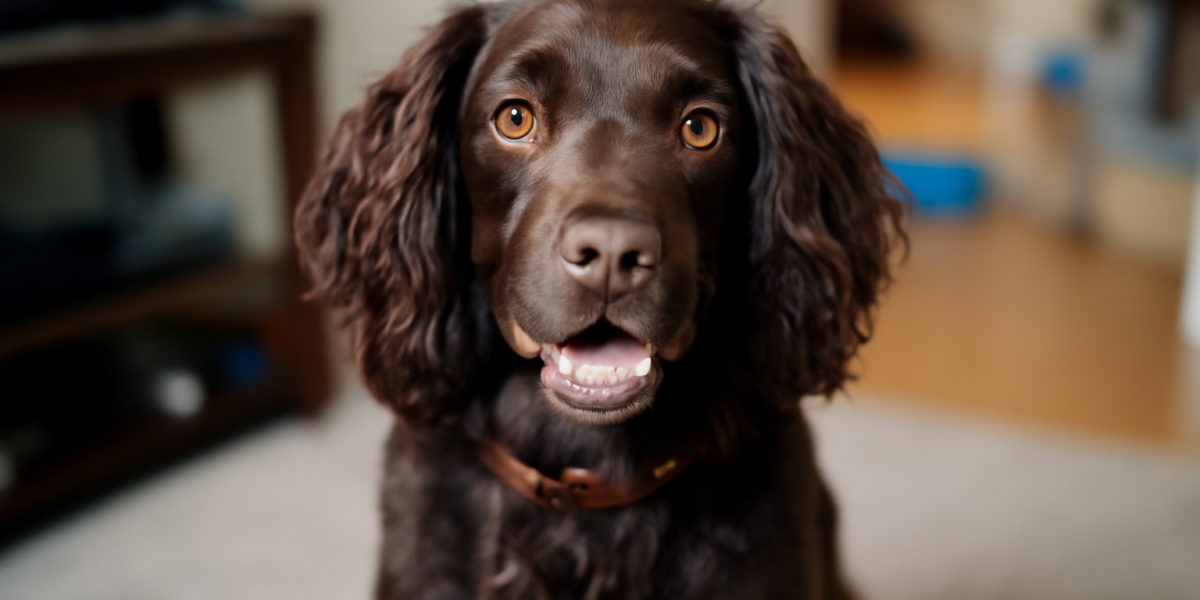
The most immediately striking feature of the boykin spaniel is its coat color: a rich, warm chocolate brown that ranges from liver to deep mahogany. The coat itself is medium in length, wavy to curly, and heavily feathered on the ears, chest, legs, and belly — that distinctive fringe that adds elegance to an otherwise workmanlike silhouette. The ears are long, set at eye level, and covered in silky, wavy hair that frames an expression that is soft, warm, and deeply appealing. Eyes are a warm amber to brown, giving the face an open, friendly look that matches the breed’s temperament exactly. The tail is traditionally docked, a practice that dates to the breed’s working origins, leaving a short, active tail that wags with characteristic boykin spaniel enthusiasm.
Exercise Needs
The boykin spaniel is a high-energy sporting breed, and its exercise requirements are real and worth taking seriously before you commit to one. This is a dog that was bred to spend entire days moving through difficult terrain — wading, swimming, flushing, retrieving — and that capacity does not simply disappear in a family home. An under-exercised boykin spaniel will find outlets for that energy on its own, and those outlets will rarely be ones you chose.
A healthy adult boykin spaniel needs at least one to two hours of vigorous exercise daily. Long walks provide a foundation but are rarely sufficient on their own. Off-leash running in a securely fenced area, retrieving games, hiking on varied terrain, and — above all — swimming are the activities that genuinely satisfy this breed’s need to move and work. The boykin spaniel’s relationship with water is one of its defining characteristics; most will enter any body of water they encounter with immediate and wholehearted enthusiasm, and providing regular swimming opportunities is one of the best investments an owner can make in the dog’s physical and mental wellbeing.
Canine sports such as hunt tests, agility, and dock diving are excellent additional outlets. Mental stimulation through obedience work, scent training, and puzzle-based feeding should complement physical activity rather than replace it. For guidance on building an exercise routine for an active sporting dog, visit our dog care blog.
Grooming Needs
The boykin spaniel’s wavy, feathered coat requires consistent attention to stay healthy and manageable, but it is not an unworkable commitment for an owner who stays on schedule. The body coat benefits from brushing two to three times per week to prevent tangles and remove the debris that inevitably accumulates after outdoor adventures in brush, water, and mud. The feathering on the ears, chest, legs, and belly is softer and more prone to matting, and these areas need methodical, patient attention with a slicker brush and a metal comb.
Trimming every few months helps keep the coat tidy and functional, particularly around the ears, feet, and underside. Many boykin spaniel owners opt for professional grooming appointments two to three times a year for a full trim, maintaining the coat themselves between visits. For a working dog that spends regular time in the field or water, more frequent light trimming may be practical.
Ear care is one of the most important grooming tasks for this breed. The long, pendant ears that give the boykin spaniel so much of its classic spaniel expression also restrict airflow to the ear canal, creating warm, moist conditions that favor bacterial and yeast infections — especially in a dog that swims frequently. Weekly ear checks and cleaning with a veterinarian-recommended solution are essential, not optional. The rest of the routine is standard: nail trims every three to four weeks, regular dental care, and periodic inspection of the paw pads for cuts or irritation after field work or swimming.
Health & Common Issues
The boykin spaniel is a generally healthy breed with a reasonable lifespan, but there are several hereditary and breed-specific conditions that any prospective owner or adopter should understand. Awareness of these issues enables better preventive care and earlier identification when problems begin to develop.
Hip dysplasia is among the most commonly inherited orthopedic conditions in the breed. This malformation of the hip joint can lead to pain, reduced range of motion, and progressive arthritis. Maintaining a healthy body weight and providing exercise that builds supportive muscle without stressing developing joints are the most accessible preventive measures available to owners.
Patellar luxation, a condition in which the kneecap slips out of its normal position, occurs with meaningful frequency in boykin spaniels. Mild cases may go unnoticed; more severe presentations can cause lameness and may require surgical correction.
Exercise-induced collapse (EIC) is a condition seen in several sporting breeds, including the boykin spaniel. Affected dogs experience sudden muscle weakness and collapse following intense exercise. DNA testing is available to identify carriers and affected individuals, and management is possible for most dogs with EIC through careful monitoring of exercise intensity.
Eye conditions, including cataracts and other inherited abnormalities, have been identified in the breed. An ophthalmologic examination early in life and periodic re-checks through adulthood are a sensible precaution. Routine wellness visits with a veterinarian familiar with the breed are the best ongoing safeguard for overall health.
Are Boykin Spaniels Good With Kids and Other Pets?
The boykin spaniel’s warm, social temperament makes it a natural fit for family life, and most boykin spaniels do genuinely well with children. These are affectionate, patient dogs that tend to treat children as playmates and companions, and their moderate size — smaller than many sporting breeds but sturdy enough to hold up to active play — works in their favor. The boykin spaniel’s energy level is well matched to the enthusiasm of kids, and its even-tempered nature means it is unlikely to become easily overwhelmed or reactive.
As with any dog, very young children and a new dog should always be supervised together, and children should be guided toward respectful, calm interaction. A boykin spaniel that has been well socialized from an early age and raised alongside children is likely to be an exceptional family companion — engaged, gentle, and deeply loyal to the whole household.
With other dogs, the boykin spaniel tends to do well. The breed has a sociable, cooperative nature that makes multi-dog households manageable, and the working dog background that required cooperation in the field has contributed to a reasonably easy-going temperament around canine companions. With cats and smaller animals, individual temperament and the quality of the introduction matter considerably. Early socialization and a patient, gradual approach to introductions give the best chance of a peaceful multi-species household.
Training Tips
Training a boykin spaniel is one of the genuine pleasures of owning the breed. These dogs are attentive, motivated, and quick to make connections — the qualities that made them effective in the field translate directly into the training environment. They respond with enthusiasm to positive reinforcement and have a sensitivity to tone and body language that makes clear, consistent communication especially effective. Heavy-handed or punishment-based methods are both unnecessary and counterproductive with this breed; a boykin spaniel that feels pressured or intimidated will shut down rather than engage, and rebuilding trust takes far longer than getting things right from the start.
Begin with the fundamentals early: recall, sit, stay, and loose-leash walking. Recall in particular is worth investing in heavily, given the boykin spaniel’s drive to follow its nose and pursue water and game. A reliable recall is both a safety tool and a freedom-enabler — it is what makes off-leash time in safe areas possible.
Socialization during puppyhood is as important as any specific skill. Exposing a young boykin spaniel to a wide range of people, environments, sounds, and situations builds the confident, adaptable temperament the breed is capable of at its best. The boykin spaniel’s working heritage makes it particularly receptive to tasks that involve retrieving, swimming, scent work, and structured outdoor activity — incorporating these into training keeps the dog engaged and taps into drives that positive, goal-oriented training can channel productively. Keep sessions short, varied, and consistently rewarding, and the boykin spaniel will prove to be among the more satisfying breeds to work with.
History & Origin
The boykin spaniel is one of the few dog breeds that can claim a genuinely documented American origin, and its story is closely tied to a single state and a single family. The breed traces directly to the early 20th century in South Carolina, where a hunter named Alexander White found a small stray spaniel-type dog near a church in Spartanburg and gave it to his hunting partner, Whit Boykin. Boykin recognized the dog’s potential, trained it as a hunting companion, and began selectively breeding it with other spaniels — likely including the American Water Spaniel, Chesapeake Bay Retriever, Springer Spaniel, and Cocker Spaniel — to produce a dog purpose-designed for the particular demands of hunting in the South Carolina lowcountry.
That purpose was specific: a dog small enough to fit in a turkey hunter’s boat on the state’s rivers and swamps, enthusiastic enough to retrieve waterfowl from cold water, and controlled enough to work at close quarters without flushing birds prematurely. The boykin spaniel filled that role with exceptional ability, and the breed spread steadily through South Carolina’s hunting community over the following decades.
In 1977, the Boykin Spaniel Society was founded to preserve and promote the breed, and the American Kennel Club formally recognized the boykin spaniel in 2009. In 1985, South Carolina designated the boykin spaniel as the official state dog — a recognition that reflects just how deeply this breed is woven into the region’s sporting and cultural identity. It remains the only dog breed developed in South Carolina.
Frequently Asked Questions
How much exercise does a boykin spaniel need each day?
A healthy adult boykin spaniel needs at least one to two hours of vigorous exercise daily, and more is generally better. This should go well beyond leash walks — off-leash running, swimming, retrieving, and hiking are the activities that genuinely satisfy this breed’s need to move and work. The boykin spaniel’s love of water makes swimming a particularly valuable outlet, both physically demanding and deeply satisfying for the dog. Mental stimulation through training and scent work should complement physical activity. A boykin spaniel that gets adequate daily exercise will be a noticeably calmer and more settled companion inside the home than one whose energy has no productive outlet.
Is the boykin spaniel a good dog for first-time owners?
A boykin spaniel can be an excellent dog for a first-time owner, provided that person is genuinely committed to meeting the breed’s exercise and engagement needs. The trainability and people-oriented temperament of the boykin spaniel make it more forgiving of inexperienced handling than many other sporting breeds. The challenge is not managing a difficult temperament — it is keeping up with the energy level. A first-time owner who is active, consistent, and willing to invest in training and daily exercise will find the boykin spaniel an enormously rewarding companion. An owner looking for a low-maintenance dog may find the experience more demanding than expected.
Do boykin spaniels shed a lot?
The boykin spaniel sheds moderately year-round, with heavier seasonal shedding in spring and fall. The wavy to curly coat texture means that loose hair tends to stay in the coat rather than falling freely onto furniture and clothing — but this also means the coat is more prone to matting if not brushed regularly. Two to three brushing sessions per week will manage shedding, prevent tangles, and keep the coat healthy. For owners who are particularly sensitive to dog hair in the home, regular brushing combined with professional grooming appointments every few months will make a meaningful difference.
Can you adopt a boykin spaniel from a rescue organization?
Yes, and it is worth looking before assuming you need to go through a breeder. Boykin spaniels and boykin mixes do enter shelters and breed-specific rescues, often because owners underestimated the exercise and engagement these dogs require. Breed-specific spaniel rescues operate across the United States and frequently have boykin spaniels or dogs with boykin characteristics available for adoption. Adult rescue dogs often come with a clearer behavioral profile than a puppy, which can actually make the match easier for adopters who know what they are looking for. Patience pays off — the right dog is often already waiting for a home.
Adopt a Boykin Spaniel
If the boykin spaniel sounds like the dog you have been looking for, the best next step is to find out who is waiting right now. Boykin spaniels and boykin mixes enter rescue and shelter situations with more regularity than most people expect, and the dog waiting for a home brings the same warm temperament, the same love of water, and the same capacity for devotion as any dog from a breeder. Often that dog has already moved through the most demanding phase of puppyhood and is simply waiting for the right household to recognize what it has to offer.
Browse available dogs on the Walk Me Home dog adoption page and see who might be a match. For guidance on welcoming an active sporting breed into your home, building an exercise routine, and establishing a training foundation that works for both of you, visit our dog care blog. The right boykin spaniel is out there — and they would love to meet you.
Looking to adopt a Boykin Spaniel Breed Profile?
Browse Boykin Spaniel Breed Profile dogs and mixes available for adoption from shelters and rescues near you.
Find Boykin Spaniel Breed Profile Dogs for Adoption