Last updated: April 11, 2026
In this article
Overview
The Bracco Italiano is one of the oldest pointing breeds in Europe, with roots stretching back to 4th and 5th century Italy. This Bracco Italiano breed profile covers everything you need to know about a dog that combines the grace of a Hound with the drive of a gundog — wrapped in a noble, droopy-eared package that is hard to resist.
After centuries of popularity in Italian hunting circles, the Bracco nearly went extinct in the early 20th century. Dedicated breeders revived the breed, and in 2022, the AKC granted full recognition. Interest has grown steadily since, but the Bracco remains relatively rare, especially in North America.
Quick Facts:
- Breed Group: Sporting (Pointer)
- Size: 55–90 pounds; 21–27 inches tall
- Lifespan: 10–14 years
- Energy Level: Moderate to high
- Grooming Needs: Low
- Coat: Short, dense, glossy
Temperament and Personality
The Bracco Italiano is often described as a “people dog” — loyal, affectionate, and eager to please. They form deep bonds with their family and are happiest when included in daily activities, whether that means a morning run, an afternoon training session, or an evening on the couch.
In the field, Braccos are focused and methodical workers with a distinctive trotting gait. At home, they switch gears to become calm, gentle companions. This dual nature is one of the breed’s most appealing qualities — they can go from energetic hunting partner to relaxed family dog with surprising ease.
Braccos are sensitive dogs who respond best to positive reinforcement training. They are eager learners but can shut down with harsh corrections. Patience, consistency, and plenty of praise produce the best results. Their intelligence and desire to cooperate make them a joy to train for owners who prefer a partner rather than a subordinate.
With children, Braccos are typically gentle and patient. Their sturdy build means they can handle the occasional toddler bump without being knocked over, and their tolerant nature makes them reliable family dogs. They also tend to get along well with other dogs, especially when socialized early.
Size and Appearance
The Bracco Italiano is a large, athletic dog with a powerful yet elegant build. Males typically stand 23 to 27 inches at the shoulder and weigh 55 to 90 pounds. Females are slightly smaller, usually in the 21 to 25 inch and 55 to 75 pound range.
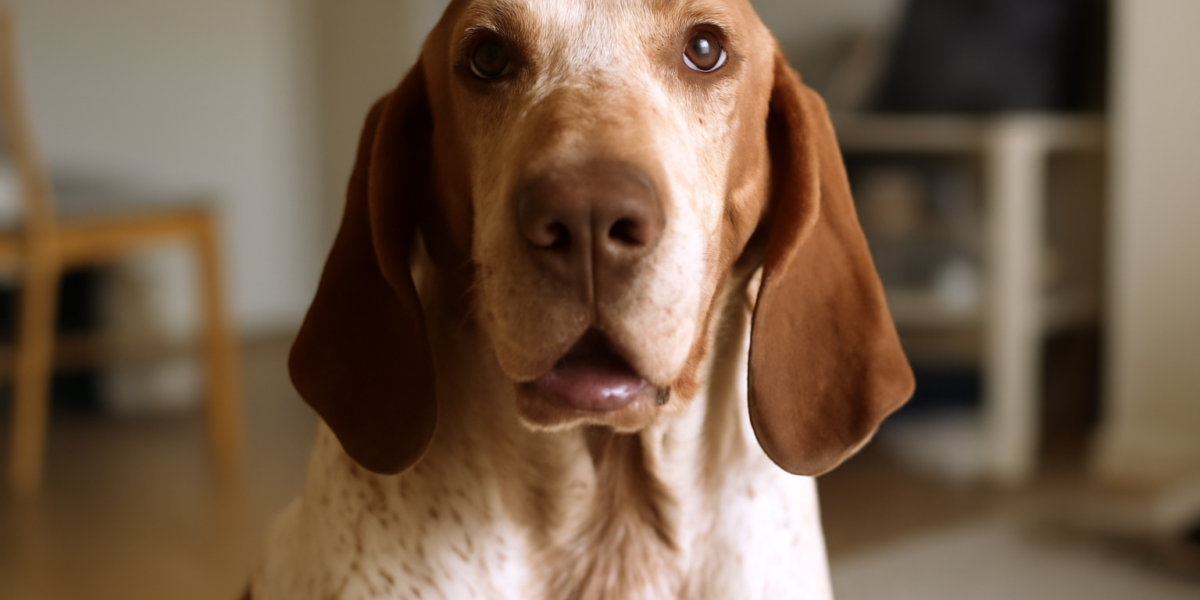
Their most distinctive features are their long, pendulous ears, deep-set soulful eyes, and pronounced dewlap (loose skin under the chin). The head is sculpted with a prominent occiput and a slightly convex skull that gives them a noble, almost aristocratic expression.
The coat is short, dense, and glossy, coming in white, white with orange markings, white with chestnut markings, or roan variations. The short coat lies flat against the body and highlights the breed’s muscular definition. Their movement is fluid and ground-covering — a distinctive extended trot that sets them apart from other pointing breeds.
Exercise and Activity Needs
As a sporting breed bred for long days in the field, the Bracco Italiano has significant exercise needs. Plan for at least 60 to 90 minutes of daily activity, which should include a mix of walking, running, and mentally engaging activities.
Braccos excel in a variety of dog sports beyond hunting. Field trials, tracking, agility, rally obedience, and dock diving all channel their energy and intelligence productively. If you are not a hunter, these activities provide meaningful outlets for the breed’s natural drives.
Off-leash exercise in a securely fenced area is ideal. Braccos love to explore with their noses and will range far if given the opportunity, so reliable recall should be established before attempting off-leash freedom in open areas. Their pointing instinct means they may “freeze” when they catch an interesting scent — which is charming but not ideal near roads.
A Bracco without adequate exercise will find their own entertainment, and that often involves digging, chewing, or barking. These are not apartment dogs. They do best in homes with a yard and active owners who can match their energy level.
Grooming and Care
The Bracco Italiano breed profile would not be complete without noting how easy their grooming is. Their short coat requires only a weekly brushing with a hound mitt or soft bristle brush to remove loose hair and distribute natural oils. They shed moderately year-round with heavier shedding during seasonal changes.
Bathing is needed only occasionally — every four to six weeks or when your Bracco rolls in something unpleasant (which, as a scent-oriented dog, they absolutely will). Use a gentle dog shampoo that does not strip natural oils.
Their long ears require more attention than the coat. Pendulous ears trap moisture and create an environment where bacteria and yeast thrive. Check ears weekly, clean with a vet-recommended ear solution, and dry thoroughly after swimming or bathing. Signs of ear infection include redness, odor, head shaking, and scratching.
Trim nails every two to three weeks, brush teeth several times weekly, and inspect paw pads regularly if your Bracco spends time on rough terrain. Their deep-set eyes should be checked for irritation or discharge during grooming sessions.
Health and Lifespan
The Bracco Italiano is a generally healthy breed with a lifespan of 10 to 14 years. However, like all large breeds, they are subject to certain health concerns that owners should monitor.
- Hip and elbow dysplasia: Common in large sporting breeds, dysplasia involves abnormal joint development that can lead to arthritis and lameness. Reputable breeders screen breeding stock through OFA or PennHIP evaluations.
- Bloat (gastric dilatation-volvulus): A life-threatening condition where the stomach twists on itself. Deep-chested breeds like the Bracco are at higher risk. Feed two to three smaller meals daily, avoid vigorous exercise immediately after eating, and learn the signs — restlessness, unproductive retching, and a distended abdomen.
- Ear infections: Their pendulous ears make them susceptible. Regular cleaning and keeping ears dry are the best preventive measures.
- Entropion: A condition where the eyelid rolls inward, causing the lashes to irritate the eye. Surgical correction is usually straightforward.
- Kidney issues: Some Braccos may develop renal amyloidosis. Regular blood work helps monitor kidney function.
Annual veterinary checkups with comprehensive blood work, joint assessments, and ear examinations keep your Bracco in peak condition. For large breeds, twice-yearly exams become advisable after age seven.
Is the Bracco Italiano Right for You?
The Bracco Italiano is a magnificent breed for active families, hunters, and dog sport enthusiasts who can provide the exercise, training, and companionship this dog thrives on. Their gentle temperament and trainability make them wonderful family dogs, provided their physical needs are met.
This breed is not ideal for sedentary households, apartments, or owners who are away for long hours. Braccos crave human interaction and physical activity in equal measure. If you can offer both, you will be rewarded with one of the most loyal, noble, and affectionate dogs you will ever meet.
Explore adoptable dogs to find your next companion. For more breed comparisons, see our Shiba Inu vs Basenji guide, and check out the Danish-Swedish Farmdog for a smaller sporting alternative.
Frequently Asked Questions
Are Bracco Italianos good family dogs?
Yes. Braccos are gentle, patient, and affectionate with family members of all ages. Their sturdy build and tolerant nature make them particularly good with children. They thrive in active families who include them in daily activities.
How much exercise does a Bracco Italiano need?
Plan for 60 to 90 minutes of daily exercise, including walks, running, and mentally stimulating activities. They are happiest with a job to do — whether that is hunting, competing in dog sports, or exploring new trails with you.
Do Bracco Italianos drool a lot?
Moderate drooling is typical, especially after drinking, eating, or exercising. Their loose lips and dewlap contribute to this. Keep a towel handy, and know that while some individuals drool more than others, it is a normal breed characteristic.
Are Bracco Italianos easy to train?
Yes, they are intelligent and eager to please, which makes training enjoyable. They respond best to positive reinforcement methods and can be sensitive to harsh corrections. Consistency and patience are key, especially during the adolescent phase.
How rare is the Bracco Italiano?
The Bracco Italiano is still relatively rare in North America, though interest has grown since AKC recognition in 2022. Finding a reputable breeder may require research and a waitlist. Breed-specific rescue organizations occasionally have Braccos available for adoption.
Looking to adopt a Bracco Italiano Breed Profile?
Browse Bracco Italiano Breed Profile dogs and mixes available for adoption from shelters and rescues near you.
Find Bracco Italiano Breed Profile Dogs for Adoption