
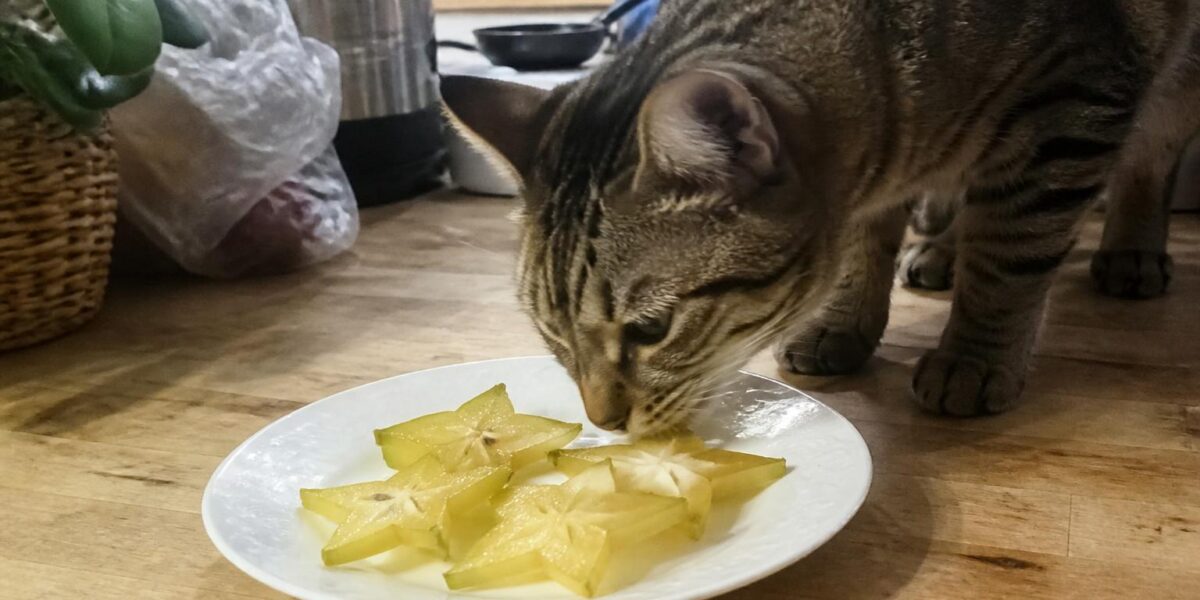
Can Cats Eat Star Fruit? The Short Answer
No — cats should not eat star fruit. If you are asking “can cats eat star fruit,” the clear answer is to avoid it. Star fruit, also called carambola, is very high in oxalates, compounds that can cause kidney damage. Because cats are already prone to kidney problems, star fruit is a genuine risk and belongs on the avoid list.
In this article
This is not a “safe but unnecessary” food. The high oxalate content makes star fruit potentially harmful even in modest amounts, and the danger is greatest for cats with any existing kidney issues. There is no nutritional reason to ever offer star fruit to a cat, and there are serious reasons not to.
It is worth taking this risk seriously because kidney health is one of the most important and most fragile aspects of feline wellbeing. Cats are small, their kidneys do a great deal of work, and damage to them can be permanent. A fruit that stresses the kidneys is not something to experiment with, even in tiny amounts.
If your cat eats star fruit, contact your veterinarian or an animal poison control line for guidance, especially if your cat has known kidney concerns or is older.
Why Star Fruit Is Dangerous for Cats
Star fruit is notably high in soluble oxalates and a neurotoxin known to affect the kidneys and nervous system. In humans with kidney disease, even small amounts of star fruit can cause serious problems, and the same kind of risk applies to animals with vulnerable kidneys.
Oxalates can bind with calcium in the body and contribute to the formation of kidney stones and crystals, and they can directly stress kidney function. Cats are especially susceptible because chronic kidney disease is one of the most common health problems in the species, particularly as they age. Many older cats already have some degree of reduced kidney function, which makes any added stress riskier.
Given how important kidney health is for cats and how concentrated the oxalates are in star fruit, the safest approach is simple: keep star fruit away from your cat entirely. Unlike many fruits that are merely unnecessary, star fruit poses a specific, meaningful danger.
The neurotoxic element of star fruit is another concern. While most documented neurological effects involve people with existing kidney disease, the principle holds — this is a fruit with genuine toxic potential rather than a harmless treat.
Symptoms of Star Fruit Toxicity in Cats
If your cat eats star fruit, watch closely for signs of kidney trouble and toxicity. These can include:
- Vomiting
- Loss of appetite
- Lethargy or weakness
- Excessive thirst and increased urination, or conversely reduced urination
- Drooling
- Tremors or, in severe cases, signs of neurological distress
- Bad breath with an unusual odor, which can accompany kidney problems
Symptoms may develop within hours. Because kidney damage can progress quickly and be hard to reverse, this is not a situation to wait out. Any of these signs after star fruit ingestion warrants an urgent call to your veterinarian, and changes in urination or repeated vomiting in particular should prompt immediate attention.
What to Do If Your Cat Eats Star Fruit
If you know or suspect your cat ate star fruit, treat it as a potential emergency:
- Remove any remaining star fruit so your cat cannot eat more.
- Note roughly how much your cat ate and when.
- Call your veterinarian or an animal poison control helpline right away for guidance.
- Do not attempt home remedies or try to induce vomiting unless a professional instructs you to.
- Be ready to bring your cat in for evaluation, as the vet may want to check kidney values and provide supportive care such as fluids.
Prompt action gives your cat the best chance of avoiding lasting kidney damage. Cats with pre-existing kidney disease are at the highest risk and should be seen quickly. Bringing details about how much star fruit was eaten helps your vet judge the severity and choose the right treatment.
Safer Fruit Options for Cats
Most cats are not very interested in fruit, and they do not need it. But unlike star fruit, a few fruits are safe in tiny amounts if your cat is curious. Good lower-risk options include small bites of blueberries, apples (without seeds), and bananas.
Even these safe fruits offer little to a carnivore and should be occasional novelties at most, served plain and in tiny pieces. Star fruit, however, is in a different category entirely and should be avoided completely — it is one of the fruits where the answer is a firm no rather than “a little is fine.”
This contrast is a helpful reminder that “fruit” is not a single category for cats. Some are harmless in moderation, while others, like star fruit and grapes, carry real risk and should never be offered.
Keeping Your Cat Safe Around Risky Foods
Preventing access is the best protection. Store star fruit and other high-oxalate or risky foods where your cat cannot reach them, and be mindful of fruit bowls left on counters. Curious cats may investigate or chew on items out of boredom, and a cat does not know which fruits are dangerous.
If you have a fruit bowl on display, consider keeping star fruit and grapes out of it entirely, or storing them in a closed refrigerator drawer. Small habits like covering food and clearing counters add up to a much safer home for a curious cat.
When you adopt a cat, a little kitchen awareness goes a long way toward keeping them healthy. To learn more about welcoming a cat into a safe home, explore our adopt a cat resources.
Protecting Your Cat’s Kidney Health
Star fruit is worth taking seriously largely because of how central and how fragile kidney health is in cats. The kidneys filter waste, balance fluids, and regulate key minerals, and once kidney tissue is damaged it generally does not regenerate. This is why chronic kidney disease is both common and serious in cats, especially as they grow older.
Against that backdrop, a fruit loaded with oxalates that directly stress the kidneys is exactly the kind of food to keep away. The risk is not just acute poisoning from a large amount — even modest exposure adds an unnecessary burden to organs that may already be working hard, particularly in senior cats or those with early, undiagnosed kidney changes.
Supporting your cat’s kidney health is mostly about consistency and prevention: feeding a complete, balanced diet, ensuring constant access to fresh water, and keeping risky foods like star fruit and grapes out of reach. Regular veterinary checkups, including bloodwork as your cat ages, help catch kidney issues early when they are most manageable.
If your cat has already been diagnosed with kidney disease, be especially vigilant. These cats have the least margin for error, and avoiding high-oxalate foods entirely is an important part of protecting what kidney function they have.
Frequently Asked Questions
Is star fruit toxic to cats?
Yes. Star fruit is very high in oxalates and contains a neurotoxin that can damage the kidneys. Because cats are already prone to kidney problems, star fruit should be avoided entirely.
What if my cat ate a small piece of star fruit?
Even a small amount can be risky due to the oxalate content. Contact your veterinarian or an animal poison control line for advice, and watch closely for vomiting, lethargy, changes in urination, or drooling.
Why are cats especially at risk from star fruit?
Chronic kidney disease is one of the most common health problems in cats. Since star fruit’s oxalates stress the kidneys, cats are more vulnerable to harm than many other animals, especially older cats or those with existing kidney issues.
What fruits can cats eat safely instead?
If your cat is curious about fruit, tiny amounts of blueberries, seedless apple, or banana are far safer choices than star fruit. Even these are unnecessary for a carnivore and should be occasional treats only.
Is dried star fruit any safer than fresh?
No. Drying concentrates the sugars and oxalates rather than removing them, so dried star fruit is no safer and may be more concentrated. The same is true of star fruit juice and smoothies, since juicing or blending does not remove the oxalates and liquid forms can be easy for a cat to lap up quickly. Star fruit in any form — fresh, dried, juiced, or blended — should be kept entirely away from cats, especially those with kidney concerns.


