
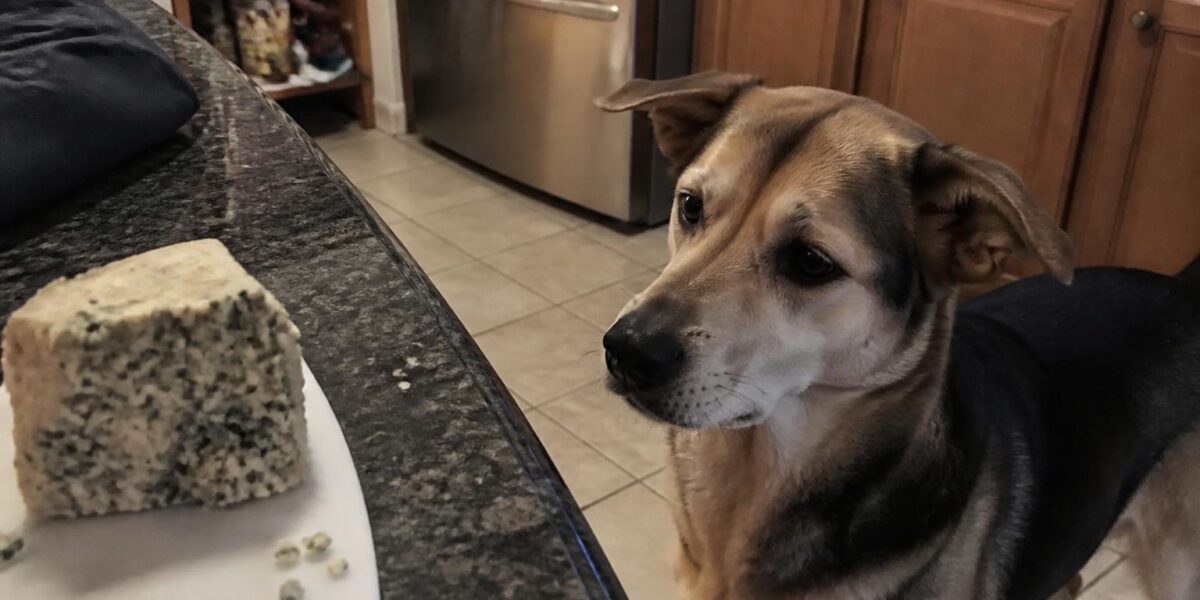
Can Dogs Eat Blue Cheese? The Short Answer
Can dogs eat blue cheese? No. Blue cheese is one cheese you should keep away from your dog. While most plain cheeses are fine in small amounts, blue cheese is different because the mold that gives it those signature veins produces a substance called roquefortine C, which can be harmful to dogs.
In this article
- Can Dogs Eat Blue Cheese? The Short Answer
- Why Blue Cheese Is Risky for Dogs
- Symptoms of Roquefortine C Toxicity
- What to Do If Your Dog Eats Blue Cheese
- Why Fat and Salt Add to the Danger
- Which Cheeses Count as Blue Cheese
- Cheeses That Are Safer in Moderation
- Keeping Blue Cheese Out of Reach
- Frequently Asked Questions
This is not a “tiny bit is fine” situation the way regular cheese is. Blue, veined cheeses such as Roquefort, Gorgonzola, Stilton, and Danish blue all carry this risk, so the safest approach is to avoid them entirely.
Many pet parents are surprised to learn this, because cheese in general has a reputation as a safe dog treat. The distinction comes down to the specific molds used to make blue cheese. Understanding why these cheeses are different helps you make confident, safe choices at the fridge and the cheese board.
Why Blue Cheese Is Risky for Dogs
The problem lies in the fungus used to make blue cheese. As these cheeses ripen, the mold can produce roquefortine C, a compound that some dogs are sensitive to. When a dog eats enough of it, it can affect the nervous system.
On top of that, blue cheese tends to be high in fat and salt. Rich, fatty foods can trigger pancreatitis in dogs, a painful and potentially serious inflammation of the pancreas. So even setting the mold aside, blue cheese is a poor choice.
It is worth noting that the amount of roquefortine C varies between cheeses and even between batches, which is exactly why caution makes sense. You cannot tell by looking how potent a particular wedge is, so the responsible move is to treat all veined, moldy cheeses as off-limits rather than gambling on a small piece.
Symptoms of Roquefortine C Toxicity
If a dog eats a significant amount of blue cheese, you may see symptoms within a few hours. Knowing the warning signs helps you act quickly.
- Muscle tremors or trembling
- Twitching or muscle spasms
- Vomiting and diarrhea
- Restlessness, panting, or agitation
- High temperature
- In severe cases, seizures
These symptoms can come on suddenly. If you see any of them after your dog has eaten blue cheese, this is an emergency and you should contact your veterinarian or an emergency clinic immediately. The faster your dog receives care, the better the outcome tends to be.
Smaller dogs are at greater risk because it takes less cheese to deliver a harmful dose relative to their body weight. A piece that might cause only mild upset in a large breed could affect a small dog much more seriously, which is another reason to keep blue cheese completely out of reach.
What to Do If Your Dog Eats Blue Cheese
A small nibble that fell on the floor may not cause harm, but you should still keep a close eye on your dog. Note how much they ate and when, since that information helps your vet decide on the right course of action.
If your dog has eaten more than a tiny amount, or shows any tremors, twitching, or vomiting, call your veterinarian right away. Do not wait to see if it gets worse. Quick treatment, which may include inducing vomiting or supportive care, gives the best outcome. It is always better to make the call and be reassured than to delay.
While you arrange care, keep your dog calm and prevent access to any more cheese. Do not attempt to make your dog vomit at home unless a veterinary professional specifically instructs you to, as doing so incorrectly can cause further harm. Let the experts guide the next steps.
Why Fat and Salt Add to the Danger
Beyond the mold, the sheer richness of blue cheese is a problem in its own right. These cheeses are dense with fat, and a sudden hit of fatty food is a well-known trigger for pancreatitis, especially in dogs that are overweight or prone to digestive trouble.
The salt content is also high, since many blue cheeses are heavily salted during production. Excess sodium can cause increased thirst and, in large quantities, more serious effects. Combined with the mold risk, this makes blue cheese a triple concern rather than a simple treat.
This is why even dogs that tolerate plain cheese well should still skip blue varieties. The issue is not whether your dog can handle dairy, but the specific compounds and richness unique to these moldy cheeses.
Which Cheeses Count as Blue Cheese
It helps to know exactly which cheeses fall under the blue cheese warning, since not every pet parent recognizes them by name. The defining feature is the visible blue, green, or gray veining created by edible mold cultures running through the cheese.
Common examples to avoid include Roquefort, Gorgonzola, Stilton, Danish blue, Cambozola, and any cheese simply labeled “blue cheese.” Some of these are soft and creamy while others are firm and crumbly, but they all share the moldy veining that produces roquefortine C. Appearance is your best clue: if you can see those characteristic streaks of mold, keep it away from your dog.
Do not confuse blue cheese with white-rinded cheeses like brie or camembert. Those use a different surface mold and are a separate topic, though their richness still means they should be limited. The specific concern here is the veined, blue-mold family, and the safest habit is to treat anything in that group as completely off-limits for dogs.
Cheeses That Are Safer in Moderation
The good news is that your dog does not have to miss out on cheese entirely. Many plain, low-fat cheeses are fine as occasional treats. Good options include cottage cheese and mild cheese in general, both of which are gentler on the stomach.
Other in-batch cheeses worth reading about include mozzarella and feta, though feta is saltier and should be limited. Avoid any moldy, veined, or heavily seasoned cheese. When choosing treats, plain and simple always wins.
Keeping Blue Cheese Out of Reach
Because the risk is real, prevention matters. Store blue cheese securely and be mindful at gatherings where cheese boards are within nose-reach of a curious dog. Many dogs will happily counter-surf a wedge of Stilton given the chance.
Let family and guests know that blue cheese is off-limits, and avoid sharing dishes like blue cheese dressing, dips, or sauces. If your dog has any underlying health issues, talk with your veterinarian about which treats are safest, since some dogs need to avoid rich foods altogether. A little household awareness goes a long way toward keeping your rescue dog safe.
Holidays and parties deserve extra attention, since cheese boards, buffet tables, and unattended plates create plenty of temptation. A dog working a room of distracted guests can hoover up a surprising amount before anyone notices. If you are hosting, it can help to keep your dog in a separate room or behind a baby gate while food is out, then reward their patience with a dog-safe treat afterward.
The reassuring takeaway is that avoiding blue cheese is easy once you know to do it. There are so many gentler, plainer cheeses and other treats your dog can enjoy that there is simply no reason to risk a moldy, veined one. With a little awareness, you can keep your dog out of harm’s way without any sense of deprivation.
Frequently Asked Questions
Is a small piece of blue cheese dangerous for dogs?
A tiny amount may not cause harm, but because of the roquefortine C in the mold, it is safest to avoid blue cheese completely. Monitor your dog and call your vet if they ate more than a nibble.
What blue cheeses should dogs avoid?
All veined, moldy cheeses, including Roquefort, Gorgonzola, Stilton, Danish blue, and any cheese with visible blue or green mold, should be kept away from dogs.
What are the symptoms of blue cheese poisoning in dogs?
Watch for tremors, twitching, vomiting, restlessness, high temperature, and in severe cases seizures. These can appear within hours and require urgent veterinary care.
Can dogs eat any cheese safely?
Yes. Plain, low-fat cheeses like cottage cheese can be safe in small amounts for most dogs. Just avoid moldy, blue, or heavily salted varieties.
Is blue cheese dressing safe for dogs?
No. Blue cheese dressing combines the moldy cheese with extra fat, salt, and often garlic or onion, making it doubly unsafe. Keep dressings and dips away from your dog.


