
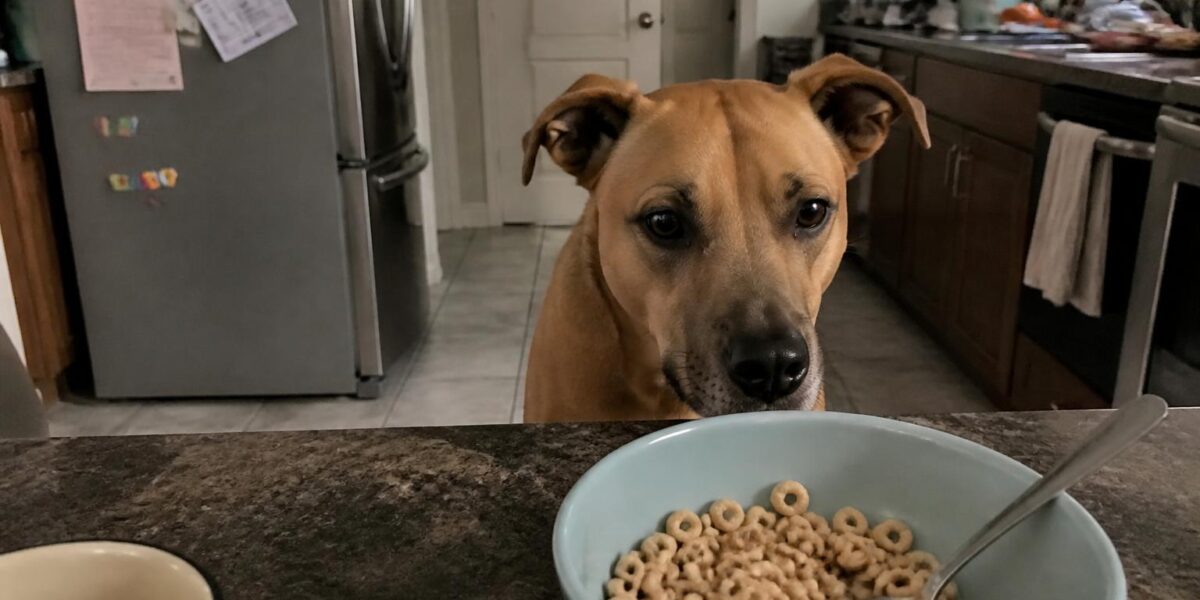
The Short Answer on Cereal for Dogs
Can dogs eat cereal? It depends entirely on the cereal, but in general a small amount of plain, low-sugar cereal is safe for dogs in moderation. Plain cereals like unsweetened oat-based or rice-based varieties are not toxic, and a few pieces as an occasional treat are fine for most healthy dogs.
In this article
The problem is that most breakfast cereals are made for human tastes, which means they are loaded with sugar, and some contain ingredients that are downright dangerous, like chocolate, raisins, macadamia nuts, or the sweetener xylitol. Those cereals are firmly off-limits.
Cereal also offers dogs very little nutritionally. So while a plain piece or two won’t hurt, cereal should never become a regular part of your dog’s diet. Always check the ingredient list before sharing.
The breakfast table is a classic spot for a hopeful dog to station themselves, and a stray piece of cereal that hits the floor is a common way dogs first encounter it. For most plain cereals, that dropped piece is no cause for alarm. The reason this question deserves a careful answer is that “cereal” covers everything from plain puffed rice to chocolate-and-marshmallow concoctions, and the gap between the safest and most dangerous options is enormous.
Is Cereal Good for Dogs?
Plain whole-grain cereals provide carbohydrates and a small amount of fiber, which gives a little energy and can support digestion. Some plain cereals are fortified with vitamins and minerals, though these are aimed at human needs.
For dogs, the nutritional upside is minimal. A complete, balanced dog food already provides the energy, fiber, and nutrients your dog needs, so cereal is more of an empty-calorie treat than a healthful food. The high sugar content of most cereals only adds to the downside.
If your dog stares longingly at your breakfast bowl, a few pieces of plain low-sugar cereal make a harmless snack. Just remember it is a treat, not a meal component, and the plainer the better.
One reason dry cereal can be handy is its convenient size and shape. Small, crunchy, uniform pieces are easy to toss as a quick reward or tuck into a food puzzle for a bit of mental enrichment. A plain oat-ring cereal, for instance, works well scattered across a snuffle mat to encourage your dog to sniff and forage. Used this way, a few pieces double as both a treat and a little brain game, which many dogs find genuinely satisfying on a rainy day indoors.
The Dangerous Ingredients to Avoid
This is the most important section, because the right cereal is harmless while the wrong one can be an emergency.
Chocolate. Chocolate-flavored cereals contain theobromine, which is toxic to dogs. Avoid them completely.
Raisins. Cereals with raisins are dangerous because grapes and raisins can cause kidney failure in dogs even in small amounts.
Macadamia nuts. Some granola-style cereals include macadamia nuts, which are toxic to dogs.
Xylitol. A few “sugar-free” or low-calorie cereals use xylitol, a sweetener that is highly toxic to dogs and can cause low blood sugar and liver failure.
Excess sugar and salt. Frosted, honey-coated, and marshmallow cereals are far too sugary, and too much sugar contributes to obesity and dental problems.
How to Serve Cereal Safely
If you want to share cereal, choosing the right type and the right amount is everything. Follow these guidelines.
- Pick a plain, unsweetened, whole-grain cereal with no chocolate, raisins, nuts, or xylitol.
- Offer it dry, not soaked in milk, since many dogs do not digest milk well.
- Give just a few pieces as a treat, not a bowlful.
- Watch for any digestive upset the first time you try it.
For serving size, a small pinch of cereal for a little dog or a small handful of plain pieces for a large dog is plenty. Cereal and all treats together should stay within about 10 percent of your dog’s daily calories.
Plain oat-based or rice-based cereals tend to be the safest choices. Avoid pouring cereal with milk, and never let your dog finish a sugary leftover bowl. When in doubt about a specific cereal, read the label carefully or ask your veterinarian.
Households with children often have the trickiest cereal situation, since sugary, colorful cereals are common and little ones love to share with the family dog. It is worth having a gentle conversation about which snacks are safe to pass to the dog and which are not, and keeping the more dangerous cereals, especially anything with chocolate or raisins, stored well out of a dog’s reach. A dropped bowl during breakfast is a classic way a dog ends up eating something they should not, so a little prevention saves a lot of worry. Teaching everyone in the family a few simple food-safety rules protects your dog far more reliably than hoping nothing falls on the floor.
Cereal Ingredients and Other Dog Foods
Many cereals are built from grains your dog can safely eat in plain form, which is why the plain versions are usually fine. If your dog enjoys grain-based treats, there are simpler, healthier options.
For related foods, see our guides on whether dogs can eat oatmeal, plus rice and in-batch sibling oats. Plain cooked oatmeal in particular is a gentler, lower-sugar way to give your dog a grain-based treat.
Keep in mind that some cereals contain raisins, which are toxic to dogs, so always read labels before sharing anything from your pantry. When you are unsure whether a food is safe, your veterinarian is the best resource.
When to Contact Your Vet
If your dog eats a few pieces of plain cereal and seems fine, there is nothing to worry about. Mild gas or a soft stool after a larger amount typically clears up within a day with fresh water available.
Call your veterinarian or an emergency clinic right away if your dog ate cereal containing chocolate, raisins, macadamia nuts, or xylitol. These are toxic, and the sooner your dog is treated, the better the outcome. Watch for vomiting, weakness, tremors, seizures, lethargy, or changes in urination, and bring the cereal box so the vet knows the ingredients.
For routine questions about whether a particular cereal or treat suits your dog, especially if your dog is overweight or diabetic, your vet can offer tailored advice.
A Quick Guide to Common Cereals
To make label-reading easier, it helps to sort cereals into rough categories. The safest group is plain, unsweetened whole-grain cereals, such as original puffed rice, plain oat-ring cereals, and unsweetened bran or wheat varieties. A few pieces of these make a harmless occasional treat for most dogs.
The next group is sweetened but otherwise simple cereals, like frosted flakes or honey-coated varieties. These are not toxic, but the high sugar content makes them a poor choice. If your dog snags a piece, there is no emergency, but they are not something to offer on purpose.
The dangerous group is the one to memorize. Any cereal containing chocolate, raisins, or macadamia nuts can be genuinely harmful, and a small number of low-sugar or sugar-free cereals contain xylitol, which is highly toxic. Granolas and trail-mix style cereals are the most likely to hide these ingredients, so read those labels especially carefully.
When in doubt, the simplest rule is this: if you would not be comfortable reading every ingredient out loud and confirming each is dog-safe, do not share that cereal. Sticking to plain, unsweetened options takes the guesswork out of it, and your dog will be just as delighted by a few plain pieces as by the sugary kind.
Frequently Asked Questions
Can dogs eat Cheerios?
Plain, unsweetened oat cereals like original Cheerios are generally safe in small amounts because they are low in sugar. Skip frosted, honey, or chocolate versions, and offer only a few pieces as a treat.
Is cereal with milk okay for dogs?
It is best to offer cereal dry. Many dogs do not digest cow’s milk well and can get gas or diarrhea, so skip the milk and stick to a few plain pieces.
Which cereals are dangerous for dogs?
Avoid any cereal with chocolate, raisins, macadamia nuts, or xylitol, all of which are toxic. Also skip very sugary frosted or marshmallow cereals, which are unhealthy even if not toxic.
How much cereal can my dog have?
Just a small pinch for a little dog or a small handful for a large dog, given occasionally. Keep cereal and all treats within about 10 percent of your dog’s daily calories.


