
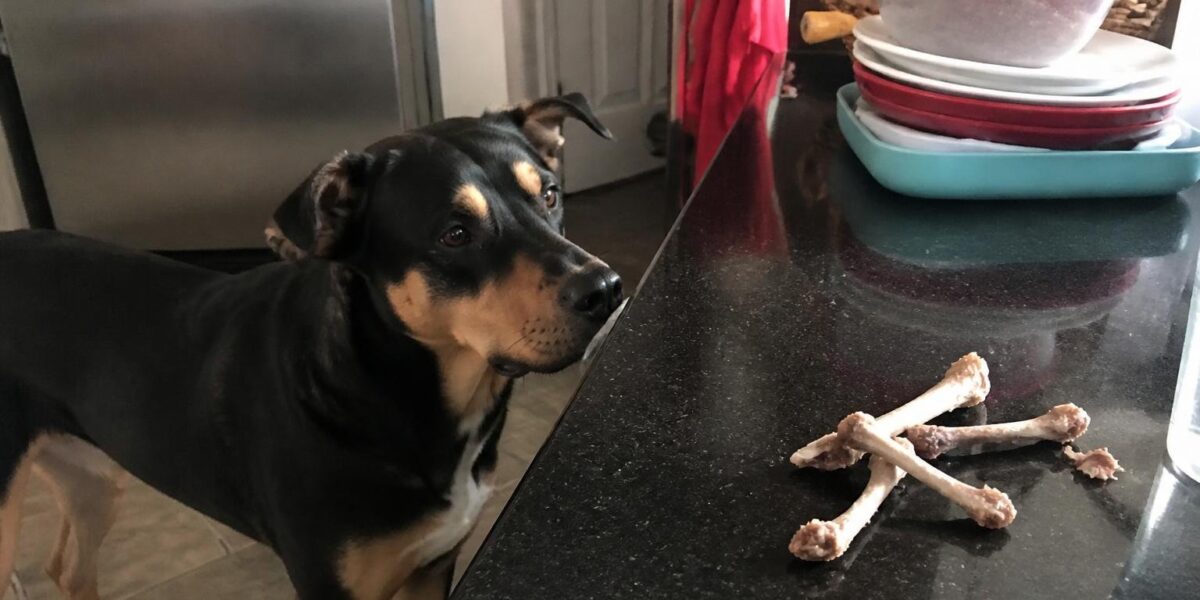
Can Dogs Eat Chicken Bones? The Short Answer
No — dogs should not eat cooked chicken bones, and this is a genuine emergency topic, not a minor caution. Cooked chicken bones become brittle and dry, which makes them splinter into sharp shards when chewed. Those shards can cause choking, lodge in the throat, or puncture the esophagus, stomach, or intestines. A perforation anywhere in the digestive tract is a life-threatening emergency that needs urgent surgery.
In this article
- Can Dogs Eat Chicken Bones? The Short Answer
- Why Cooked Chicken Bones Are So Dangerous
- What About Raw Chicken Bones?
- What to Do If Your Dog Ate a Chicken Bone
- Warning Signs to Watch For
- How Vets Handle a Swallowed Bone
- Preventing Bone Accidents at Home
- Safe Ways to Give Your Dog Chicken
- Frequently Asked Questions
This is one food-safety question where the answer really matters. If your dog has just eaten a cooked chicken bone, stay calm, take away any remaining bones, and call your veterinarian for advice right away. Below we explain why cooked bones are so dangerous, how raw bones differ, and exactly what to watch for in the hours and days after a dog swallows one.
Why Cooked Chicken Bones Are So Dangerous
Raw bone is relatively flexible and tends to crush or grind rather than shatter. Cooking changes everything. Heat draws out moisture and collagen, leaving the bone dry, hard, and brittle. When a dog bites down, instead of crumbling, the bone snaps into long, needle-sharp splinters.
Those splinters can cause harm at every stage of the digestive journey:
- Choking — a bone fragment can block the airway, especially in small dogs.
- Mouth and throat injuries — sharp edges can cut the gums, tongue, or esophagus.
- Stomach and intestinal perforation — a splinter can pierce the gut wall, allowing bacteria to leak into the abdomen and cause a deadly infection called peritonitis.
- Blockage — fragments can clump together and obstruct the intestines.
- Constipation or painful, bloody stools as bone passes through.
This is why every leftover chicken carcass, rotisserie frame, wing tip, and drumstick bone needs to go straight into a secured trash can — not an open kitchen bin a clever dog can raid.
What About Raw Chicken Bones?
Raw chicken bones are softer and more pliable than cooked ones, and some raw-feeding owners do offer them. But raw is not risk-free. Raw bones can still cause choking, broken teeth, internal injury, and intestinal blockage, and raw chicken also carries a risk of Salmonella and other bacteria that can sicken both your dog and your household.
If you are considering raw bones as part of a raw diet, that is a conversation to have with your veterinarian first — not something to start because the freezer leftovers were handy. The bottom line: cooked chicken bones are a hard no for every dog, and raw bones should only ever be fed under professional guidance, never improvised.
What to Do If Your Dog Ate a Chicken Bone
First, do not try to make your dog vomit. Bringing a sharp bone back up can cause as much damage as letting it pass, and you could make things worse. Instead, take these steps:
- Remove any remaining bones so your dog can’t eat more.
- Check for immediate distress — gagging, choking, pawing at the mouth, or difficulty breathing means you go to an emergency vet right now.
- Call your veterinarian even if your dog seems fine. They may advise feeding a small bland meal to cushion the bone’s passage, or they may want to see your dog.
- Watch closely for the next 2 to 4 days, since some injuries and blockages take time to show up.
Many dogs do pass small cooked bones uneventfully, but you cannot count on it, and you cannot see what’s happening inside. That is why a phone call to your vet is always the right first move.
Warning Signs to Watch For
For several days after your dog swallows a chicken bone, monitor for any of these red flags and seek veterinary care immediately if they appear:
- Repeated vomiting or retching
- Loss of appetite or refusing food
- A bloated, hard, or painful belly
- Whining, restlessness, or a hunched posture
- Black, tarry, or bloody stools
- Straining to defecate or constipation
- Lethargy, weakness, or fever
Any one of these can signal an obstruction, internal injury, or infection. When it comes to bone fragments, it is always better to be the cautious owner who called too early than the one who waited too long.
How Vets Handle a Swallowed Bone
It helps to know what to expect if you call your veterinarian or head in after your dog swallows a chicken bone. Your vet’s approach depends on your dog’s size, the type of bone, how long ago it was eaten, and whether any symptoms have appeared.
In many mild cases, the vet may advise a “watch and wait” plan at home, often with instructions to feed small, bland meals that help cushion the bone as it passes and to monitor every stool. For higher-risk situations — a small dog, a large or sharp fragment, or any sign of distress — they may recommend coming in for an exam. There, they might:
- Take X-rays to locate the bone and check for obstruction (though not all bone shows up clearly on film).
- Examine the mouth and throat for cuts or lodged fragments.
- Recommend monitoring with repeat imaging if the bone is moving through normally.
- In serious cases of blockage or perforation, advise an endoscopy or surgery to remove it.
The big takeaway is that this is the vet’s call, not a guess you should make alone. Bone injuries can be deceptively quiet at first, so professional guidance is what keeps a scary moment from becoming a tragedy.
Preventing Bone Accidents at Home
Most chicken-bone emergencies are entirely preventable, and a few simple habits go a long way. Dogs are opportunists, and a tipped-over trash can or an unattended dinner plate is all it takes. Build these safeguards into your routine:
- Use a secured, lidded trash can that your dog can’t knock over or nose open, and take meat scraps out promptly.
- Clear the table and counters right after meals, especially after roast chicken or holiday dinners.
- Brief your guests and kids not to slip your dog table scraps with bones in them.
- Be extra careful at cookouts and picnics, where dropped wings and drumsticks are common.
- Watch on walks, since discarded takeout bones on the sidewalk tempt many a curious nose.
If you live in a multi-pet or busy household, it’s worth making bone safety a shared rule everyone knows. A little vigilance around the kitchen prevents the vast majority of these emergencies before they ever start.
Safe Ways to Give Your Dog Chicken
The good news is that chicken itself is a wonderful, lean protein for dogs — it’s the bones that are the problem. Always serve chicken fully cooked, plain, and completely deboned. Pull the meat off carefully and check for any small fragments before sharing.
For the full rundown on safe portions and preparation, see our guide on whether dogs can eat chicken. If you tend to share leftovers, our notes on rotisserie chicken explain the seasoning and bone risks to avoid, and our piece on whether dogs can eat cooked bones covers the dangers of cooked bones from every meat, not just poultry.
Frequently Asked Questions
My dog ate a cooked chicken bone and seems fine — should I still worry?
Possibly. Many dogs pass small bones without trouble, but injuries and blockages can take days to appear. Call your veterinarian for advice and watch closely for vomiting, appetite loss, a painful belly, or bloody stools.
Should I make my dog throw up the bone?
No. A sharp bone can cause more damage coming back up. Never induce vomiting for swallowed bones — call your vet for the right guidance instead.
Are any chicken bones safe for dogs?
Cooked chicken bones are never safe. Raw bones are softer but still carry choking, injury, and bacterial risks, and should only be fed under direct veterinary guidance, not on a whim.
What can I give instead that satisfies chewing?
Choose vet-approved chew products designed for dogs, such as appropriately sized dental chews or sturdy rubber toys. They satisfy the urge to gnaw without the splintering danger of real bones.
How long should I watch my dog after they eat a chicken bone?
Monitor closely for at least two to four days, since injuries and blockages can take time to show up. Keep an eye on appetite, energy, and bowel movements, and contact your vet right away if anything seems off during that window.
Are chicken bones more dangerous for small dogs?
Yes. Smaller dogs have narrower airways and digestive tracts, so a bone fragment is more likely to cause choking or obstruction. Take extra care with small breeds and call your vet promptly if one swallows a cooked bone.


