
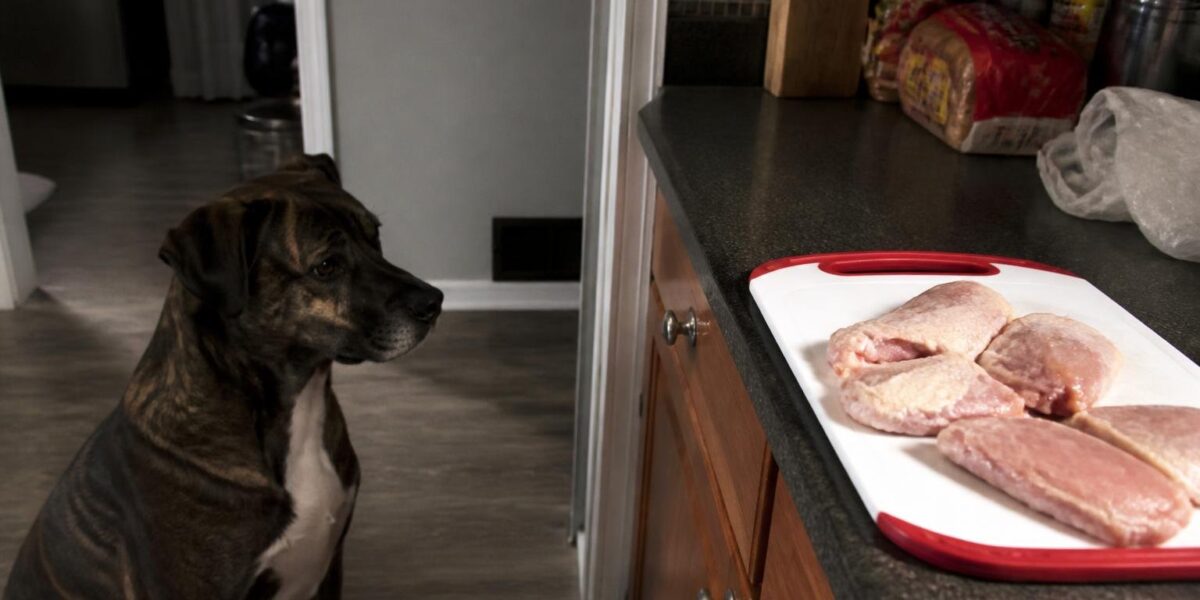
Can Dogs Eat Raw Chicken? The Short Answer
Whether dogs can eat raw chicken is genuinely debated, and the honest answer is: proceed with caution. Raw chicken carries a real risk of bacterial contamination — particularly Salmonella and Campylobacter — that can make both your dog and your household sick. Many veterinarians advise against feeding raw chicken for exactly this reason. Cooked, plain, boneless chicken is the safer, vet-preferred choice.
In this article
- Can Dogs Eat Raw Chicken? The Short Answer
- The Bacterial Risk Is Real
- The Raw-Diet Debate, Honestly
- Why Cooked Chicken Is the Safer Choice
- Safe Handling If You Do Feed Raw
- Who Should Never Eat Raw Chicken
- Symptoms of Illness to Watch For
- The Truth About a Dog’s Digestive System
- How to Transition From Raw to Cooked
- Frequently Asked Questions
Some owners feed raw diets and believe their dogs handle raw chicken well, and dogs do have shorter, more acidic digestive tracts than humans. But “tolerating” raw chicken is not the same as “no risk.” The bacteria can still shed in your dog’s stool and contaminate surfaces in your home.
This is a decision worth making with your veterinarian, especially for puppies, senior dogs, or dogs with weakened immune systems, where the risk is highest.
The Bacterial Risk Is Real
The central concern with raw chicken is foodborne bacteria. Raw poultry commonly carries:
- Salmonella — can cause vomiting, diarrhea, fever, and lethargy in dogs, and can infect humans too.
- Campylobacter — another common cause of digestive illness in dogs and people.
- Listeria and E. coli — additional pathogens sometimes present in raw meat.
Even if your dog seems fine, they can shed these bacteria in their stool and saliva, putting children, elderly family members, and immunocompromised people at risk. This public-health angle is one reason many vets and organizations discourage raw feeding. Cooked chicken sidesteps this risk entirely.
The Raw-Diet Debate, Honestly
Raw feeding has passionate supporters who argue it is closer to a dog’s ancestral diet and can produce shinier coats and firmer stools. There is some truth that dogs are well adapted to handle bacteria better than humans. However, the scientific consensus among most veterinary organizations leans against raw poultry because:
- The bacterial risk to both dogs and humans is well documented.
- Raw diets are often nutritionally unbalanced if not carefully formulated.
- The claimed benefits are largely anecdotal rather than proven.
If you are committed to raw feeding, work with your veterinarian or a veterinary nutritionist to do it as safely as possible. This is not a flat “yes” — it is a careful, informed choice.
Why Cooked Chicken Is the Safer Choice
Cooking chicken thoroughly kills Salmonella, Campylobacter, and other pathogens, removing the main hazard. Plain cooked chicken is gentle, highly digestible, and a common ingredient in bland diets vets recommend for upset stomachs. To prepare it safely:
- Cook chicken fully, with no pink remaining.
- Remove all bones — never feed chicken bones, which splinter and can cause injury.
- Keep it plain — no salt, oil, garlic, or onion.
- Cut into bite-sized pieces and serve cooled.
For a soothing meal, pair plain cooked chicken with plain rice.
This chicken-and-rice combination is a classic bland diet that vets often recommend for dogs recovering from a stomach upset. The chicken provides easily digestible protein while the rice offers gentle carbohydrates that are kind to an irritated gut. Cook both plainly, with no salt, butter, or seasoning, and serve in small, frequent portions while your dog recovers. Just remember that bland diets are meant to be temporary; once your dog is feeling better, transition them back to their complete, balanced food. If digestive symptoms last more than a day or two, or if they are severe, skip the home remedies and call your veterinarian for proper guidance.
Safe Handling If You Do Feed Raw
If, after talking with your veterinarian, you choose to feed raw chicken, careful handling becomes essential to protect both your dog and your household. The bacteria on raw poultry do not discriminate between dog bowls and kitchen counters.
Follow these precautions:
- Buy fresh, high-quality poultry and keep it refrigerated or frozen until use.
- Use separate cutting boards and utensils for raw meat, and wash them in hot, soapy water.
- Wash your hands thoroughly before and after handling raw chicken.
- Clean your dog’s bowl after every meal and pick up stool promptly.
- Keep raw food away from children, seniors, and anyone with a weakened immune system.
Even with perfect handling, the bacterial risk cannot be eliminated entirely, which is the heart of why so many vets recommend cooking. Bones are another reason for caution — never feed cooked chicken bones, and understand that even raw bones carry choking and dental risks.
Who Should Never Eat Raw Chicken
Some dogs and households face a much higher risk from raw chicken, and for them it should be off the table entirely. Skip raw chicken if your dog is:
- A young puppy with an immature immune system
- A senior dog or one with a chronic illness
- Immunocompromised or on medications that suppress immunity
- Living in a home with infants, elderly people, or immunocompromised family members
In all of these cases, the potential for serious illness in the dog or a household member is simply too high. The safe, vet-friendly alternative is always thoroughly cooked, plain chicken. It delivers the same lean protein your dog loves without the bacterial gamble, and it can be served alongside gentle staples like plain pumpkin for an easy-to-digest meal.
Symptoms of Illness to Watch For
If your dog eats raw chicken — intentionally or by accident — watch for signs of bacterial infection over the next few days:
- Vomiting
- Diarrhea, sometimes with blood or mucus
- Fever
- Lethargy or weakness
- Loss of appetite
Mild cases may resolve, but contact your veterinarian if symptoms are severe, persistent, or appear in a puppy, senior, or immunocompromised dog. Always wash your hands, bowls, and surfaces thoroughly after handling raw chicken to protect your family.
The Truth About a Dog’s Digestive System
Raw-feeding advocates often argue that dogs evolved to eat raw meat and so can handle raw chicken without issue. There is a grain of truth here, but the full picture is more nuanced.
Dogs do have shorter digestive tracts and more acidic stomachs than humans, which helps them cope with some bacteria better than we do. However, “coping better” is not the same as “immune.” Dogs still get sick from Salmonella and Campylobacter, and puppies, seniors, and immunocompromised dogs are especially vulnerable.
Just as important, even a dog who tolerates raw chicken can shed dangerous bacteria in their saliva and stool, putting people in the home at risk. Modern dogs also differ from wild ancestors in health, lifestyle, and the bacterial loads in commercially processed meat. This is why most veterinarians weigh the real-world risks heavily rather than relying on evolutionary arguments alone.
How to Transition From Raw to Cooked
If you have been feeding raw chicken and want to switch to the safer cooked version, the good news is that most dogs make the change happily. Cooked chicken is highly palatable, so the transition is usually smooth.
Go gradually over several days to avoid stomach upset. Start by mixing a little cooked chicken in with your dog’s current food, then increase the cooked portion while decreasing the raw over about a week. This slow shift gives your dog’s digestion time to adjust.
Serve the cooked chicken plain, boneless, and unseasoned, and pair it with a gentle carbohydrate like plain rice if you want a complete-feeling meal. If you are moving away from a full raw diet, talk with your veterinarian about ensuring the new diet stays balanced, since simply swapping raw meat for cooked meat does not address overall nutrition.
Frequently Asked Questions
Is raw chicken safe for dogs?
Not entirely. Raw chicken can carry Salmonella and Campylobacter, posing a risk to both dogs and humans. Many vets advise against it and recommend cooked chicken instead.
My dog ate raw chicken — what should I do?
Monitor for vomiting, diarrhea, fever, and lethargy over the next few days, and wash anything that touched the raw meat. Call your vet if symptoms appear or your dog is high-risk.
Do dogs handle raw meat better than humans?
Dogs have more acidic stomachs and can tolerate some bacteria better, but they can still get sick and shed bacteria that infect people. It is not risk-free.
Is cooked chicken better than raw?
Yes. Cooking kills harmful bacteria, making plain, boneless cooked chicken the safer and vet-preferred choice. It is also gentle, highly digestible, and a common ingredient in the bland diets vets recommend for dogs with upset stomachs.
Can puppies eat raw chicken?
It is best to avoid it. Puppies have immature immune systems and are more vulnerable to the bacteria in raw poultry. Cooked, plain, boneless chicken is the much safer choice, and a complete puppy food should make up the bulk of their diet.
What is the safest way to feed chicken to my dog?
Cook it thoroughly with no pink remaining, remove all bones, keep it plain with no salt, oil, garlic, or onion, and cut it into bite-sized pieces. Served this way, chicken is a lean, healthy protein that most dogs love and tolerate well.


