
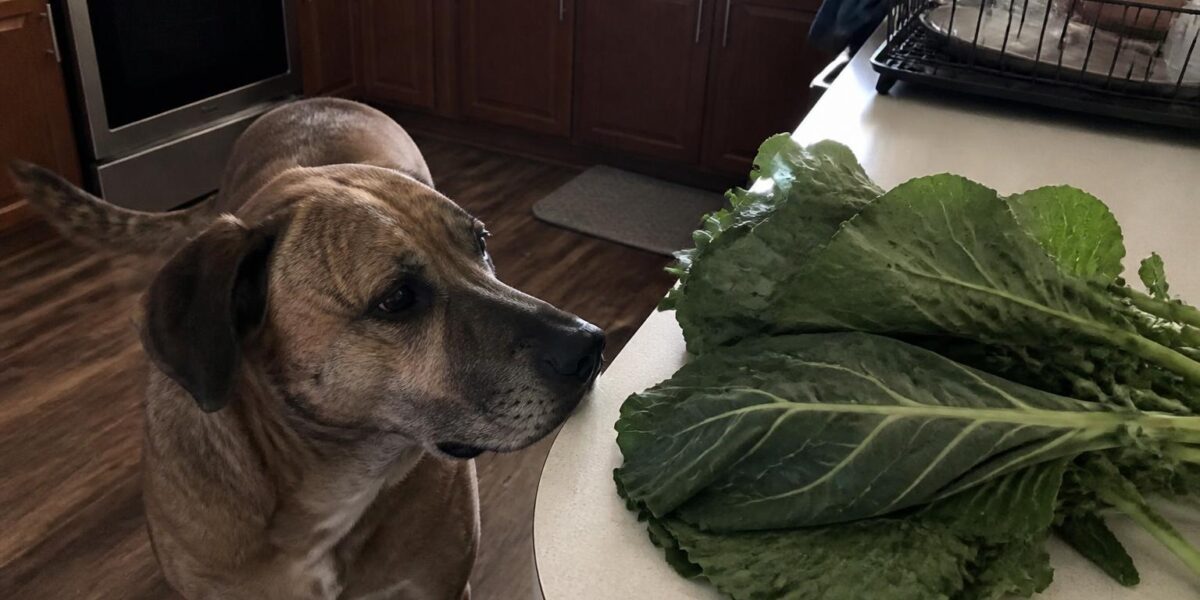
Can Dogs Eat Collard Greens? The Short Answer
Can dogs eat collard greens? Yes. Plain, cooked collard greens are safe for dogs in moderation and offer a healthy dose of vitamins, fiber, and antioxidants. These leafy greens make a nutritious occasional addition to your dog’s bowl when prepared simply.
In this article
The keys are to serve them plain and cooked, without the salt, butter, garlic, or onion that often accompany them on our own plates. Fed thoughtfully, collard greens can be a wholesome, low-calorie treat for your dog.
Leafy greens like collards are sometimes overlooked as dog food, but they fit nicely into the small produce portion that can complement a balanced diet. As long as you keep them an extra rather than a main course, they are an easy way to add a little variety and nutrition to mealtime.
The Nutritional Benefits of Collard Greens
Collard greens are a nutritional powerhouse for both people and pets. In sensible amounts, they bring several benefits to your dog’s diet.
- Vitamins A, C, and K for immune support, vision, and healthy blood clotting.
- Fiber to support healthy digestion and regularity.
- Calcium and other minerals for bone health.
- Antioxidants that help combat cell damage.
Because they are low in calories, collard greens can be a guilt-free way to add bulk and nutrients to the diet of a dog watching its weight, when used as a small supplement rather than a meal. The fiber also helps your dog feel satisfied, which can be handy if you are trimming treats to manage weight.
The vitamin K in collards supports normal blood clotting, while the vitamin A contributes to healthy eyes and skin. None of these benefits mean your dog needs collard greens, since a complete dog food already covers their needs, but they are a pleasant bonus when offered in moderation.
How to Prepare Collard Greens Safely
Raw collard greens are tough and hard for dogs to digest, so cooking is the way to go. Cooking softens the leaves and makes the nutrients easier to absorb.
To prepare them safely:
- Wash the leaves thoroughly to remove dirt and any residue.
- Remove the tough central stems, which are hard to chew and digest.
- Steam, boil, or lightly cook the leaves with no oil, salt, or seasoning.
- Let them cool, then chop into small, bite-sized pieces to prevent choking.
Never add garlic, onion, or onion powder, all of which are toxic to dogs, and skip the butter and salt that often go into Southern-style greens. The traditional ham hocks, bacon grease, and seasonings that make collards delicious for people are exactly what make them unsafe for dogs.
Steaming is often the gentlest method, since it preserves more nutrients than boiling and uses no added fat. Once the greens are soft and cooled, a quick chop ensures your dog can swallow them easily without gulping down stringy pieces.
Safe Serving Size
Like all treats and extras, collard greens should make up no more than about 10 percent of your dog’s daily calories. A spoonful or two of chopped cooked greens mixed into food is plenty for most dogs, with smaller portions for little breeds.
Introduce them gradually. Start with a small amount the first time so you can see how your dog’s stomach handles the extra fiber before making greens a regular addition. If all goes well, you can offer them a couple of times a week as part of a varied treat rotation.
Resist the urge to pile greens into the bowl just because they are healthy. More is not better here, since too much fiber at once can backfire and cause loose stools. A modest, consistent amount is far kinder to your dog’s digestion.
Possible Downsides and Symptoms to Watch For
Collard greens are part of the cruciferous vegetable family, which can cause gas and bloating if eaten in large amounts. Too much can also lead to mild digestive upset such as loose stools.
Collards do contain compounds called oxalates, which in very large quantities could be a concern for dogs prone to certain types of bladder or kidney stones. For most healthy dogs, the small amounts used as a treat are not a problem. If your dog has a history of urinary issues, check with your veterinarian before adding leafy greens, and watch for vomiting, diarrhea, or excessive gas as signs to cut back.
Dogs with thyroid conditions are another group to be mindful of, since cruciferous vegetables contain goitrogens that can interfere with thyroid function in very large amounts. The occasional spoonful is not a concern for a healthy dog, but if your dog has a medical condition, your vet is the best person to advise on safe vegetable portions.
The good news is that the amounts of these compounds in a small treat-sized serving are far below anything that would trouble a healthy dog. The cautions here matter mainly for dogs that already have a relevant condition, or for owners tempted to feed greens in large daily quantities. Stick to a modest spoonful a couple of times a week and collards remain a safe, wholesome extra.
Fun Ways to Serve Collard Greens
Once you know your dog tolerates collard greens, there are a few simple ways to work them into the routine without much effort. The easiest is to stir a spoonful of plain chopped cooked greens into their regular food, where the meat or kibble flavors help them go down easily.
You can also batch-cook a small amount of plain steamed collards, then portion and refrigerate them for a few days of easy toppers. A little cooked greens mixed with some plain cooked rice or a spoon of plain pumpkin makes a gentle, fiber-rich addition for a dog with a settled stomach.
For dogs who are unsure about the texture, finely chopping or even lightly mashing the cooked leaves can make them more appealing. Always keep the portion small and the preparation plain, and remember that greens are an extra rather than a meal. If your dog simply turns up their nose, there is no need to push it, since plenty of other vegetables can fill the same role.
Other Healthy Vegetables for Dogs
If your dog enjoys greens, there are plenty of other vegetables to rotate in. Our guides to kale and spinach cover other leafy options, while broccoli and green beans round out a healthy veggie rotation. Variety keeps things interesting and balanced.
As always, introduce any new vegetable slowly and plainly. If your dog has a sensitive stomach or an existing health condition, your veterinarian can help you decide which vegetables are the best fit. Adding a little fresh produce is a lovely way to enrich the diet of a rescue dog thriving in your care.
Rotating among several dog-safe vegetables is better than relying on any single one, since it spreads out the small concerns that come with each. Leafy greens like collards and kale bring vitamins and fiber, while crunchy vegetables offer a satisfying texture and low-calorie volume. A varied mix keeps things interesting for your dog and easy for you.
Above all, keep portions modest and preparation plain. Vegetables are a wholesome supplement, not a meal, and the goal is to complement a complete diet rather than replace part of it. With that balance in mind, a spoonful of cooked collard greens is a simple, nourishing way to share something good with your dog.
Frequently Asked Questions
Can dogs eat raw collard greens?
It is best to cook them. Raw collard greens are tough and hard to digest, so steaming or boiling them plain makes them safer and easier on your dog’s stomach.
How much collard greens can a dog eat?
A spoonful or two of chopped cooked greens for most dogs, less for small breeds, keeps them within the safe 10 percent treat allowance and avoids gas or upset.
Are collard greens good for dogs?
Yes, in moderation. They provide vitamins A, C, and K, fiber, and antioxidants, making them a nutritious low-calorie supplement when served plain and cooked.
Can collard greens cause gas in dogs?
They can if your dog eats too much, since they are cruciferous vegetables. Start with a small amount and increase slowly to avoid bloating and digestive upset.
Can dogs with kidney issues eat collard greens?
Because collards contain oxalates, dogs prone to certain bladder or kidney stones should avoid them. Check with your veterinarian before offering leafy greens to a dog with urinary problems.


