
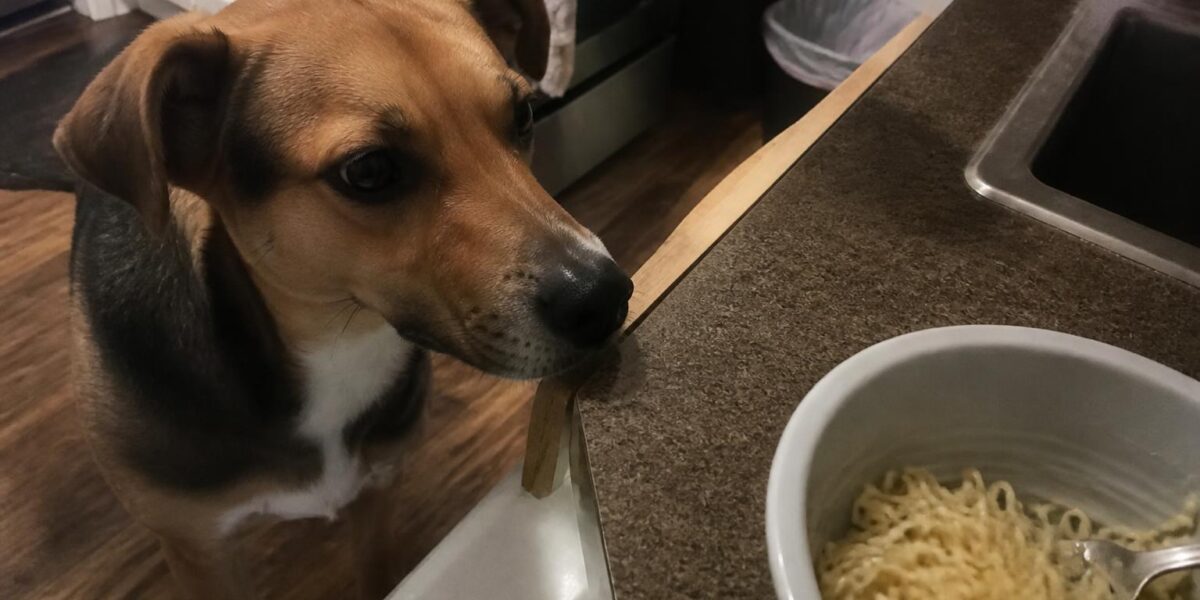
The Short Answer on Noodles for Dogs
Can dogs eat noodles? Yes, plain cooked noodles are safe for dogs in moderation. Plain pasta noodles made from flour and water are not toxic, and a small portion as an occasional treat or a bland-diet ingredient is fine for most healthy dogs.
In this article
The real danger with noodles is almost never the noodle itself. It is what goes on top. Sauces, seasonings, garlic, onions, salt, and rich oils are where the trouble lies, and those can range from unhealthy to genuinely toxic. Always serve noodles plain.
Noodles are also pure carbohydrate with little nutritional value for dogs, so they should be an occasional extra, not a regular part of the diet. Keep portions small, especially for dogs watching their weight.
The word “noodles” covers a lot of ground, from Italian pasta to Asian rice and wheat noodles to packaged instant cups. As a general rule, the plainer and simpler the noodle, the safer it is for your dog. A plain cooked egg noodle or piece of spaghetti is a world apart from a seasoned instant noodle cup, even though both are technically noodles. Keeping that distinction in mind makes it easy to share safely.
Are Noodles Good for Dogs?
Plain noodles provide carbohydrates that offer quick energy, and some whole-grain or vegetable-based noodles add a small amount of fiber. Plain pasta is also gentle and easy to digest, which is why vets sometimes recommend it as part of a bland diet for dogs recovering from an upset stomach.
Beyond that, noodles do not bring much to the table for dogs. They are low in the protein and nutrients dogs need and can be high in calories. So while a little plain pasta is harmless, it is not something your dog needs for health.
Whole-wheat noodles are marginally better than white because of the extra fiber, but the difference is small. The bottom line is that noodles are a filler treat, fine in moderation but never a dietary staple.
There is also the matter of portion creep to keep in mind. Because plain noodles are bland and easy to eat, it is tempting to scoop out a generous helping, especially for a big dog with an enthusiastic appetite. But noodles are surprisingly calorie-dense for how light they feel, and a large bowl can quietly add up to a meaningful chunk of your dog’s daily calories. Keeping the portion to a small topper, rather than treating noodles as a side dish, helps prevent unwanted weight gain over time.
The Risks to Watch For
The hazards of noodles come mostly from how they are typically prepared and served.
Garlic and onion. Many pasta dishes are made with garlic and onion, both of which are toxic to dogs and can damage red blood cells. Sauces, broths, and seasoned noodles often hide these ingredients.
Rich sauces. Creamy, cheesy, buttery, or oily sauces add fat that can cause stomach upset or trigger pancreatitis. Tomato sauces are usually loaded with salt and seasonings too.
Salt and seasonings. Instant ramen and flavored noodle packets are extremely high in sodium and additives, making them a poor choice for dogs.
Weight gain. Noodles are calorie-dense carbs, so large or frequent portions can contribute to obesity.
Wheat sensitivity. A small number of dogs are sensitive to wheat and may have digestive trouble after eating pasta.
How to Serve Noodles Safely
Serving noodles to your dog is easy when you keep it simple. Follow these steps.
- Cook the noodles in plain water with no salt, oil, or seasoning.
- Let them cool completely.
- Skip all sauces, butter, cheese, garlic, and onion.
- Cut long noodles into shorter pieces to prevent gulping, especially for small dogs.
- Offer a small portion as a topper or treat.
For serving size, a tablespoon or two for a small dog and up to a small handful for a large dog is plenty. Noodles and all treats together should stay within about 10 percent of your dog’s daily calories.
If you are using plain noodles as part of a vet-recommended bland diet, follow your veterinarian’s instructions on amounts and pairing, usually with plain boiled chicken or another lean protein. Never give your dog seasoned instant noodles or leftover saucy pasta.
A handy tip for serving is to undercook the noodles slightly less than you would for yourself, since very soft, mushy pasta can be gulped without chewing. Slightly firmer, well-cooled pieces cut into bite-sized lengths are easier for your dog to manage. And if you are cooking a batch specifically to share, set aside the plain portion before you add any salt, oil, or sauce to the pot. It is far easier to keep a portion truly plain from the start than to try to rinse seasonings off later.
Noodles and Other Grains for Dogs
Noodles are one of several grain and starch foods dog owners ask about, and plain versions of most are safe in moderation. If your dog enjoys a starchy treat, you have several options to rotate.
For related foods, see our guides on whether dogs can eat pasta in general, plus rice and bread. Plain rice in particular is a common bland-diet staple for upset tummies.
As with any new food, introduce noodles slowly and watch for any digestive upset. Grains and starches should never crowd out the protein-rich, balanced diet your dog truly needs. When in doubt, your veterinarian can guide you on how these foods fit your dog’s plan.
When to Contact Your Vet
If your dog eats a small amount of plain cooked noodles and seems fine, there is no cause for concern. A little extra gas or a soft stool after a larger portion usually passes on its own with fresh water available.
Call your veterinarian if your dog ate noodles in a sauce containing garlic or onion, especially a large amount, and watch for vomiting, weakness, pale gums, or dark urine, which can signal damage to red blood cells. Rich, fatty pasta dishes that lead to repeated vomiting, diarrhea, or belly pain also warrant a call, as they can point to pancreatitis.
For ongoing diet questions or if your dog has a suspected wheat sensitivity, your vet can help you decide whether noodles belong in your dog’s treat rotation.
Different Types of Noodles and How They Compare
Because noodles come in so many forms, it is worth knowing how the common types stack up for dogs. Plain wheat pasta, like spaghetti, macaroni, or egg noodles, is the most familiar and is fine in small cooked, unseasoned amounts. Whole-wheat versions add a touch more fiber but are otherwise similar.
Rice noodles, common in many Asian dishes, are naturally wheat-free and gluten-free, which can make them a better choice for a dog with a wheat sensitivity. As with all noodles, they must be served plain, since the dishes they usually appear in are loaded with sauces, salt, and aromatics like garlic and onion.
Instant noodles and ramen cups are the type to avoid entirely. The noodle block itself is often fried and high in fat, and the seasoning packets are extremely salty and frequently contain onion and garlic powder. Even rinsing the noodles does not make these a good choice, so it is best to skip them altogether rather than try to salvage a portion.
Finally, there are vegetable-based and bean-based noodles that have become popular. These are not toxic, but they can be higher in fiber and may cause more gas in some dogs. Whatever the type, the same principles always apply: cook it plain, serve a small amount, skip the sauce, and watch how your individual dog responds.
Frequently Asked Questions
Can dogs eat spaghetti?
Plain cooked spaghetti noodles are fine in small amounts, but skip the sauce. Most spaghetti sauces contain garlic, onion, salt, and fat that are unhealthy or toxic for dogs.
Can dogs eat ramen noodles?
Avoid instant ramen. The seasoning packets are extremely high in sodium and often contain garlic and onion, making the dish unsafe even though the plain noodle itself is not toxic.
Are noodles good for a dog’s upset stomach?
Plain boiled pasta can be part of a bland diet, though plain rice is more commonly recommended. Follow your veterinarian’s guidance on amounts and which protein to pair with it.
How many noodles can I give my dog?
A tablespoon or two for a small dog and a small handful for a large dog is plenty. Keep noodles and all treats within about 10 percent of your dog’s daily calories.


