
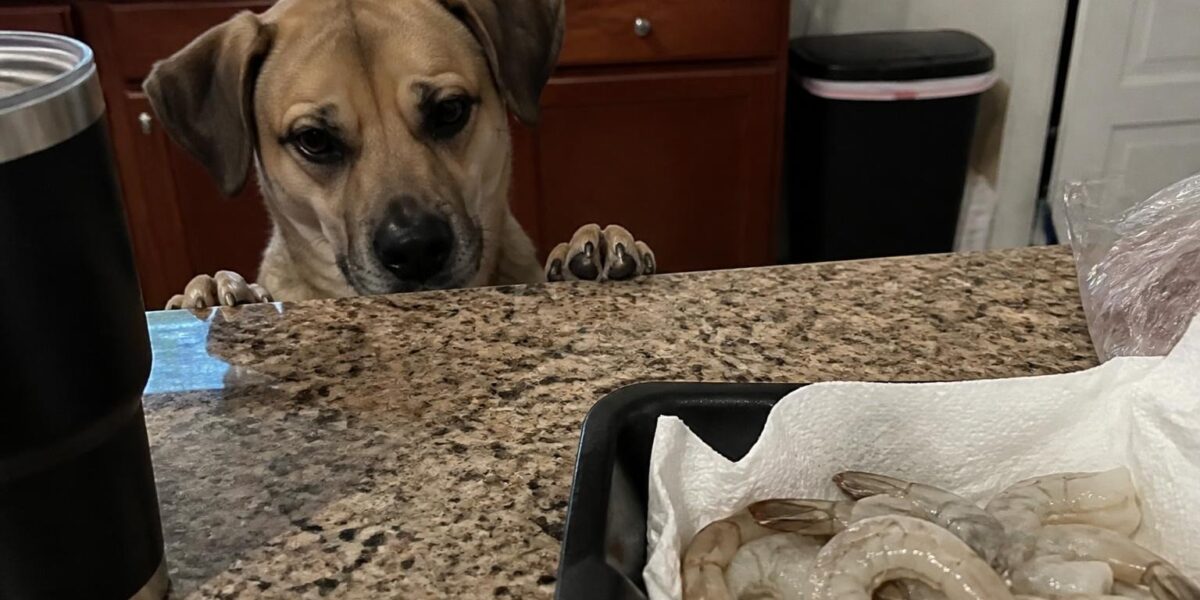
Can Dogs Eat Raw Shrimp? The Short Answer
No, dogs should not eat raw shrimp. Raw shrimp can carry harmful bacteria and parasites, and the shells, tails, and veins pose choking and digestive hazards. The safe way to share shrimp with your dog is cooked, peeled, and deveined. In that form, shrimp is a healthy, protein-rich treat — but raw is a clear “avoid.”
In this article
Cooking shrimp kills the bacteria and parasites that make raw shrimp risky, such as those that cause foodborne illness. Removing the shell and vein eliminates the physical hazards. So the message is simple: skip raw, serve cooked.
If your dog has a seafood sensitivity or any health condition, check with your veterinarian before offering shrimp in any form.
Why Raw Shrimp Is Risky
Raw shrimp poses several distinct dangers for dogs:
- Bacteria. Raw shellfish can carry Salmonella, Vibrio, and Listeria, which can cause vomiting, diarrhea, and more serious illness.
- Parasites. Raw seafood may harbor parasites that cooking would otherwise destroy.
- Shells and tails. Sharp, hard shells can cause choking or injure the mouth, throat, or digestive tract.
- The vein (digestive tract). The dark vein can carry grit and bacteria and should always be removed.
Because of these hazards, raw shrimp is never worth the risk. Like raw poultry such as raw chicken, the bacterial concern alone makes cooking the safer path.
Cooked Shrimp: The Safe Way to Serve It
Cooked shrimp, properly prepared, is a nutritious treat. It is low in fat and calories and provides protein, vitamin B12, and antioxidants. To serve it safely:
- Cook it fully by steaming, boiling, or grilling until opaque.
- Remove the shell, tail, legs, and vein completely.
- Keep it plain — no salt, butter, oil, garlic, or seasoning. Garlic and onion are toxic to dogs.
- Cut into bite-sized pieces for small dogs to prevent choking.
For more on this seafood in general, see our guide to shrimp for dogs. Other dog-safe seafood options include cooked salmon and sardines, which are rich in omega-3s.
Safe Serving Size
Shrimp should be an occasional treat, not a meal:
- Small dogs — half a small cooked shrimp.
- Medium dogs — one cooked shrimp.
- Large dogs — one or two cooked shrimp.
Treats, including shrimp, should make up no more than about 10 percent of your dog’s daily calories. Introduce shrimp slowly the first time, offering just a small piece and watching for any reaction over the next day.
It is worth remembering that shrimp, for all its appeal, is not a necessary part of your dog’s diet. A complete, balanced dog food already supplies the protein and nutrients your dog needs, so think of cooked shrimp as a fun extra rather than a dietary essential. If your dog turns up their nose at it, there is no need to insist. And if your dog loves it, simply keep portions small and occasional. For households that enjoy seafood regularly, setting aside a couple of plain, shell-free pieces before you season your own dish is the easiest way to share safely without any guesswork about ingredients.
The Nutritional Upside of Cooked Shrimp
While raw shrimp is off-limits, properly cooked shrimp is genuinely good for dogs in small amounts. It is one of the leaner seafood options, which makes it a smart treat for dogs watching their weight.
Cooked shrimp provides:
- Lean protein — supports muscle maintenance without much fat.
- Vitamin B12 — important for a healthy nervous system and energy metabolism.
- Antioxidants — including astaxanthin, which gives shrimp its pinkish color.
- Phosphorus and selenium — support bones and overall health.
Because shrimp is low in calories, it can be a satisfying treat that does not pack on the pounds, as long as you stick to small portions. It rounds out a varied seafood rotation that might also include cooked cod or a small piece of crab, all served plain and shell-free.
Shrimp Allergies in Dogs
Although shellfish allergies are less common in dogs than chicken or beef allergies, they do happen. Because shrimp is a protein your dog may not encounter often, it is worth introducing slowly and watching closely the first few times.
Signs of a shrimp or shellfish allergy can include:
- Itchy skin, redness, or hives
- Swelling of the face, muzzle, or ears
- Vomiting or diarrhea
- In severe cases, difficulty breathing
If you notice any of these signs, stop feeding shrimp and contact your veterinarian. Severe reactions, though rare, can escalate quickly and warrant emergency care. For dogs that tolerate it well, though, cooked shrimp remains a tasty, lean treat. When in doubt about introducing any new seafood, your vet is the best resource.
Symptoms to Watch For
If your dog eats raw shrimp, or reacts poorly to cooked shrimp, watch for:
- Vomiting or diarrhea
- Lethargy or weakness
- Loss of appetite
- Signs of an allergic reaction — itching, swelling, hives, or trouble breathing
- Signs of choking or an obstruction — gagging, drooling, or distress (from shells)
If your dog swallows shrimp shells or shows signs of an allergic reaction or obstruction, contact your veterinarian or an emergency clinic right away. For bacterial symptoms after eating raw shrimp, monitor closely and call your vet if they worsen.
To sum up, the message on shrimp is straightforward: raw is a no, cooked is a yes in moderation. Raw shrimp carries bacteria, parasites, and the physical hazards of shells and veins, none of which are worth the risk. Cooked, peeled, deveined, plain shrimp, on the other hand, is a lean and tasty treat that most dogs handle beautifully. Prepare it simply, keep portions small, and introduce it gradually the first time. With those precautions in place, shrimp can be a fun occasional addition to your dog’s treat rotation, and your veterinarian can help you decide whether it suits your particular dog’s diet and health.
How to Cook Shrimp for Your Dog
Turning shrimp into a safe treat is simple once you know the steps. The goal is fully cooked, plain shrimp with every hard or stringy part removed.
Follow this process:
- Start with fresh or properly thawed shrimp from a reliable source.
- Remove the shell, head, tail, and legs completely.
- Devein the shrimp by removing the dark line along the back.
- Cook it plainly by steaming, boiling, or grilling until it turns opaque and pink.
- Skip all seasoning — no salt, butter, oil, garlic, or onion.
- Cool and cut into small, bite-sized pieces before serving.
Never serve shrimp that has been cooked in a sauce or with garlic and onion, both of which are toxic to dogs. Plain is always best. Prepared this way, shrimp becomes a lean, protein-rich treat your dog can enjoy safely in small amounts.
Common Shrimp Feeding Mistakes
Even well-meaning owners can slip up with shrimp. Knowing the common mistakes helps you avoid them and keep your dog safe.
- Feeding raw shrimp — the biggest mistake, due to bacteria and parasite risk.
- Leaving on shells or tails — these are sharp and can cause choking or internal injury.
- Adding seasoning — garlic, onion, and heavy salt are harmful or toxic.
- Serving too much — even cooked shrimp should be a small, occasional treat.
- Skipping the slow introduction — shellfish allergies, though uncommon, do occur.
Avoiding these pitfalls keeps shrimp in the “healthy treat” column rather than the “vet emergency” one. As with any new food, introduce shrimp gradually, watch your dog’s response, and check with your veterinarian if your dog has existing health conditions or a history of food sensitivities.
Frequently Asked Questions
Can dogs eat raw shrimp safely?
No. Raw shrimp can carry bacteria and parasites, and the shells pose a choking hazard. Always cook, peel, and devein shrimp before offering it to your dog.
What if my dog ate raw shrimp?
Watch for vomiting, diarrhea, or lethargy over the next day or two, and check that no shells were swallowed. Call your vet if symptoms develop or your dog seems distressed.
Can dogs eat shrimp shells?
No. Shrimp shells, tails, and legs are hard and sharp and can cause choking or injure the digestive tract. Always remove them.
How should shrimp be prepared for dogs?
Cook it fully, then peel, devein, and serve it plain with no salt, oil, garlic, or seasoning. Cut into small pieces for little dogs. Steaming, boiling, or grilling without added fat are the best cooking methods.
How much shrimp can a dog eat?
Shrimp is a treat, not a meal. Half a shrimp for small dogs and one or two for large dogs is plenty. Keep all treats, including shrimp, within about 10 percent of your dog’s daily calories, and introduce it slowly the first time.
Can puppies eat shrimp?
Small amounts of fully cooked, peeled, deveined shrimp can be fine for puppies, but their main diet should be a complete puppy food. Introduce it cautiously in tiny amounts and check with your veterinarian, since shellfish is a less common protein.


