
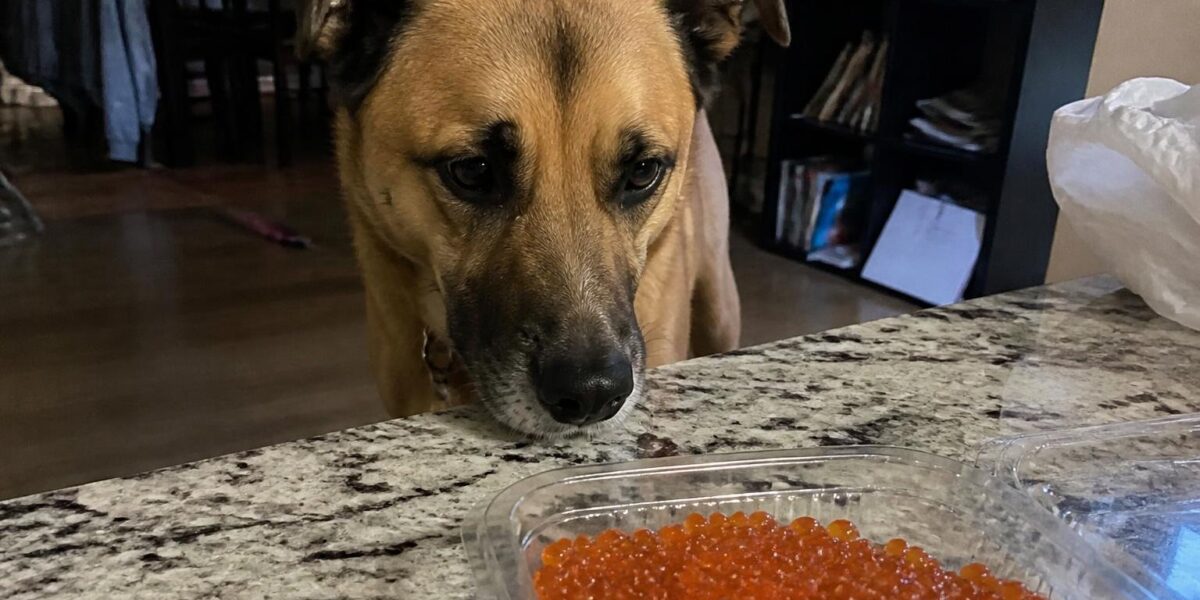
Can Dogs Eat Salmon Roe? The Short Answer
Yes, dogs can eat salmon roe in small amounts. Salmon roe — the orange fish eggs also known as ikura or salmon caviar — is rich in omega-3 fatty acids and protein, making it a nutritious occasional treat. The two main cautions are salt and source quality: many commercial roes are heavily salted or cured, and raw roe from an unsafe source can carry parasites. Choose carefully and keep portions tiny.
In this article
Because salmon roe is salty and calorie-dense, it should be a rare, small treat rather than a regular food. A few eggs are plenty for most dogs.
If your dog has a heart condition, kidney disease, or is on a low-sodium diet, avoid salmon roe and talk to your veterinarian about safer omega-3 sources.
Is Salmon Roe Good for Dogs?
In small amounts, salmon roe packs a nutritional punch. It contains some of the same valuable nutrients as salmon itself:
- Omega-3 fatty acids (EPA and DHA) — support skin, coat, joints, heart, and brain health.
- High-quality protein — supports muscle and overall vitality.
- Vitamin B12 and vitamin D — important for energy and bone health.
- Antioxidants — including the pigment that gives roe its orange color.
That said, you can get the same omega-3 benefits more cheaply and with less salt from cooked fish like salmon, mackerel, or sardines. Think of roe as a treat rather than a primary nutrient source.
The Salt and Source Concerns
Two issues make salmon roe a “small amounts only” food:
- Salt. Most store-bought and sushi-grade roe is cured in salt or brine. Too much sodium can cause increased thirst, vomiting, and in large amounts, salt poisoning.
- Source quality. Raw roe from an unreliable source may carry parasites or bacteria. Choose roe that is sushi-grade, properly processed, or lightly cooked, and from a trusted supplier.
If you can find unsalted or very lightly salted roe, that is the better option. Rinse salted roe gently to reduce the surface sodium before offering a tiny amount.
Safe Serving Size
Salmon roe should be a small, occasional indulgence:
- Small dogs — just a few eggs.
- Medium dogs — a small pinch (about a quarter teaspoon).
- Large dogs — up to half a teaspoon.
Offer it rarely, not daily. Treats, including roe, should stay within about 10 percent of daily calories. Start with a tiny taste and watch how your dog’s stomach responds, since the richness can cause loose stools.
Given how salty and calorie-dense salmon roe is, the most sensible approach for most owners is to reserve it for genuinely special moments rather than working it into any regular routine. If you are sharing sushi and want to give your dog a taste, a few unsalted eggs are plenty. There is never a need to offer a spoonful or more, and doing so risks tipping your dog into too much sodium for the day. When you weigh the small nutritional benefit against the salt and cost, plain cooked fish almost always comes out ahead as the practical everyday choice for omega-3 support.
Cured vs. Fresh Salmon Roe
Salmon roe reaches the store in a couple of forms, and the difference matters for your dog. Most of what you find at sushi counters and gourmet shops is cured roe, while fresh, uncured roe is harder to come by.
Cured roe is preserved in salt or brine, which gives it that glossy, popping texture and intense flavor. Unfortunately, that curing process is exactly what loads it with sodium. Fresh, uncured roe has far less salt but must be very fresh and from a trustworthy source to be safe.
If you can find lightly salted or fresh roe, that is the better pick for your dog. Either way, a tiny portion is all your dog should ever have. For routine omega-3s, you are far better off with plain cooked fish like tuna in small amounts, which is gentler on sodium than cured roe.
Is Salmon Roe Worth Feeding?
It is fair to ask whether salmon roe is worth the trouble at all. Nutritionally, it is impressive, but it is also expensive, salty, and easy to overdo. For most dogs, it is more of a novelty treat than a practical part of the diet.
If your dog happens to enjoy a tiny taste during a special occasion, there is no harm in the occasional few eggs, provided they are not heavily salted. But you should never feel that your dog is missing out by skipping roe entirely.
The same omega-3 benefits are available more affordably and with far less salt from cooked fish. Use those as your everyday omega-3 sources, and treat salmon roe as a rare indulgence. As always, your veterinarian can help you build a treat plan that fits your dog’s health and calorie needs.
Symptoms to Watch For
Because of the salt and richness, keep an eye out for these signs after your dog eats salmon roe:
- Excessive thirst or urination (a sign of too much salt)
- Vomiting or diarrhea
- Lethargy or loss of appetite
- Signs of an allergic reaction — itching, swelling, or hives (fish allergies do occur)
If your dog eats a large amount of salted roe, or shows signs of salt poisoning such as extreme thirst, weakness, or tremors, contact your veterinarian promptly. When in doubt, offer plain cooked fish instead for the same omega-3 benefits with far less salt.
How to Serve Salmon Roe Safely
If you decide to share a tiny bit of salmon roe, a few simple precautions keep it as safe as possible. The aim is a very small amount of low-salt, good-quality roe.
Follow these steps:
- Choose quality roe from a trusted source, ideally lightly salted or fresh.
- Rinse salted roe gently to reduce some of the surface sodium.
- Offer just a few eggs for a small dog, or a small pinch for a larger one.
- Serve it plain — never mixed with soy sauce, seasonings, or other salty toppings.
- Watch your dog afterward for any signs of stomach upset.
Because roe is so salty and rich, it should only ever be a rare treat. Make sure fresh water is available afterward to help your dog process the sodium. If your dog has any heart, kidney, or weight concerns, skip roe entirely and ask your veterinarian about gentler omega-3 options.
Better Everyday Sources of Omega-3s
Salmon roe is nutritious, but it is not a practical everyday food because of its salt and cost. For consistent omega-3 benefits, there are far better choices that are gentler on your dog’s system.
Plain cooked, boneless fish delivers the same beneficial EPA and DHA with much less salt. You can rotate options through the week to give your dog variety and keep mercury exposure low. Smaller fish in particular tend to be lower in mercury and easy to portion.
Beyond fresh fish, your veterinarian can recommend a measured fish-oil supplement formulated for dogs, which provides a reliable, consistent omega-3 dose. This is often the best approach for dogs that need omega-3s for skin, coat, or joint support. Treat salmon roe, by contrast, as the rare special-occasion indulgence it is.
Frequently Asked Questions
Is salmon roe safe for dogs?
Yes, in small amounts. The main concerns are the salt content and the source quality, so choose lightly salted or unsalted roe from a trusted supplier and keep portions tiny.
Can dogs eat raw salmon roe?
Only if it is from a safe, sushi-grade source. Raw roe from an unreliable source may carry parasites or bacteria, so quality matters. When unsure, choose cooked fish instead.
Why is salmon roe so salty?
Most commercial roe is cured in salt or brine for preservation and flavor. That salt is the main reason roe should only be given in small amounts to dogs.
How often can dogs have salmon roe?
Rarely — it is best as an occasional treat because of its high salt content. For regular omega-3s, plain cooked salmon or sardines are healthier, lower-salt choices that you can offer more often.
Can puppies eat salmon roe?
It is best to avoid it. Salmon roe is salty and rich, which is a poor fit for a puppy’s sensitive digestive system. Puppies should get their nutrition from a complete puppy food, and any fish treats should be plain, cooked, and offered only on veterinary advice.
Is salmon roe safe for dogs with kidney or heart problems?
No, it is best avoided for these dogs. The high sodium in cured salmon roe can be harmful to dogs with kidney disease, heart conditions, or those on low-sodium diets. Talk to your veterinarian about safer, low-salt omega-3 options instead.


