
Cat Travel Carrier Guide: How to Choose the Right Carrier and Travel Stress-Free with Your Cat
Whether you are heading to the veterinarian, moving to a new home, or embarking on a road trip, a reliable cat travel carrier is essential. The right carrier keeps your cat safe, reduces travel anxiety, and makes the entire experience less stressful for both of you. The wrong carrier, on the other hand, can turn even a short car ride into a miserable ordeal.
In this article
With dozens of carrier styles, sizes, and materials on the market, choosing the right one can feel overwhelming. This guide walks you through everything you need to know about selecting a cat travel carrier, from sizing and material considerations to airline compliance and comfort features. We also cover how to introduce your cat to its carrier so travel day goes as smoothly as possible.
Types of Cat Travel Carriers
Cat carriers come in several basic styles, each with distinct advantages and drawbacks depending on your travel needs.
Hard-sided carriers are the most traditional option and remain the top choice for many veterinarians and breeders. Made from rigid plastic with a metal wire door, these carriers provide excellent protection and structural integrity. They cannot be crushed if something falls on them or if they are placed under a seat. Hard-sided carriers are easy to clean, which is a significant advantage if your cat has an accident during travel. Most hard-sided carriers have a top-loading option in addition to the front door, which makes it much easier to place a reluctant cat inside. The main drawback is their bulk and weight, which can make them cumbersome to carry on longer trips.
Soft-sided carriers are made from fabric stretched over a lightweight frame. They are significantly lighter than hard-sided carriers and often feature padded shoulder straps for comfortable carrying. Many soft-sided carriers meet airline under-seat requirements because they can compress slightly to fit in tight spaces. They are generally more comfortable for cats due to the padded interior and softer walls. However, they offer less structural protection, can be difficult to clean if soiled, and may not withstand determined scratching or chewing from an anxious cat.
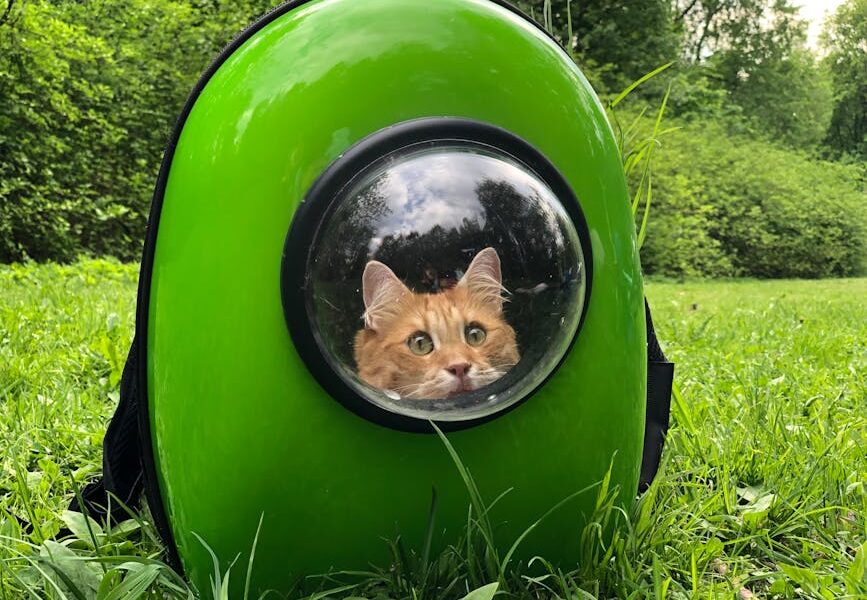
Backpack carriers have surged in popularity in recent years. These carriers allow you to wear your cat on your back, keeping your hands free while traveling. Many feature a clear bubble window or mesh panels that allow the cat to see out. Backpack carriers are excellent for public transit, hiking, and situations where you need both hands available. However, they are typically smaller than standard carriers and may not be suitable for larger cats or long journeys.
Rolling carriers feature wheels and a retractable handle, functioning like a small piece of luggage. These are ideal for airports and other situations where you need to cover long distances on foot. Many rolling carriers also have a shoulder strap for times when rolling is not practical, such as on stairs or escalators. The added weight of the wheel mechanism is offset by the convenience of not having to carry the full weight of the carrier and cat.
Expandable carriers offer the best of both worlds for longer trips. These carriers have zippered panels that unfold to create additional space once you reach your destination. Your cat travels in a standard-sized carrier but gains extra room to stretch and move when the expansion panels are opened. These are particularly useful for hotel stays and overnight trips.
How to Size a Cat Carrier Correctly
A properly sized carrier is crucial for your cat’s comfort and safety. A carrier that is too small will be cramped and stressful, while one that is too large can cause your cat to slide around during transport, increasing the risk of injury and anxiety.
The general rule is that your cat should be able to stand up without crouching, turn around completely, and lie down comfortably inside the carrier. To determine the right size, measure your cat from the tip of the nose to the base of the tail for length, and from the floor to the top of the head in a standing position for height. Add two to four inches to each measurement to get the minimum carrier dimensions.
For most average-sized domestic cats weighing between eight and twelve pounds, a carrier measuring approximately 19 inches long, 12 inches wide, and 12 inches tall will be appropriate. Larger breeds like Maine Coons and Ragdolls will need carriers in the 24-inch range or larger.
If you are purchasing a carrier for a kitten, size it for the cat’s expected adult dimensions rather than its current size. This saves you from having to buy a second carrier in a few months.
For airline travel, always check your specific airline’s carrier dimension requirements before purchasing. Most airlines require that soft-sided carriers fit under the seat in front of you, and maximum dimensions vary by airline and aircraft type. Common maximums are approximately 18 inches long, 11 inches wide, and 11 inches tall, but this varies significantly.
Essential Features to Look For
Beyond size and style, several features can make a significant difference in how well a carrier serves you and your cat.
Top-loading access is arguably the most important feature to look for. Cats often resist being pushed headfirst through a front door, and the resulting struggle is stressful for everyone. A top-loading carrier allows you to gently lower the cat in from above, which most cats tolerate much better. Some carriers offer both top and front access, giving you maximum flexibility.
Ventilation is critical for your cat’s comfort and safety. Look for carriers with mesh panels on multiple sides to ensure adequate airflow. Poor ventilation can cause overheating, especially during warm weather or in vehicles. Hard-sided carriers should have ventilation slots or holes on at least two sides.
Secure closures prevent escapes. Zippers should be high quality and ideally lockable. Some cats learn to manipulate zipper pulls, so carriers with locking zippers or additional clip closures provide extra security. For hard-sided carriers, ensure the door latch is sturdy and cannot be bumped open accidentally.
A removable, washable liner makes cleanup much easier. Accidents happen during travel, and being able to remove and wash the liner keeps the carrier hygienic. If the carrier does not come with a liner, cut a piece of machine-washable fleece or a puppy pad to fit the bottom.
Seatbelt compatibility is important for car travel. Many carriers have a strap or slot on the back that allows the carrier to be secured to the vehicle’s seatbelt, preventing it from sliding or flying forward during sudden stops. Never place an unsecured carrier on a car seat.
Storage pockets on the exterior are convenient for holding treats, vaccination records, a small water dish, and other travel essentials. While not a necessity, exterior pockets keep important items within easy reach.
Getting Your Cat Comfortable with the Carrier
One of the biggest mistakes cat owners make is storing the carrier in a closet and only bringing it out for veterinary visits. Over time, the cat associates the carrier exclusively with stressful experiences and becomes increasingly difficult to get inside it. The solution is to make the carrier a normal, positive part of your cat’s environment.
Leave the carrier out in a common area with the door open or removed. Place a soft blanket or piece of your clothing inside so it smells familiar and inviting. Many cats will begin exploring and even napping in the carrier on their own if it is available as a resting option.
Feed your cat treats and meals near and eventually inside the carrier. Start by placing the food bowl just outside the carrier opening, then gradually move it inside over several days. This creates a powerful positive association with the carrier.
Once your cat enters the carrier voluntarily, practice closing the door briefly while the cat eats treats inside. Open the door after just a few seconds at first, gradually increasing the time. Then practice lifting the carrier for a few seconds, then carrying it to another room, then taking it to the car for a short drive. Each step should be paired with treats and praise.
For a detailed, step-by-step training protocol, our cat carrier training guide provides a multi-week plan that works for even the most carrier-averse cats.
Pheromone sprays designed for cats, such as Feliway, can be applied to the carrier interior 15 to 30 minutes before travel to help reduce anxiety. These synthetic pheromones mimic the facial pheromones cats use to mark objects as safe and familiar.
Tips for Stress-Free Travel with Your Cat
Even with the right carrier and proper training, travel can be stressful for cats. These tips help minimize anxiety and keep your cat comfortable during the journey.
Limit food before travel. Feed your cat a small meal two to three hours before departure to reduce the risk of motion sickness. Avoid feeding immediately before or during the trip. Water should be available up until departure time.
Cover the carrier during car rides. A lightweight blanket or towel draped over the carrier blocks visual stimuli that can overstimulate and frighten your cat. Many cats are calmer when they cannot see the rapidly changing scenery outside the car windows. Leave one side partially uncovered for airflow.
Secure the carrier properly in the vehicle. The safest position is on the back seat, secured with the seatbelt. Never place the carrier in the front seat where it could be hit by an airbag, and never place it in the trunk of a sedan where ventilation is inadequate and temperatures can become dangerous.
Keep the car temperature comfortable. Cats are sensitive to heat, and a carrier in direct sunlight can become dangerously warm even when the car’s air conditioning is on. Use a sunshade on the windows near the carrier and keep the car at a comfortable temperature.
Play calming music. Studies have shown that cats respond positively to species-specific music composed with frequencies and tempos that match feline vocalizations. Classical music at low volume can also have a calming effect. Avoid loud music, talk radio, and sudden volume changes.
Never open the carrier during transit. No matter how distressed your cat seems, opening the carrier in a moving vehicle or in an unfamiliar location is extremely dangerous. A panicked cat can escape, hide in inaccessible areas of the car, or bolt into traffic. If your cat seems severely distressed, pull over in a safe location and speak calmly to the cat without opening the carrier.
For longer road trips with your pets, our pet-friendly road trip guide covers planning, pit stops, and pet-friendly accommodations. And if you are relocating, our moving with pets article addresses the unique challenges of helping cats adjust to a new home.
Carrier Care and Maintenance
Regular cleaning keeps your carrier hygienic and helps maintain positive associations for your cat. After each use, remove and wash any liners or bedding. Wipe down hard-sided carriers with a pet-safe disinfectant and allow them to air dry completely before storing. Soft-sided carriers should be spot-cleaned according to the manufacturer’s instructions, and many can be machine washed on a gentle cycle.
Inspect zippers, latches, stitching, and structural components regularly for signs of wear. A zipper that fails during transport or a latch that pops open unexpectedly can result in an escaped cat in a dangerous environment. Replace carriers that show signs of structural compromise.
Between uses, store the carrier in an accessible location rather than tucking it away in a closet or attic. As discussed earlier, keeping the carrier out as a piece of everyday cat furniture helps your cat maintain a positive relationship with it. Place a comfortable blanket inside and you may find your cat voluntarily using it as a nap spot.
Frequently Asked Questions
Can two cats share one carrier?
In most cases, each cat should have its own carrier. Sharing a carrier is stressful because the cats cannot retreat from each other in the confined space, and a frightened cat may redirect its anxiety onto its carrier-mate. The only exception is bonded kittens under six months of age who are accustomed to sleeping together and may find comfort in each other’s presence. For adult cats, always provide separate carriers.
Should I put a litter box in the carrier for long trips?
For trips under four hours, a litter box in the carrier is not necessary and there is usually not enough space for one anyway. For longer journeys, plan regular stops every three to four hours where you can offer your cat access to a small portable litter box inside the car with windows and doors closed. Line the carrier with an absorbent puppy pad as a precaution in case your cat needs to urinate during transit.
My cat screams the entire car ride. Is there anything I can do?
Persistent vocalization during car rides is common and usually indicates stress rather than pain. Start with short practice trips around the block paired with treats at the destination, gradually increasing the duration. Covering the carrier, playing calming music, and using pheromone sprays can all help. For cats with severe travel anxiety, speak with your veterinarian about anti-anxiety medication for occasional travel. Some cats do well with a mild sedative for longer trips, but this should always be prescribed and dosed by a veterinarian.


