
Last updated: March 31, 2026
In this article
- What Are Whiskers For? Understanding Your Cat’s Sensory System
- What Is Cat Whisker Fatigue?
- Is Cat Whisker Fatigue Scientifically Proven?
- Signs of Cat Whisker Fatigue
- Wide Shallow Bowls: The Simplest Solution
- Whisker-Friendly Bowls: What to Look For
- Other Reasons Cats Are Messy Eaters
- When to See a Vet About Eating Changes
- Frequently Asked Questions
Cat Whisker Fatigue: Is It Real? Signs & Solutions
If your cat scoops food out of the bowl, refuses to finish meals, or seems anxious around the food dish, you may have come across the term “cat whisker fatigue.” The concept has become a major talking point among cat owners and veterinarians alike — but is it a genuine condition or simply clever marketing for specialty bowls? This guide covers what cat whisker fatigue is, what the science says, how to spot the signs, and what simple changes can make mealtimes more comfortable for your cat.
What Are Whiskers For? Understanding Your Cat’s Sensory System
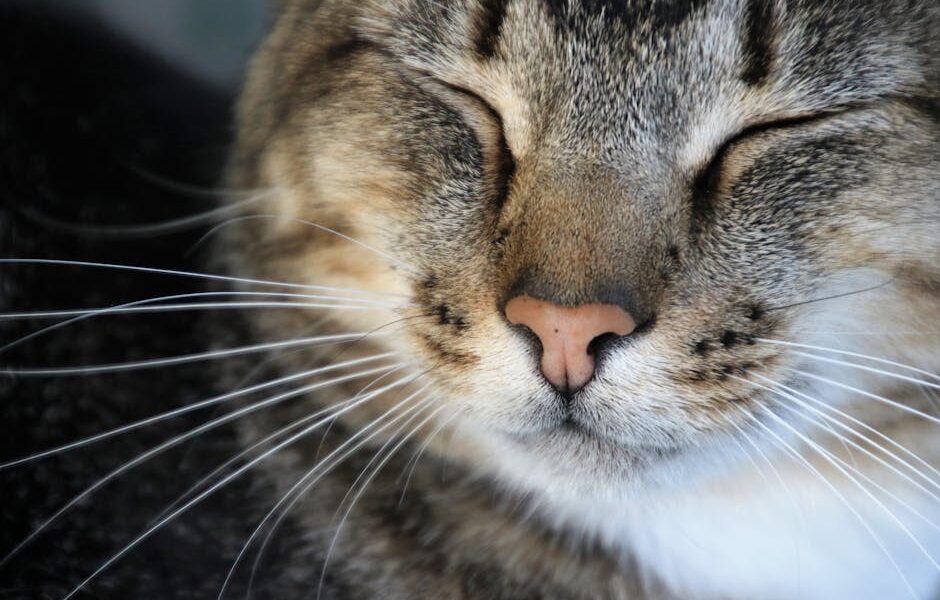
Whiskers — technically called vibrissae — are not ordinary hairs. They are thicker, stiffer, and rooted far more deeply in the skin than regular fur. Each whisker follicle is surrounded by a dense network of nerve endings and blood vessels, making whiskers one of the most sensitive touch receptors on a cat’s body. The mystacial whiskers — the long, prominent ones on either side of the nose — are the ones most relevant to whisker fatigue. They serve several critical functions.
- Spatial awareness. Whiskers help cats judge whether they can fit through tight spaces. The span of the mystacial whiskers roughly matches the width of the cat’s body, acting as a built-in measuring tool.
- Navigation in low light. Cats are crepuscular hunters, most active at dawn and dusk. Whiskers detect subtle air currents and vibrations, allowing cats to sense nearby objects and prey even in near-darkness.
- Detecting food and water. When a cat lowers its face to eat or drink, the whiskers provide immediate tactile feedback about what is around the mouth. This helps cats identify food temperature, texture, and position.
- Communication. Whisker position signals mood. Forward-facing whiskers often indicate curiosity or excitement, while flattened whiskers may signal fear or aggression.
In short, whiskers are a high-resolution sensory system wired directly into the brain. Anything that repeatedly overwhelms those nerve endings has the potential to cause discomfort — and that is the foundation of the cat whisker fatigue theory.
What Is Cat Whisker Fatigue?
Cat whisker fatigue — sometimes called whisker stress — refers to the idea that a cat’s whiskers can become overstimulated when they are repeatedly pressed against the sides of a narrow food or water bowl. Each time the cat dips its head into the dish, the whiskers bend and make contact with the bowl’s walls, sending a flood of tactile signals to the brain. Over the course of multiple meals per day, this constant sensory input is thought to cause stress, discomfort, or even a form of sensory overload.
The term gained attention in the mid-2010s through online pet communities and product marketing for wide, shallow dishes. Think of it like wearing a scratchy shirt tag all day — no single contact is painful, but the cumulative repetition becomes genuinely unpleasant. For a cat eating two or three meals daily from a deep, narrow bowl, that adds up to hundreds of whisker-to-bowl contacts every day.
Is Cat Whisker Fatigue Scientifically Proven?
As of now, cat whisker fatigue has not been formally defined as a veterinary diagnosis. No major veterinary textbook includes it as a recognized syndrome, and many veterinarians remain cautious about using the term clinically. However, the underlying science is well established. The whisker follicle complex is one of the most densely innervated sensory structures in the mammalian body. Studies on rodent vibrissae have demonstrated that sustained whisker stimulation can alter neural firing patterns and cause measurable changes in the somatosensory cortex.
A 2018 study in the Journal of Feline Medicine and Surgery found that some cats showed a preference for flatter, wider dishes and exhibited fewer stress-related behaviors when eating from them, though the authors noted more research was needed.
The honest summary: the sensory anatomy is real, the potential for overstimulation is plausible, and some behavioral evidence supports the idea — but we lack the controlled clinical studies to definitively prove cat whisker fatigue as a discrete condition. Many veterinary behaviorists take a pragmatic view: if changing the bowl resolves the behavior, the exact label matters less than the practical outcome.
Signs of Cat Whisker Fatigue
Cat whisker fatigue is identified through behavioral observations at mealtime rather than any specific medical test. If your cat shows one or more of the following patterns consistently, whisker fatigue may be worth considering as a contributing factor.
Messy Eating
A cat that previously ate neatly begins scattering food around the bowl, pushing kibble over the edges, or dragging wet food onto the floor. The cat is clearly hungry but resists eating directly from the bowl. The mess is not random — it is the cat’s attempt to access food without pushing its whiskers against the bowl walls.
Pawing Food Out of the Bowl
Many cats with suspected whisker fatigue use a paw to scoop food out of the bowl and eat it off the floor. This is a deliberate workaround — the cat has learned that eating from a flat surface is more comfortable than pressing its face into a narrow dish. If your cat consistently paws food out rather than eating directly, the bowl shape is a very likely contributor.
Refusing to Eat from the Bowl
Some cats refuse to eat from the bowl altogether. They approach, sniff the food, and walk away — only to cry for food minutes later. If the cat eagerly eats the same food from a flat plate, the bowl is the problem, not the food. Owners sometimes cycle through brands and flavors when the real solution is a different dish.
Only Eating from the Center of the Bowl
A subtler sign is a cat that eats only the food in the center and leaves a ring of untouched food around the edges. The cat is eating as much as it can reach without its whiskers touching the sides — especially common with wet food in standard round bowls.
Agitation at Mealtimes
Cats experiencing discomfort during meals may show tail twitching, flattened ears, jerky head movements, or even hissing at nearby pets during feeding. If your cat seems stressed specifically around mealtimes but is otherwise relaxed, the feeding setup deserves a closer look.
Wide Shallow Bowls: The Simplest Solution
The simplest solution for suspected cat whisker fatigue is switching to a wide, shallow bowl or flat plate. A wide dish lets the cat eat without its whiskers contacting the bowl’s edges, keeping them in a natural resting position. Many owners report an immediate improvement — messy eating stops, pawing stops, and the cat finishes meals it previously abandoned.
You do not need a specialized product to test this. A flat saucer or clean salad plate works perfectly as an initial experiment. If your cat’s behavior improves within a few days, you have your answer — and can then decide whether to invest in a purpose-built dish.
Whisker-Friendly Bowls: What to Look For
If you want to buy a dedicated feeding dish designed with whisker comfort in mind, look for these features when shopping.
- Low sides. The rim of the bowl should be no more than one to two centimeters high — just enough to contain food without touching the whiskers when the cat eats.
- Wide diameter. The dish should be wide enough that the cat’s whiskers never touch the edges. A diameter of at least 15 centimeters (roughly 6 inches) works for most cats, but larger cats or cats with especially long whiskers may need more room.
- Slightly raised. Elevated dishes bring the food closer to the cat’s natural head height, reducing neck strain and making it easier to eat in a comfortable posture. A slight elevation of 5 to 10 centimeters is generally ideal.
- Non-slip base. A dish that slides across the floor while the cat eats adds frustration. Look for bowls with silicone feet or a weighted base.
- Easy-to-clean material. Stainless steel and ceramic are the best choices. Plastic bowls can harbor bacteria in scratches and may cause feline acne (chin acne) in some cats, creating a separate problem.
The core principle across all whisker-friendly bowls is the same: give the whiskers space. You do not need the most expensive option — function matters far more than aesthetics.
Other Reasons Cats Are Messy Eaters
While cat whisker fatigue is one possible explanation for messy eating, it is not the only one. Before assuming whisker fatigue is the sole cause, consider these other common factors.
- Dental pain. Cats with tooth resorption, gingivitis, broken teeth, or oral tumors may eat messily because chewing is painful. They may drop food, tilt their head to one side while eating, or drool excessively.
- Food texture or temperature. Some cats prefer certain textures and will push aside chunks they find unpleasant. Cold food straight from the refrigerator is less aromatic and less appealing to many cats — slightly warming it can make a noticeable difference.
- Bowl placement. Cats are vulnerable while eating and prefer feeding stations in quiet, low-traffic areas where they can see their surroundings. A bowl placed in a noisy kitchen corner or near a loud appliance can create mealtime anxiety that looks like picky eating.
- Competition from other pets. In multi-cat or multi-pet households, a cat may eat quickly and messily because it feels pressure from another animal nearby. Providing separate feeding stations can resolve this entirely.
- Nasal congestion. Cats rely heavily on smell to identify and enjoy food. Upper respiratory infections, chronic rhinitis, or polyps can reduce a cat’s sense of smell and lead to disinterest in food or unusual eating patterns.
- Flat-faced breeds. Brachycephalic cats like Persians and Exotic Shorthairs have shortened muzzles that make eating from standard bowls physically awkward. These breeds often benefit from shallow dishes regardless of whisker fatigue. You can learn more about these breeds in our cat breeds directory.
- Age-related changes. Senior cats may develop arthritis that makes bending down to a floor-level bowl uncomfortable, or cognitive changes that affect eating habits.
In many cases, more than one factor is at play. A cat with mild dental sensitivity eating from a deep narrow bowl in a busy kitchen is dealing with three overlapping stressors. Addressing all of them — not just one — leads to the best outcome.
When to See a Vet About Eating Changes
A change in eating behavior always deserves attention, even if you suspect the cause is something as benign as bowl shape. Certain signs warrant a veterinary visit sooner rather than later.
- Sudden loss of appetite lasting more than 24 hours. Cats — especially overweight cats — are at risk of hepatic lipidosis (fatty liver disease) if they stop eating for even a short period. This is a medical emergency.
- Weight loss. If your cat is losing weight despite having access to food, something beyond bowl preference is going on. Hyperthyroidism, diabetes, kidney disease, and cancer can all cause weight loss alongside changes in eating behavior.
- Drooling, pawing at the mouth, or bleeding from the gums. These signs point strongly toward dental disease or an oral injury that needs professional treatment.
- Vomiting after meals. Occasional vomiting is not unusual in cats, but frequent vomiting after eating may indicate food allergies, inflammatory bowel disease, or gastrointestinal obstruction.
- Changes in drinking habits. Increased thirst alongside appetite changes can signal kidney disease, diabetes, or other systemic illness.
- Behavioral changes beyond mealtimes. If your cat is also lethargic, hiding, vocalizing more than usual, or showing personality changes, a thorough veterinary exam is essential.
The rule of thumb is simple: if switching to a wide, shallow bowl does not resolve your cat’s eating difficulties within a week, or if any of the symptoms above are present, schedule a vet appointment. A physical exam and basic bloodwork can rule out medical causes quickly and give you peace of mind. Your veterinarian is always the best resource for evaluating changes in your cat’s health.
If you are considering bringing a new cat into your home and want to set up a whisker-friendly feeding station from day one, browse our adoptable cats and start your journey with the right setup already in place.
Frequently Asked Questions
Is cat whisker fatigue a real medical diagnosis?
Cat whisker fatigue is not currently listed as a formal diagnosis in veterinary textbooks. However, the underlying anatomy — whiskers are extraordinarily sensitive touch organs connected to dense nerve networks — is well documented. Many veterinarians and feline behaviorists acknowledge that overstimulation of whiskers during feeding is plausible and treat it as a practical consideration when evaluating mealtime behavior problems.
How do I know if my cat has whisker fatigue or is just a picky eater?
The simplest test is to offer the same food on a flat plate or wide saucer instead of the usual bowl. If your cat eats eagerly from the flat surface but resists eating from the bowl, the dish shape is likely a factor. A truly picky cat will refuse the food regardless of the container. You can also watch for specific behaviors like only eating from the center of the bowl or consistently pawing food onto the floor before eating it.
Can whisker fatigue affect a cat’s water intake?
Yes, the same principle applies to water bowls. A cat that is reluctant to drink from a deep, narrow water bowl may drink more readily from a wide dish or a pet water fountain with an open surface. Adequate water intake is critical for kidney health, so if you suspect your cat is not drinking enough, switching to a wider water dish is a worthwhile change.
Do all cats experience whisker fatigue?
Not all cats show signs of whisker sensitivity. Some cats eat happily from deep bowls their entire lives with no apparent discomfort. Sensitivity likely varies between individual cats based on whisker length, nerve density, temperament, and personal tolerance. Breeds with especially long or prominent whiskers may be more susceptible, but there is no definitive breed-specific data available.
Should I trim my cat’s whiskers to prevent whisker fatigue?
No. Never trim, cut, or pluck a cat’s whiskers. Whiskers are essential sensory organs that cats depend on for spatial awareness, navigation, and balance. Removing or shortening them causes significant disorientation and stress. The correct approach is to change the bowl, not the cat. A wide, shallow dish eliminates the problem without any harm to your cat.
What bowl material is best for cats with whisker fatigue?
Stainless steel and ceramic are the best materials for cat food bowls in general. Both are easy to clean, durable, and do not harbor bacteria the way plastic does. Plastic bowls can also cause feline chin acne in sensitive cats. For whisker fatigue specifically, the shape and depth of the bowl matter far more than the material — but choosing stainless steel or ceramic is a good practice regardless.


