
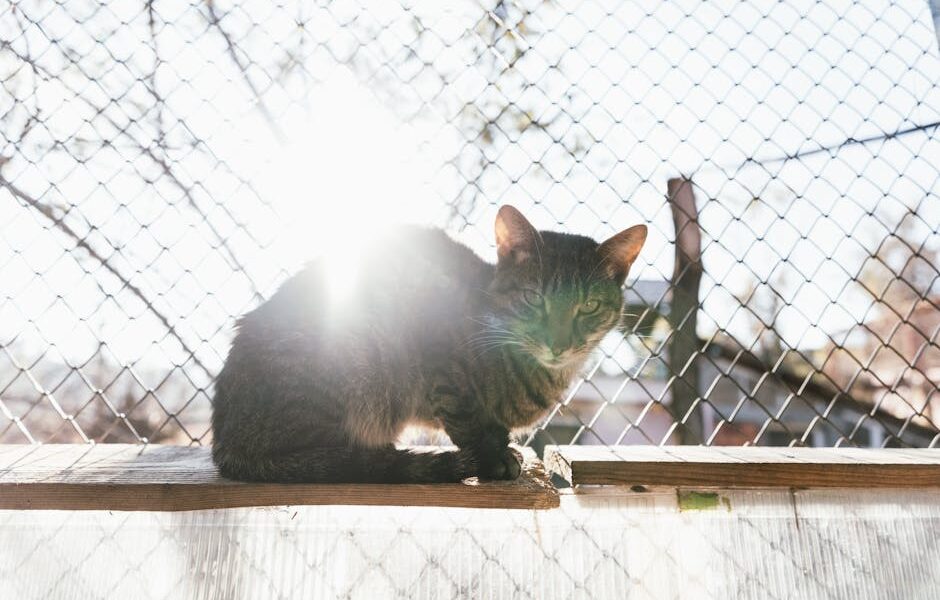
Why a Catio Is Worth Considering
Catio basics — buy vs DIY — sit at the intersection of indoor cat enrichment and outdoor cat safety. A catio (cat patio) is a fully enclosed outdoor space designed so cats can experience fresh air, sun, breeze, and bird-watching without the dangers of free roaming: traffic, predators, parasites, fights with other cats, and the toxic-plant exposure that takes lives every year.
In this article
For owners of strictly indoor cats, a catio extends quality of life in measurable ways. Cats engage their senses, get vitamin D from filtered sunlight, exercise more on vertical surfaces, and show reduced indoor stress behaviors. For households where outdoor freedom is impractical — apartments, high-rise units, urban areas with heavy traffic — the catio is the answer to “my cat seems bored and frustrated by being indoor-only.”
The question of buying a prefab kit versus building from scratch comes down to space, budget, skills, and how the catio integrates with the home. Both options work; the right choice is the one that gets built and used. A perfect catio that never materializes is no better than no catio at all.
Sizing and Layout Basics
Minimum useful catio dimensions are roughly 4 feet wide by 4 feet deep by 6 feet tall for a single cat. Smaller than this and the cat treats it as a cage rather than a territory; larger gives room for shelves, ramps, and multiple resting spots. Multi-cat catios need more square footage and more vertical complexity to avoid resource competition.
Height matters because cats use vertical space. A catio with platforms at varying heights gives more usable territory than a flat-floor catio of the same footprint. Plan for at least three height levels — ground, mid-platform, and elevated perch — connected by ramps, ladders, or jumps a cat can make safely.
Roofing is non-negotiable. A roofed catio protects from rain, sun, falling debris, and aerial predators (hawks and owls take small cats). Even in suburbs, roof-enclosed catios prevent the rare but real raptor attack. Mesh roofing works for shade and predator block; solid roofing adds rain protection.
Access from inside the house is the make-or-break design feature. A catio the cat must be carried into gets used less; a catio with a cat-door insert in a window or wall gets used constantly. Plan the house-side access from the beginning — retrofitting access is more work than building it in.
Mesh and Wire Selection
The single most important material choice is the mesh. Use galvanized hardware cloth — also called welded wire fabric — with openings no larger than half an inch by one inch. This is structural-grade wire that resists chewing, climbing predators, and weather.
Do not use chicken wire. Chicken wire is soft hexagonal wire designed to keep chickens in, not predators out. Raccoons, neighborhood dogs, and even cats can stretch or break chicken wire, and the openings let mosquitoes through. Hardware cloth costs more but is the right material for predator-grade enclosure.
Mesh size matters for keeping things out as well as keeping the cat in. Half-inch openings block most insects (mosquitoes still get through; that’s a separate problem requiring different barriers), small reptiles, and the curious neighbor cat. The wire should be securely fastened to the frame with stainless or galvanized staples, not loose-stapled.
Wire-mesh edges are sharp. Either bend the cut edges over and into the frame, or cover with wood trim. A cat dragging a paw against a raw mesh edge can cut a pad badly.
Frame Construction
For DIY builds, cedar is the wood of choice — naturally weather-resistant and non-toxic if the cat chews. Avoid pressure-treated lumber (the chemicals are not cat-safe) and avoid pine without weatherproofing (it rots in two seasons).
Build the frame in panels — pre-assembled 4×6 or 4×8 mesh-and-wood sections that bolt together on site. This is easier than trying to build the catio in place. Panels can be moved if you relocate, and they are easier to clean and repair.
Anchor the catio. Wind loads on a 4x4x6 enclosure are significant; a catio that has lifted in a storm and toppled is a cat-escape and structural-damage event. Concrete-bolt the frame to a deck or porch surface, or use ground anchors set in concrete blocks.
Doors should be cat-secure (latch locks, not just gravity catches) and human-passable (you need to enter for cleaning). A standard human-sized door with a self-closing hinge prevents the accidental “I forgot to shut the catio” escape.
Prefab Catio Brands
For owners without carpentry skills or the time, prefab catio kits have improved dramatically. Catio Spaces sells customizable plans and complete kits in a range of sizes from window-box to full backyard. Habitat Haven offers modular sections that connect. Kittywalk produces tunnel and platform systems that adapt to existing decks and patios.
Generic online retailer catios (Aivituvin, Coziwow, Trixie) range from acceptable to fragile. Read reviews carefully — many budget catios use thin wire that bends, frames that warp, and roofs that leak. A catio that needs replacement in two years often costs more than a quality kit that lasts ten.
Kits typically run $500 to $3,000 depending on size and features. DIY builds cost roughly half to two-thirds the kit price in materials, plus your time. For a one-cat household with a small footprint, the kit is often the right tradeoff; for a multi-cat household or unusual space, DIY allows custom sizing.
Plant Safety
Any plant inside or near the catio needs the toxic-to-cats check. Lilies are the canonical danger — exposure causes acute kidney failure, and even pollen on fur that the cat licks off can be lethal. Read our guide on lily toxicosis in cats and remove all lilies from anywhere near catio airspace.
Other common toxic plants to avoid in or near a catio: sago palm (acute liver failure), oleander, autumn crocus, tulips and daffodils (bulbs especially toxic), azaleas and rhododendron, foxglove, and yew. The ASPCA Animal Poison Control plant list is the reference.
Cat-safe plants you can include inside the catio: cat grass (oat or wheatgrass), catnip, silver vine, valerian (in moderation — strong responses in some cats), spider plant, Boston fern, African violet, and bromeliads. These provide enrichment and chewable greens.
Outside the catio but within wind-blown range, keep similar standards. Pollen and falling petals enter through the mesh. If the neighbor has lilies in their yard, you cannot fully control exposure, but reducing your own property’s risk is the controllable part.
Climbing, Resting, and Enrichment Features
A catio is more than an empty cage. Add features that let the cat use the space: scratching posts (sisal-wrapped wood resists weather better than carpet), platforms at varying heights, hammocks attached to the frame, perches near the mesh for bird-watching, and shaded retreat boxes for sunny days.
Bird feeders placed outside but visible through the catio mesh provide hours of entertainment — “cat TV” at its purest. Avoid placing the feeders too close — birds need to feel safe enough to actually use them — but within clear cat sightlines.
Water and shade are essential for sunny-climate catios. A small water dish prevents dehydration on hot days; partial shade (a roof tarp, a vine over the mesh, or a strategically planted tree nearby) prevents the catio from becoming a heat trap.
Pair the catio with our cat environmental enrichment protocols guide for the wider stimulation framework that catios fit into.
Multi-Cat Considerations
For households with multiple cats, the catio needs to accommodate the dynamics of the indoor relationships. Cats that conflict indoors will conflict outdoors — sometimes worse, because outdoor space activates territorial behavior more strongly.
Provide multiple resting spots, multiple food/water stations if the cats eat in the catio, and multiple exit routes (cats hate being cornered with no escape). Read our five pillars of multi-cat resource setup for the framework that prevents resource conflict.
Vertical complexity becomes essential in multi-cat catios. A single floor with no climbing forces cats into proximity; multiple levels let them share space at different heights. Read our resource distribution in multi-cat households guide.
HDB, Apartment, and Singapore-Specific Notes
For HDB and condo residents in Singapore, the catio question intersects with balcony safety rules. Read our HDB balcony pet safety mesh guide for the building-regulation framework. Approved mesh systems for HDB balconies can also function as small catio enclosures.
High-rise units face additional considerations. Read our high-rise syndrome in cats guide before adding any balcony or catio feature; cats falling from height is a real and preventable injury that good enclosure design avoids.
For full-feature catios, a ground-floor unit or landed property has more options than a high-rise. Apartment-friendly window-box catios (sometimes called “window cats”) give small-space cats outdoor air without requiring a balcony or yard.
Maintenance and Seasonal Care
Inspect the catio monthly. Check mesh integrity, frame joints, door latches, and any signs of attempted entry by neighborhood animals. Annual checks of the anchoring and roofing prevent storm damage.
Hose out the floor and platforms regularly to clear cat hair, droppings, and food debris. A catio that smells of cat litter or stale food deters use; a clean catio invites it.
In seasonal climates, prepare for the off-season. Cold-climate catios may need a heated bed or a closed-in “winter cabin” addition. Tropical catios need extra shade, a cooling mat in the resting area, and water access in peak heat.
Frequently Asked Questions
How small can a useful catio be?
The minimum for genuine enrichment is roughly 4 feet square by 6 feet tall for a single cat. Smaller “window cubes” (1-2 feet) are better than nothing for cats with no other outdoor option, but they don’t provide enough movement to count as real outdoor enrichment.
Will a catio attract neighborhood cats or wildlife?
Yes — the smells of your cat will attract neighborhood cats to investigate, and wildlife is curious about new structures. Quality mesh keeps everyone out. Some catio owners report that initial nighttime stand-offs through the mesh fade after a few weeks as the curiosity wears off.
Can I include a litter box in the catio?
Yes, but consider weather and cleaning logistics. An indoor box that the cat can access from the catio is usually more practical than an outdoor box that needs daily cleaning regardless of rain. Outdoor litter also attracts flies and pests in warm climates.
Do all cats enjoy catios?
Most do once acclimated, but some — particularly cats with no prior outdoor experience or very anxious individuals — take weeks to start using a new catio. Introduce gradually with treats and supervision; let the cat choose when to enter. Forcing the cat in creates negative association.
What does a catio cost to build or buy?
DIY costs range from $200 for a small window-style enclosure to $1,500 for a freestanding backyard catio in cedar and hardware cloth. Prefab kits run $500 to $3,000. Custom installer-built catios can reach $5,000 to $10,000 for elaborate designs. Match the budget to how much daily use you expect.


