The Marketing Myth vs the Brush in Your Hand
Designer dog grooming gets sold as a feature: “low-shedding, easy-care, hypoallergenic.” Walk into any breeder’s website and you will see those words layered on top of fluffy puppy photos. Then the puppy comes home, the coat changes around eight months old, and reality sets in. Most doodle owners spend more time, money, and frustration on grooming than owners of either parent breed. The “easy-care” claim is, for most coats, simply not true.
In this article
- The Marketing Myth vs the Brush in Your Hand
- What a Doodle Coat Actually Is
- Brushing Frequency: Lab vs Golden vs Poodle vs Doodle
- The Coat-Change Crisis at Eight Months
- Professional Grooming: Cost and Cadence
- Tools You Actually Need at Home
- Coat Comparison: Goldendoodle, Labradoodle, Bernedoodle
- Bathing, Drying, and the Skin Issue
- Ear Care, Nail Trims, and the Often-Forgotten Tasks
- The Hidden Cost of Skipping Grooming
- Honest Time Math for Prospective Owners
- Seasonal Grooming Adjustments
- Frequently Asked Questions
The honest comparison is this: a Labrador grooms itself with a quick brush and an occasional bath. A Golden Retriever needs weekly brushing and seasonal blowouts. A Poodle needs a professional groom every four to eight weeks but does not mat as quickly between visits. A doodle inherits the worst of both worlds in the wrong proportions — a coat that grows like a Poodle’s but mats like wool, on a dog the size of a Lab. If you are weighing a designer dog purchase, understanding designer dog grooming is the single most important reality check.
What a Doodle Coat Actually Is
A Poodle has a single-layer curly coat that grows continuously, like human hair, and sheds very little. A Lab or Golden has a double coat with a soft undercoat that sheds heavily twice a year. When you cross them, the puppy gets some hybrid version of these two coat structures — and the result varies wildly even within a single litter.
F1 first-cross doodles can have flat, wavy, or curly coats. Some shed heavily. Some shed almost not at all. F1B (back-crossed to a Poodle) coats lean curlier and lower-shed. Multigen coats are more consistent but still vary. The thing all doodle coats share is that they grow, they tangle, and most need professional grooming for life. There is no “wash and go” doodle.
Brushing Frequency: Lab vs Golden vs Poodle vs Doodle
Brushing time is where the comparison gets stark. Here is roughly what each coat type needs at home.
- Labrador Retriever: 5 to 10 minutes weekly, more during shed season.
- Golden Retriever: 15 to 30 minutes two or three times a week.
- Standard Poodle: 20 to 40 minutes two or three times a week between professional grooms.
- F1 doodle (wavy or curly): 30 to 60 minutes every other day, daily during coat change.
- F1B or multigen curly doodle: 30 to 45 minutes daily.
The doodle daily brushing is not optional. Skip three days on a curly coat and you will find pelt-style mats forming at the armpits, behind the ears, and on the rear legs. Once mats form, they cannot be brushed out — they have to be shaved off, which often means a full-body shave-down at the next professional groom.
The Coat-Change Crisis at Eight Months
Most doodle owners are blindsided by the coat change. Around six to ten months, the puppy coat falls out and the adult coat grows in. During those weeks, the dog mats faster than any human can keep up with. Daily one-hour brushing sessions are common, and many dogs end up shaved to the skin because the mats become impossible.
This is when many doodles get surrendered. The grooming bill triples, the brushing is taking an hour a day, the dog hates it, and the family gives up. Knowing about the coat-change phase before you buy the puppy is the single best way to avoid becoming part of the doodle rescue pipeline.
Professional Grooming: Cost and Cadence
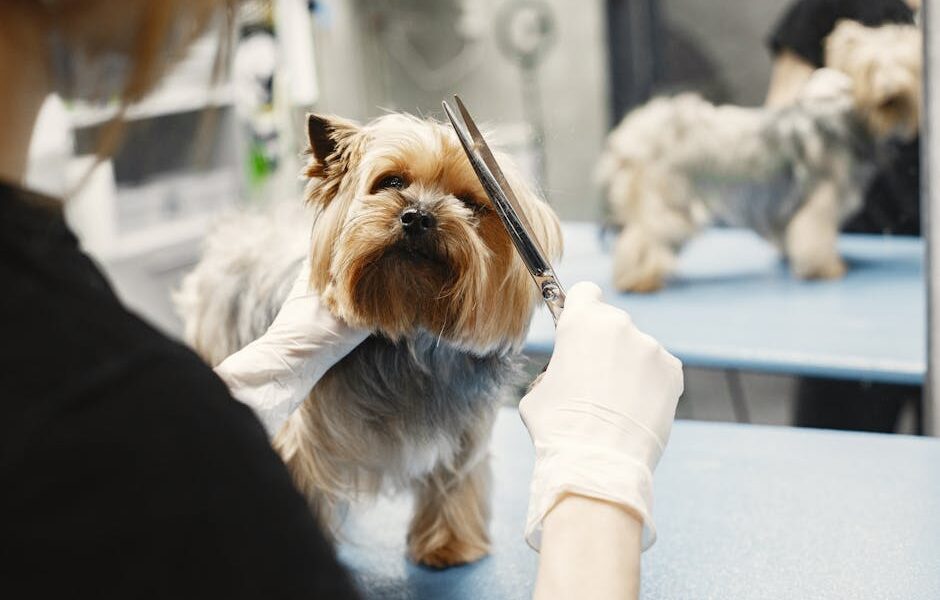
Most doodles need professional grooming every four to eight weeks for the dog’s entire life. A standard-sized doodle groom typically runs in line with grooming for other large coated breeds, and prices have climbed in most regions. Mobile groomers, breed-specialty shops, and big-box chains all charge differently. Read our overview of grooming costs for a realistic budget.
Compare that to a Lab, which most owners groom at home with a slicker brush and a bath in the tub. The lifetime grooming cost difference between a Lab and a doodle can run into thousands of dollars across the dog’s life. That is real money, and it is rarely included in the “first year of dog ownership” math new buyers do.
Tools You Actually Need at Home
If you bring home a doodle, you will need real tools, not a pet-store grooming kit. The basics:
- Slicker brush (firm pin): The workhorse for daily brushing.
- Metal Greyhound comb: The check tool — if the comb does not pass cleanly through the coat, the dog still has tangles.
- Detangling spray: Reduces breakage and friction.
- Mat splitter or dematting rake: For early-stage tangles only.
- Force dryer or high-velocity dryer: Critical for fully drying the dense coat after baths.
- Sturdy grooming table or non-slip surface: Saves your back and the dog’s joints.
Brushing on the floor with a soft baby brush will not work on an adult doodle coat. The slicker has to reach the skin, and the comb has to confirm the coat is mat-free top to bottom.
Coat Comparison: Goldendoodle, Labradoodle, Bernedoodle
Among the big three doodles, coat type and care vary a bit. Goldendoodles tend to be wavier and slightly easier to maintain than full Poodle coats, but matting is still common. Labradoodles range widely depending on which generation — F1 Labradoodles can shed heavily, while Australian multigen Labradoodles are more uniformly low-shed. Bernedoodles often have the densest, most cotton-like coats and tend to mat the fastest.
Browse breed-specific guides to compare directly: grooming a Goldendoodle, grooming a Labradoodle, and grooming a Poodle. Reading all three side by side will make the differences concrete.
Bathing, Drying, and the Skin Issue
Doodle skin is sensitive. The coat traps moisture, and dogs that are not fully dried after a bath are prone to hot spots and skin infections. Towel-drying alone is not enough — you need either a force dryer at home or a professional groomer who blow-dries to the skin.
Bathing frequency is generally every three to six weeks. Over-bathing strips the coat oils and worsens skin issues; under-bathing leads to a smelly, oily coat. Dogs prone to atopic dermatitis — a known issue in Poodle and Golden lines — need a vet-coordinated bathing schedule with medicated shampoo.
Ear Care, Nail Trims, and the Often-Forgotten Tasks
Beyond brushing and bathing, doodle owners face several other regular grooming tasks that owners of short-coated breeds often skip entirely. The hair-covered ears trap debris and moisture, requiring weekly checks and cleaning with a vet-approved ear solution. Plucking ear hair (some groomers do this; some discourage it) is a routine question that depends on your specific dog’s ear health.
Nail trims happen every two to four weeks. Doodle nails grow fast, and dogs that walk mainly on grass or carpet do not wear them down naturally. Long nails change paw mechanics over time and contribute to joint stress. Sanitary trims — keeping the area around the bottom and groin clean — are also a regular task that pet-store grooming kits do not really address. A full home grooming kit includes ear cleaner, nail clippers or a grinder, and small scissors for sanitary work.
The Hidden Cost of Skipping Grooming
Owners who fall behind on grooming pay a higher cost when they finally book a professional appointment. Mat-removal fees can double or triple a standard groom. Many groomers refuse to dematt severely matted dogs, and a full shave-down for matted dogs is sometimes the only humane option — even though it leaves the dog cold and self-conscious for weeks while the coat regrows.
Beyond the financial cost, severely matted coats cause real welfare problems. Mats pull at the skin, restrict movement, hide skin infections, and can develop hot spots underneath. The kindest approach is preventing mats in the first place — or being willing to keep the dog in a shorter “puppy cut” that is more forgiving than a long teddy-bear style.
Honest Time Math for Prospective Owners
Before you commit to a doodle, do the math: 30 to 45 minutes of daily brushing, a 90-minute bath every month, a professional groom every four to eight weeks, and an hour of nail and ear care weekly. That is real time. If your schedule cannot absorb it, the kindest choice for a doodle is not buying one.
The kinder alternative is a Lab from your local adoption hub, a Standard Poodle from rescue, or a Golden Retriever — all of which need less daily grooming than the average doodle. If you are committed to the doodle look, consider adopting a rescue Poodle or a doodle from a foster home, where the adult coat type is already known.
Seasonal Grooming Adjustments
Doodle grooming routines shift with the seasons. In summer, many owners go to a shorter clip to help with heat tolerance, knowing the dense coat is less heat-friendly than a Labrador’s short coat. In winter, longer clips may help with cold tolerance but require more diligent dematting after wet walks. Wet doodle coats mat aggressively as they dry, especially around the legs, belly, and chest.
Spring brings the longest brushing sessions because the coat changes seasonally and dogs shed any underlayer they have developed for winter. Fall is similar in reverse. Owners who track the calendar tend to schedule their professional grooming visits to match — a longer reset groom in spring and fall, with shorter touch-up grooms between.
Frequently Asked Questions
Are any doodle coats truly low-maintenance?
The closest you will get is a flat-coated F1 Goldendoodle that inherited mostly Golden coat genetics. Those dogs shed more but mat less. The trade-off is they are not low-shedding, which defeats the original reason most buyers chose a doodle.
Can I groom a doodle myself at home?
Yes, but it requires investment in tools, a willingness to learn, and the time to do it right. Many home-grooming owners still take the dog to a professional every six months for a full reset. Plan to spend a year learning before you can fully self-maintain.
Why does my groomer want to shave my doodle?
Almost always because the coat has matted to the skin and dematting would be painful and unsafe. Shave-downs are not the groomer’s preference — they are the result of brushing falling behind. Daily brushing prevents this.
Will my doodle shed less if I groom it more?
Grooming does not change shedding genetics, but it removes loose hair before it lands on your couch. Owners often perceive less shedding after improved grooming routines, even though the dog’s hair-cycle has not changed.
Are doodles really hypoallergenic?
No. No dog is fully hypoallergenic. Some lower-shedding doodles produce less dander loose in the home, which can help some allergy sufferers, but reactions vary by individual and by dog. The hypoallergenic claim has been overstated by breeders for decades.
What’s the best length to keep a doodle’s coat?
For most pet doodles, a one-to-two-inch all-over clip (“puppy cut” or “teddy bear cut”) balances appearance and ease of care. Longer coats look more dramatic but mat faster and require more daily brushing. Shorter coats are easier to maintain but require more frequent professional touchups.
Looking to adopt a Designer Dog Grooming vs Parent Breeds?
Browse Designer Dog Grooming vs Parent Breeds dogs and mixes available for adoption from shelters and rescues near you.
Find Designer Dog Grooming vs Parent Breeds Dogs for Adoption